Major Real Estate Acquisition in Dallas’s Coveted Lee Park: Unmasking the Future of North Hall Street
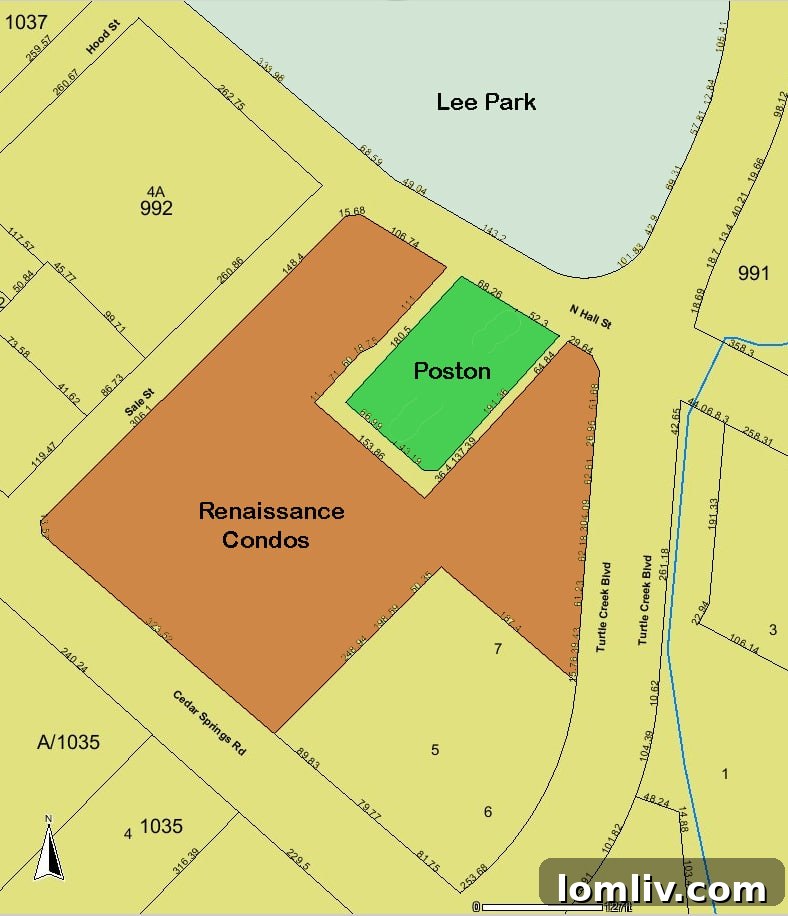
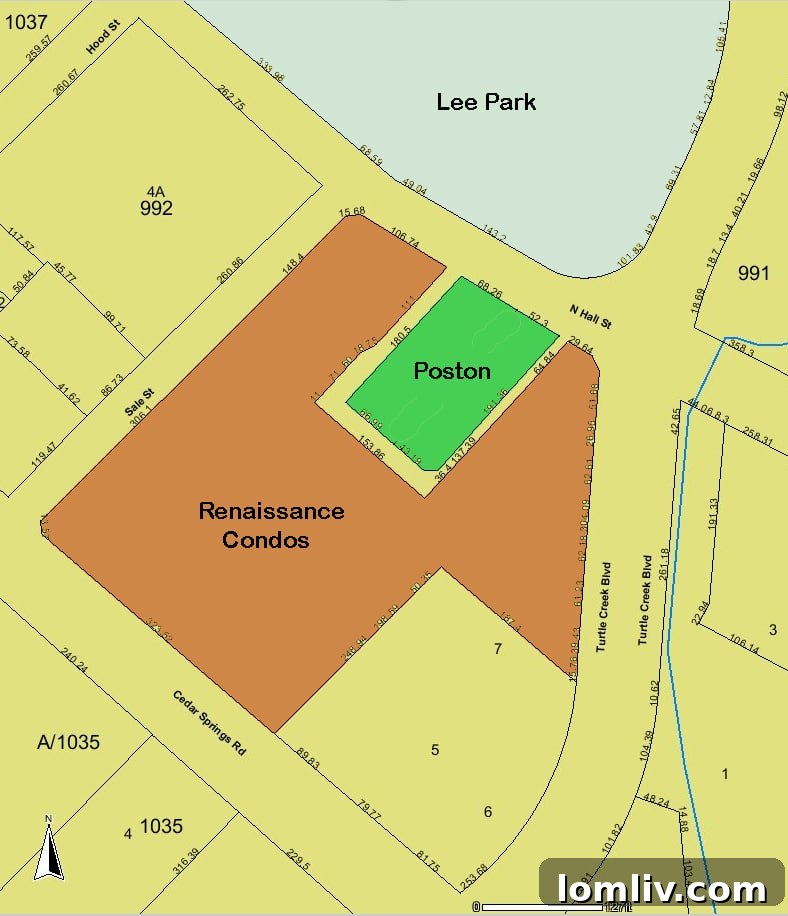
The dynamic landscape of Dallas real estate continues to evolve at a rapid pace, with the highly sought-after Lee Park and Turtle Creek neighborhoods consistently attracting significant investor interest. A recent transaction involving two prime lots at 3407 and 3409 North Hall Street has ignited substantial speculation within the market. These properties, strategically located in one of Dallas’s most desirable urban cores, were reported in January to have been acquired by TDRE Lee Park LLC, a move that signals potential for a transformative development in the area.
The sale of these parcels marks a crucial moment for the North Hall Street corridor, hinting at the next wave of upscale development that has become synonymous with the Lee Park and Turtle Creek districts. The immediate mystery surrounding the ultimate beneficial owner of TDRE Lee Park LLC underscores a common, yet intriguing, aspect of large-scale real estate transactions where sophisticated investors often operate behind layers of corporate structure to maintain privacy and execute strategic plans. This acquisition is not merely a land sale; it’s a prelude to what could be a significant addition to Dallas’s luxury residential or commercial offerings.
The Strategic Acquisition: TDRE Lee Park LLC Enters the Scene
The official records from the Dallas Central Appraisal District (DCAD) confirmed the sale of the lots at 3407 and 3409 North Hall Street earlier this year. The acquiring entity, TDRE Lee Park LLC, presents a classic example of how high-value real estate investments are often channeled through limited liability companies. While the LLC lists a local Dallas address at 4100 Spring Valley Road, Suite 310, it effectively serves as a masking agent, obscuring the identity of the true owner from immediate public scrutiny. This strategic use of an LLC is a standard practice for developers and investors who prioritize discretion and liability protection in their substantial ventures.
Further investigation reveals that TDRE Lee Park LLC is a Houston-registered entity, established by prominent Houston attorney John W. Wood. Mr. Wood serves as the registered agent for a vast portfolio of over 200 LLCs, primarily based in Houston. His extensive involvement as a registered agent for such a large number of corporate entities, especially those involved in real estate, speaks volumes about the professional and sophisticated nature of the transaction. This pattern strongly suggests that the North Hall Street properties were not acquired by a small, local investor aiming for a modest renovation, but rather by a well-capitalized organization with substantial development ambitions.
The profile of Mr. Wood, described as a successful individual residing in Houston’s affluent Tanglewood section, reinforces the idea that the entities he represents are backed by significant financial power. For seasoned real estate players, forming an LLC offers several compelling advantages, including shielding personal assets from potential business liabilities, facilitating complex ownership structures, and providing a clean legal framework for financing and future sales. This corporate structuring is a hallmark of strategic investment in competitive markets like Dallas, where projects often involve multi-million-dollar outlays and intricate regulatory navigation.
Unraveling the Network: TDRE’s Broader Ambitions in Dallas
The acquisition on North Hall Street appears to be part of a larger, coordinated strategy by the mysterious investor behind the “TDRE” nomenclature. TDRE Lee Park LLC is one of three related LLCs, all registered by John W. Wood and presumably controlled by the same principal or organization. These include TDRE Hood LLC, which was registered on the very same day as TDRE Lee Park LLC (December 22, 2015), and TDRE Investments LLC, registered a few months earlier on April 2, 2015.
The existence of TDRE Hood LLC immediately sparks speculation regarding potential future property acquisitions along Hood Street, another prime artery within the highly desirable Turtle Creek area. While DCAD currently shows no other TDRE-owned properties beyond the former Poston sites on Hall Street, the identical registration date for TDRE Lee Park and TDRE Hood LLCs is highly suggestive. It points to a predefined investment strategy, possibly involving the coordinated acquisition of multiple parcels across the vicinity. The Turtle Creek area, known for its aging low-rise apartment buildings, presents ample opportunities for redevelopment into modern, high-density luxury residential or mixed-use projects. This strategic foresight to secure multiple entity names simultaneously indicates a developer poised for significant expansion.
All three TDRE-named LLCs share the same Houston address, which, as is common with such corporate registrations, is likely a mail drop rather immense development possibilities due to their strategic location and zoning designation. Within the PD-193 area, these parcels are primarily listed as residential MF-2, which typically limits density to 60 units per acre. However, a critical detail emerges: DCAD designates these specific parcels as commercial.
This commercial designation within PD-193 is a game-changer. For commercially designated parcels in this planned development district, the allowable density skyrockets to an impressive 160 units per acre. This significant increase in potential unit yield transforms the half-acre site from a moderate development opportunity into a prime canvas for a high-density, multi-story project. Such a high allowable density is a clear indicator that the city’s planning framework supports substantial vertical growth in this specific corridor, catering to the ongoing demand for urban living.
However, even with favorable density allowances, the path to development is rarely without obstacles. The original article highlights that “setback requirements have scuttled deals in the past.” Setback regulations, which dictate how far a building must be from property lines, streets, and other structures, can significantly impact a project’s design, buildable area, and overall feasibility. In dense urban environments, these requirements can reduce the effective usable land, potentially limiting the number of units or the scale of commercial space. Navigating these nuanced regulations requires expert architectural and legal teams to maximize the site’s potential while adhering to all municipal codes. Despite these challenges, the substantial unit allowance suggests that a savvy developer like TDRE Lee Park LLC will find a way to optimize the space for a profitable venture.
The Allure of Lee Park and Turtle Creek: A Prime Dallas Investment Hub
The magnetic appeal of the Lee Park and Turtle Creek areas to high-profile investors is deeply rooted in their unparalleled desirability within the Dallas metropolitan area. These neighborhoods represent the zenith of urban luxury living, seamlessly blending natural beauty with sophisticated city amenities. The presence of the iconic Katy Trail, offering miles of scenic paths for recreation, coupled with proximity to the vibrant cultural centers of downtown Dallas and Uptown, makes this location exceptionally attractive to a discerning demographic.
Residents of Lee Park and Turtle Creek enjoy access to a plethora of high-end dining, boutique shopping, and cultural institutions, all within a short distance. This established infrastructure, combined with an ever-increasing demand for luxury urban residences, fuels a robust real estate market characterized by high property values and strong appreciation. The ongoing transformation of the Turtle Creek corridor, marked by the replacement of older, often outdated low-rise structures with modern, architecturally significant high-rise developments, further cements its status as a premier investment destination.
The demographic trends in Dallas support this trajectory. A growing influx of high-income professionals, empty nesters seeking urban convenience, and young professionals desiring a vibrant lifestyle continues to drive demand for upscale, walkable communities. Developers are keenly aware of this demand, and properties offering the potential for high-density, luxury construction in such prime locations are fiercely contested. The acquisition by TDRE Lee Park LLC perfectly aligns with this market dynamic, positioning the investor to capitalize on the enduring allure and economic vitality of one of Dallas’s most prestigious neighborhoods.
The Greater Dallas Real Estate Landscape: Trends and Forecasts
The transaction on North Hall Street is not an isolated event but rather a reflection of the broader robust health and dynamic growth of the Dallas real estate market. For years, Dallas has consistently ranked among the top cities in the U.S. for real estate investment and development, driven by a powerful combination of factors: sustained population growth, significant corporate relocations, and a diversified, resilient economy. Major companies continue to choose Dallas for their headquarters and regional hubs, bringing with them a steady stream of new residents and a heightened demand for both residential and commercial properties.
This strong economic environment translates into a highly competitive real estate market, particularly for prime developable land in coveted urban areas. Investors, both local and international, are drawn to Dallas’s growth trajectory and its potential for substantial returns. The city’s proactive stance on urban planning and infrastructure development further enhances its attractiveness, ensuring that new projects are supported by necessary amenities and transportation networks. The acquisition of properties like those on North Hall Street, even small parcels, is indicative of a developer’s confidence in the long-term value appreciation and continued demand for high-quality housing in Dallas.
Forecasts for the Dallas real estate market remain overwhelmingly positive, with experts predicting continued growth across all sectors. This sustained upward trend makes investments in strategic locations incredibly valuable. The ability to secure a parcel with high-density commercial zoning in a prestige area like Lee Park offers an investor a unique opportunity to contribute significantly to the city’s evolving skyline while reaping substantial rewards from the buoyant market. This transaction is another testament to Dallas’s standing as a powerhouse in the national real estate arena.
What’s Next for North Hall Street? Speculations and Expectations
Given the prime location, the sophisticated nature of the acquiring LLC, and particularly the generous commercial zoning allowing for 160 units per acre, the future of 3407 and 3409 North Hall Street almost certainly involves a substantial high-rise development. This site is ripe for a luxury residential tower, designed to cater to the affluent demographic that covets the Lee Park and Turtle Creek lifestyle. Such a project would likely feature state-of-the-art amenities, including concierge services, rooftop pools, fitness centers, private entertaining spaces, and expansive views of the city skyline or the verdant Katy Trail.
The type of development could lean towards luxury condominiums, offering ownership opportunities in a highly sought-after address, or high-end rental apartments, tapping into the strong demand for premium lease options. There’s also potential for a sophisticated mixed-use development, incorporating upscale retail or dining establishments at the ground level, further enhancing the pedestrian experience and the vibrancy of North Hall Street. This would align with modern urban planning trends that emphasize live-work-play environments.
The timeline for such an ambitious project typically involves several stages, beginning with meticulous architectural design, followed by securing various municipal permits, which can be a lengthy process. Construction itself would then span several years. Throughout this period, the developer would work closely with city planners and potentially engage with the local community to ensure the project integrates harmoniously with its surroundings while maximizing its economic potential. The expectation is clear: North Hall Street is on the cusp of witnessing a significant transformation that will reshape its immediate skyline.
Impact on the Local Community and Future Development Patterns
Any large-scale development in a mature, desirable neighborhood like Lee Park inevitably brings about discussions concerning its impact on the existing community. A new high-rise on North Hall Street would contribute to increased density, potentially affecting local traffic patterns, demand for public services, and the overall character of the street. However, such developments also often bring significant benefits, including an expanded tax base for the city, job creation during construction, and enhanced retail and service offerings for residents.
These projects also play a crucial role in Dallas’s broader urban planning vision, which increasingly emphasizes densification in strategically chosen corridors to accommodate population growth and reduce urban sprawl. By building vertically in established, amenity-rich areas, the city aims to create more sustainable, walkable communities. Developers are increasingly incorporating green building practices and community-centric design elements to ensure new projects are not only economically viable but also environmentally responsible and socially integrated.
The evolution of North Hall Street, spurred by this acquisition, will be a key indicator of future development patterns in similar Dallas neighborhoods. It highlights the ongoing balance between preserving neighborhood character and embracing progressive urban development. As the project unfolds, it will be essential for stakeholders to monitor its progression and discuss its long-term implications for the fabric of the Lee Park and Turtle Creek communities. For now, all eyes are on TDRE Lee Park LLC and the exciting possibilities for one of Dallas’s most prestigious addresses.
Stay tuned to daltxrealestate.com for more as this significant development story unfolds.
We invite real estate professionals, community members, and anyone with insights into the Dallas market to share their perspectives. Do you have an HOA story to tell? A little high-rise history? Realtors, want to feature a listing in need of renovation or one that’s complete with flying colors? How about hosting a Candy’s Dirt Staff Meeting? We value your input and stories that enrich our understanding of Dallas’s vibrant real estate scene. Marriage proposals accepted (they’re legal)! [email protected]