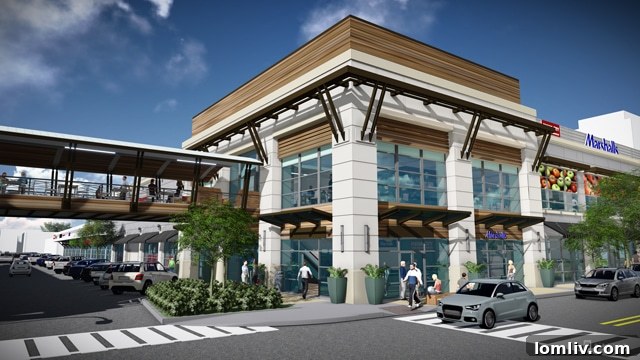
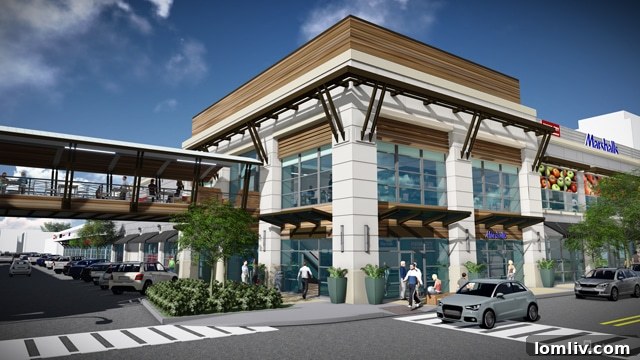
The bustling landscape of Dallas, particularly the affluent enclaves of Preston Hollow and Preston Center, often sparks lively debates concerning urban development, infrastructure, and community amenities. Recently, a compelling discussion was ignited by a tongue-in-cheek column inThe Dallas Observerby Eric Nicholson. This piece humorously tackled the ongoing skybridge controversy for Preston Center – a proposal that, ironically, just received unanimous approval for all four variances from the Dallas Board of Adjustment today. Nicholson’s column cleverly (and satirically) drew attention to a USDA map that ostensibly categorizes parts of Preston Hollow as having “low access” to supermarkets and, by extension, healthful food options. The implication, if taken literally, would suggest that prominent figures like former Mayor Laura Miller, residing in areas like Dentwood, are somehow suffering from a lack of food accessibility. Similarly, many residents recall the perceived inconvenience when living in areas like Park.
This situation highlights a common pitfall of governmental data interpretation: a lack of nuance regarding specific local conditions. Such maps often fail to account for the unique characteristics of neighborhoods like Preston Hollow, which are defined by expansive, affluent estates, sometimes with a single sprawling home per acre, or in extreme cases, like that of Tom Hicks, one residence spanning over 25 acres. To apply a blanket classification of “low access” to such areas, typically associated with genuine food deserts, overlooks the distinct socio-economic fabric and daily realities of its residents.
Indeed, the city is in a fight to get grocery stores in neighborhoods. And check out this nifty USDA map classifying a large swath of Preston Hollow as having “low access” to a supermarket and the healthful food therein. And according to the USDA, such a barrier“may negatively affect diet and food security.”
The USDA’s methodology for identifying areas with “low access” to healthy food often involves calculating the distance to the nearest supermarket from a given population center. While crucial for identifying genuine food deserts in underserved communities, this metric can become misleading when applied without considering the socio-economic context. In affluent areas, “access” transcends mere physical distance; it encompasses convenience, quality, variety, and the ease of incorporating grocery runs into a busy lifestyle, often characterized by personal transportation. The satirical tone of Nicholson’s article, while humorous, underscores the disconnect between generalized data and the lived experience of Preston Hollow residents.
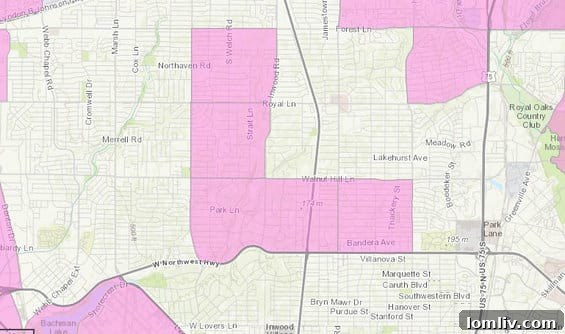
Eric Nicholson’s playful critique further suggests a subtle unfamiliarity with the day-to-day realities of grocery shopping in this part of Dallas. His column, perhaps inadvertently, reveals a perspective that might not fully grasp the intricacies of family logistics and consumer expectations within the Preston Hollow community. He questions the USDA map’s omission of several established grocery options:
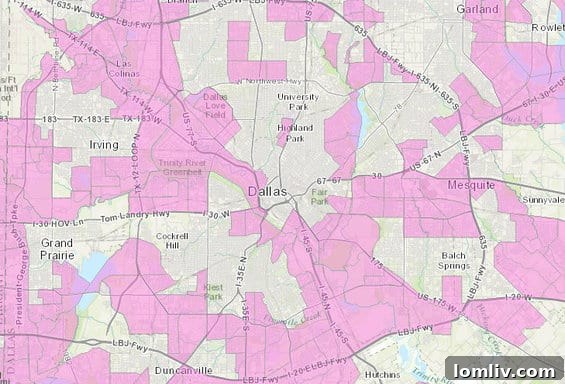
We have no idea why the map doesn’t seem to count the Tom Thumb in the Plaza at Preston Center, just across the street from the proposed skybridge, or the Minyard’s Sun Fresh Market (formerly Alberton’s) at Midway and Northwest Highway, which are both within a mile of most of the pink area. Plus, farther north along Preston Road are two more Tom Thumbs, a Whole Foods and a Central Market that are just a short Beemer drive away from Preston Center. The point is, the neighborhood is officially in the same boat as Pleasant Grove, most of Northwest Dallas and parts of Oak Cliff:
This comparison, however, is where the humor veers into a more serious misrepresentation of Dallas’s diverse neighborhoods. To equate Preston Hollow with areas like Pleasant Grove, Northwest Dallas, or parts of Oak Cliff in terms of food access is to fundamentally misunderstand the socio-economic drivers behind retail development. While these other neighborhoods genuinely face significant challenges in attracting and retaining grocery stores, Preston Hollow operates under an entirely different set of market dynamics.
Understanding the Realities of Grocery Retail in Dallas
The stark truth is that these areas are far from being “in the same boat.” The disparity in grocery store presence across Dallas neighborhoods is primarily driven by two critical factors: the purchasing power of the local populace and prevailing crime rates. Grocery stores, like any business, operate on profit margins. They strategically locate in areas where there’s a sufficient concentration of affluent residents who possess the financial means to regularly purchase their goods. Furthermore, elevated crime rates, particularly shoplifting, can severely impact profitability and even deter insurance companies from providing coverage, making it incredibly challenging for stores to sustain operations. This explains why downtown areas, despite density, sometimes struggle to retain grocery outlets, as attested by accounts of significant losses due to theft.
Conversely, Preston Hollow and the northern stretches of Dallas, particularly south of LBJ, boast an abundance of grocery stores – arguably more than any other Dallas neighborhood, with Lakewood following closely behind. This concentration is a direct reflection of the demographics: these areas are populated by individuals and families with the disposable income to consistently patronize these establishments, ensuring their commercial viability and success.
The Realities of Distance and Dallas Traffic
Beyond the socio-economic factors, the practicalities of geography and traffic in a sprawling city like Dallas cannot be overstated. Eric’s assertion that Minyard’s at Northwest Highway and Midway is “within a mile” of the Preston Center area is, unfortunately, a significant miscalculation. In reality, the distance is closer to four or five miles. But even more critically, one must consider the notorious traffic conditions on Northwest Highway, especially during peak hours around 5 o’clock. This major artery serves as a critical mid-town cross-town expressway, frequently used by commuters aiming to bypass the perpetually congested LBJ Freeway.
The idea that residents would casually “pop over” to a grocery store located on such a perpetually gridlocked route, particularly for a quick errand, is simply not realistic. This kind of traffic congestion is precisely what proponents of I-345 tear-down initiatives envision for downtown Dallas – a reliance on local streets that inevitably leads to their overuse and abuse. The practical implications are clear: a “short drive” in Dallas can quickly transform into a time-consuming, frustrating ordeal, making quick stops at seemingly nearby stores a logistical nightmare. This is a primary reason why many residents, despite its proximity, might seldom frequent the Tom Thumb located across from NorthPark during busy periods.
The Nuances of Modern Grocery Shopping
To truly understand the “food access” needs of a community like Preston Hollow, one must delve into the modern grocery shopping experience, which is far more complex than simply having “a store” nearby. Consider a common scenario: a parent needs to grab milk, bread, olive oil, and perhaps some exotic curry for an evening meal. With kids’ practices and various commitments, time is a precious commodity. There’s simply no feasible way to embark on a 4-5 mile journey down a congested Northwest Highway, battle traffic, navigate a busy store, and wait in line for what invariably turns into 10-12 items instead of the initial 5-6. Such a trip would inevitably lead to missed pick-ups or further delays, adding immense stress to an already packed schedule. While one might stop at Minyard’s if already in the vicinity for, say, a child’s birthday party, it’s not a go-to for routine or time-sensitive errands.
Yes, there is a Tom Thumb at Preston Center Plaza, conveniently tucked behind Park Cities Baptist Church. It’s often affectionately referred to as a “small but mighty” outpost, capable of providing everything from essential toiletries to fresh flowers in a pinch. However, for those planning a dinner party, hosting guests, or simply seeking a broader culinary selection, its limitations become apparent. While its produce department is perfectly adequate for daily needs, many residents, accustomed to the veritable “grocery retail meccas” surrounding them, have developed an expectation for expansive displays featuring multiple rows of pristine, fresh produce, allowing for careful selection and inspiration, even for something as simple as a tossed salad that might benefit from a sprinkle of pomegranate seeds.
This illustrates a crucial point: one grocery store, regardless of its convenience, simply doesn’t cater to all shopping needs. The modern consumer often engages in a multi-store shopping strategy. For instance, a trip to Trader Joe’s at Walnut Hill & Central might be essential for their unique milk and yogurt selections. However, Trader Joe’s doesn’t carry everyday staples like odor-blocking kitchen garbage bags, Tide detergent, or waxed paper. This necessitates a subsequent trip to another retailer, perhaps a larger Tom Thumb. Similarly, many discerning shoppers prioritize taste and quality, opting to purchase fresh vegetables and specialty items from Whole Foods or Central Market. The reality is, navigating this curated shopping experience in Dallas inherently involves significant car usage and access to a diverse array of options.
The Case for a 50,000 Square Foot Supermarket in Preston Center
Given these nuanced consumer behaviors and the specific needs of the Preston Hollow community, the proposition of a 50,000 square foot grocery superstore in Preston Center emerges as a highly attractive and beneficial development. Such a large-format store would not only provide an unparalleled selection, catering to diverse culinary preferences and offering greater variety in departments like produce and specialty foods, but it could also introduce competitive pricing due to its scale. It would consolidate many of the separate shopping trips currently undertaken by residents, significantly reducing travel time and traffic impact on local roads. This convenience would be a tremendous asset for the community, enhancing its livability and supporting the busy lifestyles of its residents.
Moreover, the establishment of a major supermarket acts as a significant economic anchor, drawing foot traffic and supporting surrounding businesses. It transforms a commercial area into a more complete, self-sufficient hub, where residents can live, work, and shop with greater ease. Considering the ongoing evolution of retail spaces, as evidenced by decisions like those made by Highland Park Village owners to replace a Tom Thumb with a Royal Blue Grocery store, it’s clear that commercial spaces must adapt to community needs and market demands. Regardless of one’s stance on the controversial skybridge, the introduction of a substantial, high-quality grocery option stands out as an unequivocally positive development for the entire Preston Center area.
Envisioning Preston Center’s Future: Beyond Groceries
This discussion naturally leads to a broader question about the future vision for Preston Center. If a supermarket isn’t the preferred option for a prominent corner, what else would best serve the community? Should it be dedicated to more retail boutiques, expanded office spaces, or perhaps mixed-use developments that blend commercial and residential elements? Each option carries its own set of benefits and challenges, impacting everything from traffic flow and pedestrian experience to property values and overall neighborhood character. Thoughtful urban planning must consider these factors to ensure that new developments genuinely enhance the area’s functionality and appeal.
Ultimately, while data-driven maps are valuable tools for urban planners, they must be interpreted with a deep understanding of local contexts and socio-economic realities. The unique demands of an affluent, car-dependent community like Preston Hollow for convenience, quality, and variety in grocery options are distinct from the critical needs of genuinely underserved food deserts. Acknowledging these differences allows for more targeted and effective development strategies that truly benefit all residents of Dallas. As for personal nostalgia, the loss of iconic department stores like Foley’s from the retail landscape is a sentiment many Dallasites share, reflecting a broader shift in consumer habits and the evolving face of urban commerce.