

The dawn of autonomous vehicles (AVs) is not just reshaping the transportation industry; it’s poised to fundamentally transform urban landscapes and real estate development. This monumental shift aligns remarkably with emerging trends observed in the realm of walkable urban places (WalkUPs), signaling two powerful, real-estate-driven boons that promise to redefine our cities over the coming decades. As self-driving technology matures, its integration into our daily lives will open unprecedented opportunities for urban planners, developers, and communities alike.
The autonomous vehicle ecosystem is vast and dynamic, with numerous companies innovating across a spectrum of applications. From long-haul platooning systems designed for efficient freight transport to compact neighborhood delivery robots, the potential uses of AV technology are incredibly diverse. Understanding the multifaceted impact of these innovations on real estate is crucial for forward-thinking development. Recently, experts from Mobility e3 and Stantec gathered at a panel discussion hosted by the Munsch Hardt law firm to dissect the intricate real estate implications of AVs, offering invaluable insights into what lies ahead.
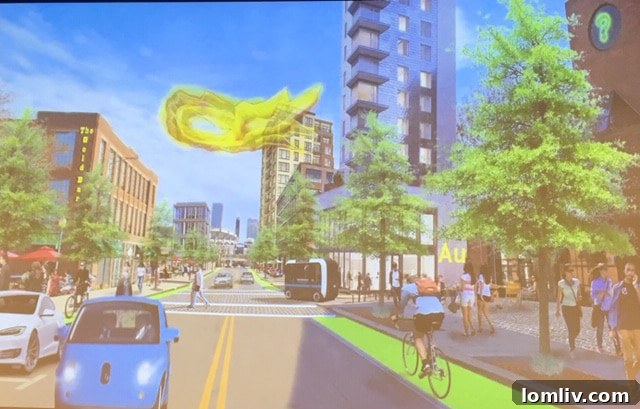
At the heart of the most significant real estate transformations will be AV technologies capable of seamlessly navigating high-density urban environments with heavy pedestrian traffic. While the initial novelty of driverless cars may lead to curious interactions, the true game-changer will be when these vehicles operate smoothly and safely alongside pedestrians. This requires sophisticated AI, advanced sensor technology, and robust safety protocols. Companies are intensively focused on perfecting this navigation for dense, mixed-use areas where origins and destinations are in close proximity, minimizing travel times and maximizing efficiency.
One notable pioneer in this space is Navya, a French company renowned for building one of the first driverless vehicles. Navya has already demonstrated its capabilities with driverless shuttle minibuses operating in Las Vegas and recently deployed a public bus fleet in Oslo, Norway. These small-scale deployments offer a glimpse into the future of urban mobility, where shared, autonomous transport solutions reduce reliance on private vehicles. Currently, most prototype AVs in use across the U.S. are compact, designed to carry between four and eight passengers, emphasizing shared mobility and efficient urban transit.
Commuters and the Evolving Urban Landscape
The complete replacement of long-distance commuter vehicles by AVs remains a distant prospect, with Kelley Coyner, CEO and founder of Mobility e3, projecting an 80 percent adoption rate closer to 2050 due to the slow turnover rate of privately owned vehicles. However, the impact on urban commuting and residential choices is already much closer at hand, particularly in high-density, mixed-use neighborhoods, often referred to as WalkUPs. These vibrant urban centers are increasingly attractive to diverse demographics, including empty nesters, young singles, and Millennial families, who prioritize an urban lifestyle with easy access to amenities and robust public transportation.
In these burgeoning WalkUPs, we are already observing a significant trend of lower personal vehicle ownership. This is especially true in areas well-integrated into comprehensive multi-modal transportation systems, offering alternatives like public transit, ride-sharing, and increasingly, micro-mobility options. Coyner anticipates a rapid market deployment of AVs in these areas, potentially reaching 75 percent as early as 2025. This accelerated adoption will be driven by the convenience, cost-effectiveness, and environmental benefits that AVs offer in dense urban settings, further reducing the need for private car ownership and reshaping residential preferences.
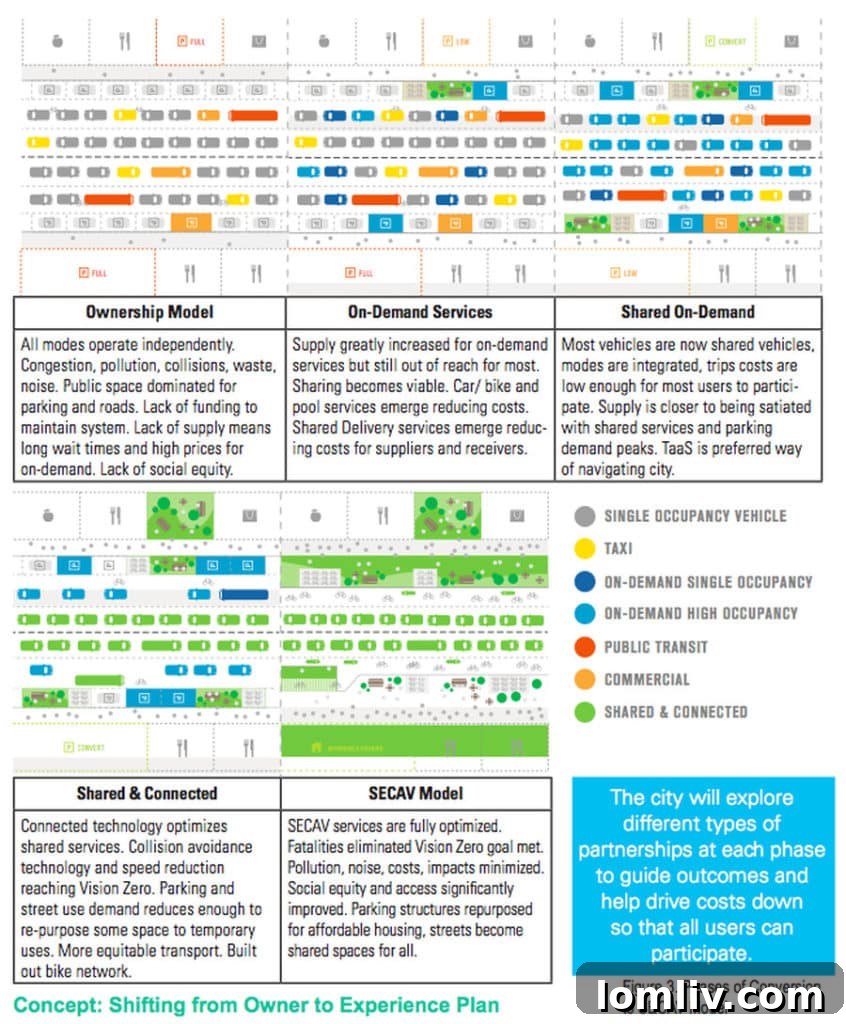
The most profound opportunity for real estate development emerges as parking demand undergoes a dramatic reduction. Cities are beginning to revise their outdated parking requirements, recognizing the impending shift. The cost of constructing structured parking is substantial, ranging from $25,000 to $45,000 per parking space. The potential savings for developers by eliminating or significantly reducing these requirements are enormous, freeing up capital for other development priorities. Furthermore, lower parking mandates will maximize the development potential of sites, allowing for more efficient use of valuable urban land. Perhaps most excitingly, vast surface parking lots—often unsightly and inefficient uses of prime real estate—will become ripe for redevelopment, transforming into dynamic new urban spaces.
Consider the significant portion of downtown Dallas real estate currently occupied by surface parking lots. A 2018 study on parking in five U.S. cities revealed a surprising lack of local parking lot inventories and a widespread issue of “over-parking.” The ongoing redevelopment of a downtown Dallas parking lot into the beautiful Pacific Plaza park serves as a compelling prototype for how our urban landscapes could dramatically evolve with reduced parking needs. Moreover, the ten acres of mostly surface lots at Ross Ave and Field St in Downtown Dallas, acquired by Headington Companies years ago, represent one of the first private redevelopment ventures poised to capitalize on this massive real estate transition that Dallas, and many other cities, will soon witness. These spaces could become anything from residential towers and commercial hubs to much-needed green infrastructure, fostering more livable and sustainable communities.
Looking ahead, a 2017 study projected a remarkable 31 percent drop in citywide private car ownership in Dallas within just 15 years. Even for individuals who drive their privately owned cars into WalkUPs, transportation within the district itself is envisioned to become far simpler through diverse transit modes. This vision is already gaining traction with the widespread adoption of bike-share and scooter-share operations, even in expansive regions like North Texas, demonstrating a clear demand for flexible, on-demand micro-mobility solutions. The next step involves fine-tuning the operational practices and policy frameworks to fully integrate these evolving transit options.
Kelley Coyner envisions a future where “full-access mobility passes” become commonplace, offering a comprehensive suite of transportation services—from mass transit and ride-sharing to car-sharing—all bundled into a convenient monthly subscription. This “Mobility-as-a-Service” (MaaS) model empowers individuals to embrace a transit-rich lifestyle, providing all transportation options literally at their fingertips, without the burdens and costs associated with private car ownership. This shift promises not only individual convenience but also significant urban benefits, including reduced traffic congestion, lower emissions, and more equitable access to transportation.
However, realizing this transformative vision hinges critically on proactive governance. State and local development policies must adapt swiftly to plan for AV integration, allow their operation, and modify existing urban infrastructure to accommodate a robust autonomous vehicle system. This requires a forward-thinking approach to zoning laws, infrastructure investment, data sharing protocols, and safety regulations. It’s no surprise that pioneering regions like California have already begun accepting applications for driverless car permits, demonstrating a commitment to leading the charge in this new era of urban mobility. Their experiences will provide valuable lessons for other cities grappling with the complexities of AV integration, paving the way for smarter, more efficient, and ultimately more livable urban environments.