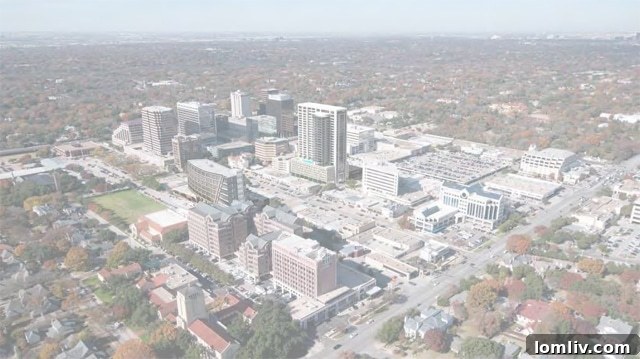
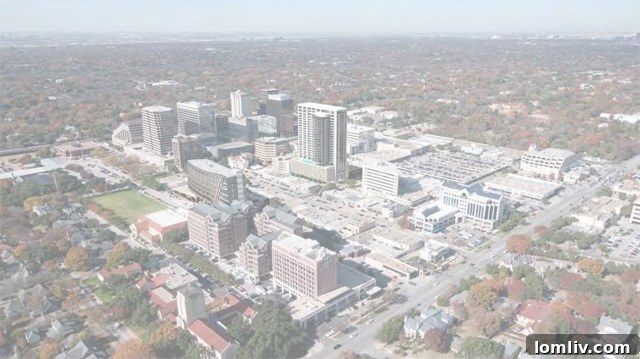
Unpacking Preston Center: Demographics, Development, and the Path Forward
Earlier this year, discussions around a ballot distributed within the affluent “Pink Wall” territory revealed a surprising truth: voter apathy was remarkably high. This lack of engagement regrettably echoed throughout a recent installment of the Preston Center Task Force (PCTF) meeting. A significant portion of the appointed Task Force members were absent, and public attendance was minimal, with only five residents from a study area encompassing 6,736 people making an appearance. This stark turnout underscores a prevalent challenge in urban planning: while public outcry regarding developments, such as Transwestern’s proposed apartment complex, can be fierce post-factum, proactive engagement in the planning stages often languishes. This pattern suggests a broader disinterest in the intricate details of urban development until decisions directly impact residents’ lives.
Notably, representatives from Task Force zones 2 and 3, areas directly bordering the contentious Transwestern complex and traditionally vocal about its implications, were among the missing. Even a key figure known for her community influence was otherwise engaged, despite receiving commendation for successfully fundraising for the now fully funded plan. As an observer, I approach these urban development exercises with a blend of hopeful pessimism. While I harbor skepticism about the city’s commitment to implementing radical recommendations, I remain optimistic that these efforts might still yield positive outcomes. Such is the dedication that I even bypassed an episode of Big Bang Theory to be there!
The initial data presented, though incomplete and thus somewhat raw, offered more insights than surprises. This preliminary crunch provides a foundational understanding of Preston Center, revealing its unique characteristics and underlying challenges that shape its future development.
Demographic Realities: The Unsurprising Profile of Preston Center
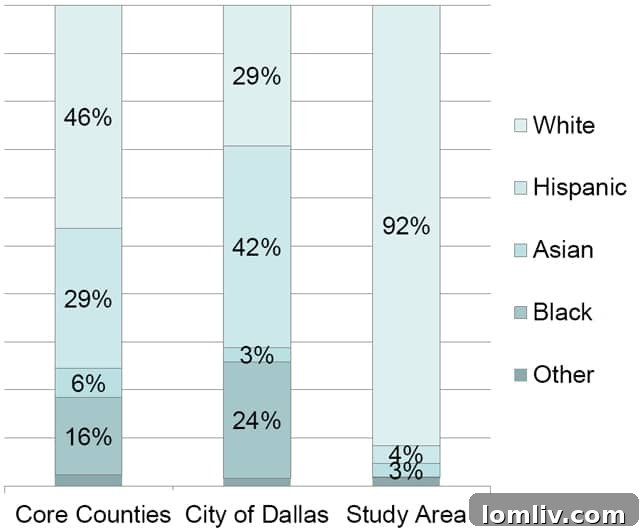
While some data points were genuinely illuminating, others merely confirmed long-held assumptions about Preston Center. For instance, the racial demographic of the Preston Center Task Force area is overwhelmingly homogenous. Out of 6,736 residents, an astonishing 6,197 identify as white. This leaves a mere 539 individuals from other racial backgrounds. One can’t help but ponder how many of these non-white residents are live-in staff, a common scenario in affluent neighborhoods. The visual representation of this data further emphasizes the disparity, with black residents barely registering as a discernible segment, instead depicted as a thinner line. This striking lack of diversity is unlikely to surprise anyone familiar with the area, yet it prompts a moment of reflection and perhaps a degree of collective embarrassment regarding such profound homogeneity.
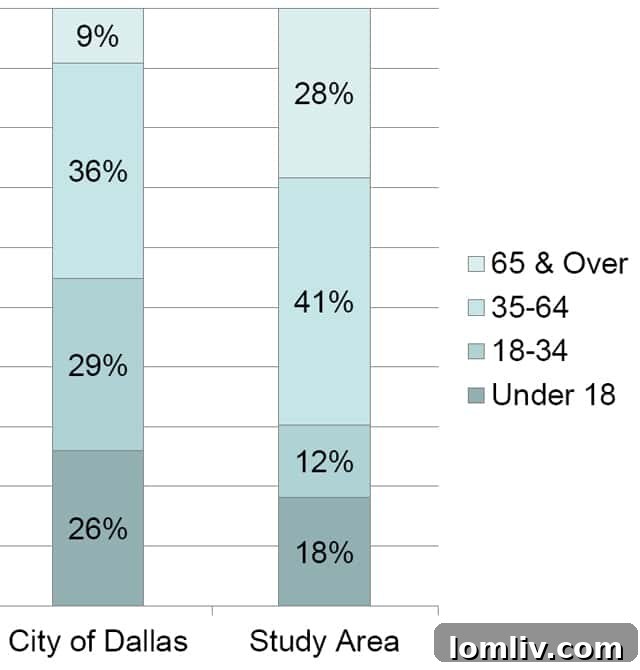
Equally unsurprising is the age distribution within the Preston Center area. As insights into high-rise demographics consistently reveal, age significantly influences opinions and adaptability to change. The Preston Center area boasts a population nearly three times older than the general average for the city of Dallas, a figure that is still broadly in line with national Census age breakdowns for similar affluent communities. However, the demographic segmentation indicates fewer children under 18, characterized by a smaller 18-34 age bracket and a larger 35-64 group. A substantial factor contributing to this age segmentation is undoubtedly the prohibitive cost of living in the area, which naturally limits younger families and individuals. Again, this finding confirms rather than challenges existing perceptions.
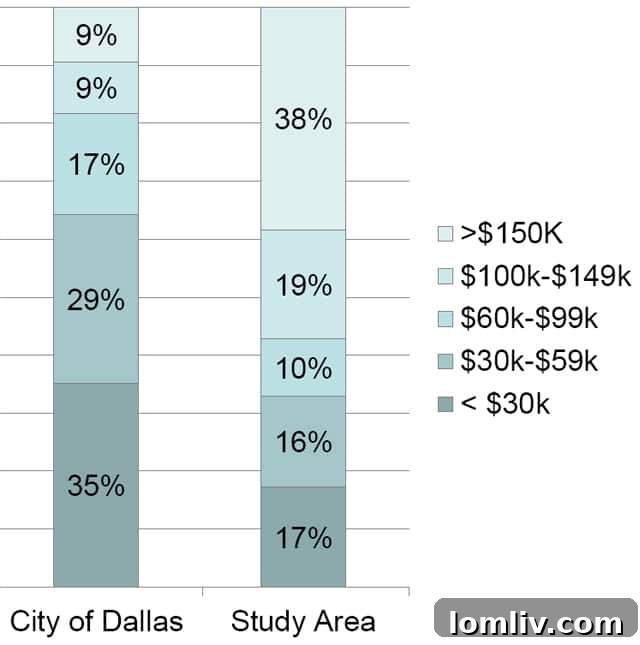
Rounding out the expected demographic findings is the undeniable affluence of the Preston Center area. Given the substantial home prices and property sizes prevalent here, a robust income is not merely desirable but essential for residency. While the broader city of Dallas reports approximately 18 percent of its residents earning over $100,000 annually, a remarkable 57 percent of Preston Center residents fall into this six-figure income bracket. Ultimately, the consistent data paints a clear picture: Preston Center is a predominantly Liquid Paper white, heavily wealthy, and mature demographic. These characteristics are foundational to understanding the area’s current state and its future development potential.
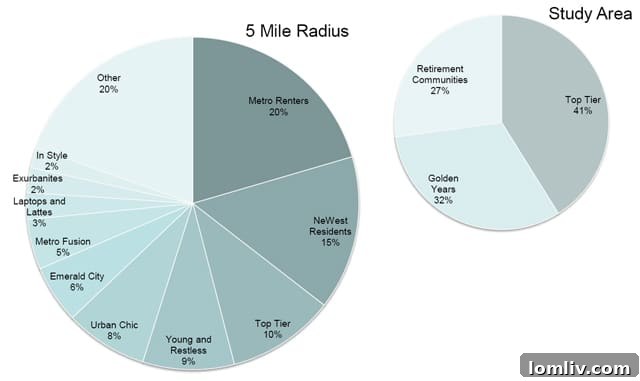
Further reinforcing these demographic observations, data from Esri, a California-based company specializing in geographic information systems, revealed an extraordinary lack of resident diversity when mapped against the Preston Center area. The presenter noted the rarity of encountering a community defined by only three resident types, especially when Esri itself identifies 67 distinct categories globally. While a five-mile radius from Preston Center displays a rich tapestry of resident profiles, the core Preston Center area emerges as remarkably uniform – a quintessential representation of an established, wealthy, and predominantly white demographic. This striking homogeneity underscores the absence of diversity across various dimensions within the community.
Reconciling Desires with Demographic Realities
The conclusions drawn from these “unsurprising” demographic insights highlight a significant disconnect within Preston Center. Many residents have voiced a desire for enhanced walkability and a youthful vibrancy, often citing areas like Bishop Arts as a model. However, the prevailing demographics fundamentally contradict the feasibility of cultivating such an environment organically. Concepts like “hip,” “trendy,” and “cool” are inherently antithetical to the characteristics of “retirement communities,” “golden years,” and a “top-tier” established demographic.
Organic trendiness, exemplified by districts like Bishop Arts, typically blossoms when young, often experimental demographics find economically accessible “laboratories” to shape their communities. The data unequivocally indicates that Preston Center lacks both the demographic youth and the economic conditions necessary to spontaneously ignite this form of cultural and lifestyle evolution. Conversely, “planned trendiness,” which perhaps isn’t genuine trendiness at all, such as seen in West Village, is a deliberate construct. It is designed to attract higher-income residents who can sustain established, higher-ticket regional or national businesses capable of affording premium rents. Preston Center East already exhibits more West Village-like characteristics. Preston Center West, however, grapples with an element of dilapidation but without the influx of younger residents or the affordable rents required to foster genuine organic trendiness.
Ultimately, a fundamental divergence exists between the aspirations expressed by residents and the economic capacity to attract the catalysts needed to realize those desires. Adding to this complexity is the retail landscape; situated between prominent high-end shopping destinations like NorthPark Center and Highland Park Village, the area is already saturated with the kind of luxury retail that naturally appeals to the majority of Preston Center’s affluent residents. The market simply doesn’t necessitate another boutique for brands like Chanel or Hermès just a couple of miles away.
These reflections provide crucial context, which I will tie together later. But first, let’s delve into some truly interesting data points.
Key Insights from the Data: Infrastructure, Traffic, and Parking
Urban Infrastructure: The Walkability Challenge
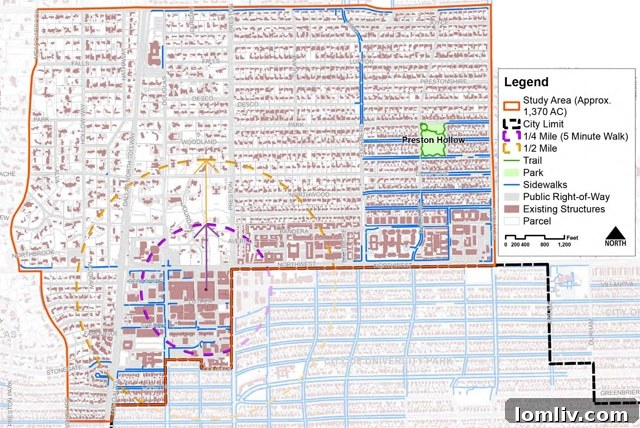
One of the most frequently cited desires from zone meetings was an improvement in walkability. The concise chart above graphically illustrates the inherent difficulties in achieving this goal. The thin blue lines denote the existing sidewalk infrastructure, which is remarkably sparse. The historical reasons for the virtual absence of sidewalks in Preston Hollow (in stark contrast to nearby University Park) remain a subject of speculation. Was it a deliberate measure to deter “undesirables” or to cultivate a more “rural” aesthetic? Alternatively, were curbing, sewers, and sidewalks initially omitted as cost-saving measures during development? Regardless of the historical rationale, the current infrastructure fundamentally conflicts with residents’ contemporary aspirations for a pedestrian-friendly environment, necessitating significant investment and planning to rectify.
Green Spaces and Urban Canopy
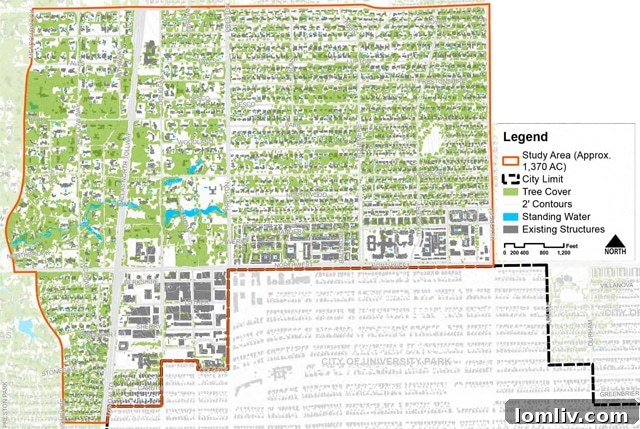
Another detailed, albeit microscopically presented, chart illuminated the area’s tree coverage and waterways. While altering waterways is largely beyond human intervention, the existing tree coverage appears relatively robust. My interpretation is that the white areas predominantly represent roads, extensive surface parking lots, and perhaps the sites of numerous McMansions where original lots were cleared to accommodate sprawling imitation Spanish haciendas with Greco-Roman flourishes. Grey areas denote existing structures. While there is certainly room for improvement in enhancing the urban canopy, overall, the area’s green infrastructure is not in a dire state.
Navigating Traffic: A System in Flux
The traffic analysis section unveiled some of the most compelling, albeit challenging-to-read, data. Readers can access the raw data here and here. Here are some critical highlights:
Signal Malfunctions and Upcoming Improvements
A striking discovery by the consultants was that every traffic signal on Northwest Highway within the study area is deemed “Not Functioning Properly.” Compounding this issue, all traffic signals within Preston Center along Douglas Avenue exhibit similar malfunctions. While the Preston Road signals between the Preston Centers, controlled by University Park, were not directly assessed, it is reasonable to infer they might suffer from similar issues. “Not Functioning Properly” signifies that while signals still cycle through red, yellow, and green, their synchronization is severely lacking, akin to “cats being sprayed by a hose.” The silver lining is that the ongoing construction on Northwest Highway, currently a source of frustration, is slated to include the replacement of these critical traffic signals, promising much-needed relief and improved flow.
Analyzing Traffic Patterns
The more complex analysis involved auto traffic counts at area intersections. Consultants meticulously counted straight and turning traffic on all major and minor roadways (excluding every neighborhood street). Turning data is invaluable, primarily revealing traffic origins and destinations during peak AM/PM rush hours. It also offers insights into the extent of cut-through traffic. Understanding this data allows urban planners to deduce where residents live and work, and with a complete dataset, comprehensive trip patterns can be established. This granular understanding can differentiate between traffic destined for Preston Center and traversal traffic merely passing through. As previously advocated in my own traffic plan, it is paramount to avoid “traffic fixes” that inadvertently increase traversals – traffic solely for the sake of traffic, with no tangible local benefit.
- Preston Road and Northwest Highway: During the evening rush, nearly double the number of cars turn north onto Preston Road. This suggests that in the morning, alternative routes are more efficient for northern commuters traveling south than Preston Road. It also indicates Preston Road is predominantly used by commuters traveling from northern residences to southern workplaces rather than the reverse.
- East-West Traffic on Northwest Highway: Traffic flow on Northwest Highway is remarkably balanced, with morning eastbound traffic largely mirrored by evening westbound traffic. The majority of this constitutes traversal traffic, an unsurprising finding given its role as a major thoroughfare connecting two highways.
- Douglas Avenue: Most rush-hour traffic entering and exiting Preston Center (presumably linked to office complexes) does so via Douglas Avenue onto Northwest Highway. Traffic originating from Preston Road, conversely, typically enters through Sherry Lane.
- Lomo Alto Drive (East Tollway Frontage Road): The data supports the argument that Preston Center is disadvantaged by the absence of a midway Tollway cross-point between Northwest Highway and Lovers Lane. Consultants observed significant southbound traffic (likely from the Lovers exit) entering Preston Center south of Northwest Highway. Establishing a cross-point at Colgate linking Preston Center to Eastern Avenue could effectively divert some Tollway/Northwest Highway congestion southward to the Lovers Tollway entrance, easing current bottlenecks.
- The Tollway: The Tollway exhibits a balanced flow, with less than a 10-percent variance between cars traveling to and from the north. This implies that the same individuals largely use the Tollway for their morning and evening commutes. Analyzing traffic from the south is more complex due to multiple feeders into Lomo Alto, making it challenging to correlate with the single-feeder Northwest Highway southbound turning patterns.
- Side Streets: Park Lane, with its Tollway overpass, is busier than other side streets, yet it does not experience significant rush hour congestion, peaking at fewer than two cars per minute on either side of Preston Road. Northwood Drive averages a car every two minutes, while the frequently debated Averill Way sees a car approximately every 40 seconds at its busiest. These figures effectively debunk the pervasive myth of widespread cut-through traffic saturating residential side streets.
Preston Center Parking: Perception vs. Reality
The reality of parking in Preston Center is often misconstrued. While it can feel frustrating if one insists on parking directly in front of their destination, particularly if avoiding the central parking garage in Preston Center West is a priority, the situation is far from dire. Despite its perceived crappiness, the central garage almost invariably offers available spaces, even during peak lunch hours. Traffic counters observed over 130 vacant spaces on the upper deck during lunch on a Thursday, indicating that parking is only a minor issue during specific peak times. It’s an interesting dichotomy: the same individuals who vocalize frustration about parking directly outside a CVS often simultaneously lament the area’s poor walkability, highlighting a potential misalignment in expectations and desires.
Summary of Key Findings and a Vision for the Future
To encapsulate the multifaceted analysis of Preston Center:
- The area is predominantly old, wealthy, and white, while paradoxically featuring significant green spaces (with Preston Center itself being an exception).
- Its infrastructure is inherently car-centric, rather than prioritizing pedestrians, cyclists, or public transit.
- The existing traffic control systems are antiquated and malfunctioning, though crucial upgrades are anticipated.
- The socio-economic landscape of the area makes it improbable to organically cultivate the “trendiness” observed in other Dallas neighborhoods. Furthermore, the fractured ownership structure of Preston Center West complicates any efforts towards planned, coordinated trendiness.
- Common perceptions regarding traffic congestion and parking scarcity often do not align with the empirical data.
- The area is unlikely to attract new high-end retail given its current saturation.
When these local findings are viewed through the lens of global urban development trends, a compelling narrative emerges. The most financially unsustainable form of development is the perpetual expansion of urban sprawl into new fields. Long-term economic analyses consistently demonstrate that sprawl is unsustainable; while initial decades may appear prosperous, infrastructure repair and maintenance costs eventually overwhelm municipal budgets. Dallas, like many cities, is currently experiencing the ramifications of this firsthand.
Historically, Dallas was designed for the automobile, with centralized services necessitating longer travel distances. Over time, this evolved into regional centers (e.g., Galleria, Lakewood) that reduced commuting distances for work and leisure. Currently, these regions are further subdividing into more localized neighborhoods – a reversal of pre-automobile urban planning where distinct neighborhoods coalesced to form a city. The future success of Preston Center hinges on the willingness of its residents and landowners to recalibrate their grand aspirations towards fostering a “small town” ambiance. This vision aims to minimize travel and promote car-less conveniences, primarily through nurturing neighborhood-focused shops, services, and entertainment – replicating the functional self-sufficiency of a traditional town.
For new commercial high-rises, a holistic approach is critical: ground-floor retail and restaurants, mid-level office spaces, and upper-level residential units that are affordable to a substantial proportion of the workforce generated by the office spaces. Existing high-rises should explore opportunities to repurpose their ground-floor areas into vibrant retail and dining establishments. Furthermore, recognizing the prevalence of service-based businesses with lower-paying jobs, proactive measures must be taken to provide nearby housing for these essential workers. They are indispensable to the community yet often face the greatest financial barriers to long commutes, especially with fluctuating fuel costs. Could live/work arrangements, offering business tenants breaks on residential rent, be a viable solution?
By consciously cultivating a “small town” character, Preston Center has the potential to gently shift away from its historically old, white, and affluent demographic. This strategic evolution could attract the socio-economic diversity that is paramount to successfully rejuvenating the area, ultimately benefiting all its stakeholders. This vision resonates with a statistic I recall from decades ago: “80 percent of car accidents occur within 10 miles of home.” This wasn’t due to increased danger near home but because 80 percent of our lives are lived within that 10-mile radius. To enhance Preston Center’s economic vitality and elevate its residents’ quality of life, the overarching goal should be to attract development that significantly increases the proportion of residents’ time spent within walking, rather than driving, distance of their homes.
Connect with Us!
Do you have a compelling HOA story to share, or perhaps a fascinating snippet of high-rise history? Realtors, interested in featuring a listing that requires renovation, or one that has achieved outstanding success? Or perhaps you’d like to explore hosting a community discussion? We’re eager to hear from you! Email your stories, ideas, and even marriage proposals (they’re legal, after all!) to [email protected].