Should You Make Your Last Mortgage Payment Before Closing? A Comprehensive Guide for Home Sellers
By Lydia Blair
Special Contributor & Escrow Expert
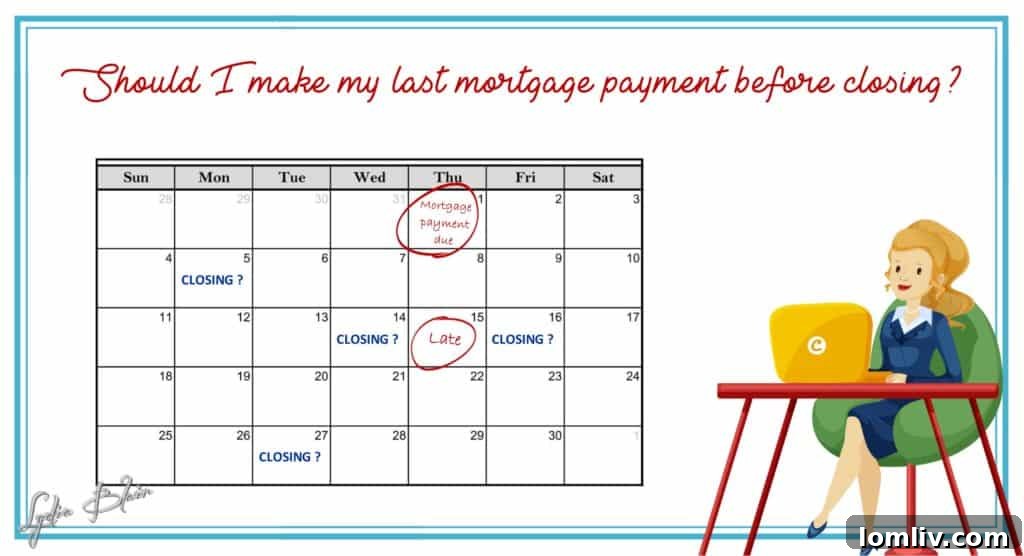
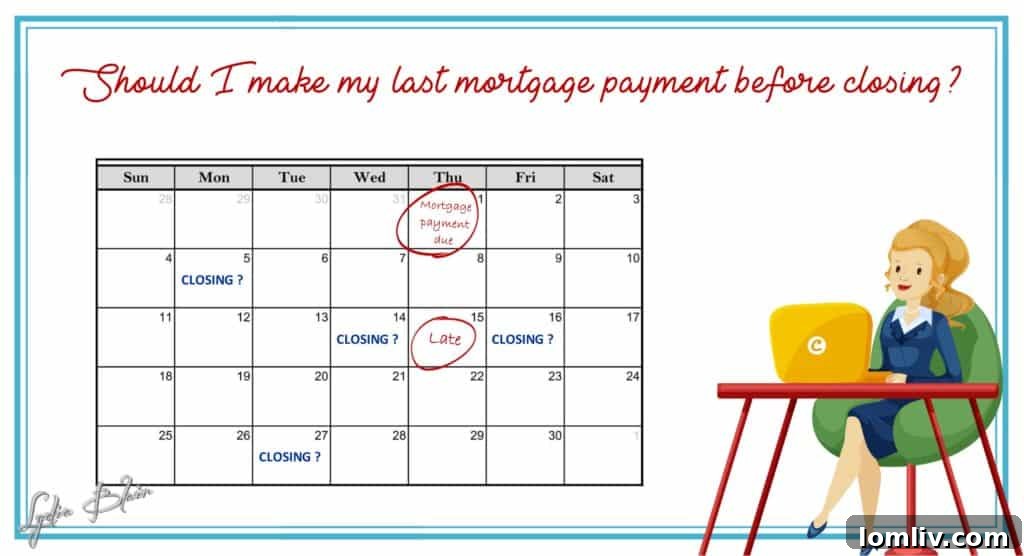
As you approach the exciting, yet often stressful, final stages of selling your home, a critical question frequently arises: “Should I make my next mortgage payment if my house is scheduled to close soon?” This isn’t just a hypothetical query; it’s a common dilemma for countless sellers. Imagine this scenario: you’re under contract, your closing date is set for the 14th of the month, and your regular mortgage payment is due on the 1st. What do you do? This guide aims to demystify the process, offering clear, actionable insights to help you make an informed decision and ensure a smooth transaction when selling your property.
Understanding the Mortgage Payoff Process at Closing
The key to answering the “to pay or not to pay” question lies in understanding how your existing mortgage is handled during the closing process. When you sell your home, your outstanding mortgage balance must be paid off in full from the proceeds of the sale. This responsibility primarily falls to the title company or closing attorney, who acts as a neutral third party to facilitate the transaction.
How the Title Company Manages Your Mortgage Payoff
- Ordering the Payoff Statement: Before closing, the title company will contact your current mortgage lender to request an official “payoff statement.” This crucial document details the exact amount required to fully satisfy your loan as of a specific date. It’s more than just your principal balance; it’s a precise calculation.
- Calculating the Payoff Amount: The payoff statement will include the remaining principal, any accrued interest up to the specified payoff date, any late fees (if applicable), and sometimes other minor charges or credits. Crucially, it often accounts for “per diem” interest – the daily interest accrual – allowing the title company to calculate the precise amount owed based on the actual closing and funding date, ensuring accuracy down to the last day you own the property.
- Deducting from Proceeds: At the closing table, this calculated payoff amount is deducted directly from the funds you receive from the sale of your home. This means you don’t typically write a separate check for your mortgage; it’s handled automatically through the closing statement.
- Wiring Funds to Your Lender: After all documents are signed, and the buyer’s lender has “funded” the loan (meaning the money has been sent to the title company), the title company will then promptly wire the payoff amount to your mortgage lender. This usually happens on the same day as funding or the next business day, depending on bank processing times and the specific wire transfer deadlines set by financial institutions.
The Timing Conundrum: Mortgage Due Dates vs. Closing Dates
Most mortgage payments are due on the first day of the month, with a grace period typically extending until the 15th. Payments received after the 15th are generally considered late and can incur penalties. This standard grace period is what makes the timing around a mid-month closing particularly complex and often leads to seller uncertainty.
Common Scenarios and What They Mean for You
Closing Early in the Month (e.g., 1st-7th)
If your closing is scheduled very early in the month, say on the 3rd, and you haven’t made your payment for that month, it’s generally safe not to make it. The title company’s payoff statement will include all accrued interest up to the date your loan is paid off. Since the payment would still be well within the grace period (and likely before any late fees are applied), not paying is often the default and correct action. You’re effectively only paying for the few days you’ve owned the home in that month.
Closing Mid-Month (e.g., 8th-20th) – The Primary Dilemma
This is the most common and perplexing scenario, exemplified by our reader’s question with a closing date of the 14th. This is where the decision to pay or not to pay becomes less clear-cut, involving a careful balance of potential risk versus the convenience of not making an extra payment.
“My advice would be if you have not made your payment for the month and you are closing on the 14th then your payoff with title already includes the interest due for November. So it is ok to not make the payment even up till the end of the month as long as the loan funds in November and the payoff is wired to the lender,” advises Michael Fooshee, Senior Loan Officer at Verity Mortgage.
This expert insight highlights that the title company’s payoff calculation *should* account for all interest due for the month you close. However, several factors can complicate this seemingly straightforward process:
- Unexpected Closing Delays: What if your closing is unexpectedly delayed from the 14th to the 16th? Now your payment, if not made, would technically be late according to your lender’s schedule, potentially triggering a late fee. Delays can occur for various reasons, from last-minute document issues to buyer financing hiccups.
- Funding Delays: Even if you sign your documents on time, funding approval from the buyer’s lender can take several hours, or even spill into the next business day. This directly impacts when the title company receives the funds and, consequently, when they can send out your mortgage payoff wire.
- Bank Wire Deadlines: Banks have specific wire transfer deadlines, often in the early afternoon. If funding occurs too late in the day, the payoff wire might not go out until the following business day, potentially pushing the actual payoff date past your grace period.
Closing Late in the Month (e.g., 21st-31st)
If your closing is scheduled late in the month, it is almost always advisable to make your regular mortgage payment. By this point, you’re well past the typical grace period, and any delay in closing or funding would almost certainly result in late fees and potentially impact your credit score. Making the payment proactively removes this risk. The title company will simply include the made payment in their final reconciliation, and any overpayment will be promptly refunded to you by your mortgage lender after the loan is satisfied.
Risks of Not Making Your Last Mortgage Payment
While the goal for many sellers is to avoid an unnecessary payment, skipping it carries potential risks that homeowners should be fully aware of before making a final decision. Understanding these risks can help you weigh your options effectively:
- Accrual of Late Fees: This is the most immediate and common consequence. If the payoff doesn’t reach your lender before the grace period expires (which is typically the 15th of the month), you will be charged a late fee. This fee will then either be added to the final payoff amount, or you may receive a separate bill directly from your lender after closing. Even if reimbursed later, it can create a momentary hassle.
- Impact on Credit Score: As Michael Fooshee notes, “But your credit should not be affected unless the full payoff or payment wasn’t received by the lender by the last day of the month.” While missing a single payment can typically ding your credit score, if the loan is fully paid off by the very end of the month, the negative impact might be mitigated or even avoided if the lender processes it as paid in full. However, any significant delay, an insufficient payoff, or a miscommunication could lead to a reported late payment, negatively affecting your credit. This can be particularly problematic if you are simultaneously applying for a new mortgage for your next home.
- Potential for Closing Delays: In rare but possible scenarios, if the payoff amount provided by the title company becomes insufficient due to an unmade payment and accrued late fees, it could cause a last-minute scramble to get additional funds from the seller. This unexpected financial adjustment could potentially delay the closing process, adding stress and complexity to what should be a smooth final step.
- Increased Stress and Uncertainty: For many sellers, the uncertainty of not knowing if a late fee or a credit hit will occur can be a significant source of stress during an already intense period. Selling a home involves numerous moving parts, and eliminating this particular worry can be invaluable for peace of mind.
Benefits of Making Your Last Mortgage Payment (Even If Reimbursed)
Given the potential risks associated with skipping a payment, many sellers opt for the path of least resistance: making the payment. There are several compelling reasons why this can be a wise and reassuring choice:
- Ultimate Peace of Mind: This is often the primary and most significant benefit. By making your regular payment, you eliminate the worry of late fees, potential credit impacts, or unexpected closing adjustments. You know your loan is current, and that’s one less thing to stress about during the busy moving process.
- Guaranteed Smooth Closing Process: By ensuring your loan is current, you remove one variable from the complex closing equation. This helps facilitate a smoother process for all parties involved – you, the buyer, the title company, and the lenders – as there are no surprises regarding your mortgage status.
- Automatic and Reliable Reimbursement: As Fooshee confirms, “Any over payment made will be reimbursed to you.” If you make a payment and your loan is paid off before that payment’s period (e.g., you pay for the full month but close on the 14th), your lender will automatically refund the excess amount. This refund typically happens within a few weeks of your loan being fully satisfied, often by check or direct deposit. It’s a reliable process, so you won’t lose money in the long run.
- Escrow Account Refunds: Beyond the mortgage payment itself, many homeowners have an escrow account with their lender, which holds funds for property taxes and homeowner’s insurance. “Also, if you have a positive escrow balance, then you will receive a refund typically 2 to 3 weeks after the loan is paid off,” adds Fooshee. This is a separate, additional refund that comes after your lender confirms the mortgage is paid off and reconciles your escrow account. It’s an important financial detail not to overlook.
The Practicalities: What to Expect and How to Prepare
Communication is Key
Do not rely solely on assumptions. Proactive communication with your closing team is paramount to ensure clarity and avoid misunderstandings:
- Talk to Your Title Officer: Discuss your specific closing date and their standard operating procedure for mortgage payoffs. Ask if their payoff request date includes the current month’s interest and when they typically send out the final payoff wire. This conversation can provide invaluable context for your decision.
- Consult Your Mortgage Lender: You can also contact your current mortgage lender directly to understand their policies regarding early payoffs, prorated interest, and potential refunds if an overpayment is made. They can clarify their grace period and late fee policies.
Automated Payments
If you have automated mortgage payments set up, remember to manage them carefully. Once your loan has been paid off and the closing is complete, ensure you cancel any recurring automatic payments. While any overpayment will eventually be reimbursed, preventing an unnecessary payment can simplify your finances and avoid a temporary dip in your bank account balance.
The Bottom Line: You Pay for What You Own
Ultimately, the fundamental principle is that you will only pay for the days you owned the property. If your loan is paid off on the 14th of the month, you will only be responsible for interest up to the 14th. If you’ve made a payment for the entire month, you will receive a refund for the prorated portion of the payment covering the days you no longer owned the home.
If you are closing mid-month, and you’re comfortable with a small degree of risk and potential for a minor late fee (which would be covered by your closing proceeds and often reimbursed), then you *might* choose not to make the payment, especially if your title company explicitly confirms their payoff includes the current month’s interest. However, if peace of mind is your absolute priority, or if your closing date is late in the month, making the payment is the safer, less stressful, and often recommended option, knowing that any excess will be returned to you.
About the Author: Lydia Blair
Lydia Blair (formerly Lydia Player) brings a wealth of experience and expertise to the complex world of real estate closings. With a successful decade as a Realtor under her belt, she transitioned to the title side of the business in 2015, gaining an even deeper understanding of the intricacies of property transactions. Before her distinguished career in real estate sales, Lydia was actively involved in buying, remodeling, and selling homes – long before “house flipping” became a popular expression. This extensive, hands-on experience means she has navigated the real estate closing process countless times, not just as an industry professional, but also from the crucial perspectives of a buyer, a seller, and a Realtor.
As an Escrow Officer for Carlisle Title, Lydia is widely known for her dedication to solving problems and adeptly cutting through red tape, thereby ensuring a smooth and efficient experience for her clients. The most gratifying part of her job, she often remarks, is the memorable moment she gets to hand people the keys to their new home or the substantial check from their sale, marking the successful completion of a significant life event and a major financial milestone.
Disclaimer: The opinions expressed in this article are solely those of the individual author for informational purposes only and should not be construed as legal, financial, or mortgage advice. Real estate laws and financial regulations can be complex and vary significantly by jurisdiction. For personalized advice tailored to your specific situation, it is strongly recommended to consult with a qualified attorney, a certified public accountant, or a licensed mortgage officer. Neither the author nor the publisher assumes any liability for actions taken based on the information provided herein.