by Cody Neathery
Special Contributor
Texas A&M Pursues Eminent Domain for Dental School Expansion: Balancing Public Good and Private Property
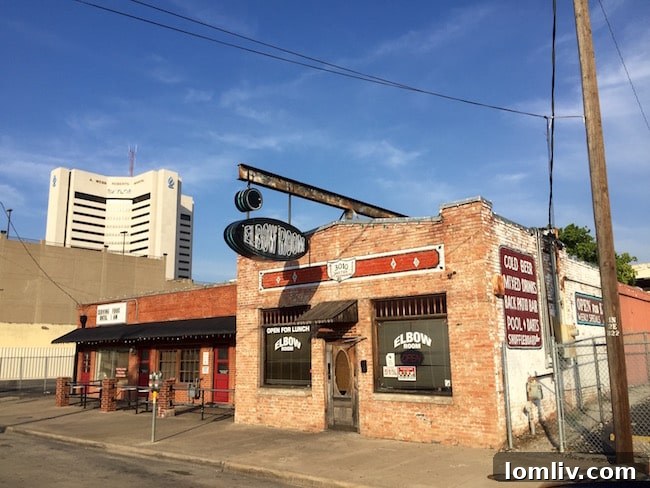
In a significant move that highlights the ongoing tension between public infrastructure development and private property rights, Texas A&M University has announced its potential pursuit of eminent domain to acquire the property currently occupied by The Elbow Room. This decision, described as a “last resort,” stems from the university’s ambitious plans to expand its College of Dentistry in Dallas. The primary justifications cited by Texas A&M are the urgent need to protect Texas taxpayers and to alleviate a critical shortage of dental care providers across the state.
The situation presents a complex scenario where the public interest, championed by a major state university, directly impacts a long-standing local business. This article delves into the university’s detailed statement, examining the motivations behind the expansion, the critical need for increased dental care, the eminent domain process, and the broader implications for both the community and the state’s healthcare landscape.
Addressing Texas’s Critical Dental Care Shortage
Texas A&M University’s statement underscores a pressing issue within the state: a significant and growing shortage of dental health care providers. This scarcity poses a substantial challenge to the well-being of millions of Texans, particularly those in underserved communities and rural areas where access to oral healthcare is often limited. The implications of this shortage extend beyond mere inconvenience, impacting public health outcomes, economic productivity, and the overall quality of life for residents.
Oral health is intrinsically linked to overall systemic health. Untreated dental issues can lead to severe pain, infection, difficulty eating and speaking, and even contribute to chronic diseases such as diabetes and heart conditions. When a state faces a deficit of qualified dentists, these problems are exacerbated, placing a greater burden on emergency rooms and increasing healthcare costs in the long run. Texas, with its rapidly growing and diverse population, requires a robust healthcare infrastructure to meet these evolving needs. The expansion of institutions like the Texas A&M College of Dentistry is therefore presented as a vital step towards closing this critical healthcare gap and ensuring equitable access to essential dental services for all its citizens.
The Vision Behind the Texas A&M College of Dentistry Expansion
The proposed expansion of the Texas A&M College of Dentistry is not a sudden decision but rather the culmination of strategic planning and legislative approval. In 2015, the Texas Legislature recognized the imperative to enhance the state’s dental education capacity and approved plans for the dental school’s growth. As a public institution, Texas A&M is committed to serving the residents of Texas, and this expansion is a direct reflection of that mission.
Currently, the College of Dentistry handles approximately 100,000 patient visits annually. With the proposed new facilities and increased capacity, this number is projected to surge by up to 40 percent, potentially reaching 140,000 patient visits each year. This dramatic increase will allow the university to serve a greater number of Texans, particularly those in the Dallas region and surrounding areas who are in desperate need of affordable and accessible dental care. The expansion is designed to facilitate the training of a significantly larger cohort of dentists, equipped with the latest knowledge and technology. Furthermore, the university is committed to maintaining its standing as the nation’s most diverse dental school, recognizing that a diverse healthcare workforce is better positioned to understand and serve the varied cultural and socioeconomic needs of Texas’s diverse population. By training more dentists from diverse backgrounds, the college aims to deploy oral health professionals into communities throughout the state, ensuring that the “best and brightest” are accessible to everyone.
Eminent Domain: A Controversial Last Resort
The concept of eminent domain, while enshrined in the Fifth Amendment of the U.S. Constitution, which allows the government to take private property for public use with “just compensation,” remains one of the most contentious tools available to public entities. Texas A&M explicitly states that its exploration of eminent domain is a “last resort option,” undertaken reluctantly and only when “duty-bound” to protect taxpayers and fulfill its public mission.
The legal framework surrounding eminent domain requires that the acquired property be for a legitimate “public use” and that the owner receives “just compensation.” While a dental school expansion clearly falls under public use, the definition of just compensation can often be a point of contention. Property owners frequently argue that fair market value does not adequately cover the intangible losses, such as sentimental value, business goodwill, or the costs associated with forced relocation. For a business like The Elbow Room, losing its established location can mean losing its identity, its customer base, and potentially its entire operation. This makes the eminent domain process not just a legal battle over property, but a deeply personal and often emotional struggle for those affected. Texas A&M’s position highlights the difficult ethical tightrope public institutions must walk when balancing societal benefits against individual property rights.
The Negotiation Process: Fair Market Value vs. Owner Demands
Texas A&M’s statement provides crucial insight into the negotiation process that preceded the discussion of eminent domain. The university claims to have initiated negotiations with the property owner in January, with a clear intent to offer “fair market value.” This approach aligns with their commitment to judiciously using taxpayer money. To ensure fairness, both the university and the property owner engaged independent appraisers to assess the property’s value.
Interestingly, the appraiser chosen by the property owner actually provided a valuation lower than that of Texas A&M’s appraiser. In an effort to demonstrate good faith and a desire for an amicable resolution, the university offered to pay the higher of the two appraised values. Despite this gesture, the offer was not accepted. According to A&M, the property owner subsequently “demanded significantly more than the appraisals could justify.” It was at this juncture, faced with what they perceived as an unreasonable demand that would compromise their fiduciary duty to Texans, that the university felt compelled to explore eminent domain. This sequence of events paints a picture of a prolonged negotiation where common ground on valuation could not be reached, ultimately pushing the university towards a legal and often adversarial solution.
Impact on The Elbow Room and Its Tenants
While the university’s statement focuses on the broader public good, it also acknowledges the direct impact on the tenants operating The Elbow Room. “We recognize that this puts them in a difficult position,” the statement reads. In an attempt to mitigate the disruption, Texas A&M has offered to pay “reasonable relocation expenses” should the bar decide to move. Additionally, the university has promised to provide “adequate notice” before any move becomes necessary.
For a business like The Elbow Room, which may have been a local fixture for years, forced relocation presents numerous challenges. Beyond the financial costs of moving—which even with assistance can be substantial—there are intangible losses. An established business often relies on its location for visibility, accessibility, and a loyal customer base. Moving could mean losing regular patrons, having to re-establish brand recognition in a new area, and facing significant downtime during the transition. The emotional toll on business owners and employees can also be profound. While the university’s offers of relocation assistance and notice are intended to ease the burden, they cannot fully compensate for the disruption and uncertainty inherent in such a situation. The future of The Elbow Room, a Dallas dive bar with a notable presence, hangs in the balance as this legal process unfolds.
The Public Good That Can Be Accomplished
As this contentious matter progresses through the legal channels, Texas A&M urges all stakeholders “not to lose sight of the public need and the public good that can be accomplished with the expansion of the dental school.” This expansion, they argue, is not merely about constructing new buildings but about creating a lasting legacy of improved public health and educational opportunities for generations of Texans. The promise is clear: “Thousands of Texans will benefit for generations to come.”
The vision of increasing the number of skilled dental professionals, enhancing access to critical oral health services, and bolstering the state’s healthcare infrastructure represents a significant societal investment. While the immediate consequences for private property owners and businesses are undoubtedly challenging, the university’s stance is that these localized impacts are outweighed by the long-term, widespread benefits to the entire state. This narrative of collective well-being versus individual sacrifice is central to the justification of eminent domain. The expansion is poised to foster a healthier Texas, reduce healthcare disparities, and contribute to a more robust public health system. Ultimately, the resolution of this situation will serve as a powerful example of how public institutions navigate complex issues to fulfill their mandates for the betterment of society.
Thank you.