The $150,000 Piano Predicament: A Deep Dive into Preston Tower’s Controversial HOA Dispute
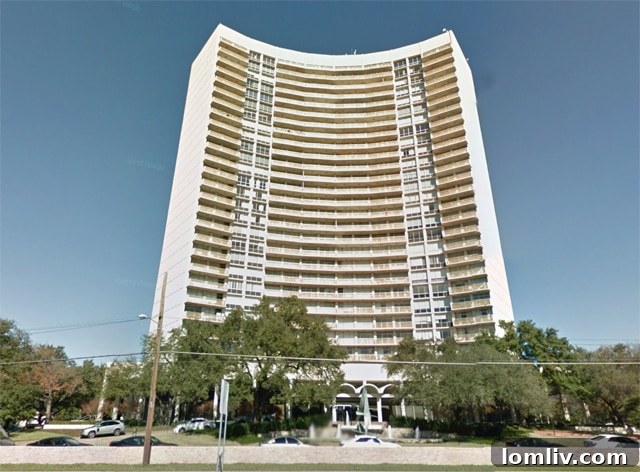
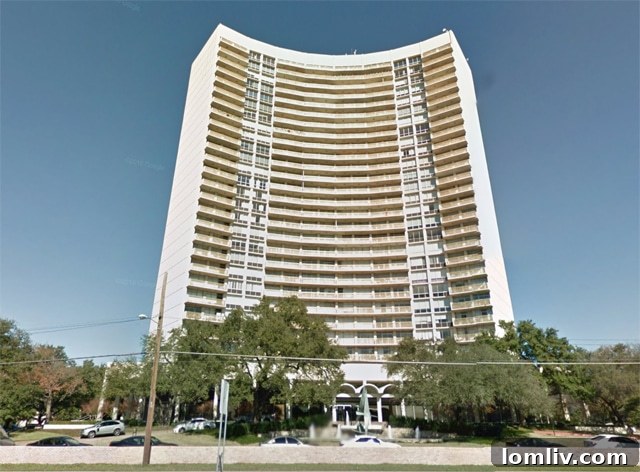
In the world of luxury condominiums, where residents expect a blend of comfort, community, and well-managed services, unexpected conflicts can sometimes arise. One such startling case unfolds at Preston Tower on Northwest Highway, where a long-time resident’s valuable concert grand piano became the center of a contentious legal battle with the building’s Homeowners Association (HOA). This dispute raises crucial questions about owner rights, HOA authority, and the perplexing challenges that can emerge from evolving city codes and internal community dynamics.
The story gained public attention with a lawsuit filed on November 12, 2019. Robert Marcus, who was a previous owner of Preston Tower unit 2900 for three decades and currently resides as a tenant in the building, is seeking a declaratory judgment against the Preston Tower Condominiums Association, Intercity Investments Inc. (the building management company, also known as ICI), WD Piano Movers Inc., and American Eagle Elevator LLC. Marcus’s lawsuit, spanning 10 counts, seeks damages ranging from $200,000 to $1,000,000, bringing into sharp focus the complex relationship between residents and their governing bodies.
This isn’t Preston Tower’s first encounter with legal challenges. The building has seen its share of disputes, highlighting a pattern of complex resident-HOA interactions, as documented in previous incidents such as a resident’s successful lawsuit for damages here and here, and another instance involving mounting water woes where the HOA was sued here. These past events underscore the importance of transparency and clear communication in condominium governance, themes that resonate deeply in Marcus’s current struggle.
The Heart of the Matter: A Steinway Grand Confiscated
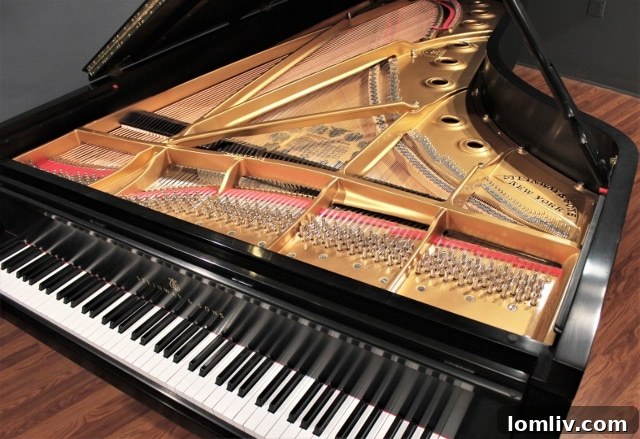
At the core of this dispute lies a magnificent Steinway Model D Concert Grand piano, an instrument renowned for its exceptional quality and significant value, often priced upwards of $155,000. For context, Marcus’s former unit 2900 was listed for $349,000 before its sale, demonstrating the piano’s substantial worth relative to the property itself. Manufactured since 1880, the Model D holds a prestigious place in musical history, with one famously gracing the White House. Beyond its monetary and cultural value, the piano is an imposing physical presence, measuring approximately 9 feet by 5 feet and weighing over 1,000 pounds – a logistical challenge for any relocation.
Robert Marcus, a dedicated piano teacher, had owned unit 2900 for three decades. In 1996, his prized Steinway was delivered to his home. However, when he sold his unit in September 2018 and subsequently moved into a second-floor unit in the same building as a tenant, the saga of the piano began. With a new owner moving into his former unit, Marcus faced the immediate need to relocate the massive instrument. Due to the rapid transition, the piano was temporarily stored on its side in the hallway, an interim measure while Marcus diligently sought a suitable mover. The challenge, however, was far greater than he anticipated, primarily due to unforeseen city code changes implemented in 2005 that prohibited the very method used to bring the piano into the building years prior – transporting it on top of the elevator.
A Labyrinth of Logistics: Marcus’s Struggle to Relocate His Valued Instrument
The urgency to move the piano was compounded by a seven-day warning from building management, demanding its removal by October 18, 2018, or risk confiscation. Despite this looming deadline, Marcus’s efforts to secure a mover were met with insurmountable obstacles. He initially contacted the same movers who had installed the piano in 1996, only to be informed that the “top-of-the-elevator” method was now against building regulations, effectively ruling out Steinway and Metroplex Piano from his list of options. The change in city code from 2005 had created a significant logistical void that neither Marcus nor the HOA seemed adequately prepared to address.
Undeterred, Marcus launched an extensive search, reaching out to specialized moving companies across Texas, from Fort Worth to Austin and Houston, and even as far as New York. His lawsuit alleges that some of these arrangements were actively interfered with by WD Piano Movers, one of the entities he is now suing. The sheer scale of his efforts highlights his commitment to his instrument; he even explored extraordinary options such as hiring a freight helicopter or a crane to facilitate the move. These extreme considerations underscore the unique difficulty of moving such a large and valuable item within the confines of a high-rise building, especially under new regulatory restrictions.
Despite Marcus’s demonstrable diligence and his long-standing residency, the Preston Tower HOA, in its responses, chose to categorize the concert grand piano as “abandoned.” This label, applied to an instrument of immense value owned by a resident still living in the building, strikes a discordant note, suggesting a lack of understanding or empathy from the HOA’s perspective regarding the complexities of the situation and Marcus’s earnest attempts to resolve it.
Communication Breakdown and Shifting Status: The Owner-Tenant Divide
A significant portion of the delays and misunderstandings in this saga can be attributed to an apparent breakdown in communication, particularly once Robert Marcus transitioned from an owner to a tenant. The court filing, a substantial 140 pages long, details numerous interactions between Marcus, building manager Rob Kennehan from ICI, and HOA board president Jeff Shaw.
However, Shaw’s deposition reveals a chilling lack of willingness to engage with Marcus once his status changed. He testified that because Marcus was now a renter, he was not obligated to respond to Marcus’s emails, stating bluntly, “I owed him nothing.” When pressed on whether he could have simply redirected Marcus to the appropriate contact person, Shaw conceded he “could have, yes,” but chose not to, deeming it “not worthwhile.” His rationale, “Look, he’s a grown man, and I can’t help him,” paints a picture of dismissive leadership and a stark contrast to the expected level of support for a long-time resident, regardless of their ownership status.
Adding another layer of complexity and perceived double standards, the lawsuit highlights the presence of a second piano being stored in the 29th-floor hallway during the renovation of that unit. Unlike Marcus’s piano, this second instrument was reportedly not hauled away, nor was its owner apparently fined, despite being cited by the Dallas Fire Department. This discrepancy raises questions about fairness and the consistent application of rules within the Preston Tower community, further fueling Marcus’s claims of discriminatory treatment.
The Controversial Seizure and Its Damaging Aftermath
With the October 18 deadline having passed, and unbeknownst to Marcus, the Preston Tower HOA proceeded to contract WD Piano Movers to remove the piano on October 19. Rather than relocating the instrument to Marcus’s second-floor unit and billing him for the service, the HOA directed the movers to transport it offsite to an undisclosed warehouse. This move was made without Marcus’s knowledge or consent, and for a period, he was reportedly barred from inspecting his valuable piano or assessing its condition.
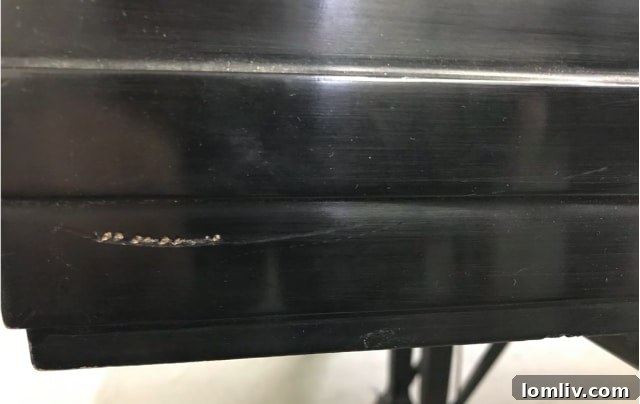
After several months, and following initial court interventions, the piano was eventually moved from WD Piano’s facility to a mutually agreed-upon warehouse, where it currently remains while legal action unfolds. Once Marcus finally gained access to inspect his instrument for move-related damage, he received an estimate for repairs totaling $7,144.50. This amount, coupled with the emotional distress and professional disruption, added a significant burden to his ongoing ordeal.
Compounding the severity of the situation, the Preston Tower HOA asserted that the piano was legally theirs. This claim baffled many within the building, with some homeowners questioning why the HOA incurred the cost of removal when they could have potentially donated Marcus’s piano to charity, ostensibly saving on moving expenses. An email from HOA board member Robin Kyle to other board members and Ron Kennehan on October 11 explicitly posed this question: “Also. I have been asked by some homweowners (sic), why did we pay to move the piano rather than just offering it to a company/charity that would haul it off at no charge to us?”
Crucially, just two days before the piano’s removal, a potential solution had emerged. Board member Angela Jeffrey proposed, “Why not let Marcus store the piano with the resident who wanted it? Marcus could pay the resident and buy whatever time he needs. I don’t mean to sound soft, but there is a willing person who would like to have it.” This suggestion highlights a missed opportunity for a compassionate and amicable resolution that could have prevented the escalating conflict and significant legal costs.
Unraveling the Mystery: How the HOA Succeeded Where Marcus Failed
One of the most perplexing aspects of this dispute is how the HOA managed to move the massive Steinway when Marcus, despite his extensive efforts, could not. According to sources within the building, WD Piano Movers, the company contracted by the HOA, was allegedly granted the option of using the freight elevator to move the piano – an option reportedly not extended to other movers Marcus had contacted. This alleged preferential treatment could explain the HOA’s successful, albeit controversial, removal of the instrument and forms a key component of Marcus’s legal arguments.
The lawsuit details considerable animosity that developed between Marcus and WD Piano Movers. Marcus claims that after he sought out alternative movers, WD Piano Movers allegedly contacted these other companies, attempting to undermine their potential contracts by asserting that the job was exclusively theirs. Adding to the complexity, on the day before the piano was removed, Marcus met with two movers, building management, and elevator technicians. Marcus contends that building management had pre-arranged meetings with these parties, instructing them that the piano had to be moved that very day. Naturally, neither mover committed to such an immediate timeline, as they were there only to evaluate the logistics, and the Preston Tower HOA refused to grant any extension.
Marcus’s lawsuit seeks compensation for “loss of value of the stolen property, loss of use of the stolen property, and loss of profits from the stolen property,” emphasizing the impact on his livelihood as a piano teacher. More than a year has passed since the confiscation, and the valuable Steinway remains locked away in storage, a silent testament to an ongoing and deeply personal legal battle.
Lessons for Condo Owners: Navigating HOA Disputes and Due Diligence
The Preston Tower piano dispute serves as a potent reminder for anyone considering purchasing property within an HOA-run community, whether a single-family home or a multi-family condominium. Prospective buyers should always undertake thorough due diligence, investigating and researching the building’s litigious history, bylaws, and the substance of any past or ongoing lawsuits. While every HOA may face legal challenges, some are frivolous, others hold significant merit, and understanding the context is vital.
This case highlights the potential for power imbalances within HOAs and the critical importance of transparent, fair, and empathetic leadership. The shift in a resident’s status from owner to tenant should not, in principle, erode their fundamental rights or the HOA’s responsibility to act reasonably. The narrative of Robert Marcus and his Steinway piano is a cautionary tale about how miscommunication, perceived double standards, and rigid adherence to rules without flexibility can lead to costly and protracted legal conflicts, ultimately impacting the entire community. In such complex and emotionally charged situations, it is ultimately the courts that must decide the true merits of the case and deliver a judgment.

About the Author: My focus consistently revolves around high-rise living, HOA dynamics, and urban renovation projects. Beyond these specialties, I hold a deep appreciation for modern and historical architecture, often viewed through the lens of the YIMBY movement. My dedication to real estate writing has been recognized by the National Association of Real Estate Editors, earning me three Bronze awards in 2016, 2017, and 2018, along with two Silver awards in 2016 and 2017. If you have a compelling story to share or a message to convey, please reach out via email at [email protected]. You can also look for me on Facebook and Twitter, though my online presence there is intentionally elusive.