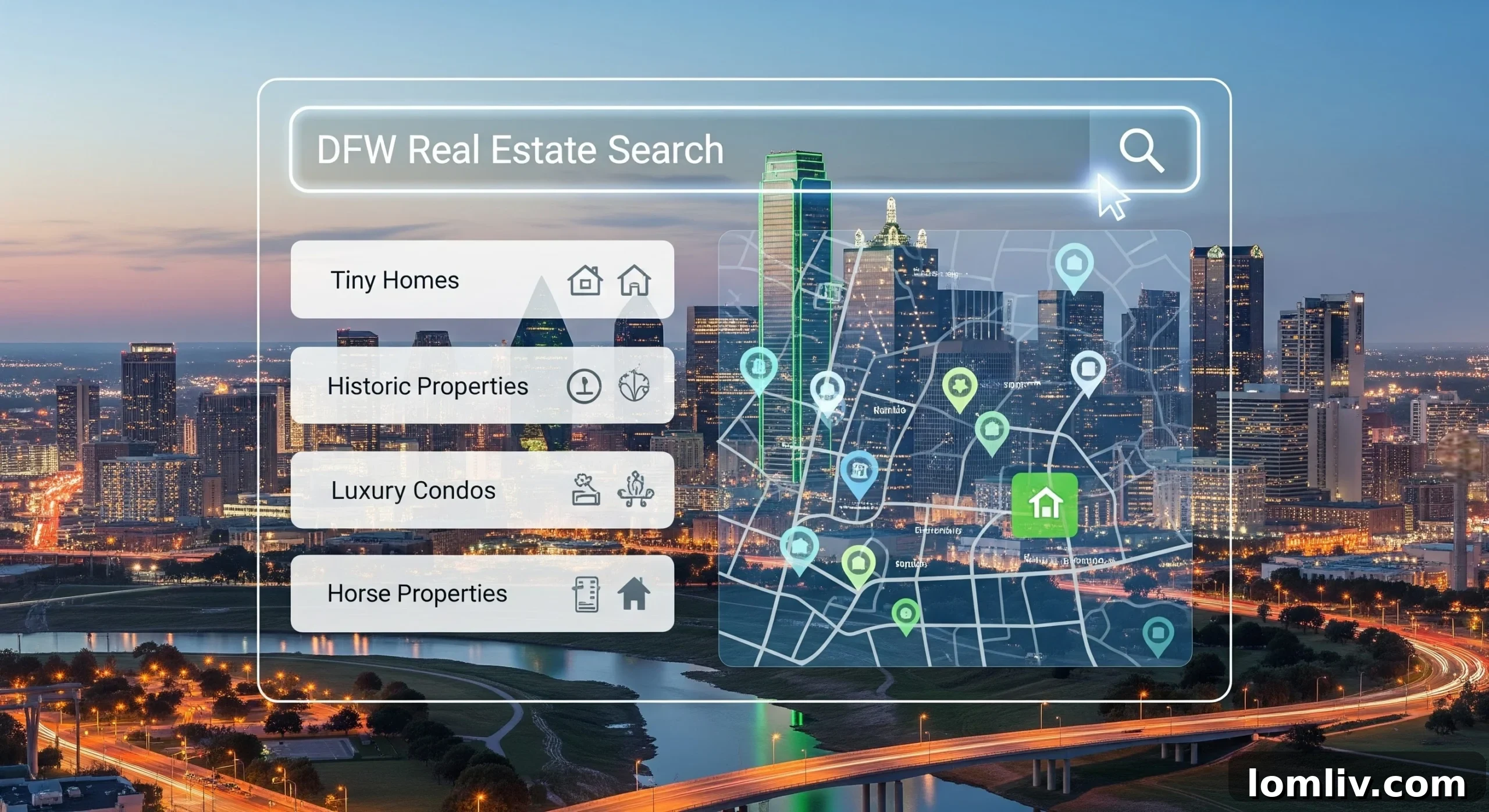
As we navigate the landscape of 2026, the Dallas-Fort Worth housing market stands at a pivotal juncture. The frenetic pace and unpredictable shifts observed in the post-pandemic era have given way to a more balanced and sustainable environment. With rising inventory levels and a tempered price appreciation settling into a modest 2% to 4% range, DFW is embracing a “reset” that signifies maturity and stability. However, this normalization, while welcome, introduces a new layer of complexity for both buyers and real estate professionals. With nearly 30,000 active listings populating the market, the days of relying on generic search terms for buyers to discover their ideal home are unequivocally over.
The sheer volume of available properties, coupled with an increasingly sophisticated consumer base, demands a radical re-evaluation of how properties are marketed and discovered. No longer is it enough for a listing to simply exist; it must be discoverable in a highly nuanced and personalized manner. This evolving dynamic underscores a fundamental shift in buyer behavior and the imperative for real estate professionals to adapt their strategies to remain competitive and relevant in the Dallas-Fort Worth real estate market of 2026 and beyond.
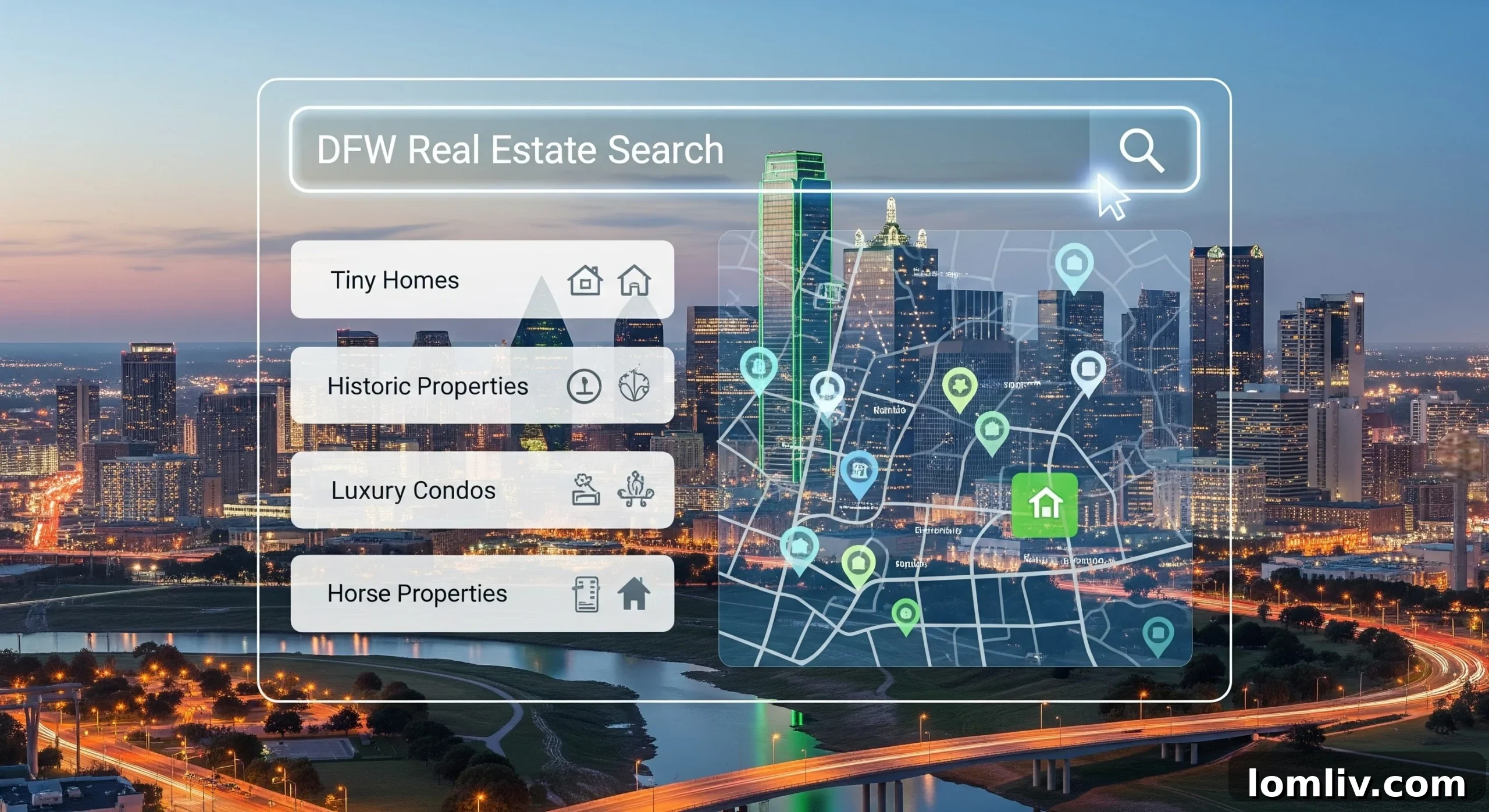
The Evolution of Property Search: A Smarter Search Bar
For decades, the real estate industry operated on a foundational “grid” game. The standard search criteria—zip code, price range, number of bedrooms, and bathrooms—were the pillars of how buyers initiated their property hunt. While these basic filters remain essential, consumer behavior has undergone a profound transformation. Today’s homebuyers are increasingly leveraging the power of conversational AI and advanced natural language processing to articulate highly specific, lifestyle-driven questions. This paradigm shift is driven by two key factors: the technological capability to ask these complex questions and the inherent desire to streamline the home-buying process, minimizing countless hours spent touring properties that don’t truly align with their needs.
Consider the stark difference: instead of a broad query like “Dallas condos,” modern buyers are posing questions that reflect their intricate personal circumstances and aspirations. Examples include:
- “Where can I find a low-maintenance, hurricane-safe community in a beach-accessible area for retirement with amenities like golf and a clubhouse under $600k?”
- “What are the best neighborhoods for young professionals near North Dallas trails, offering pet-friendly apartments, excellent nightlife, and easy access to public transport?”
- “I’m looking for a family home in Frisco with a large backyard, access to top-rated elementary schools, and a dedicated home office space for remote work.”
These sophisticated queries go beyond mere property specifications; they articulate the “why” behind the buy. They encapsulate a buyer’s lifestyle, future plans, safety concerns, and personal preferences, painting a detailed picture of their ideal living situation. This is the essence of what is known as the “long-tail” of real estate search. Extensive research consistently demonstrates that these hyper-specific, multi-faceted queries represent significantly higher intent. A buyer meticulously searching for a “Ponte Vedra Beach retiree condo under $650k with ocean views” isn’t just casually browsing; they have already conducted extensive self-qualification, identified their core motivations, and are poised to make a decisive move. This level of intent drastically reduces the sales cycle and improves the quality of leads for real estate professionals.
Why “Discoverability” Outperforms Traditional SEO in 2026
In the evolving Dallas housing market, where Dallas County home prices have experienced a softening of approximately 1.4% and the average days on market have climbed to a notable 57 days, the efficacy of generic visibility has severely diminished. Traditional Search Engine Optimization (SEO), primarily focused on ranking for broad, high-volume keywords, is no longer sufficient to connect properties with their most suitable buyers. While SEO ensures a property appears in general searches, it often fails to capture the nuanced, lifestyle-driven intent that defines modern property hunting.
This critical disconnect gives rise to what we term the “Discoverability Gap.” This gap occurs when a property possesses the exact unique features, amenities, or community characteristics that a buyer is actively seeking, but remains virtually invisible because it isn’t appropriately indexed or categorized to surface for those specific, lifestyle-driven questions. For instance, a home boasting state-of-the-art smart home technology, eco-friendly construction, or a prime location within a specific school district’s micro-zone might be listed, but its distinct advantages are often buried deep within a lengthy property description. Traditional real estate portals, with their standardized filtering mechanisms, frequently fail to expose these unique attributes, rendering them invisible to standard keyword searches. Such vital information, which could be the decisive factor for a buyer, often remains hidden until a direct conversation between the buyer and an agent occurs—a conversation that might never happen if the property isn’t discovered in the first place.
To truly thrive and win in the competitive 2026 DFW real estate market, agents and brokers must pivot their strategies from traditional SEO to Answers Engine Optimization (AEO). AEO represents a strategic shift towards structuring and presenting property data in a way that allows it to serve as the definitive, comprehensive answer to a buyer’s complex, intent-driven query. This involves not just listing features, but understanding the context and the “why” behind those features. By embracing AEO, real estate professionals can ensure that their listings are not just found, but are discovered with unparalleled precision, directly matching unique properties with buyers whose specific needs and desires they perfectly fulfill.
How Dallas Brokers Can Win in the 2026 Market
Success in the balanced yet competitive 2026 Dallas-Fort Worth housing market demands more than just listing properties; it requires a sophisticated, relational, and data-driven strategy. Agents and brokers must evolve their approach to truly connect with the modern homebuyer.
1. Focus on “The Why”: Crafting Lifestyle-Centric Narratives
The key to unlocking buyer interest in today’s market is to move beyond mere feature lists and instead market to the lifestyle. Buyers aren’t just purchasing a house; they are investing in a future, a community, and a way of life. By understanding and articulating the “why” behind each property’s appeal, agents can forge a deeper, more emotional connection with potential buyers. This means creating compelling narratives that highlight how a property fulfills specific desires and solves particular problems for the buyer.
A highly effective strategy is the creation of “Collection” pages. These are curated groups of listings centered around specific needs, lifestyles, or highly sought-after amenities. Examples include:
- “Hurricane-Safe Beach Communities in Coastal Texas”
- “Retiree-Friendly Homes with Golf Course Access and Low HOA Fees”
- “Homes with Dedicated Home Offices and High-Speed Internet in North Dallas”
- “Eco-Friendly Properties Near Public Transport and Urban Green Spaces”
- “Family Homes in Top-Rated School Districts with Large Backyards”
- “Luxury Condos with Concierge Services and Walkable City Access”
Such specific collection pages allow agents to capture high-intent leads that traditional, generic portals frequently miss. These platforms often lack the granular filtering capabilities required to surface such niche categories. By proactively curating these collections, brokers become the authoritative source for highly specific searches, positioning themselves as experts in niche markets. This approach not only attracts the right buyers but also significantly streamlines their search process. For those looking for an innovative solution to automatically generate these high-intent collections, platforms like Deli offer advanced AI capabilities to do the heavy lifting.
2. Leveraging the “Supply Shock”: Becoming the Trusted Advisor
The substantial increase in inventory across the DFW market represents a significant shift from the scarcity-driven markets of recent years. While this offers buyers more choices, it also introduces a new challenge: choice paralysis. With an abundance of options, buyers are taking longer to make decisions, meticulously weighing pros and cons, and often feeling overwhelmed by the volume of listings. In this environment, the role of the real estate agent transforms from a simple salesperson to an indispensable trusted advisor.
The agent who can provide the precise “answer” to a buyer’s specific lifestyle query—not just a list of properties, but a curated selection that truly resonates with their articulated needs—builds trust and rapport far more rapidly and effectively than an agent relying on a generic sales pitch. This means actively listening, understanding the underlying motivations, and then leveraging data and discoverability tools to present solutions that genuinely fit. By demonstrating a deep understanding of the market and the buyer’s unique requirements, agents can cut through the noise, alleviate buyer fatigue, and guide them confidently towards their ideal home. This relational approach fosters loyalty, generates referrals, and ultimately leads to higher conversion rates in a market where buyers have the luxury of time and choice.
The Future-Proofing Strategy for Real Estate Professionals
The 2026 DFW real estate market unequivocally belongs to the discoverable. By strategically moving beyond the outdated standard search grid and wholeheartedly embracing long-tail intent, brokers and agents can effectively bypass the overwhelming noise of a crowded and competitive market. The ultimate goal is to achieve perfect alignment between your available inventory and the specific, nuanced questions posed by today’s sophisticated homebuyers. This ensures that the leads entering your pipeline are not just prospects, but already highly qualified individuals who have clearly articulated their needs and desires, making them significantly more likely to convert into successful transactions.
The transition to a more balanced market demands a proactive and innovative approach. Those who cling to traditional, broad-stroke marketing methods risk being left behind as buyers gravitate towards platforms and professionals who offer precision and relevance. Embracing discoverability means investing in strategies that anticipate buyer needs, structure data intelligently, and speak directly to the “why” behind every home purchase. It’s about being found not just when someone searches for “Dallas house,” but when they search for “family-friendly home in Frisco with a large yard and a top-rated school district.” This level of specificity is the new gold standard.
Are you ready to stop chasing generic, low-intent traffic and start capturing high-intent leads that are eager to engage? It’s time to redefine your real estate marketing strategy and harness the power of AI-driven discoverability. Visit usedeli.com to learn how our cutting-edge AI discoverability platform creates niche collection pages that perfectly match the highly specific ways today’s discerning homebuyers are searching. Empower your brand to saturate the market with relevant, targeted listings, ensuring you connect with the right buyers at the right time, every time.
Author Bio
Lyman Starmer is the visionary Founder of Deli, an AI discoverability startup that is fundamentally reshaping the landscape of how real estate is both searched and sold. With a keen foresight, Lyman has been at the forefront of AEO (Generative Engine Optimization) and search discoverability for the past three years, pioneering innovative solutions ever since the widespread rise of consumer AI began to transform digital interactions.
Unlike traditional SaaS products that offer generic solutions, Deli bridges the crucial gap between sophisticated conversational AI search engines and the vast, real-world property inventory. By meticulously focusing on understanding “the why” behind each purchase—the unique motivations and lifestyle aspirations of homebuyers—Deli intelligently creates high-intent collection pages. These pages are expertly centered around long-tail searches such as “hurricane safe beach communities” or “eco-friendly family homes near urban parks.” This targeted approach ensures that properties reach precisely the right buyers who are actively seeking specific niche lifestyles and property features. Built on a performance-driven model, Deli empowers top-tier brokerages to effectively connect with high-quality leads, streamlining the sales process and fostering more meaningful buyer-agent relationships. Learn more about how Deli can transform your lead generation and property discovery at usedeli.com.
LinkedIn – https://www.linkedin.com/in/lymanstarmer/