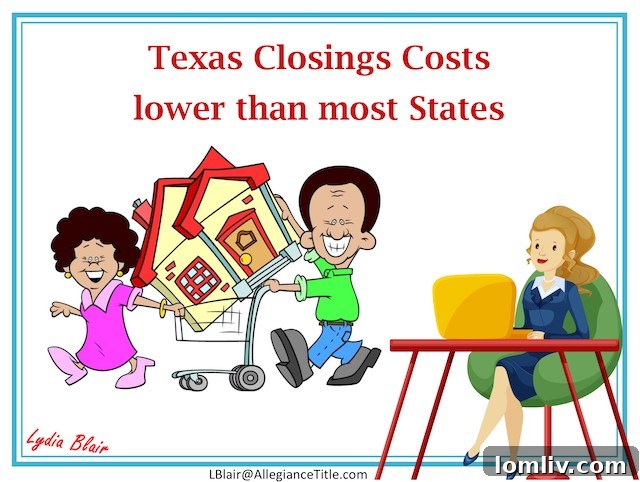
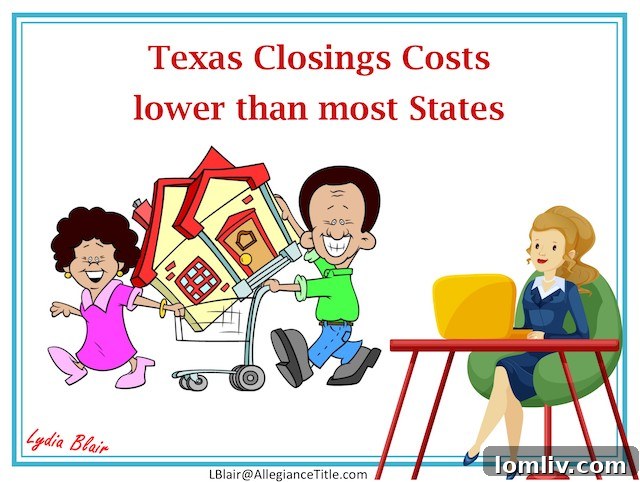
For many aspiring homeowners, the dream of buying a house often comes with a significant and sometimes unexpected hurdle: closing costs. These fees, paid at the closing of a real estate transaction, can add thousands of dollars to the total cost of a home purchase. While home prices have seen a steady climb across the nation, recent national data from 2019 provided a surprising insight: average closing costs remained relatively flat. This trend offers a glimmer of relief for buyers, suggesting that despite a more expensive housing market, the additional fees associated with finalizing a purchase aren’t necessarily escalating at the same rate. This comprehensive guide will delve into the nuances of closing costs, with a specific focus on the Texas real estate market, offering clarity on what buyers can expect and how the Lone Star State compares nationally.
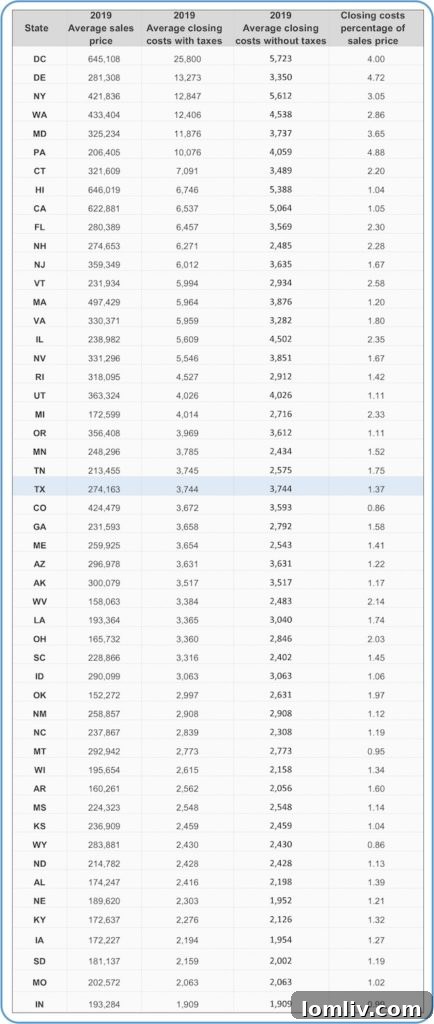
In 2019, the average closing costs in Texas stood at $3,744, a modest figure when considering the average sales price of $274,163 for homes in the state. This translates to approximately 1.75 percent of the sales price, placing Texas squarely at the 28th position nationally for closing costs as a percentage of the home’s value. This relatively lower percentage indicates a more favorable environment for homebuyers in Texas compared to many other states. Understanding the components that make up these costs and the unique regulatory landscape of Texas is crucial for anyone looking to navigate the local housing market.
Demystifying Closing Costs: Components and Their Significance
Closing costs encompass a variety of fees charged by different entities involved in a real estate transaction. These can include lenders, title companies, attorneys, and government agencies. Data compiled by ClosingCorp, a leading provider of residential real estate closing cost data, typically includes a range of services such as title insurance, appraisals, settlement fees, recording fees, surveys, and transfer taxes. Each of these components plays a vital role in securing the transaction and protecting the interests of both the buyer and the lender.
Let’s break down these critical elements:
- Title Insurance: This crucial protection safeguards both the buyer (owner’s policy) and the lender (lender’s policy) against potential claims on the property’s title due to past ownership issues, liens, or errors. It’s a one-time fee paid at closing but offers long-term peace of mind.
- Appraisals: A professional appraisal is conducted to determine the fair market value of the property. Lenders require this to ensure the home’s value justifies the loan amount, protecting them from over-lending. It also assures buyers that they are not paying significantly more than the home is worth.
- Settlement Fees (Escrow or Closing Fees): These are charges for the services provided by the closing agent, escrow company, or attorney who oversees the closing process. They ensure all documents are properly prepared, funds are distributed correctly, and the transaction is legally finalized.
- Recording Fees: After the sale, the deed and mortgage (or deed of trust) must be recorded with the local county government to make the change of ownership and the lien a matter of public record. These fees cover the cost of this administrative process.
- Surveys: A land survey precisely defines the property boundaries, identifies any easements or encroachments, and verifies the legal description of the property. While not always required, they are highly recommended, especially for properties with unclear boundaries or planned improvements.
- Transfer Taxes: These are taxes levied by state or local governments on the transfer of real estate ownership. Texas is notably one of the few states that does not impose transfer taxes, which significantly contributes to its lower overall closing costs compared to other regions. If we exclude these non-existent transfer taxes from the national data, Texas still maintains its 28th ranking, underscoring its general affordability in this regard.
The absence of transfer taxes is a key differentiator for Texas. In states where these taxes are substantial, they can add thousands or even tens of thousands of dollars to closing costs, depending on the property’s value. For instance, some of the states with the highest average closing costs, excluding taxes, include Washington, D.C.; New York; Hawaii; and California. This reflects not only high closing service fees but also significantly higher average sales prices in these regions. When evaluating closing costs solely based on the percentage of the sales price, states like Pennsylvania, Delaware, Washington, D.C., and Maryland frequently rank highest, with their percentages often averaging more than double the closing costs seen in Texas. This stark contrast highlights the potential savings for homebuyers in the Lone Star State.
Empowering Consumers: The Art of Shopping for Closing Services
One of the most empowering aspects of the homebuying process in many states is the ability for consumers to shop around for certain closing services. Just as you would compare rates for a mortgage loan or quotes for homeowner insurance, many closing costs are negotiable or vary between providers. This “shopping around” can lead to significant savings, but it requires diligence and an understanding of which fees are flexible and which are fixed.
In most states, buyers can compare costs for services like title insurance (where rates are not regulated), settlement fees, survey fees, pest inspection fees, and sometimes even attorney fees. The cost of title insurance, for example, can vary based on several factors, including the purchaser’s credit scores (in some states), the amount of their down payment, and the specific title company. Similarly, escrow, legal, and closing fees can fluctuate not just from company to company but even from county to county within the same state, reflecting local market dynamics and customary practices.
To effectively shop for closing costs, buyers should:
- Review the Loan Estimate: Your lender is required to provide a Loan Estimate within three business days of applying for a mortgage. This document outlines estimated closing costs, distinguishing between those you can shop for and those you cannot.
- Get Multiple Quotes: For shoppable services like title and escrow (in unregulated markets), solicit quotes from at least three different providers. Compare their fees line by line.
- Negotiate with the Seller: In some markets, particularly buyer’s markets, you might be able to negotiate with the seller to pay a portion of your closing costs or offer a credit.
- Understand the Closing Disclosure: Three business days before closing, you will receive a Closing Disclosure, which details the final closing costs. Compare this with your Loan Estimate to ensure there are no unexpected changes.
Being an informed consumer and actively engaging in comparing services can result in tangible savings, making the homeownership dream more attainable. While some fees, such as government recording fees or appraisal fees (as the lender typically selects the appraiser), are generally non-negotiable, a significant portion of closing costs can be influenced by savvy shopping.
Texas’s Distinctive Regulatory Framework for Title Insurance
Texas stands out with its unique approach to title insurance. Unlike many other states where title insurance rates are competitive and vary among providers, in Texas, the cost of title insurance is set and rigorously regulated by the state through the Texas Department of Insurance (TDI). This means that all Texas title companies are legally required to charge the exact same premium for a title policy, regardless of the company chosen.
This regulated environment for title insurance is a recurring subject of debate. Proponents of deregulation argue that introducing a free market and fostering more competition among title companies would ultimately lead to lower costs for consumers. The theory suggests that companies would innovate and compete on price, driving down premiums. However, the existing regulatory structure has its staunch defenders. Arguments for regulation often center on consumer protection, ensuring fair and transparent pricing, and maintaining the financial stability of title insurance providers. The TDI periodically reviews and adjusts these rates based on actuarial data and market conditions.
Indeed, in a significant move, the Texas Department of Insurance actually lowered title insurance rates in September 2019, providing a direct benefit to homebuyers across the state. This proactive adjustment by the regulatory body demonstrated that the system can respond to market conditions in favor of the consumer, even without a deregulated competitive market. For now, the system in Texas appears to be functioning effectively, offering a level of predictability and transparency in one of the most significant closing cost components that is often absent in other states.
Strategies for Minimizing Closing Costs in Texas
While Texas benefits from a lack of transfer taxes and regulated title insurance rates, there are still proactive steps homebuyers can take to manage and potentially reduce their overall closing expenses:
- Negotiate Seller Concessions: In a balanced or buyer’s market, you might negotiate with the seller to contribute towards your closing costs. This is often structured as a credit applied at closing, reducing the amount you need to bring to the table.
- Explore Lender Credits: Some lenders offer credits to cover a portion of your closing costs in exchange for a slightly higher interest rate on your mortgage. You’ll need to calculate whether the long-term cost of the higher interest outweighs the immediate savings on closing costs.
- Shop for Third-Party Services: Even with regulated title insurance, other services like home inspections, pest inspections, or even some attorney fees (if you choose to use one beyond the title company’s default attorney) may be shoppable. Always ask your real estate agent for recommendations on reputable and competitively priced providers.
- Plan Your Closing Date Strategically: Closing towards the end of the month can sometimes reduce the amount of pre-paid interest you owe. Lenders typically collect interest from the closing date through the end of the month, so a later closing means fewer days of interest to pay upfront.
- Meticulously Review Documents: Always scrutinize your Loan Estimate and Closing Disclosure. Ensure there are no unexpected fees or discrepancies from what you were initially quoted. Errors can happen, and catching them early can save you money.
By employing these strategies, Texas homebuyers can strategically approach their real estate transaction, minimizing out-of-pocket expenses and making the path to homeownership smoother.
Conclusion: Texas Offers a Favorable Landscape for Homebuyers
The consistent national data indicating flat closing costs, coupled with Texas’s unique regulatory environment and absence of transfer taxes, paints a favorable picture for homebuyers in the state. While the average closing costs of $3,744 and 1.75 percent of the sales price may seem like a significant sum, it positions Texas as a relatively affordable state when it comes to these transaction fees, especially compared to high-cost markets across the country.
Understanding the components of closing costs, knowing which fees are fixed versus variable, and being aware of Texas’s state-regulated title insurance are all crucial steps for any prospective buyer. The ability to shop for certain services (in other states) and the proactive measures taken by regulatory bodies like the TDI to adjust rates demonstrate a commitment to consumer welfare. For those looking to invest in Texas real estate, the relative transparency and comparative affordability of closing costs add another layer of appeal to an already dynamic and growing market. By staying informed and strategic, homebuyers can navigate the closing process with confidence, bringing them one step closer to owning their dream home in the Lone Star State.