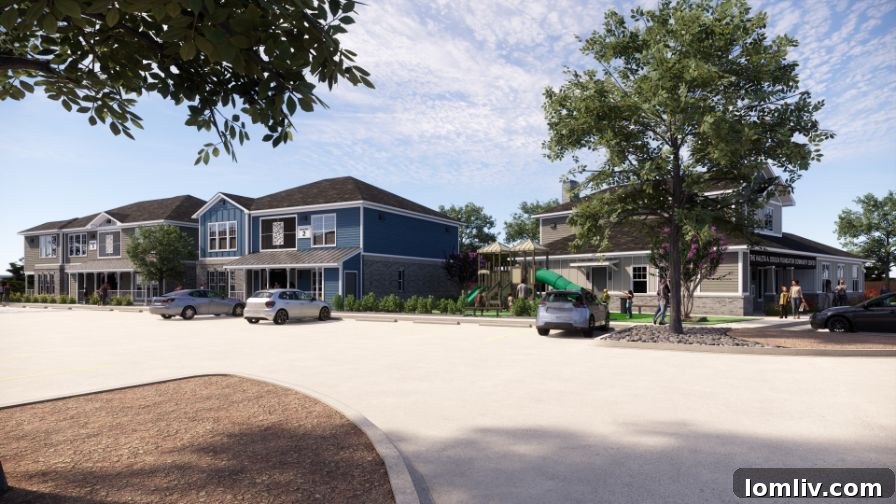
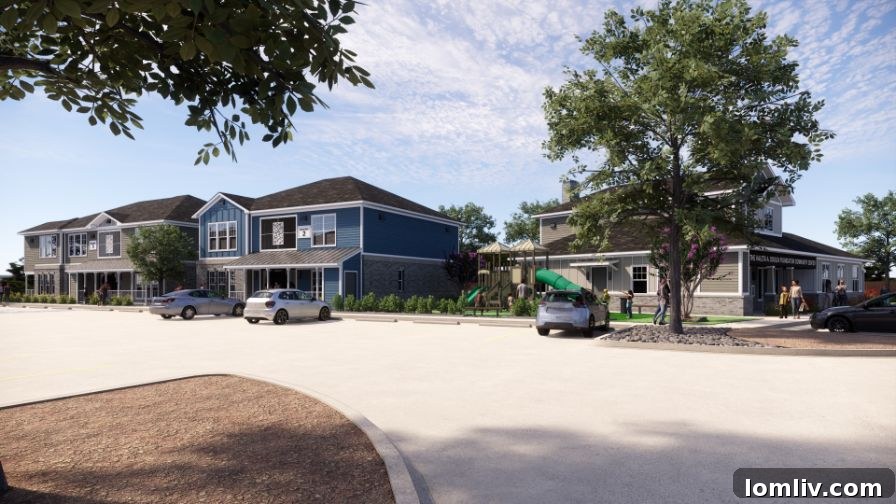
In a significant stride towards addressing the pressing issue of homelessness in North Texas, the Jericho Village project, a vital initiative in Collin County, is now firmly back on track. Initially facing a temporary setback due to escalating construction costs, officials with Jericho Village have joyfully announced that the ambitious plan is not only moving forward but is scheduled to break ground in April. This development marks a pivotal moment for a community grappling with increasing housing instability and demonstrates a renewed commitment to providing sustainable solutions for its most vulnerable residents.
The $9.6 million project, spearheaded by the dedicated Agape Resource & Assistance Center Inc., initially encountered some resistance within the close-knit Wylie community when it was first unveiled. Public perception can often be a hurdle for such vital projects. However, a strategic and empathetic shift in communication has transformed local sentiment. Neighbors, who once expressed reservations, are now openly embracing and welcoming Agape’s proactive efforts to shelter and support the unsheltered population. This change highlights the power of clear communication and community engagement in fostering understanding and support.
This positive shift in community reception can largely be attributed to a thoughtful re-evaluation of the project’s marketing and branding strategy. By reframing its core mission, Jericho Village successfully bridged the gap between community concerns and the critical need it aims to fulfill. The initial public discourse around “homeless housing” often carries stigmas and misconceptions, which can unfortunately overshadow the project’s true intent and positive impact.

The multifamily rental housing complex is now effectively being promoted and understood as “transitional housing.” This subtle yet profound change in terminology makes a significant difference. Transitional housing implies a temporary, supportive environment designed to help individuals and families move from instability to self-sufficiency. It emphasizes growth, empowerment, and a structured pathway back into mainstream society, rather than a permanent solution for homelessness. This re-branding has helped clarify the project’s long-term vision and its comprehensive approach to aid.
Beyond simply providing affordable homes, Jericho Village is committed to offering a holistic support system to its tenants. According to its comprehensive website, the complex will feature an onsite social worker and a robust suite of support services. These services are meticulously designed to address the root causes of housing instability, offering guidance on financial literacy, job placement, mental health support, and life skills development. This integrated approach ensures that residents receive the necessary tools and resources not just to find shelter, but to rebuild their lives with dignity and independence.
The community’s evolving perspective is best encapsulated by comments from local residents. As one social media user aptly put it regarding a post about the project, “I’m happy Wylie is stepping up to provide resources to women in ‘difficult-to-leave’ situations.” This feedback underscores a deeper understanding and empathy within the community, recognizing that many individuals facing housing crises are often in vulnerable circumstances, such as escaping domestic violence, navigating health challenges, or overcoming economic hardship. Transitional housing offers a crucial lifeline during these critical periods.
Strategically located for accessibility and integration, the development is planned for a 2.6-acre parcel at 511 West Brown St., conveniently situated near Winding Oaks Drive. This prime location ensures residents have access to local amenities, public transport, and community resources, fostering a sense of belonging and reducing isolation. The careful selection of the site reflects Agape’s commitment to thoughtful community planning and integration, ensuring Jericho Village is a valuable addition to Wylie, not an isolated entity.
A Comprehensive Housing Mix for Jericho Village Residents
Kathy Beazley, a spokeswoman for the nonprofit Agape Resource & Assistance Center, shed light on the financial backbone of Jericho Village. She emphasized that a significant portion of the funding has been generously contributed by private donors. This private funding model is critical, as Beazley clarified that Jericho Village is not government-subsidized Section 8 housing. This distinction is important, as it often streamlines the development process and allows for greater flexibility in tailoring support services to the specific needs of the residents without the bureaucratic layers often associated with federal programs. The reliance on private philanthropy also speaks volumes about the community’s belief in Agape’s mission and the project’s potential impact.
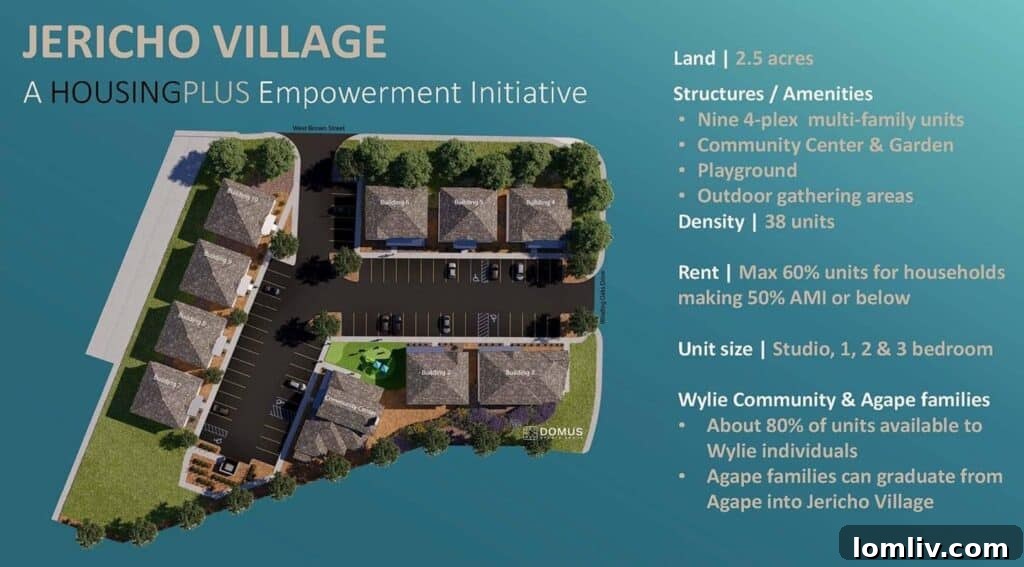
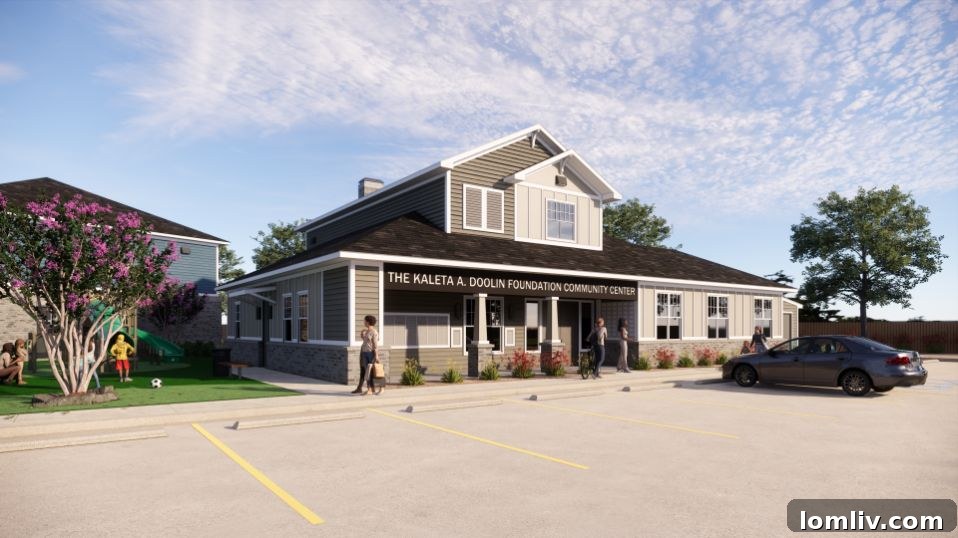
The development itself is meticulously designed to foster a supportive and communal environment. It will feature nine fourplex multifamily units, creating a total of 36 modern and comfortable apartments. Beyond the individual living spaces, Jericho Village will boast a vibrant community center, serving as a hub for workshops, social gatherings, and support group meetings. An integrated garden will offer residents the opportunity for therapeutic activity and fresh produce, promoting wellness and shared responsibility. Furthermore, a dedicated playground ensures that children have a safe and engaging space to play, while an outdoor gathering area provides a welcoming spot for residents to connect and build relationships. These amenities are crucial for building a sense of community and stability for families and individuals transitioning out of homelessness.
The housing mix within Jericho Village is designed to cater to diverse needs, ensuring inclusivity and flexibility. The plan calls for a variety of unit types, including efficient studio apartments, as well as more spacious one-, two-, and three-bedroom units. This variety allows Jericho Village to accommodate single individuals, couples, and families of various sizes. To ensure affordability and accessibility for those most in need, a maximum of 60 percent of the units will be designated for tenants at or below 50 percent of the Area Median Income (AMI). This tiered approach to affordability helps ensure that the project genuinely serves those struggling with housing insecurity. Importantly, the majority of the units will be made available to individuals and families already living within the Wylie area, ensuring that the project directly addresses local needs and supports existing community members.
Beazley underscored the profound need for such initiatives in the North Dallas community, emphasizing that the statistics speak for themselves. “The facts are astounding,” she remarked, painting a stark picture of the challenges faced by many families. “Sadly, extended-stay hotels have become temporary housing for some and are now frequent stops along the school bus routes.” This observation highlights a hidden crisis, where families are forced into precarious living situations, often with children attending local schools, further illustrating the urgent demand for safe, stable, and supportive housing solutions like Jericho Village.
Addressing the Profound Challenge of Homelessness in Collin County
The struggle against homelessness in Collin County is a silent but significant battle, impacting thousands of lives annually. Information provided by Jericho Village representatives reveals sobering statistics: approximately 61,000 Collin County residents live at or below the poverty line. This economic vulnerability is a precursor to housing instability for many. The ripple effect extends to the youngest members of the community, with more than 16,000 Plano ISD students relying on free or reduced lunch programs. These figures are not just numbers; they represent children and families struggling daily, often teetering on the brink of losing their homes or already experiencing instability.
The scarcity of shelter resources further exacerbates the crisis. There are a mere 300 beds available to shelter the homeless in all of Collin County. This severe deficit means that approximately 4,000 homeless people are turned away from shelters each year, leaving them with nowhere to go. Beazley highlighted a particularly heartbreaking aspect of this shortfall: “Most of those who are turned away are women and children.” This demographic often represents individuals fleeing domestic violence, facing unexpected job loss, or struggling with single parenthood, making their vulnerability even more acute. Turning away these families perpetuates cycles of instability and trauma, underscoring the critical need for expanded and compassionate housing options.
Jericho Village stands as a beacon of hope and an innovative model designed to break these cycles. Beazley articulated the project’s overarching philosophy: “Jericho Village is an innovative approach to creating life empowerment by aiding people with transitional housing, support services, sustainable income-stream development, and other resources to function in the greater community by helping to stabilize their lives, with the intent of them becoming self-sustaining adults.” This mission goes far beyond simply providing a roof overhead. It encompasses a holistic strategy focused on equipping residents with the skills, confidence, and resources needed to achieve long-term independence and integrate successfully into the broader community. The goal is not just temporary relief but enduring transformation, fostering an environment where individuals and families can thrive.
The comprehensive support system offered at Jericho Village is a cornerstone of its “life empowerment” approach. From the moment residents move in, they will have access to dedicated social workers who provide personalized case management. These professionals assist with navigating complex systems, accessing healthcare, securing childcare, and addressing any immediate needs. Beyond basic services, the emphasis on sustainable income-stream development is paramount. This includes job readiness training, resume building, interview coaching, and connecting residents with local employment opportunities. The objective is to empower individuals to secure stable employment that allows them to support themselves and their families, reducing reliance on aid and fostering economic independence. Coupled with financial literacy education, these resources are designed to ensure that residents not only earn a living but also manage their finances effectively for long-term stability.
As Jericho Village prepares for its groundbreaking, the anticipation within the community is palpable. This project represents more than just a housing complex; it signifies a collective commitment from Agape, private donors, and the Wylie community to tackle homelessness with compassion, innovation, and a long-term vision. By providing not just shelter, but a pathway to self-sufficiency through transitional housing and comprehensive support services, Jericho Village is set to become a transformative force in Collin County, offering a tangible solution and renewed hope for those seeking to rebuild their lives. The success of Jericho Village will serve as a powerful testament to what can be achieved when a community unites to support its most vulnerable members, turning a crisis into an opportunity for empowerment and growth.