

Cast your mind back to the tumultuous real estate landscape of 2009. Do you recall the prevalence of Adjustable Rate Mortgages (ARMs) that most aspiring homeowners were choosing? Can you vividly remember a time when an abundance of homes offered a wide array of choices for potential buyers? If these memories resonate with you, then it’s crucial to grasp this fundamental truth: 2022 is unequivocally not a mere repetition of 2009.
While our dedicated Tarrant County Tuesday column has diligently sought to convey this critical distinction to our valued readers over recent months, a persistent segment of the public remains unconvinced. Some may not be fully attuned to sound economic analyses, while others seem predisposed to accept the sensationalist narratives propagated by national media outlets, which frequently predict another imminent housing bubble, subsequent crash, and widespread economic doom. This article aims to provide a clear, evidence-based perspective to alleviate these concerns.
So, let us take a moment, breathe deeply, and delve into the current state of the housing market with clarity and precision.
Understanding the Housing Bubble Phenomenon
It’s perfectly understandable if you need a quick refresher on what constitutes a housing bubble. Sometimes, foundational economic concepts can become obscured by market noise. A housing bubble, or real estate bubble, is characterized by widespread speculative buying within the housing industry. This rampant speculation drives prices to artificially inflated levels, often detached from fundamental economic value. Crucially, a bubble also typically coincides with a high inventory of available homes, meaning there are many properties on the market that buyers are snatching up, often purely for investment rather than occupancy, pushing prices unsustainably high.
This exact scenario was a central catalyst for the Great Recession of 2009. We witnessed a perfect storm of inflated home prices coupled with an abundant supply of homes for sale. This combination allowed for widespread speculation and unsustainable market growth, ultimately leading to a sharp and painful correction. Understanding this historical context is vital when evaluating today’s market.
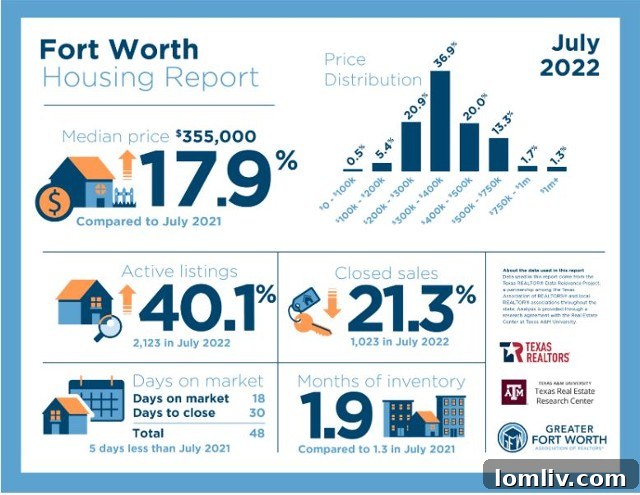
In stark contrast, the real estate market in 2022 presents a profoundly different picture, as we have frequently discussed. Only in recent months has the monthly inventory of available homes across many regions, including the Dallas-Fort Worth area, begun to exceed a mere one month’s supply. To clarify, monthly inventory is a metric calculated by dividing the total number of homes closed in a specific area within a given month by the number of homes currently available for sale in that same area.
A truly balanced real estate market, one where there is an equilibrium between supply and demand, is generally considered to have approximately 6.6 months of inventory. This level ensures enough homes for buyers without an overwhelming surplus for sellers. The recently released July 2022 report for many areas, while showing an upward trend, indicates that the month’s supply is still only nearing two months. This figure, while an improvement, remains significantly below the benchmark for a balanced market, underscoring the ongoing demand-supply imbalance.
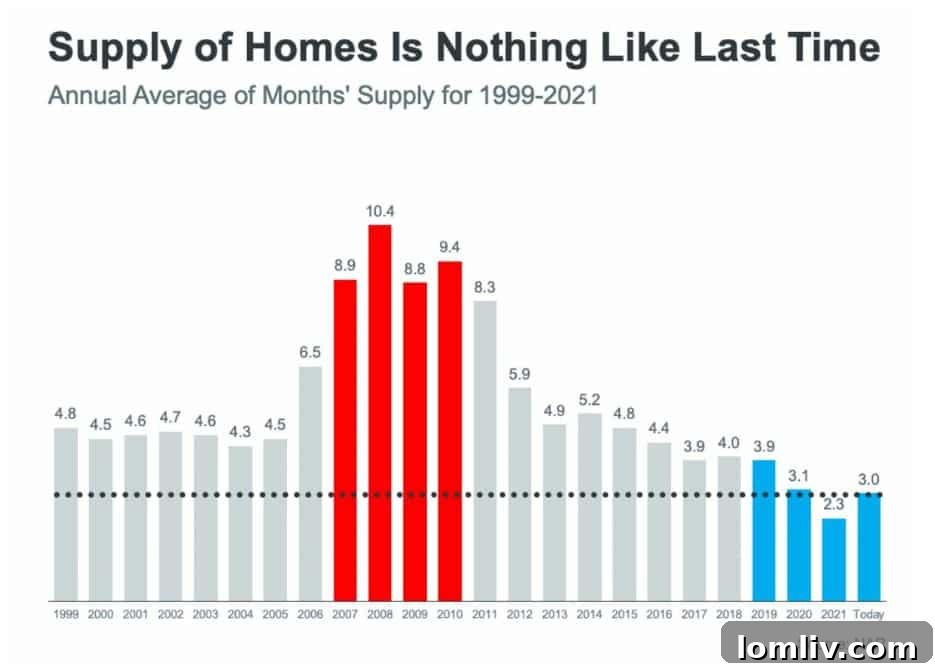
Consequently, the Dallas-Fort Worth metropolitan area, like many regions across the nation, continues to grapple with a substantial lack of housing inventory. Although home prices remain elevated, a direct consequence of this persistent demand, the supply of available homes is still relatively low. This crucial distinction—high prices coupled with low inventory—is precisely why we are not, by economic definition, experiencing a housing bubble akin to the one that preceded the 2009 crisis. The fundamental dynamics of supply and demand are simply too different.
Rigorous Lending Standards: A Safeguard Against Past Mistakes
I have immense respect for my colleagues in the lending industry. They possess the expertise to navigate complex financial models and interpret market data with impressive precision. However, it’s undeniable that the lending environment leading up to 2009 was vastly different, almost unbelievably permissive. Do you recall that period when obtaining a loan seemed remarkably easy, to the extent that it felt like virtually anyone, even figuratively speaking, could secure financing? It wasn’t their fault entirely, but the system itself encouraged laxity.
During that era, both government policies and bank practices made homeownership appear incredibly accessible, perhaps deceptively so. A prime example was the widespread use of adjustable-rate mortgages (ARMs). These loans initially offered borrowers exceptionally low, enticing interest rates for a fixed period, typically a few years. While attractive upfront, the true risk lay in their adjustability; once the introductory period expired, the interest rate would reset, often significantly higher, based on prevailing market conditions.
Compounding this issue was the prevalence of “stated income” or “no-doc” loans. Buyers could secure a loan simply by verbally declaring their income and debt levels, without the need to provide any supporting documentation or proof. This lack of rigorous verification opened the door to widespread fraud and placed many unqualified buyers into homes they ultimately couldn’t afford once their loan terms changed. It was an era where the mantra seemed to be: “You get a loan! And you get a loan! Everybody gets a loan!”

While such permissive lending might have been “fun” for a select few in the short term, the consequences were devastating. When the initial low-interest period of ARMs concluded and rates reset to current market levels, many homeowners found themselves in a perilous position. They had minimal equity built up in their homes, and crucially, they were unable to meet the significantly increased monthly mortgage payments. When the true financial burden came due, a tragic wave of foreclosures swept across the nation, impacting countless families and destabilizing the entire housing market.
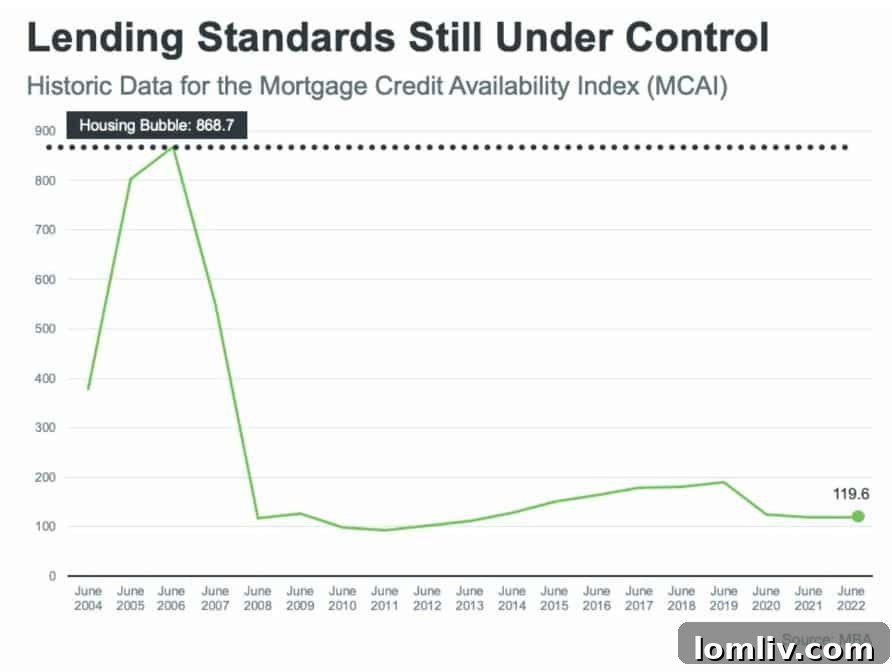
Fortunately, it appears that banks, lenders, and federal regulatory bodies have learned critical lessons from the excessively relaxed lending criteria of the past. The stringent reforms implemented since 2009 aim to prevent a recurrence of those costly mistakes in today’s market. As evidenced by the accompanying image, current regulations and requirements for lenders are substantially tighter. This means that not every applicant automatically qualifies for a loan, ensuring that those who do are genuinely creditworthy and financially capable of sustaining homeownership. This is a vital safeguard: remember, if you cannot secure a loan under current, more responsible standards, then you generally cannot purchase a home.
It’s important to acknowledge that the days of zero-doc loans, no-income-verification loans, and other risky lending loopholes that were exploited by unscrupulous banks and lending companies are, thankfully, not making a comeback anytime soon. This renewed emphasis on responsible lending practices forms a robust foundation for the current housing market, making it inherently more stable than the pre-2009 period.
Foreclosures: A Dramatic Shift from Past Crises
The term “foreclosure” conjures grim memories, especially from the period of the Great Recession. The sheer volume of foreclosures during that time was staggering. When homeowners found themselves unable to afford their homes, faced with little to no equity (meaning the market value of their home was often less than what they owed), and a frozen market in which selling was nearly impossible, many felt they had no option but to simply walk away, allowing banks to repossess their properties. This created a domino effect that plunged communities into crisis.
The stories emerging from across the country were truly horrifying. Images of abandoned homes, entire neighborhoods blighted by vacant properties, and communities struggling under the weight of financial collapse were appalling and heartbreaking to witness. It was a period marked by profound human tragedy and economic devastation.
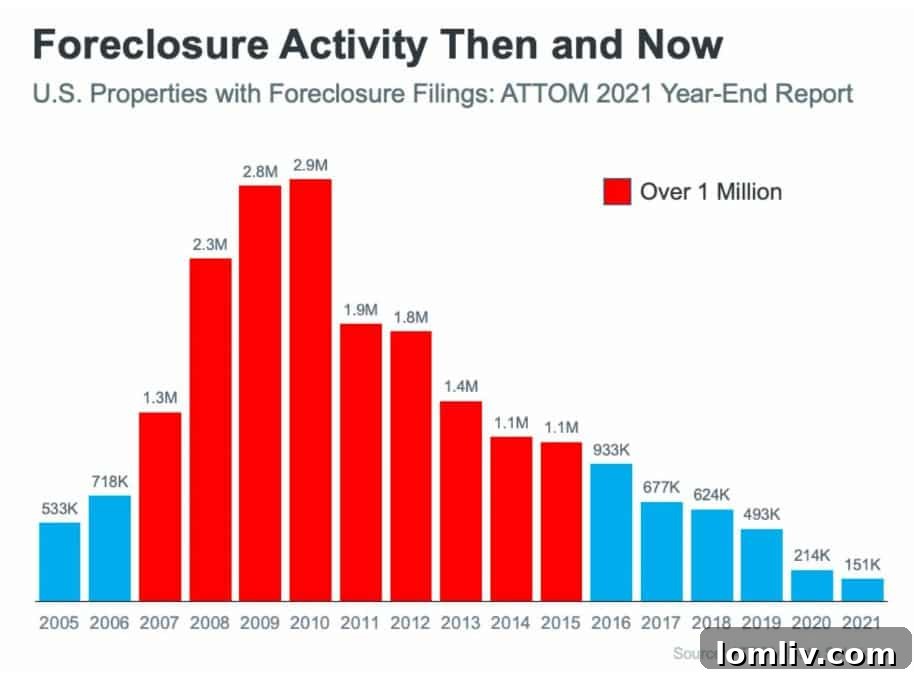
Let’s unequivocally state this truth, and internalize it: “We are not, repeat, not, going to experience the same scale of foreclosure issues as we did in the past.” This affirmation is critical for understanding the resilience of today’s housing market.
Why is the situation so dramatically different in 2022 compared to 2009? Several key factors contribute to this protective barrier against mass foreclosures. Firstly, the global COVID-19 pandemic prompted unprecedented government intervention. In 2021, broad moratoriums were placed on foreclosures, providing a critical lifeline for homeowners struggling with pandemic-related financial hardships. This measure prevented a sudden surge of properties onto the market during a vulnerable time.
Secondly, and perhaps most significantly, homeowners across the nation have accumulated substantial equity in their properties over the past few years, driven by consistent home value appreciation. Even if an owner faces financial difficulties and can no longer make their monthly payments, they are in a far stronger position than their counterparts in 2009. Instead of walking away, they can typically list their home for sale, leverage the built-up equity to pay off their mortgage, and often walk away with a significant sum of money. This robust equity cushion acts as a powerful buffer, turning potential foreclosures into orderly sales, thereby stabilizing the market and protecting individual homeowners from total financial ruin.
Acknowledging Market Adjustments: A Path to Health, Not Collapse
It is important to approach the current market with a balanced perspective. Yes, we readily acknowledge that the real estate market is indeed cooling off from the frenzied pace witnessed over the past 24 months. Yes, rising interest rates are undoubtedly a significant factor influencing buyer affordability and market momentum. And yes, persistent inflation, affecting everything from construction costs to household budgets, is certainly not helping to ease the situation.
However, it is crucial to understand that this cooling period does not signify the beginning of a catastrophic collapse. Instead, it represents a necessary and healthy market adjustment. We are not heading towards a total meltdown of the real estate market due to several very tangible and robust factors: stricter lending requirements that ensure qualified buyers; a continued, albeit slowly improving, low inventory of available homes that prevents a supply glut; and the significant built-up equity in homes over the past few years, which protects homeowners from negative equity situations.
Do prices for both existing and new construction homes need to adjust downwards to become more sustainable and affordable? Absolutely. This adjustment is not a sign of weakness but a vital step towards a healthier, more accessible market. Reluctant sellers are slowly but surely beginning to heed the advice of their experienced real estate sales professionals and are reducing the asking prices for their homes to meet evolving buyer expectations. While it may take some additional time, eventually, the prices of new construction homes will also be adjusted sufficiently to stimulate demand and move inventory off the market.
The sooner all stakeholders involved in the housing ecosystem embrace and understand that a balancing market is ultimately beneficial for the entire economy, the better. This collective understanding is key to a smoother transition. Landowners need to temper their asking prices for development plots. Laborers, while deserving of fair wages, may need to adjust expectations slightly in some areas. The exorbitant costs of goods and building materials must return to more realistic and sustainable levels (though a return to pre-COVID pricing, unfortunately, seems unlikely). Furthermore, builders must cease passing all their escalated costs directly onto the consumer without absorbing some of the burden. The quicker new homes once again become genuinely affordable for first-time home buyers, the sooner the housing market will regain its optimal equilibrium and robust trajectory.
The Path to Equilibrium: Patience and Perspective
Will the market’s return to a fully balanced state take some time? Yes, undoubtedly. The question of “how long is ‘a while’?” remains a subject of considerable speculation, as no one possesses a crystal ball. However, current indicators offer reasons for cautious optimism. The interest rate environment appears to be stabilizing, halting the rapid upward trajectory we’ve observed. Similarly, gas prices, a significant contributor to consumer sentiment and overall inflation, are also showing signs of stabilization.
As the autumn season approaches, and individuals return from their summer vacations, there’s an expectation that a sense of normalcy will gradually restore. People will begin to realize that the world is not, in fact, ending, and that economies are not on the brink of total collapse. This renewed confidence will likely translate into a resurgence of interest in buying and selling properties once again, albeit at a more measured and sustainable pace than the frenzied activity of recent years.
The overarching message remains clear and unwavering: 2022 is fundamentally distinct from 2009. The underlying economic conditions, lending standards, and homeowner equity positions are robust, providing a strong foundation for the market. Now, go forth and share this informed perspective with everyone you know, helping to dispel unfounded fears and foster a clearer understanding of our current real estate landscape.