

Welcome to “Upon Closer Inspection,” a recurring feature where the dedicated professionals at Green Scene Home Inspections offer invaluable insights into home maintenance and efficiency for Daltxrealestate.com readers. Join us weekly to discover what experienced inspectors observe in homes like yours.
In the rush of daily life, it’s easy to fall into a routine with our homes, often overlooking subtle signs of malfunction or wasteful operation. As we approach Earth Day, it’s an opportune moment to pause and assess our household habits. Many homeowners are inadvertently wasting significant amounts of energy and water, leading to higher utility bills and a larger environmental footprint. This guide will highlight common areas of inefficiency and provide actionable strategies to create a more sustainable and cost-effective home environment.
Understanding where your home is losing energy and water is the first step toward reclaiming efficiency. From the automated systems outdoors to the hidden mechanics within your walls, identifying and addressing these overlooked issues can make a substantial difference. By taking a proactive approach to home maintenance, you not only save money but also contribute to a healthier planet. Let’s delve into some critical areas where many homes underperform and how you can rectify them.
1. Optimizing Your Sprinkler System for Water Conservation
The garden’s vibrant health often relies on an efficient irrigation system, yet it’s a frequent culprit for water waste. As spring home maintenance becomes a priority, a thorough inspection of your sprinkler system is crucial, especially after unpredictable weather patterns. Winter’s freeze-thaw cycles can wreak havoc, causing subterranean pipes to crack and sprinkler heads to break or misalign. A malfunctioning system not only fails to properly hydrate your landscape but can also send hundreds, if not thousands, of gallons of water spiraling down the drain.
Begin by meticulously checking for any broken lines, cracked sprinkler heads, or visible leaks that might be pooling water or causing uneven distribution. Even minor leaks can accumulate into significant waste over time. Next, consult your local city’s watering guidelines. These regulations are often designed to promote water conservation and prevent overwatering, which can also harm your plants and lawn. Adjust your sprinkler system’s timer and zone settings according to these guidelines, ensuring your landscape receives just the right amount of water without excess.
Modern “smart” sprinkler systems offer an advanced solution, simplifying water management with features like rain sensors that automatically shut off irrigation during and after rainfall. This prevents redundant watering, saving both water and money. Beyond rain detection, many smart systems can integrate with local weather forecasts, adjusting watering schedules based on real-time conditions, soil type, and plant needs. This intelligent approach minimizes waste and promotes healthier plant growth. Furthermore, it’s essential to map out the location of all your sprinkler heads. This awareness prevents accidental damage from lawnmowers or gardening tools, avoiding comical yet costly mishaps like the one demonstrated in the video below:
Regular system checks, proper calibration, and awareness of local watering restrictions are paramount. Investing a little time in your irrigation system can lead to significant water savings, lower utility bills, and a more environmentally responsible home.
2. Maximizing Efficiency with Energy-Efficient Windows
Windows play a pivotal role in your home’s thermal performance, acting as gateways for heat transfer. The leap from older single-pane windows to modern double-pane (or even triple-pane) energy-efficient windows promises substantial savings and improved comfort. However, this advantage is entirely negated if the thermal seal of these advanced windows has failed. While designed for longevity, even the best energy-efficient windows do not last forever, and their effectiveness diminishes significantly with a compromised seal.
A broken thermal seal typically manifests as condensation or a foggy appearance between the glass panes, indicating that the inert gas (like argon or krypton) trapped within the panes has escaped, and humid air has entered. This gas layer is crucial for insulating your home, preventing heat from escaping in winter and entering in summer. When the seal breaks, your double-pane window essentially performs like a single-pane window, losing its insulating properties and becoming a significant source of energy loss. You can visibly observe what a broken thermal seal looks like in the video provided by home inspectors, often accompanied by drafts or noticeable temperature differences near the window frame.
To accurately diagnose window inefficiencies, consider scheduling a professional energy audit. Auditors use specialized tools, including thermal imaging cameras, to detect air leaks and insulation deficiencies around windows and doors. This technology vividly illustrates where your conditioned air is escaping, revealing cold spots in winter and hot spots in summer, as depicted in the thermal image below:
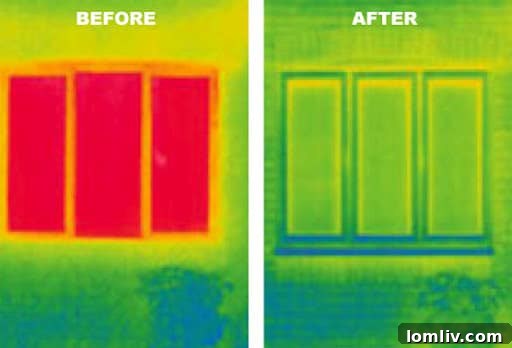
Energy-efficient windows are engineered to keep your home’s conditioned air – whether warm in winter or cool in summer – precisely where it belongs: inside. Conversely, leaky windows or those with broken thermal seals force your HVAC system to work overtime, straining its components and consuming excessive energy. This leads not only to escalating utility bills but also to unnecessary wear and tear on your heating and cooling units. Beyond replacing faulty windows, improving their efficiency can also involve simpler solutions like applying weatherstripping, sealing cracks with caulk, and utilizing energy-efficient window treatments such as cellular shades or insulated drapes. Investing in window efficiency is an investment in long-term comfort and significant energy savings, directly impacting your home’s overall sustainability and your wallet.
3. The Imperative of Professional HVAC Servicing
As seasons change and we transition into warmer months, preparing your home for peak performance is essential. With air conditioning season rapidly approaching, scheduling professional HVAC servicing is not merely a recommendation; it’s a critical step, especially if your system hasn’t been checked in a while. An HVAC system might appear to be “working” because it’s still producing air, but its efficiency can degrade imperceptibly over time. This gradual decline often goes unnoticed until your monthly energy bills begin to climb inexplicably, signaling that your system is consuming more energy to achieve the same level of comfort.
Regular maintenance ensures your HVAC unit operates at its optimal efficiency, extending its lifespan and preventing costly breakdowns. A comprehensive service typically includes cleaning or replacing air filters, inspecting and cleaning evaporator and condenser coils, checking refrigerant levels, lubricating moving parts, and inspecting electrical connections. These proactive measures can prevent minor issues from escalating into major repairs, ensuring consistent performance throughout the year. Beyond efficiency, a well-maintained system also contributes to improved indoor air quality by effectively filtering out dust, allergens, and pollutants.
One common, yet critical, issue often uncovered during an HVAC inspection involves the ductwork. Older homes, or those with less thorough installations, might still feature deteriorated “gray ductwork,” a material once commonly used but now largely obsolete due to its poor durability and insulation properties. As demonstrated in the accompanying video, such ductwork can disintegrate, exposing the air ducts to unconditioned spaces like attics or crawl spaces. When ducts are exposed or leaky, significant amounts of conditioned air are lost before ever reaching your living areas. This forces your HVAC system to work harder, consume more energy, and ultimately cost you more money. Modern ductwork materials and sealing techniques prevent such air loss, ensuring that every bit of conditioned air is delivered efficiently to where it’s needed.
A little preventative home maintenance, specifically professional HVAC servicing, can avert these inefficiencies and their associated costs. It’s an investment that pays dividends in comfort, reduced energy consumption, and the longevity of one of your home’s most critical systems.
Additional Strategies for a Sustainable and Efficient Home
Beyond the critical areas of sprinklers, windows, and HVAC, numerous other opportunities exist within your home to enhance efficiency and reduce waste. As temperatures continue their seasonal ascent, ensuring your attic is properly insulated becomes paramount. Adequate attic insulation acts as a thermal barrier, preventing heat from radiating into your living space during summer and escaping during winter. Understanding your home’s R-value – a measure of thermal resistance – and upgrading to appropriate insulation levels can dramatically stabilize indoor temperatures, reduce the workload on your HVAC system, and significantly cut down on energy consumption. Different types of insulation, such as fiberglass, cellulose, or spray foam, offer varying benefits and R-values, making it worthwhile to assess which is best for your home’s specific needs.
Another impactful change involves upgrading older appliances. Many older models, particularly refrigerators, washing machines, and water heaters, consume far more energy and water than their modern counterparts. Look for appliances with the ENERGY STAR label, which signifies superior energy efficiency without compromising performance. While the initial investment might seem higher, the long-term savings on utility bills, coupled with reduced environmental impact, make these upgrades incredibly cost-effective. Modern appliances also often feature advanced technologies, such as smart controls and optimized cycles, further enhancing their efficiency.
Furthermore, maintaining a vigilant eye on your energy costs is crucial. Smart meters and energy monitoring apps can provide real-time data on your electricity and water usage, empowering you to identify peak consumption periods and adjust your habits accordingly. Understanding your utility bill beyond just the total amount, by analyzing usage trends and comparing them month-to-month, can reveal insights into your home’s efficiency. Even small changes, like switching to LED lighting, unplugging “phantom loads” (electronics that draw power even when turned off), and installing low-flow fixtures, contribute to a substantial overall reduction in waste.
By diligently maintaining and strategically upgrading your home’s systems and components, you can make a profound impact on its overall efficiency, leading to substantial financial savings and a healthier planet. These efforts align perfectly with the spirit of Earth Day, encouraging us all to embrace more sustainable living practices.
There are countless straightforward ways to reduce waste and foster sustainability within your home. To gain a clearer understanding of your ecological footprint, you can calculate your personal carbon footprint. For an extensive collection of excellent tips and resources aimed at reducing your environmental impact, visit earthday.org. Every conscious decision we make contributes to a greener, more efficient future for our homes and our world.