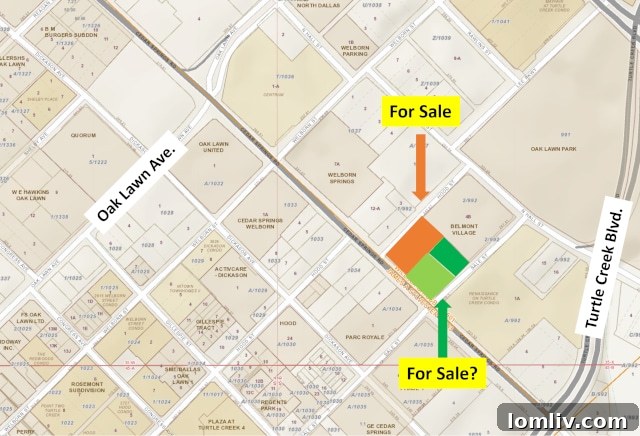
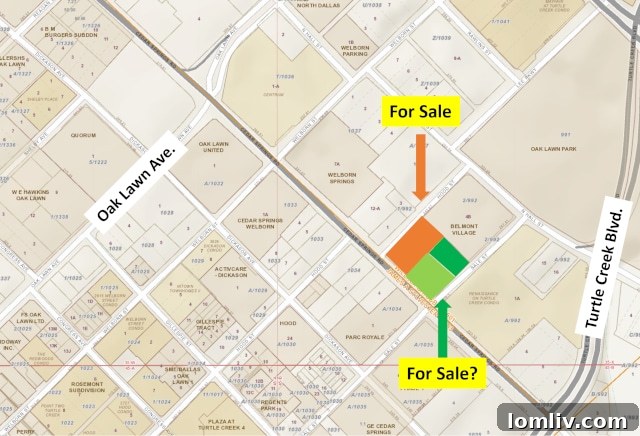
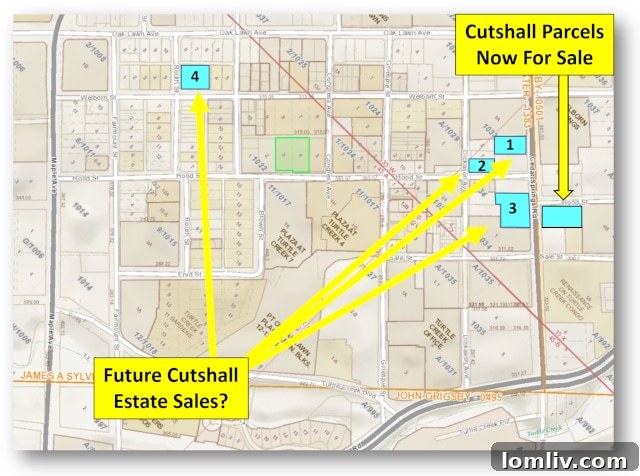
The dynamic landscape of Dallas’s highly sought-after Uptown and Oak Lawn neighborhoods continues its relentless transformation, driven by an insatiable demand for prime urban real estate. At the heart of this evolving tapestry, a significant trio of parcels, prominently marked in red on the accompanying map, has recently entered the market. Strategically positioned at the vibrant intersection of Cedar Springs Road and Hood Street, these properties were previously under the ownership of the late Ralph Cutshall and are now being offered for sale by his heirs, marking a pivotal moment for this coveted Dallas locale. This transaction is poised to reshape a critical corner of one of the city’s most prestigious districts, signaling further high-density development in the area.
For those deeply entrenched in Dallas real estate circles, the Cutshall name resonates with a history of strategic land holdings across the region. Indeed, the family’s extensive portfolio on the opposite side of Cedar Springs Road, within the distinguished Mansion Park area, garnered attention as recently as July 2020. The current move to divest these specific parcels suggests a broader trend of generational land sales influencing the future development trajectory of Uptown and Oak Lawn, opening up new avenues for high-density, mixed-use projects in an area already experiencing a significant boom. This divestment highlights the increasing pressure on long-held family assets in rapidly urbanizing environments.
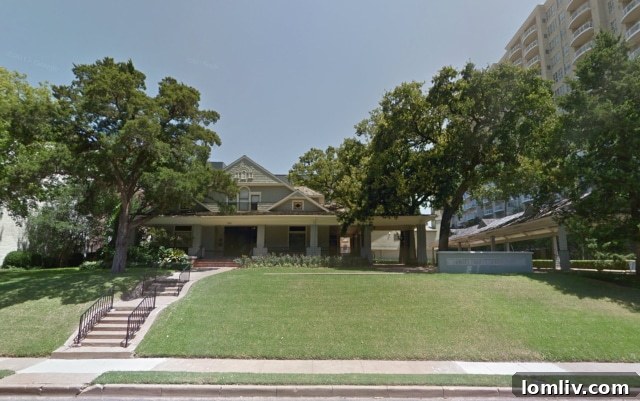
The corner parcel, a key component of this offering, is widely recognized as the site of Dragon Park Gardens. Adjacent to this, a low-rise office building stands to the south, while an historic, original home has served as the dedicated headquarters for Dwell with Dignity since 2012. This arrangement underscores the unique blend of commercial activity and community-focused initiatives that have historically characterized this vibrant micro-neighborhood, now facing the inevitable forces of redevelopment.
Dwell with Dignity, a distinguished 501(c)(3) non-profit organization, shares a noble mission akin to that of Habitat for Humanity, yet with a distinct focus. Rather than constructing new homes, Dwell with Dignity dedicates its efforts to furnishing and outfitting living spaces for individuals and families emerging from homelessness or poverty. They transform empty residences into comfortable, functional, and uplifting homes, providing stability and dignity to those in desperate need. This vital work makes their potential displacement particularly poignant, highlighting the often-unseen social cost of rapid urban development. The prospect of losing their long-standing home poses a significant challenge, forcing them to seek new premises amidst a competitive real estate market that offers few affordable alternatives for non-profits.
The irony of their situation is not lost on observers; an organization dedicated to finding homes for others may soon find itself in search of its own. While one might suggest a temporary setup within the adjacent Dragon Park, even that space is earmarked for future development, underscoring the relentless march of progress that leaves little room for established community anchors in prime urban areas. This situation serves as a stark reminder of the delicate balance between economic growth and the preservation of community resources within rapidly developing cities like Dallas, where demand for land often outweighs other considerations.
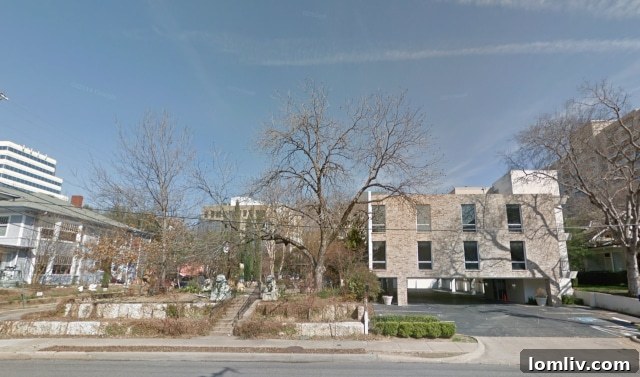
These three highly strategic parcels, represented by Edge Commercial Real Estate – a firm with an extensive portfolio in Dallas’s competitive market – encompass a combined area of 24,947 square feet, equating to approximately 0.57 acres. The significant asking price of $4.15 million translates to an impressive per-acre rate of roughly $7.246 million. This valuation is a testament to the unparalleled desirability of the Cedar Springs corridor and its surrounding Uptown and Oak Lawn submarkets, reflecting the intense investor appetite for well-located development opportunities within the city’s urban core. This price point positions the properties as premium assets for any developer looking to capitalize on Dallas’s booming real estate sector.
Such a robust price point is indicative of the premium placed on urban infill sites in Dallas, particularly those zoned for high-density development. Developers are increasingly seeking parcels that can accommodate luxury residential towers, mixed-use complexes, or high-end office spaces, aligning with the area’s ongoing transformation into a sophisticated urban hub. The scarcity of available land, coupled with strong demographic growth and sustained economic expansion in Dallas, continues to push land values upwards, making properties like these a highly coveted asset for major development firms looking to capitalize on the city’s dynamic real estate market. This trend is expected to continue, driving further vertical growth and densification in Uptown Dallas.
Strategic Land Assemblage: Unlocking Development Potential in Uptown Dallas
The potential sale of the Cutshall parcels naturally raises a crucial question for the future of this Cedar Springs submarket: what will become of the adjacent properties to the south, and how might they factor into a larger development scheme? The strategic acquisition of contiguous parcels, known in the real estate industry as land assemblage, is a common practice for maximizing development potential in dense urban environments. Developers often seek to combine smaller, fragmented lots into a larger, more viable site capable of accommodating a substantial project, such as a high-rise residential building or a sprawling mixed-use complex that would otherwise be impossible on individual plots. This method is critical for achieving the scale necessary for ambitious urban redevelopment projects.
One such neighboring property, housing Swift Property Company at 3506 Cedar Springs, represents a significant piece of the puzzle. This parcel, depicted in light green on the map, covers 17,828 square feet of land. Its estimated market value, hovering around $2.966 million, notably exceeds its valuation by the Dallas Central Appraisal District (DCAD) by approximately $700,000. This disparity underscores the rapid appreciation of land values in the area and the persistent market demand that often outpaces official appraisals. For a developer aiming to create a larger footprint, this parcel would be a prime target, essential for achieving the scale necessary for a modern, high-density project, offering significant returns on investment.
Further south, another contiguous parcel, distinguished by its darker green shading on the map, introduces additional complexity. This site comprises seven condo units, originally constructed in 1980, situated on 13,460 square feet of land. While the total land value is estimated at $2.239 million, dividing this among the seven units yields roughly $320,000 per unit. This figure, being relatively close to current DCAD valuations for the individual condo units, suggests that purchasing these units for redevelopment might not be immediately “enticing” for developers. The cost of acquiring each unit individually, navigating multiple owners, and potentially dealing with relocation expenses could diminish the profit margins, especially if the current residents are not keen to sell. Successful assemblage often relies on a clear economic incentive for existing property owners, making this particular parcel a more challenging prospect for immediate acquisition and adding layers of complexity to any potential development plan.
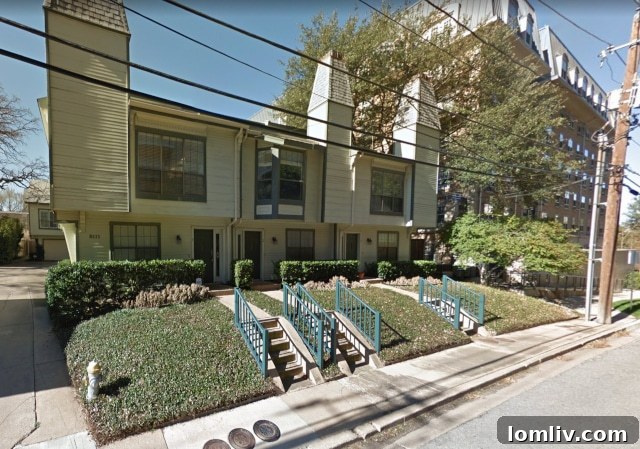
Among the properties vital for a comprehensive assemblage, the 1905 vintage home currently occupied by Swift Property stands out as a potentially controversial element. Its historical significance could become a flashpoint for local preservationists, who would undoubtedly raise strong objections if a demolition permit were sought. Dallas has a rich architectural heritage, and while economic development is a priority, there’s a growing awareness of the importance of preserving historical structures that contribute to the city’s unique character. Any plans involving the demolition of such an old, distinctive property would likely face significant public scrutiny and could delay or even derail a development project, making this parcel a delicate consideration for any prospective buyer, balancing economic gain with community sentiment.
Considering the rapid changes occurring in the immediate vicinity, the owners of these adjacent properties face a compelling dilemma. Do they wish to remain next to whatever substantial development is likely to emerge? They are already significantly “boxed in” by existing high-density structures. To the west, across Sale Street, looms The Renaissance, an imposing high-rise condominium complex. To the east, the mid-rise Belmont Village retirement home creates another substantial barrier. With the inevitable construction of a tall structure on Hood Street, any semblance of an open, airy environment will vanish, replaced by the dense urban fabric typical of modern Uptown. Even across Cedar Springs Road, the relatively new, often criticized, mid-rise apartment buildings further cement the area’s evolution into a high-density corridor, fundamentally altering the neighborhood’s original charm.
From a pragmatic perspective, if one were the owner of such land, the most logical course of action might be to sell and relocate. The substantial proceeds from a sale could offset the inconvenience and provide opportunities elsewhere. It might even be financially viable to include the cost of relocating the historic Swift Property home into the overall deal, thereby mitigating potential preservationist backlash and potentially streamlining the development process. Being hemmed in by taller, newer developments inherently limits property options and diminishes the long-term enjoyment of the existing property, making the current market conditions ripe for a strategic exit for existing owners seeking to maximize their investment in this evolving Dallas real estate market.
The Extensive Cutshall Legacy: Future Redevelopment in Mansion Park
The current offering of these parcels at Cedar Springs and Hood Street is likely just the beginning of a broader strategic divestment. As previously noted, the late Ralph Cutshall held an extensive portfolio of at least eight distinct parcels within the prestigious Mansion Park area, located directly across Cedar Springs Road. This significant collection of land, held under the entity Winhavir LP, represents a substantial legacy of strategic investment in prime Dallas real estate, accumulated over decades in a highly appreciating market.
Should the heirs continue their current strategy of monetization, it is only a matter of time before these other Mansion Park parcels are also brought to market for redevelopment. The combined square footage of the Cutshall-owned properties in Mansion Park totals a formidable 76,241 square feet, or approximately 1.75 acres. Applying the current market rate established by the Cedar Springs listings, the estimated value of these additional holdings could reach an impressive $12.7 million. This substantial potential sale highlights the scale of inherited wealth now poised to reshape a significant portion of Mansion Park, an area renowned for its elegant homes and historical significance, further solidifying its status as a prime target for luxury development in Dallas.
The eventual sale and redevelopment of these larger Cutshall holdings would undoubtedly attract considerable interest from top-tier developers, given Mansion Park’s unparalleled location and desirability. Such a large contiguous area offers immense potential for luxury residential development, whether in the form of high-end condominiums, sophisticated townhomes, or even a bespoke mixed-use project that aligns with the upscale character of the neighborhood. The implications for the architectural integrity and community feel of Mansion Park are considerable, marking a new chapter in its ongoing evolution. Interested parties and local residents are advised to stay tuned, as further developments are expected to unfold in the coming months, promising significant changes to this iconic Dallas district, influencing everything from traffic patterns to property values.
A Glimmer of Preservation: The Welborn & Fairmount Streets Outcome
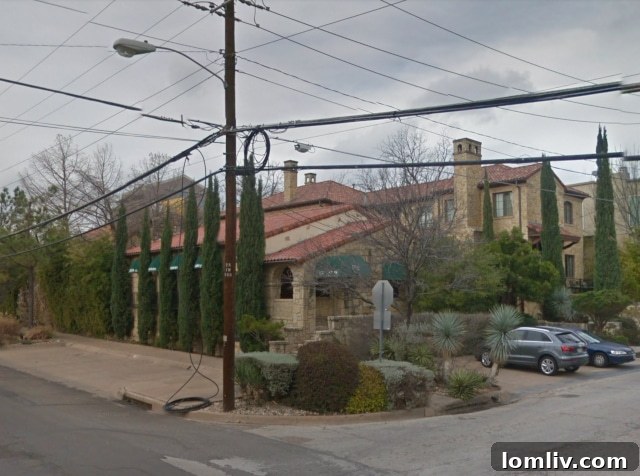
While the narrative of relentless development often dominates discussions about Dallas’s evolving urban core, a contrasting, albeit slightly tangential, story offers a valuable perspective on the ongoing battle between preservation and progress. At the historic corner of Welborn and Fairmount Streets, a pair of distinguished properties – the Roughton Galleries and the adjacent Roughton home – recently found themselves at the center of a different kind of real estate transaction, one that brought a measure of relief to many.
These properties had been actively listed with Allie Beth Allman, a prominent luxury real estate brokerage, for an extended period before being directed to auction earlier this year. In a collective sigh of relief for local preservation advocates and those who value the city’s architectural heritage, the outcome of the auction delivered a welcome surprise: the buyers were not developers intent on demolition and high-density reconstruction. Instead, a discerning law firm acquired the properties, with plans to establish their practice within the unique gallery space while concurrently utilizing the residential side for living purposes. This adaptive reuse scenario is a celebrated example of how historic properties can be successfully integrated into modern urban life without succumbing to the wrecking ball, offering a sustainable alternative to wholesale demolition.
UPDATE: It is important to correct an earlier misconception. The original version of this story mistakenly indicated that the property had not sold at auction, largely due to an outdated listing on CBRE’s website that continued to show the property as active. However, as confirmed by comments below and subsequent information, the sale successfully closed on November 30th. This clarification ensures an accurate portrayal of events surrounding these historically significant Dallas properties, confirming their secure future and avoiding potential misunderstandings in the local real estate community.
The combined lots, encompassing a respectable 13,782 square feet, have thus been effectively “saved” from potential demolition, securing their future as part of Dallas’s evolving fabric. This outcome provides a ray of hope for communities striving to balance economic growth with the preservation of character and history. It demonstrates that not every prime parcel must yield to the highest density development, and that creative solutions for adaptive reuse can indeed prevail, contributing to a richer, more diverse urban landscape that retains elements of its past amidst relentless modernization.
Despite these occasional victories for preservation, the overarching trend for Dallas’s Uptown and Oak Lawn neighborhoods remains unmistakably clear: an relentless, rapid transformation into an exceptionally dense urban environment. This evolution is characterized by a pervasive mix of high-rise and mid-rise residential developments, a substantial percentage of which, regrettably, exhibit what might be termed a “cheap, tacky, quick-buck” aesthetic. This often implies a focus on maximizing unit count and profit margins over architectural distinction, quality craftsmanship, or long-term community integration. The sheer volume and speed of this development raises legitimate concerns about the long-term character, sustainability, and aesthetic appeal of these once-distinct neighborhoods, challenging their historical identity.
The current trajectory suggests a future where the unique charm and historical nuances of Uptown and Oak Lawn could be overshadowed by a monotonous sea of new construction. While urban densification is an inevitable aspect of growth in successful cities, the quality and thoughtfulness of that development are paramount. Dallas faces the challenge of managing this intense growth responsibly, ensuring that new constructions contribute positively to the urban fabric rather than simply filling available space. The question remains whether the city can maintain its unique identity amidst this rapid and often uninspired wave of vertical expansion. The future of these iconic Dallas districts hangs in the balance, continuously reshaped by market forces and development decisions, demanding careful consideration from city planners and residents alike.