Frisco Debates Universal Theme Park: Community Opposition Spurs Delays and Intense Scrutiny
The rapidly growing city of Frisco, Texas, finds itself at the epicenter of a passionate debate as residents voice strong opposition to a proposed Universal theme park. The ambitious project, envisioned as a unique, family-focused entertainment destination, has faced multiple delays in city council and planning commission votes, highlighting significant community concerns that continue to challenge its progression. What was initially hailed as a groundbreaking development for North Texas is now under intense scrutiny, as local residents rally to protect their neighborhoods from what they perceive as an overwhelming disruption.
Repeated Delays Signal Deep-Seated Issues
Initially slated for a pivotal vote on February 7th, the Frisco City Council and Planning and Zoning Commission decided to postpone their decisions regarding Universal’s proposed theme park within The Field’s development. This initial delay pushed the discussion and potential vote to February 21st. However, as community dialogue intensified and opposition mounted, a second postponement was announced, rescheduling the critical meeting to March 7th. These consecutive delays are more than just administrative hiccups; they underscore the complexity of the project and the city’s recognition of the profound impact it could have on the local community, particularly in response to the vocal concerns of its citizens.
Such postponements provide crucial time for city officials to further review plans, consider alternative solutions, and, most importantly, engage with residents. They also offer an opportunity for Universal Parks & Resorts to potentially refine their proposals in response to feedback, though the core nature of a theme park presents inherent challenges that are difficult to mitigate entirely. The ongoing deferrals suggest that city leadership is carefully navigating the delicate balance between fostering economic growth and preserving the quality of life for its residents.
Frisco Residents Mobilize Against the Project
The community’s discontent reached a crescendo during the most recent public meeting. Residents from surrounding neighborhoods, particularly those in close proximity to the proposed site, articulated their fears and frustrations with fervor. The primary concern revolves around the dramatic shift in local dynamics that a major entertainment venue of this scale could bring.
Phil Evitt, a resident of the neighboring Cobb Hill community, encapsulated the sentiment of many, stating unequivocally, “We do not want this project. This will decimate our neighborhood.” This powerful declaration reflects a deep-seated apprehension that extends beyond mere inconvenience. Residents fear a fundamental erosion of their current lifestyle, envisioning a future where their once tranquil residential areas are overshadowed by the constant activity, noise, and infrastructure demands of a bustling theme park.
Key Concerns Raised by the Community:
- Traffic Congestion: The most prominent worry centers on an exponential increase in vehicular traffic. The proposed park is located along the already busy Dallas North Tollway and Panther Creek Parkway, areas that experience significant congestion during peak hours. Residents envision gridlocked streets, extended commute times, and a general deterioration of local roadways.
- Noise Pollution: Theme parks, even those designed for families, generate considerable noise from rides, attractions, events, and crowds. Residents are concerned about constant noise disrupting their homes and impacting their peace and quiet.
- Strain on Infrastructure: A massive development like a theme park requires substantial resources. Residents question whether Frisco’s existing water, sewage, power, and waste management systems are adequately prepared to handle the increased demand.
- Safety and Security: An influx of visitors inevitably brings new challenges related to public safety and security, potentially straining local police and emergency services.
- Property Values and Quality of Life: Many residents believe that the proximity of a theme park could negatively impact their property values and fundamentally alter the residential character of their neighborhoods, diminishing their quality of life.
- Environmental Impact: Concerns have also been raised regarding the environmental footprint of such a large development, including potential impacts on local ecosystems and green spaces.
To address these critical issues, residents have formally requested the establishment of a citizen’s advisory committee. This committee would be tasked with conducting an independent and thorough study of potential traffic problems, offering a community-centric perspective on mitigation strategies. Furthermore, a novel suggestion has emerged: the creation of a public park designed to encircle the theme park, serving as a buffer to maintain a degree of seclusion for residential areas. This proposed green space would aim to mitigate some of the visual and auditory impacts, while also potentially offering a recreational amenity for local families.
Universal’s Vision for Frisco: A Unique Family-Focused Park
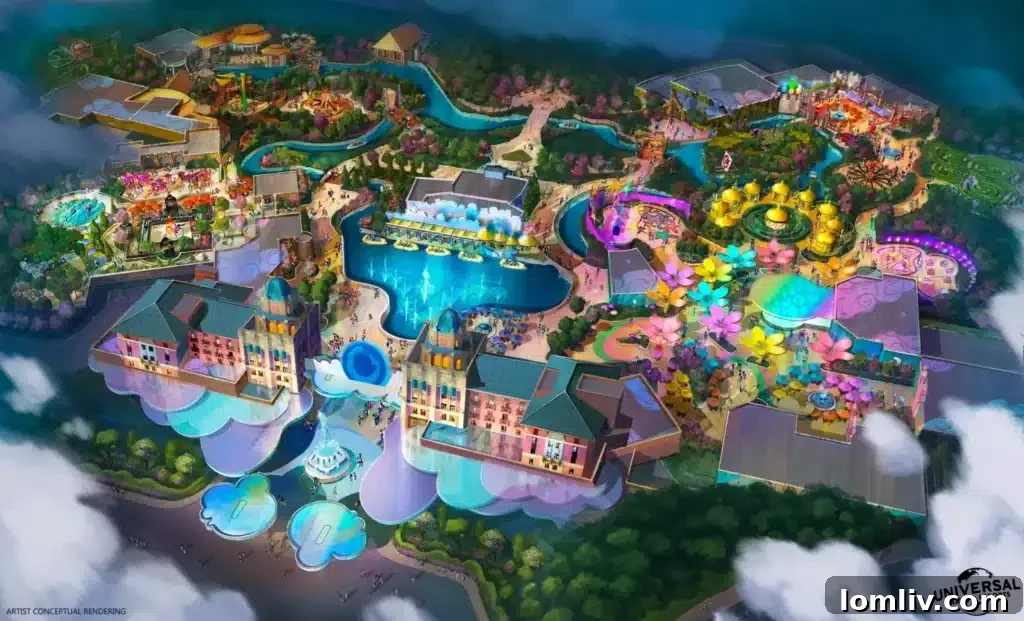
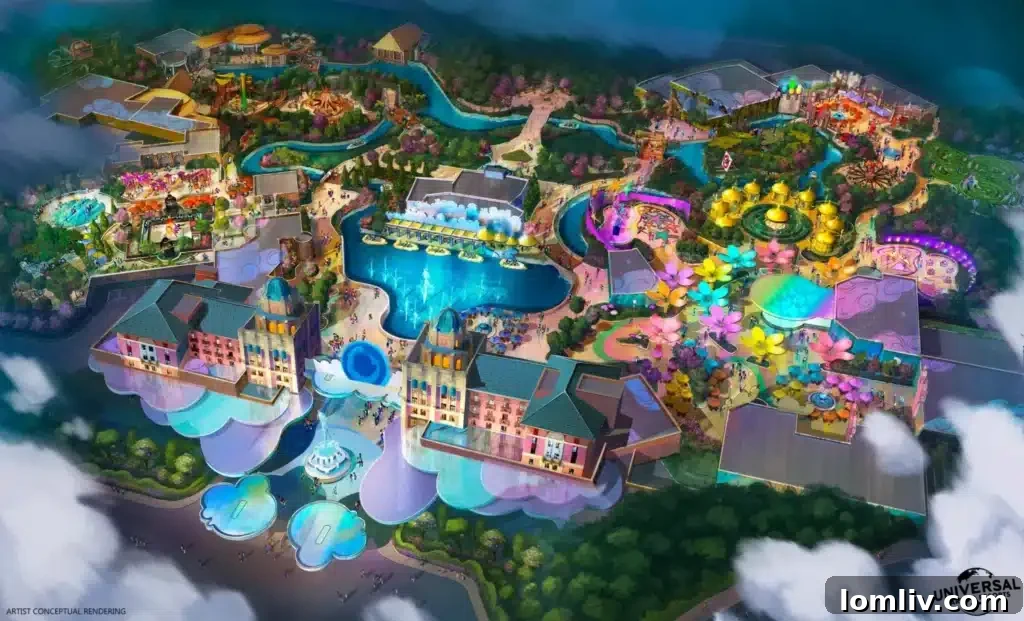
Despite the current pushback, the initial announcement in January by Universal Parks & Resorts and the city of Frisco was met with considerable excitement by many. The plan introduces a groundbreaking concept: a one-of-a-kind theme park specifically engineered to cater to families with young children. This differentiates it significantly from Universal’s larger, more thrill-ride-heavy parks in Orlando and Los Angeles, aiming to fill a unique niche in the burgeoning North Texas entertainment landscape.
According to a release from the city, the park is designed to immerse visitors in themed lands, leveraging Universal’s beloved brands and iconic characters in “ways that will wow even the youngest theme park goers.” This emphasis on younger audiences suggests a curated experience with gentler rides, interactive shows, and character meet-and-greets, tailored to create lasting magical memories for toddlers and elementary-aged children.
Project Scope and Location:
- Location: The proposed 97-acre site is strategically located within The Field’s development, a massive master-planned community that is rapidly transforming a significant portion of Frisco. Its position along the prominent Dallas North Tollway and Panther Creek Parkway offers high visibility and accessibility, factors critical for a major tourist attraction.
- Scale: Notably, this Frisco park will be considerably smaller than its counterparts, measuring just one-fourth the size of Universal’s flagship parks in Orlando and Los Angeles. This scaled-down approach aligns with its family-focused concept, potentially allowing for a more manageable and intimate visitor experience.
- Adjacent Development: Universal’s plans also include an adjacent themed hotel, designed to provide convenient accommodations for park visitors and enhance the overall resort experience. Furthermore, the master plan accounts for room for future expansion, indicating a long-term vision for growth within Frisco.
- The Field’s Development Context: The theme park is envisioned as a key anchor in The Field’s, a colossal “city within a city” project that will ultimately feature over 3,500 homes, extensive commercial spaces, and other amenities. Integrating a theme park into such a vast mixed-use development presents both opportunities and challenges for urban planning and community cohesion.
The Economic Promise vs. Community Preservation
For city officials and proponents of the project, the Universal theme park represents a substantial economic boon. The potential benefits are manifold:
- Job Creation: The construction phase alone would generate numerous temporary jobs, followed by hundreds, if not thousands, of permanent operational roles, ranging from hospitality and entertainment to maintenance and administration.
- Increased Tax Revenue: A new theme park would significantly boost Frisco’s tax base. This includes property taxes from the development, substantial sales tax revenue from park admissions, merchandise, food and beverage sales, and hotel occupancy taxes from the adjacent themed hotel and other local accommodations. These revenues could fund essential city services, infrastructure improvements, and public projects.
- Tourism and Brand Recognition: Hosting a Universal theme park would elevate Frisco’s profile as a premier family entertainment destination, attracting visitors from across Texas, the nation, and potentially internationally. This increased tourism would benefit other local businesses, restaurants, and attractions.
- Catalyst for Further Development: Such a high-profile anchor could attract additional businesses and investments, further stimulating economic growth and diversification in the region.
However, these economic promises stand in stark contrast to the deeply personal concerns of residents who prioritize their immediate living environment. The challenge for Frisco’s leadership is to weigh these significant economic advantages against the potential adverse effects on existing communities. Finding a balance that satisfies both economic aspirations and residential quality of life is paramount.
The Road Ahead: A Crucial Decision for Frisco’s Future
As the March 7th meeting approaches, all eyes are on the Frisco City Council and Planning and Zoning Commission. Their decision will not only determine the fate of Universal’s theme park but also set a precedent for future large-scale developments in this rapidly expanding city. The ongoing dialogue underscores a critical moment in Frisco’s growth trajectory, where residents are actively shaping the narrative of their city’s future.
The outcome hinges on whether Universal and the city can effectively address the pressing concerns of the community, particularly regarding traffic and infrastructure, while still delivering on the promise of a world-class family entertainment destination. The proposal for a citizen’s advisory committee and a public park buffer illustrates residents’ desire for collaborative solutions, demonstrating that community engagement will be essential for any successful path forward. Whatever the final decision, it will undeniably leave a lasting mark on the identity and development of Frisco, Texas, impacting its economy, its landscape, and, most importantly, its residents.