
The Groovy, The Gaudy, and the Grand Unveiling: A 1970s Time Capsule Home in Peoria, Arizona
Sometimes, the well of inspiration for a weekly column feels like it might run dry. Then, almost as if a mischievous, yet benevolent, force is invested in this editorial endeavor, an email lands in my inbox. It contains images of a house—a quintessential example of everything that went wonderfully wrong with interior decorating in the 1970s. This week, we dive headfirst into such a property, a home that initially presents a deceptive facade of normalcy, only to reveal a wild world within.
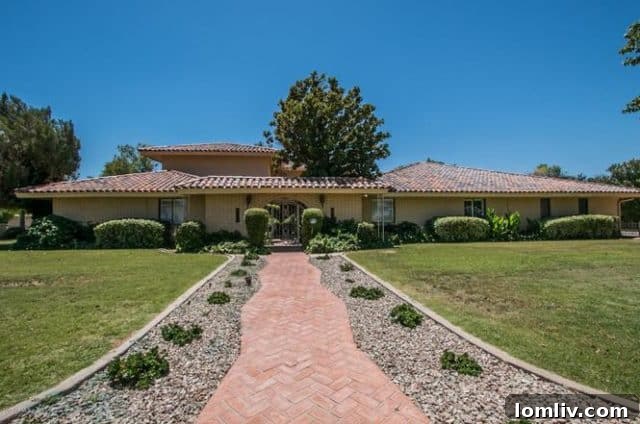
Take this week’s featured house, for instance. From its exterior shots, it appears fairly ordinary, perhaps even pleasant. There’s nothing immediately alarming about its curb appeal or structural aesthetics, hinting at the vibrant, almost shocking, spectacle that lies behind its front door. It’s the kind of house that could blend into any suburban landscape, making its interior revelations all the more surprising.

The first few glimpses truly offer no hint of the forthcoming design adventure. The initial photographs showcase a well-maintained exterior, hinting at a comfortable suburban lifestyle. There’s a subtle charm to its architecture, a classic silhouette that suggests a home built for practical living, not flamboyant statements.
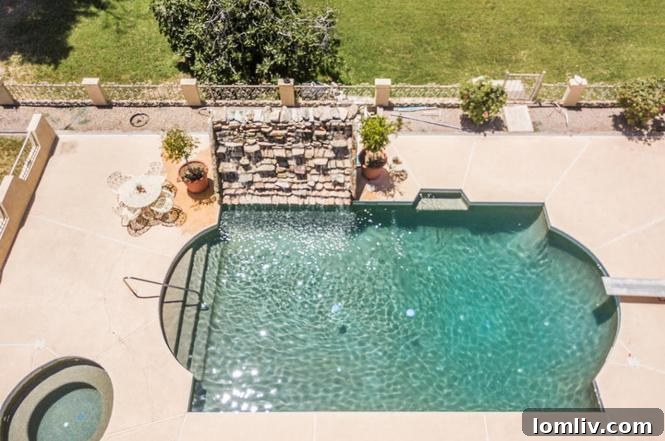
Beyond the pleasant exterior, this Peoria, Arizona residence even boasts a truly lovely pool area. Surrounded by what appears to be a tranquil outdoor setting, the pool is an inviting feature, promising relaxation and enjoyment under the desert sun. One might imagine peaceful afternoons spent by the water, completely oblivious to the unique aesthetic journey awaiting inside. This serene outdoor space further lulls one into a false sense of conventionality, making the interior’s dramatic departure from the norm even more impactful. It’s a perfect example of how a book should never be judged by its cover, or in this case, a house by its inviting exterior.
Stepping Back in Time: The Interior Unveiled
Things at this Peoria, Arizona, home quickly take a fascinating, albeit bewildering, turn once you begin clicking through the interior photos. To fully appreciate (and dissect) the unique design choices, we assembled a discerning panel of individuals who possess both a keen eye for detail and an admirable tolerance for visual torture—also known as this writer’s friends and coworkers. Our esteemed panel included Jo, Karen, Kristin, Amanda, Andrea, Lindsey, and Mia. Together, we embarked on an exploration of this remarkable 70s time capsule, meticulously reviewing every questionable design decision, from audacious wallpaper to reflective ceilings. Let’s delve into their collective feelings and our shared experience with this unforgettable blast from the past.

The Eerie Entryway and Staircase: A Haunting Reminder?
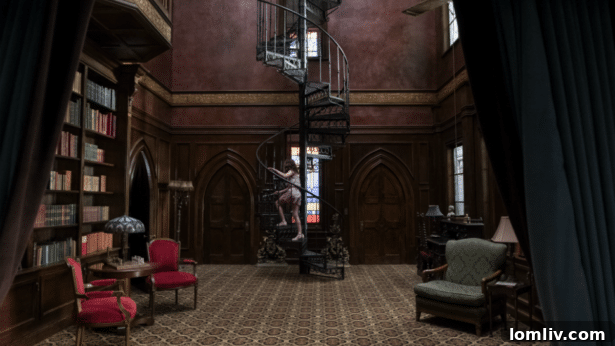
Our journey into the 1970s begins right at the entrance, where the decor immediately sets a distinctive, somewhat unsettling, tone. The staircase and entryway serve as the initial gateway to this vintage spectacle, hinting at the grandeur and occasional eccentricity that defined a bygone era. Dark wood paneling, characteristic of many 70s homes, dominates the space, creating an atmosphere that, for some, evokes more than just nostalgia.
It wasn’t long before the panel began drawing vivid comparisons. Kristin and Amanda, in particular, found themselves reminded of the popular horror series, “The Haunting of Hill House,” a testament to the unexpected chills some vintage aesthetics can provide. The interplay of shadows, the heavy patterns, and perhaps the sheer weight of history seemed to coalesce into an ambiance that felt less like a welcoming home and more like a set piece from a psychological thriller.
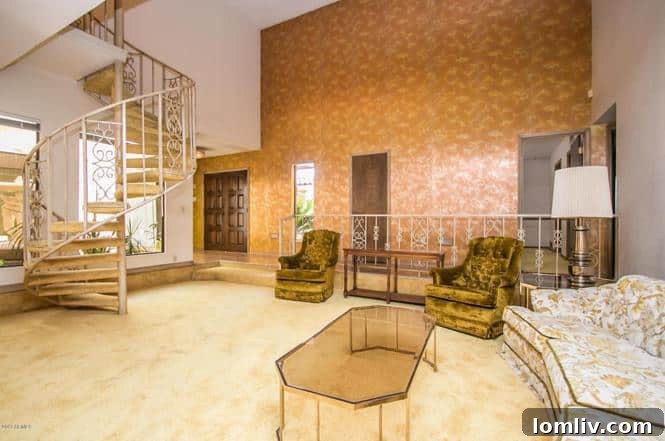
Kristin captured this sentiment perfectly, remarking, “I think I’ve seen the bent neck lady on that staircase,” a chilling reference that Amanda promptly seconded with a simple, “Yep.” This immediate, visceral reaction highlights how dramatically certain design choices of the 70s, when viewed through a modern lens, can transform from merely dated to genuinely unsettling. The combination of design elements here—the robust banisters, the specific shade of wood, and the overall enclosed feeling—certainly contributes to an aura of mysterious elegance, albeit one with a potential for spectral encounters.
The Living Spaces: A Symphony of 70s Excess
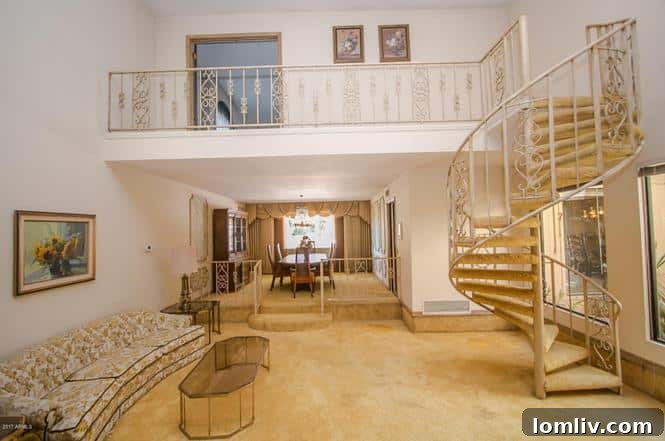
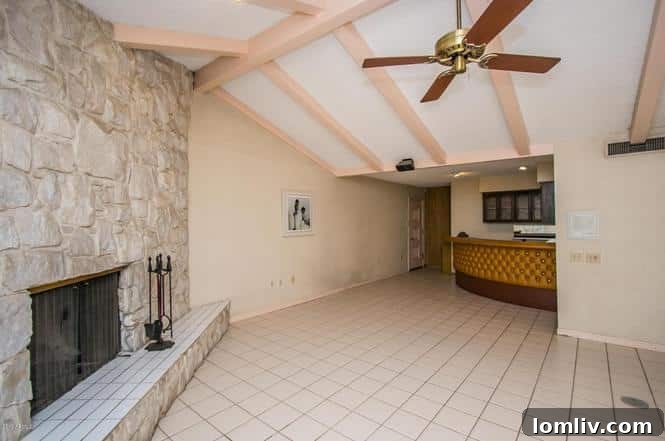
Moving beyond the eerie entryway, the main living areas unfold like a museum exhibit dedicated to mid-century design choices, offering a comprehensive look at the era’s adventurous spirit. Here, the 1970s truly announces its presence, not with a whisper, but with a full-blown orchestral performance of patterns, textures, and bold statements. Mia, our resident expert in all things vintage, articulated the collective sentiment with a mix of awe and trepidation: “Oh hi, 1970s, welcome back we miss you not — smoky quartz coffee table holy sh—.” Her exclamation perfectly encapsulates the polarizing nature of this home’s aesthetic.
Central to this spectacle is indeed the smoky quartz coffee table, a daring and undeniably weighty centerpiece that demands attention. Its imposing presence, combined with the often-dense patterns found in 70s textiles and wallpapers, creates a visual density that modern minimalist sensibilities might find overwhelming. Mia’s observation continued, “And the wall full of obvious repeating pattern wallpaper is just…” The trailing ellipsis speaks volumes, capturing the ineffable quality of design that pushes boundaries, sometimes to their breaking point. The wallpaper, a hallmark of 70s interior fashion, dominates the space with its repetitive motif, adding another layer to the home’s distinctive character.
These rooms are a masterclass in 1970s maximalism, where every surface, it seems, was an opportunity for expression. From the deep-pile carpets that might grace the floors to the intricate carvings on the furniture, the era embraced an eclectic mix of influences. The color palette, often featuring rich browns, burnt oranges, mustards, and avocado greens, contributed to a warm, earthy, yet often intense, atmosphere. This deliberate clash of textures and patterns, while jarring to some today, was once the epitome of cutting-edge design, reflecting a cultural shift towards individual expression and away from the more restrained styles of previous decades.
Diving Deeper: The Truly Unforgettable Rooms
As we scrolled through more images, the initial shock gave way to a collective gasp, then an almost simultaneous unloading of opinions as the panel encountered the house’s most audacious and unforgettable spaces. These weren’t just rooms; they were declarations, bold statements of 1970s luxury and, dare we say, questionable taste. The following sequence of photographs showcased elements that transcended mere dated decor, venturing into realms that sparked both bewildered laughter and genuine concern. This is where the true character of the Peoria time capsule solidifies, revealing designs that challenge modern perceptions of comfort, privacy, and even safety.
The Bathroom Blunders: Mirrored Ceilings and Bathtub Chandeliers
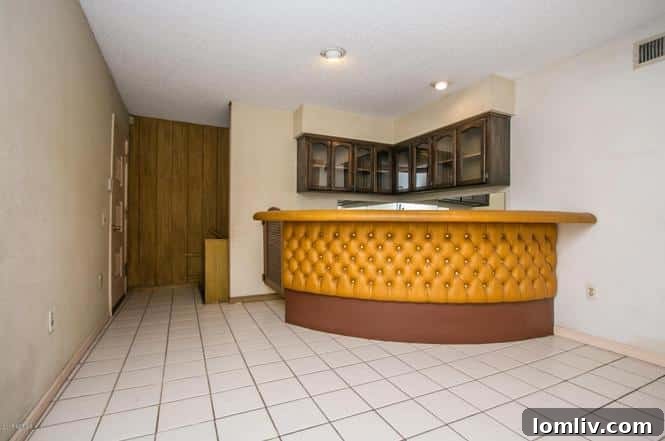
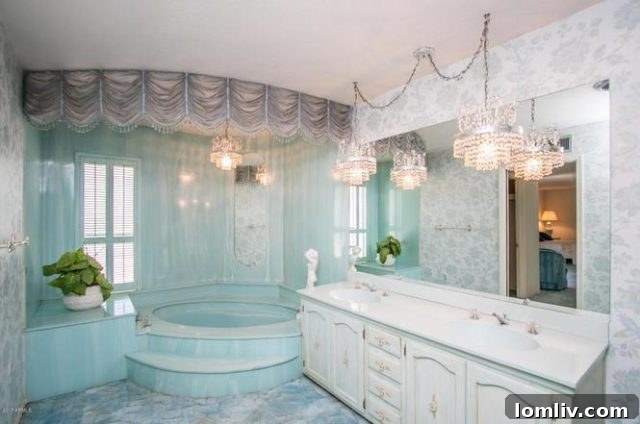
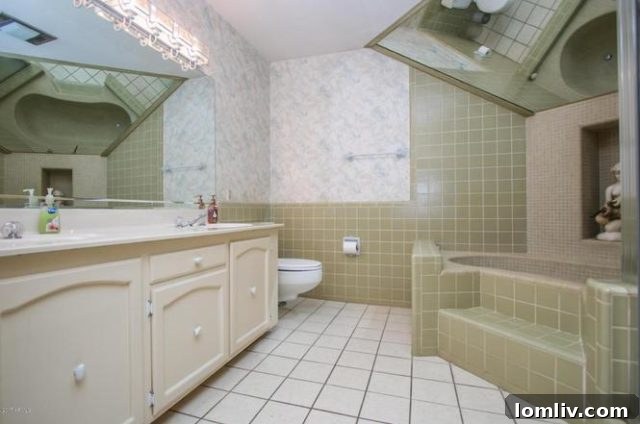
It was the bathrooms, in particular, that cemented this home’s legendary status in our panel’s minds. Karen’s reaction was a rapid-fire assessment of the sheer audacity: “Oh my God, I don’t know what’s the most horrendous—the mustard tufted vinyl bar, the coffin liner shower curtains, or yep it’s the mirrored ceiling in the bathroom because you just can’t have enough naked!” Her exasperation was palpable, perfectly capturing the multifaceted assault on conventional design. The mustard tufted vinyl bar, a relic of many a 70s entertainment space, and the ominously dark shower curtains, indeed resembling something from a gothic funeral home, were merely appetizers to the main course of design controversy.
The mirrored ceiling in the bathroom, however, was the undisputed star of this particular show. Its presence immediately sparked a flurry of jokes and bewildered inquiries. My own contribution, delivered with a deadpan expression, was, “That mirrored ceiling is in case you want to do circumcisions on the side.” Karen, quick to pick up the thread, added, “Heck, I bet Walter (Candy Evans’ husband, an OB/GYN) could do a C-section in there.” The humor, though dark, underscored the sheer absurdity of such a design choice, prompting questions about privacy, utility, and the very intent behind it.
Equally unsettling were the chandeliers dangling precariously over bathtubs. This particular design choice elicited shivers, literally. “Chandeliers over bathtubs give me the heebie-jeebies,” I confessed. “I mean, what if it falls in with you?” The combination of electricity and water, especially in such an intimate setting, raises immediate safety concerns, transforming a supposed luxury into a potential hazard. This was further amplified by the sight of a mirror positioned directly above a sunken jacuzzi, a feature that truly pushed the boundaries of what one might consider appropriate for a private residence.
Jo, ever the pragmatist, offered a succinct and pointed critique: “There are no wholesome reasons why someone puts a mirror over a sunken jacuzzi.” Her statement resonated with the entire panel, highlighting the distinctly non-family-friendly vibe emanating from these spaces. Amanda, catching up to the visual onslaught, chimed in with a bewildered, “Wait a minute…is that a mirror above the bathtub?!!! What is that about?!!” Her question, punctuated by multiple exclamation marks, perfectly mirrored the collective disbelief.
Andrea then delivered the ultimate summary of the bathroom’s transformation: “Seriously… that took a turn from kitschy little old lady house to cheesy sax music playing in the background swinger/porn house really quick.” Her comment, though humorous, perfectly articulated the rapid descent from quirky vintage to overtly suggestive design. Mia, not to be outdone, focused on a spare bath, proclaiming, “The spare bath is OBVIOUSLY a set from Boogie Nights, sans Marky Mark’s gifts. Definitely contemporaneous with that era. I’m glad it’s been cleaned, to be honest. I’m not gonna THINK about what that poor mirror has witnessed.” The image of this space as a film set, complete with its historical context, only added to its mystique and slightly sordid charm.

The Peculiar Master Suite: Secrets and Orange Hues
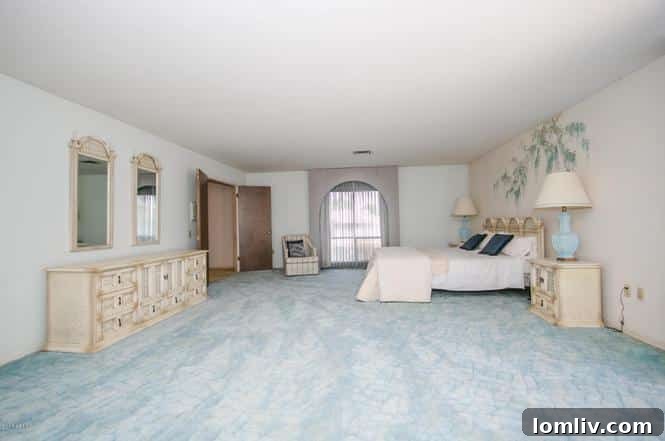
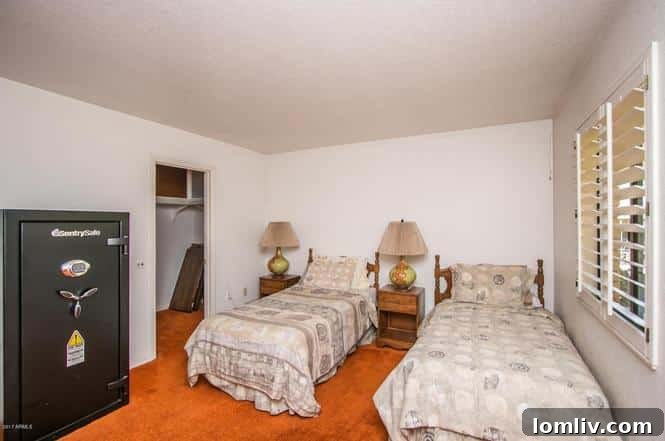
Just when we thought the house had revealed all its eccentricities, the master suite presented its own set of perplexing questions. This room, a curious tableau of mismatched elements, offered yet another glimpse into the homeowner’s unique vision. I found myself scrutinizing the photo with a growing list of queries: “I also have questions about this room, because there is a lot going on here. Huge safe? Mismatched bedding? Orange carpet?” Each element, seemingly out of place, contributed to a larger, more enigmatic picture.
Lindsey, with her keen observational skills, added a sensory dimension to the visual chaos: “One, these pictures look like it smells. Two, there is def a body in that safe.” Her remarks, half-joking, half-serious, perfectly captured the unsettling aura of the room. The presence of a massive safe, incongruously placed, immediately suggested hidden narratives, clandestine activities, or perhaps just an owner with an unusual penchant for security in their private quarters. The clashing bedding patterns and the bold orange carpet further amplified the room’s idiosyncratic character, creating a space that felt both intimate and deeply peculiar.
Mia, having traversed the full spectrum of 70s design horrors by this point, offered a resigned, yet definitive, final word on the matter: “After that mirror, nothing shocks me. Not the rust or mustard carpet nor the top-border wallpaper. Burn it down.” Her sentiment, while extreme, perfectly encapsulated the exhaustion and ultimate desire for a clean slate that such an unadulterated time capsule can evoke. The master suite, with its blend of personal touches and questionable design choices, served as a fitting coda to our exploration of this truly unforgettable 1970s home.
A Deeper Look into 1970s Interior Design Trends
To fully appreciate the Peoria home, it’s essential to understand the broader context of 1970s interior design. This decade was a fascinating period of transition, moving away from the sleek modernism of the 60s into a more eclectic, often rebellious, and highly expressive era. The ’70s saw a surge in personal expression, with homeowners embracing bold colors, unconventional materials, and a sense of “anything goes” that truly broke free from past conventions.
Key to the 70s aesthetic was a penchant for earthy tones blended with vibrant accents. Avocado green, harvest gold, burnt orange, and various shades of brown and mustard yellow were omnipresent, often combined in a single room, creating a warm but sometimes overwhelming palette. These colors were frequently applied to iconic elements like shag carpets, which provided plush comfort underfoot and were available in every imaginable hue, from subtle creams to shocking purples.
Materials also played a significant role. Synthetic fabrics like polyester and vinyl gained popularity due to their durability and ease of maintenance, evident in elements like the tufted vinyl bar in our Peoria example. Laminate countertops and plastic furniture were also common, offering practical yet stylish solutions for the modern home. Wood paneling, often dark and rich, was a staple, gracing walls in living rooms, dens, and even hallways, imparting a sense of warmth and perceived luxury.
Patterns were another defining feature. Geometric designs, often psychedelic in nature, shared space with large, floral motifs, creating a visual tapestry that was both stimulating and, at times, dizzying. Wallpaper, as seen throughout the Peoria house, was a dominant decorative element, transforming plain walls into canvases of repeating designs that reflected the era’s adventurous spirit.
Furniture tended to be chunky, low-slung, and comfortable, encouraging lounging and informal gatherings. Sunken living rooms, or “conversation pits,” were the epitome of this trend, designed to foster intimacy and communal interaction. Lighting fixtures were often dramatic, with oversized chandeliers, hanging globes, and even lava lamps adding to the groovy ambiance. Mirrors, especially mirrored walls and ceilings, were popular, serving not only to expand spaces visually but also to add a touch of glamour and, as some might argue, playful extravagance.
The 1970s was a decade that truly celebrated the home as a personal sanctuary, a place where individuals could express their unique style without inhibition. While many of these trends have since fallen out of favor, viewed through a modern lens, they offer a fascinating glimpse into a period of bold experimentation and a distinctly different definition of “luxury” and “comfort.” The Peoria home, with its preserved elements, stands as a vibrant testament to this captivating era.
Renovation Realities: From Time Capsule to Modern Marvel?
Despite its eccentricities and pronounced 70s character, the fact that this Peoria home is already under contract speaks volumes. Clearly, someone sees beyond the mustard vinyl and mirrored ceilings, recognizing the inherent potential for transformation. This raises the perennial question when encountering such a distinctive vintage property: is it destined for a complete “gut job,” or could it benefit from a more “gentle massage” to modernize its charm?
A full “gut job” would entail stripping the interior down to its studs, allowing for a complete redesign that aligns with contemporary aesthetics and functionality. This approach offers maximum flexibility to address structural issues, update plumbing and electrical systems, improve energy efficiency, and introduce an entirely new layout. While costly and extensive, it ensures the home meets modern standards and buyer expectations, effectively erasing its 70s identity in favor of a fresh start.
Conversely, a “gentle massage” might involve selectively updating certain elements while preserving some of the home’s unique vintage character. Perhaps some of the bolder colors could be toned down, the more outrageous fixtures replaced, and the layouts subtly improved, but a nod to its retro roots could remain. This approach requires a delicate balance, identifying which elements genuinely contribute to a charming retro vibe and which are simply dated and detract from the home’s value or livability. For a home like this, where the 70s aesthetic is so profoundly integrated, a “gentle massage” might prove challenging, as many of its features are deeply intertwined with the overall design narrative.
Renovating a home from this era often comes with its own set of considerations, including potential hazardous materials like asbestos in older flooring or insulation, or lead-based paint, which would require professional remediation. The cost implications for such an extensive overhaul, especially for a property that hasn’t seen significant updates in decades, can be substantial. Ultimately, the future owners of this Peoria time capsule face an exciting, albeit challenging, endeavor in deciding whether to completely reinvent its identity or to subtly coax it into the 21st century while honoring its unique past.
The Enduring Debate: Love It or Leave It?
The Peoria, Arizona, home is undeniably a piece of living history, a perfectly preserved snapshot of 1970s interior design that evokes strong reactions. From its surprisingly demure exterior to its shockingly vibrant and controversial interior, it offers a compelling case study in changing tastes and daring design choices. As our panel discovered, this house isn’t just a home; it’s a conversation starter, a source of both amusement and genuine debate.
So, the question remains for future homeowners and design enthusiasts alike: is this a prime candidate for a complete “gut job,” a meticulous overhaul to erase its retro past and bring it into the modern era? Or does it warrant a more “gentle massage,” a thoughtful renovation that respectfully updates its spaces while perhaps preserving a touch of its original, groovy charm? Regardless of the chosen path, this house undeniably holds a unique place in the annals of residential architecture. Its journey from a mid-century statement to a contemporary living space will surely be as fascinating as its current state.
Want to delve deeper into this incredible 70s time capsule and form your own opinion? See more pictures and explore the full listing by clicking here.