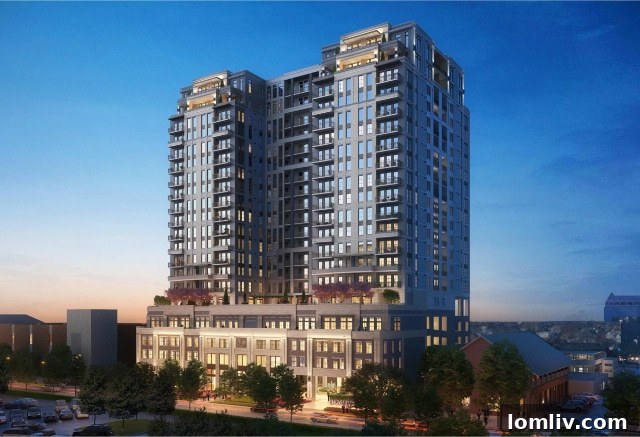
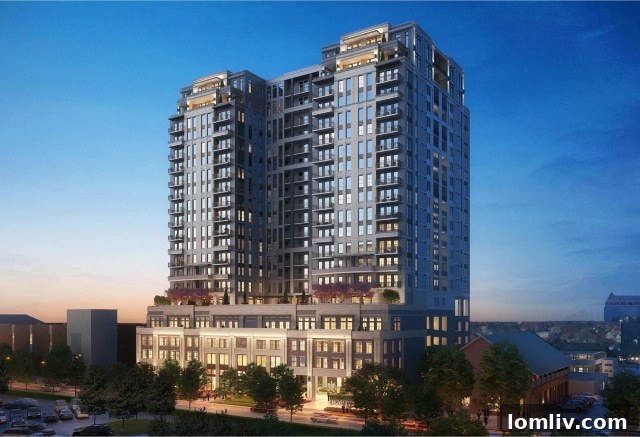
In the vibrant and rapidly evolving urban landscape of Dallas, specifically within the sought-after Oak Lawn district, a recent development project by Crescent Communities has stirred considerable debate and scrutiny. The “Novel Turtle Creek” apartment building, currently under construction near the intersection of Oak Lawn and Irving Avenues, behind a FedEx facility and opposite Holy Trinity Catholic Church, has become a focal point for discussions about urban planning, zoning regulations, and community engagement. My initial investigations into this project, following the Oak Lawn Committee meeting on March 10th, led to a pair of columns detailing significant concerns regarding its perceived scale and the process by which it was approved. For those interested in the initial findings and the unfolding narrative, these columns can be accessed here and here. These pieces highlighted a critical examination of the project’s conformity with existing regulations and its impact on the surrounding neighborhood.
The developer’s presentation to the Oak Lawn Committee was strictly informational, with the project being presented as “by-right,” implying that no zoning changes were required. This designation typically signifies a straightforward development process adhering to established codes. However, from the moment I first encountered images of the proposed building several months prior, something about its sheer scale felt incongruous with the area. It appeared disproportionately large for its location, prompting an inquiry to Crescent Communities in January, which unfortunately yielded no substantive details about the project plans. The subsequent week, after the publication of my columns, was marked by an intense exchange of communications with Kris Sweckard, the City of Dallas’s Director of Sustainable Development and Construction, a correspondence that notably included several high-ranking City Hall officials. The buzz behind the scenes suggested that my reporting had indeed touched a raw nerve within the city’s planning hierarchy, indicating that the issues raised were more than mere speculation.
Unpacking the Controversial Replatting Process
The core of the controversy surrounding the Novel Turtle Creek project lies in a specific aspect of its land acquisition and planning: the replatting of two distinct parcels into a single, combined lot. On January 17, 2019, the Plan Commission granted approval for the replatting of the AT&T site and the Novel development site into one unified parcel. This new configuration, while officially a single lot, was designed to be jointly owned by the two entities. Traditionally, such arrangements are structured as partnerships, where parties hold a percentage interest (e.g., 60/40 split) in the entire parcel. However, in this particular instance, the agreement stipulated that the owners of the combined parcel would retain their deeded ownership interest in their original, physical portions of the overall lot. This atypical ownership structure immediately raised questions about its intent, appearing to be a calculated legal strategy to maximize access to inherent development rights that would not otherwise be available to a single, smaller parcel.
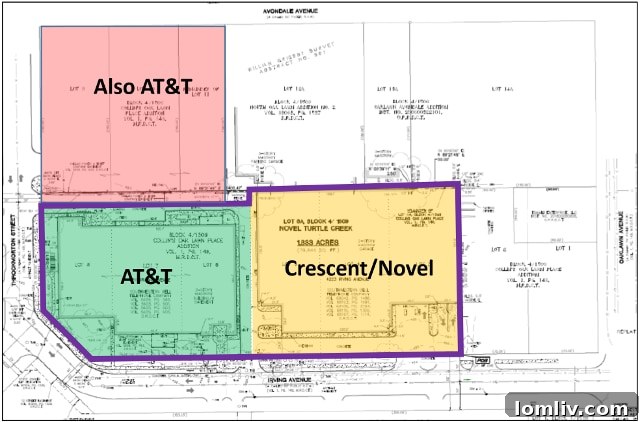
When pressed for clarification on this unusual ownership model, Mr. Sweckard affirmed its legality within the city’s code but struggled to provide any historical examples of similar arrangements. Seeking further insight, I consulted Ken Nolan, the chief appraiser for the Dallas Central Appraisal District (DCAD). Mr. Nolan confirmed that, while uncommon, it is indeed permissible for multiple parties to jointly own a single parcel, and that their ownership interests could be defined by physical boundaries rather than just percentage shares. He emphasized that such a unique ownership structure would require explicit detailing in the parcel’s deeds. He likened it to a condominium arrangement, but applied to land: there is a common, overarching parcel, yet each “owner” is specifically assigned and maintains interest in a particular physical segment of the whole. This clarification underscored the novel approach taken by Crescent Communities and AT&T. However, a significant hurdle remained: at the time of my investigation, the replat had been approved but not formally filed, meaning the crucial deed language that would detail this ownership structure was not yet available for public inspection, leaving many specifics opaque.
Approved but Unfiled: A Permitting Paradox
One of the most perplexing aspects of this project was the revelation that, fourteen months after its approval, the replat remained unfiled. Despite this, building permits had been issued, allowing construction to proceed. Mr. Sweckard justified this by citing a code provision that allows projects in the platting process to obtain early release of building permits once the review is complete and engineering plans are finalized. He described this as a common practice, noting that a final Certificate of Occupancy cannot be issued until the plat is officially filed. While technically permissible, this practice raises significant concerns about transparency and accountability in urban development. Why would the City of Dallas permit construction to commence on such a large scale without the prerequisite legal documentation – the filed replat – being in place? Why issue building permits based solely on approval, rather than the complete, filed record?
From a developer’s perspective, this delay in filing is equally puzzling. While the city’s rationale remains elusive, the industry standard and common sense would dictate that developers would want to finalize all legal documentation, including replats, as swiftly as possible. I spoke with a national developer who deemed this practice “highly unusual” and another one of those “Dallas things” – a unique local quirk. He explained that banks and lenders typically require a replat to be officially filed once approved before they release significant funds for construction, as it secures their investment and clarifies property boundaries and rights. The delay in filing presents potential risks for both the developer and their financial partners, making the motivation behind Crescent’s decision to wait so long to file the replat even more perplexing. While I can only speculate, it is reasonable to assume that the delay might be rooted in financial considerations, as is often the case in complex real estate transactions. This situation highlights a potential systemic flaw where critical legal processes lag behind physical construction, creating a window of ambiguity that could have broader implications for future developments.
Deciphering the Floor Area Ratio (FAR) & Development Rights
The perceived mass and scale of the Novel Turtle Creek building are directly linked to how its Floor Area Ratio (FAR) was calculated. Typically, a standalone residential building in this zone would be limited to a 4:1 FAR. However, the Novel Turtle Creek project claims a higher 4.5:1 FAR. This increased density is achieved through the ingenious, albeit controversial, strategy of leveraging the combined parcel’s mixed-use designation. By integrating the existing AT&T central office operation, which is commercial, with the new residential development, the project effectively redefines itself as a mixed-commercial and residential use on a single, albeit physically segmented, parcel. This clever maneuver allows Crescent Communities to harness the development rights of the AT&T site without the costly necessity of purchasing the land outright, and simultaneously, AT&T avoids the need to sell a strategically important asset.
This intricate deal was meticulously structured to allow Crescent to optimize every available square foot. It’s not a case of shuffling building height, but rather a strategic reallocation of FAR and lot coverage rights. Because the developers are able to claim a single, unified parcel for regulatory purposes, the maximum 60 percent lot coverage is applied to the *combined* lot area, rather than just the portion where Crescent is constructing its residential tower. This means that the specific sub-parcel where the Novel building stands can exceed the 60 percent coverage threshold on its own, because the unused portion of the AT&T site contributes to keeping the overall combined parcel within limits. This “piling” of rights extends to the FAR as well. The 4.5:1 FAR is effectively concentrated onto the Novel sub-parcel, allowing for a larger residential structure, while the AT&T facility continues its operations without change, acting as the commercial anchor that justifies the higher FAR for the combined site. To illustrate, imagine a one-acre parcel with a 4:1 FAR, allowing a four-story building with 100 percent lot coverage. If you possessed three acres but only intended to build on one, you could potentially construct a 12-story building on that single acre, provided the remaining two acres remain undeveloped. This analogy, though simplified, captures the essence of how development rights from one part of a combined parcel can be transferred or “piled” onto another section, enabling a significantly larger structure than would otherwise be permissible.
The Looming Threat of a “Double-Dip” Development
A critical concern arising from this unique replatting and ownership structure is the potential for the combined lot to be separated back into two distinct parcels at a future date. This possibility fuels a significant fear: what prevents the de-platting of this unified lot, followed by the construction of a second high-rise building on AT&T’s existing 1.7 acres? Such an outcome would represent a “double-dip” of development rights, effectively exploiting the system twice over from what was initially approved as a single development package.
Mr. Sweckard’s response to this apprehension offers a degree of reassurance. He stated that should a de-platting application be filed, the city would rigorously assess whether the resulting individual parcels would create “any zoning non-conformities, such as FAR or setback encroachments.” If such non-conformities were identified, the issue “must be addressed before a plat can be filed.” Importantly, while certain variances can be rectified, “FAR is not a regulation that can be varied by the board of adjustment, so a replat that creates noncompliance with FAR cannot be approved.” This official position suggests that AT&T would likely be unable to double-dip on FAR for a new project utilizing their 1.7 acres of non-Crescent land, as the existing building already utilizes the combined parcel’s maximum FAR. This interpretation implies a safeguard against a second large-scale development on the AT&T portion.
However, this complex land ownership arrangement also casts a long shadow over the future of the Novel Turtle Creek project itself, particularly if there were ever a consideration for converting the apartments into condominiums. The current replatted land ownership, characterized by a complex intertwining of two distinct owners within a single parcel, would create substantial challenges for residential mortgages. A residential unit in such a setup would essentially function as a “condo within a condo,” a structure that banks find exceptionally problematic to finance. Similarly, if the plat were somehow separated, banks and insurance companies would be highly reluctant to engage with non-conforming uses. This reluctance stems from the lack of guarantee that such a structure could be rebuilt if it were ever destroyed by a disaster, rendering it an undesirable asset from a risk management perspective. Thus, while the city’s stance might prevent a double-dip, the innovative ownership structure introduces other long-term complications and limitations for the property.
Is It a Loophole or a Systemic Design Flaw?
This entire convoluted process appears to be a highly intricate method for achieving what are essentially “transferable development rights” – a planning tool that allows development capacity to be shifted from one parcel to another. While formal transferable development rights (TDR) programs exist in many cities to manage density and preserve specific areas, Dallas has notably been slow to implement such a comprehensive system. A proper TDR mechanism would involve a formal zoning case, permanently extinguishing the seller’s development rights and, crucially, including robust community notification and engagement. In contrast, this particular replatting strategy bypasses those established checks and balances, potentially undermining the spirit of urban planning regulations.
It is almost certain that AT&T was financially compensated for their rights in this arrangement; after all, AT&T is a major corporation and not a benevolent organization. The opacity of this compensation and the lack of public scrutiny around the “transfer” of these rights is deeply troubling. This innovative approach to maximizing density is not entirely unprecedented in the Oak Lawn and Uptown areas. Recent projects, such as Streetlights on Oak Lawn and Lemmon, also utilized methods to concentrate development rights within a parcel, though notably, they pursued a full zoning case, ensuring community notification. Similarly, rumors circulate about a high-rise planned for the Maple Terrace parking lot, which is also reportedly claiming “by-right” status. However, in both these comparable cases, the *entire* parcel was owned by a single entity. From my limited experience in Dallas real estate, this Novel Turtle Creek project marks the first instance where a replatting process has been strategically employed to facilitate a development rights transfer between two separate owners of a parcel that was explicitly combined solely for this purpose. This novel application of replatting raises serious questions about its legitimacy and fairness.
When a replat application comes before the City Plan Commission (CPC), the process is often streamlined. Unless there is well-informed and organized opposition, these applications are typically approved in bulk, with minimal discussion or detailed scrutiny. Petitioners for a replat are not generally required to submit comprehensive plans of their proposed construction. In the case of Novel Turtle Creek, the “staff recommendations” curiously included a requirement for a full set of plans to be submitted *when the replat was filed* – which, as we’ve seen, could be years after approval and potentially even after the building is substantially complete. This delay in requiring detailed plans fundamentally undermines the CPC’s ability to make informed decisions. It is naive to believe that AT&T and Crescent Communities were unaware of the general development plan; Crescent would hardly engage AT&T without a clear understanding of the financial remuneration and the scope of the project. Equally naive is the assumption that they were unaware of potential neighborhood opposition to a project of this scale and nature.
This situation compels us to question whether this constitutes a loophole, or simply an exploitation of the existing system. Is it a flaw that a replat can be approved with no detailed development plans, within a process that generally gives little attention to replats? Is it a loophole that the true intentions and implications of such a specific type of replat can be so easily obscured from public view and official scrutiny? Is it a loophole that this particular ownership setup can be utilized to effectively transfer significant development rights without the transparency and community engagement that would typically be required for such a substantial impact? While “loophole” might not be the perfect descriptor, it highlights a profound inadequacy in the current regulatory framework, leaving us struggling for a more precise term to capture the essence of this systemic challenge.
Charting the Course: Essential Next Steps for Urban Planning
While the construction of Novel Turtle Creek is well underway – a classic case of the “horse being out of the barn” – this critical juncture offers a vital opportunity for introspection and reform within the City of Dallas’s urban planning and development processes. It is imperative that the city learns valuable lessons from this case and takes proactive measures to prevent similar situations from undermining public trust and sound urban development principles. The time has come to “shut the barn door” by implementing concrete changes to the replatting process.
Firstly, the City Plan Commission must begin requiring explicit statements of intent and comprehensive development plans for all replat applications. This raises a crucial question: does Plan Commission already possess the authority to demand such information? If so, why is it not consistently exercised? Providing more detailed information on an applicant’s intentions and plans upfront would undoubtedly lead to more informed decisions, fostering transparency and accountability. Such a requirement would ensure that all stakeholders, including city officials and the community, have a clear understanding of a project’s scope and impact from its earliest stages.
Secondly, the significant delay between a replat’s approval and its official filing must be addressed. Is it truly sensible for building permits to be issued for approved but unfiled replats? What is the rationale behind allowing construction to proceed based on an approval that is not yet fully legalized through filing? The current standard, seemingly “the day you’re finished,” is clearly inadequate and introduces unnecessary ambiguity and risk. Establishing a strict time limit for the filing of approved replats would streamline the process, reduce uncertainty, and align Dallas with best practices in urban planning across the nation.
Finally, there is an urgent need to re-evaluate how replat applications are handled within affected neighborhoods. Should residents in close proximity to a proposed replat be formally notified, akin to the process for rezoning cases? Furthermore, should these residents have access to the applicant’s detailed plans, empowering them to assess potential impacts and provide informed feedback? In areas like PD-193, encompassing Oak Lawn, Uptown, and Knox, should established bodies like the Oak Lawn Committee be routinely apprised of replat applications and their associated plans? While some might argue that such measures mirror rezoning procedures, and that many replats are minor, the Novel Turtle Creek case clearly demonstrates that in certain, significant instances, such comprehensive community engagement is not only warranted but essential. It would ensure that developments align with neighborhood character and address resident concerns.
My overarching concern is that this seemingly novel playbook – a method to effectively “upzone” property without undergoing traditional rezoning processes or engaging with city planners and neighborhood groups – will gain dangerous traction within the development community. This precedent, if left unchecked, risks eroding the integrity of Dallas’s urban planning framework and diminishing community voice. It is a concern that should be shared by all citizens invested in the thoughtful and sustainable growth of our city. Moreover, the long-term impact of the current global economic climate, particularly COVID-19’s ramifications on real estate funding and investment, suggests that the final chapter of this particular project, and others like it, may still be unwritten, adding another layer of uncertainty to an already complex situation.