In a compelling counterpoint to recent discussions surrounding the White Rock Lake Stone Tables, renowned Preservation Architect Norman Alston offers a critical perspective on the recent renovation project. His insights illuminate why the approach taken constitutes a significant loss for Dallas’s heritage and provide invaluable lessons for future preservation efforts. This article delves into the core principles of historic preservation, challenging common misconceptions and advocating for a more authentic and informed stewardship of our city’s invaluable landmarks.
By Norman Alston, FAIA
Special Contributor
Dallas, for many years, has grappled with an enduring self-perception that it possesses little history—especially architectural history—that warrants preservation and celebration. This narrative often suggests that whatever historical fabric we do have, we are quick to dismantle. This sentiment is one I’ve encountered countless times, and I must admit, it consistently troubles me because it fundamentally misrepresents the rich historical tapestry of our city.
Contrary to popular belief, Dallas boasts a vibrant and fascinating history, accompanied by an impressive array of buildings that have played integral roles in its unfolding story. The depth of our heritage is evident in the numbers alone: the City of Dallas Landmarks program proudly encompasses more than 4,000 designated historic landmarks, including both individually listed sites and properties nestled within historic districts. Moreover, for every officially designated Dallas Landmark, there are undoubtedly several others that are equally eligible for recognition, yet remain formally undesignated. This underscores a profound legacy that we, as a community, have inherited.
Despite this inherited wealth of history, we frequently find ourselves struggling with the fundamental questions of when and how to appropriately care for it. Karen Eubank’s recent article, which explored the work undertaken at the Stone Tables at White Rock Lake, provided a valuable service by clarifying standard terms within historic preservation—terms whose precise meanings are often misunderstood by the general public. Collaborating with my esteemed friend and colleague, Marcel Quimby, FAIA, Karen’s piece helped demystify the foundational concepts underpinning modern historic preservation practices: renovate, restore, rehabilitate, and reconstruct. These critical definitions meticulously outline the “how” of preservation.
However, the recent events surrounding the Stone Tables project at White Rock Lake powerfully highlight that our learning journey is far from over. Even more crucial than grasping the “how,” we must deeply comprehend the “why” that truly drives meaningful preservation efforts. This “why” is not merely about maintaining old structures; it’s about safeguarding the very essence of our shared past.
The unequivocal answer to this “why” is authenticity. For a historic building or site to truly maintain its cultural and historical relevance, it must be genuine. It must stand as an authentic product of its specific time, bearing the true marks of its origin, its creators, and its evolution. Without authenticity, a historical object, no matter how old or aesthetically pleasing, risks becoming merely a replica, losing its profound connection to the past it represents. This principle extends beyond grand architectural marvels to the humble, yet equally significant, public works of art and infrastructure that shape our communal spaces.

It appears we intuitively grasp the concept of authenticity in many aspects of our lives, yet curiously, we sometimes falter when it comes to historic sites and buildings. Perhaps we feel the same rigorous standards simply don’t apply. I recall a vivid childhood experience from the 1960s in Dallas. I purchased a new baseball, a standard, regulation ball, but what made it special was a printed signature of Mickey Mantle—a towering figure for young boys of that era—as if he had personally signed it. My excitement was palpable as I showed it to my father. He gently, yet clearly, explained that the autograph, while appearing authentic, was merely machine-stamped. Mickey Mantle himself had virtually no involvement in its creation. Even at that young age, I perfectly understood the crucial difference.
To most observers, my purchased ball and one genuinely autographed by Mickey Mantle might have appeared indistinguishable. Yet, their respective values were wildly different. This fundamental human tendency to value authenticity holds true across a vast spectrum of objects: whether we’re discussing fine art, cherished antiques, classic automobiles, high fashion, rare sports memorabilia, or, most critically, historic sites. A perfect copy, no matter how flawlessly executed, can never truly replicate the intrinsic value and unique spirit of the original. This distinction is paramount in the realm of historic preservation, where the physical fabric of a site often holds the very imprint of history itself.
Where the White Rock Lake Stone Tables Lost Their Authenticity
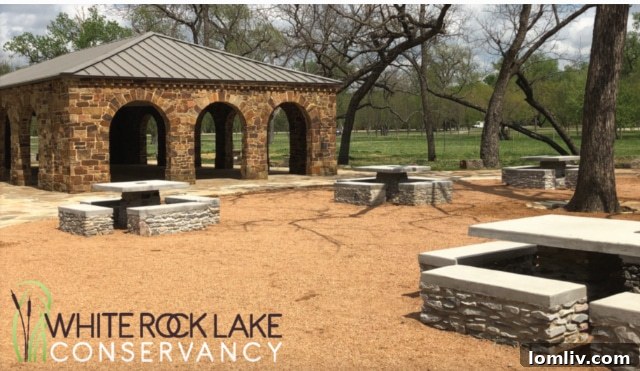
The narrative of the Works Progress Administration (WPA) and its profound legacy at White Rock Lake is a truly remarkable one. The Stone Tables, in particular, embody a significant chapter of this history. That these workers—individuals often facing hardship during the Great Depression—conceptualized and meticulously constructed these tables on their own initiative speaks volumes about their dedication and ingenuity. This inherent attribute, the tangible evidence of their unique craftsmanship and collective spirit, is precisely what makes such features stand out and emphatically warrants their careful preservation. They were so distinctive, so integral to the landscape, that the very site derived its name from them: Stone Tables. These tables, along with their compelling backstory, were the beating heart of what made that place truly special.
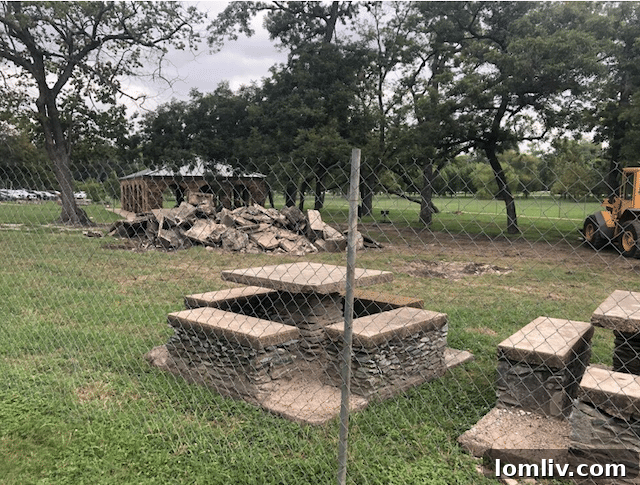
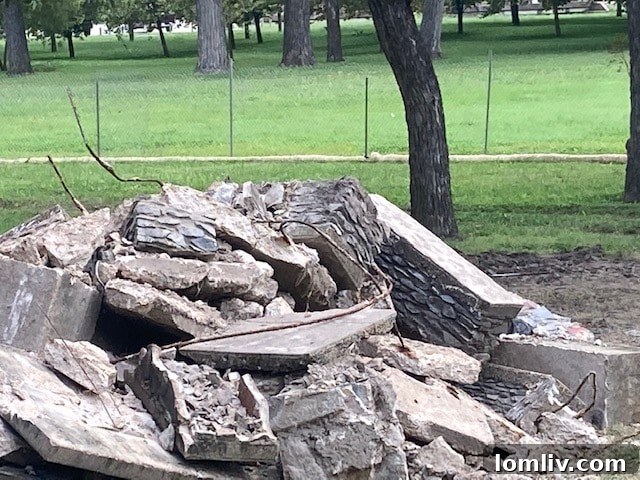
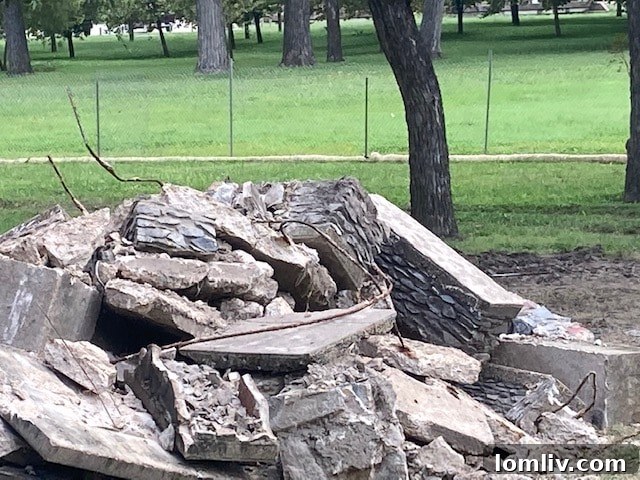
Tragically, those original, authentic Stone Tables are now gone. The intricate handiwork of the original builders, the very stones shaped by their hands and imbued with their effort, were unceremoniously scooped up and piled on-site. This demolition was accompanied by a vague promise to “use what we can” from the salvaged material. The consequence of this approach is devastating: we no longer possess a reliable means to distinguish between original material and new additions. More critically, none of the actual workmanship of the original craftsmen remains intact. The unique arrangement, the subtle variations in stone placement, the very spirit of their creation—all have been irrevocably erased.
The Stone Tables we see today, while perhaps bearing a superficial resemblance to their predecessors and likely incorporating a considerable number of stones from the initial construction, are fundamentally imperfect copies of the originals. Their unique, authentic qualities have been effectively wiped out. This is the profound and unyielding truth about historical authenticity: once it is lost, it can never be truly recovered. There is no conceivable way, through any method of reconstruction or replication, to genuinely recover the authentic Stone Tables that once defined this cherished site.
The Path Not Taken: What Should Have Happened with the Stone Tables?
A vastly different and infinitely more responsible approach should have been employed for the Stone Tables. Instead of demolition, modern, proven preservation techniques should have been meticulously applied to safeguard as much of the original material and, crucially, the original workmanship as possible, without reducing the entire structure to a mere pile of rubble. While such an endeavor might appear daunting at first glance, this approach is both common and highly effective in projects involving stone and concrete construction. It requires expertise, careful planning, and a deep respect for the existing historical fabric, but it is by no means an impossible task for skilled preservationists.
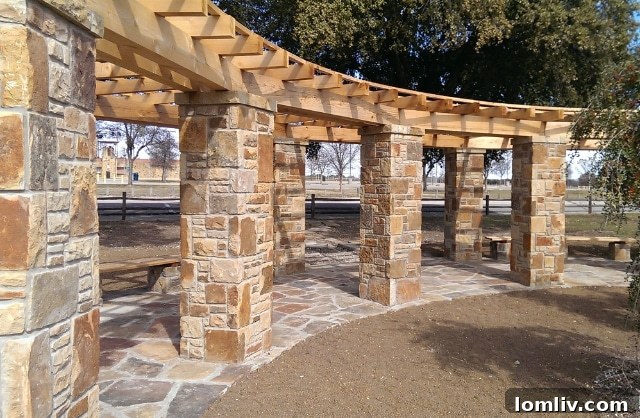
The successful restoration of the Kiest Park Pergola, also here in Dallas, stands as an excellent example of how proper preservation can be executed. This pergola, another magnificent stone structure dating back to the WPA era, was a beloved landmark within its Oak Cliff neighborhood for many decades. However, years of environmental exposure took their toll, eventually necessitating the removal of most of its original components for safety reasons. Despite this significant deterioration, Dallas Parks and Recreation made an unwavering commitment to both restore and reconstruct the historic pergola site for the benefit of the community, guided by invaluable original drawings and photographs.
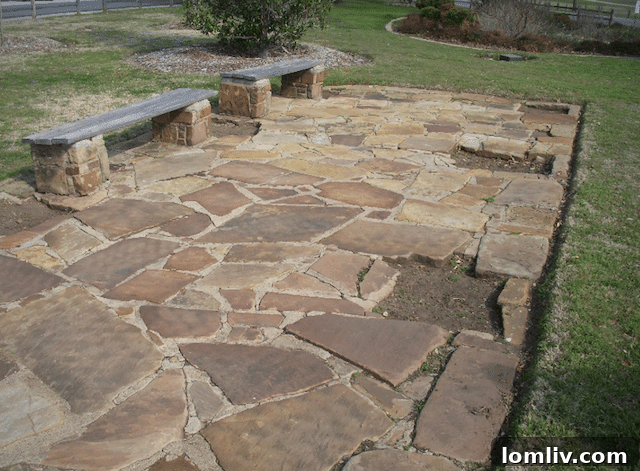
At the very inception of the restoration and reconstruction project, only the original stone paving and a few benches remained of the Kiest Park Pergola; the distinctive columns and the wooden pergola structure itself had long since vanished. For the restoration of the surviving original stone paving, a methodical and highly precise process was undertaken: each individual stone was meticulously mapped and numbered before being carefully removed. This painstaking documentation allowed for the installation of a new, stable foundation beneath the paving. Critically, this pre-salvage documentation ensured that every single stone could be re-set in its exact original location, preserving the authentic pattern and feel of the historic surface.
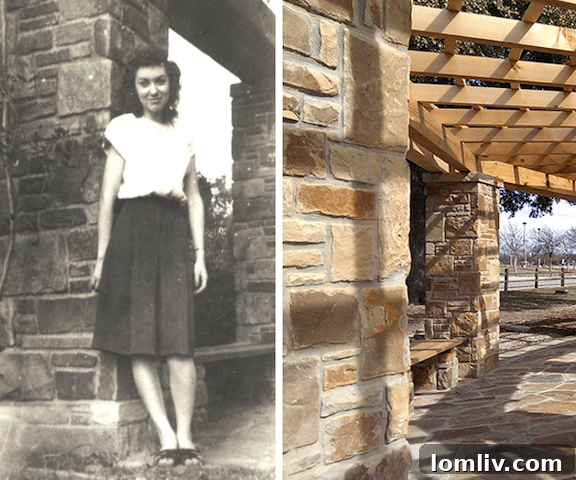
Subsequently, for the reconstruction of the pergola structure itself—the parts that were entirely missing—historic drawings and photographs, such as the one on the left, served as an indispensable guide. These detailed historical records enabled the recreation of the original design with the highest possible degree of accuracy, a fact confirmed by comparing the reconstructed pergola to historical images of the finished structure (as seen on the right). It is crucial to note, as previously mentioned, that the pergola portion is a reconstruction. It utilized none of the original materials or workmanship simply because those elements no longer existed. Nevertheless, this reconstruction represents the closest possible approximation of authenticity that the circumstances would permit. Reconstruction, as a preservation approach, should only ever be undertaken as a last resort, when absolutely no other option is available, and then only when robust, comprehensive documentation of the missing original features is at hand. The Kiest Park Pergola exemplifies how to responsibly approach reconstruction when necessary, valuing historical accuracy and documented evidence.
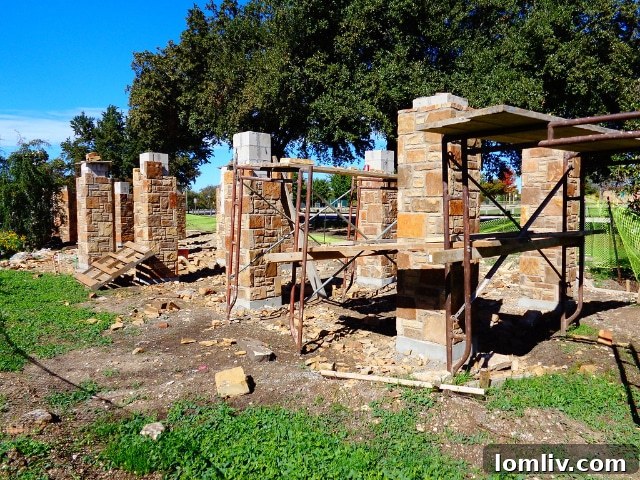
The measures employed at Kiest Park were far from extreme or prohibitively expensive. In fact, the Kiest Park Pergola project was completed well within the Dallas Parks and Recreation budget and, notably, was constructed by the very same general contractor responsible for the work at the Stone Tables: Henneberger Construction. This demonstrates unequivocally that a more sensitive and historically appropriate approach was not only feasible but also financially viable, underscoring the missed opportunity at White Rock Lake.
Suggestions for the Future of Dallas’s Historic Parks
It was asserted that the White Rock Lake Stone Tables project was never intended as a preservation endeavor. While I find this stance difficult to comprehend given the site’s clear historical significance, it undeniably highlights a critical need: the establishment of a robust, systematic framework within Dallas Parks and Recreation to review and guide projects that involve popular and valuable historic components. Such a system would ensure that historical assets are recognized and protected from the outset, rather than being an afterthought.
One potential method to accomplish this would be to designate White Rock Lake Park itself as a City of Dallas Landmark. This formal designation would trigger specific protections and review processes for any proposed changes within the park’s boundaries. However, achieving such a designation is not without its challenges. Beyond the considerable time and diligent effort required for the application process, there would undoubtedly be both practical and political obstacles to navigate, likely extending the timeline for a year or more. While a comprehensive solution, it might not be the most agile response for immediate needs.
Perhaps a more elegant, timely, and adaptable response would involve the Park Board establishing a dedicated committee comprising knowledgeable staff and engaged community volunteers. This advisory body could serve as an essential resource, offering expert guidance and quick answers for any proposed projects impacting historic features within our parks. Such a program would not only provide invaluable professional insights but also empower the community to actively participate in safeguarding beloved historic sites, ensuring that future interventions are informed by a deep understanding of preservation principles and a commitment to maintaining authenticity. This proactive approach would help Dallas truly live up to the rich history it possesses and deserves to celebrate.
The ribbon-cutting of the newly constructed Stone Tables took place at 10 a.m. Saturday, August 28, at 711 East Lawther Road. While this marks a new chapter, it also serves as a poignant reminder of the lessons learned regarding authenticity and preservation.
Norman Alston, FAIA, is a distinguished Dallas preservation architect and a dedicated daily user of White Rock Lake Park, offering him a unique perspective on its evolving landscape.