Escalation Clauses in Real Estate: A Risky Strategy Buyers and Sellers Should Avoid
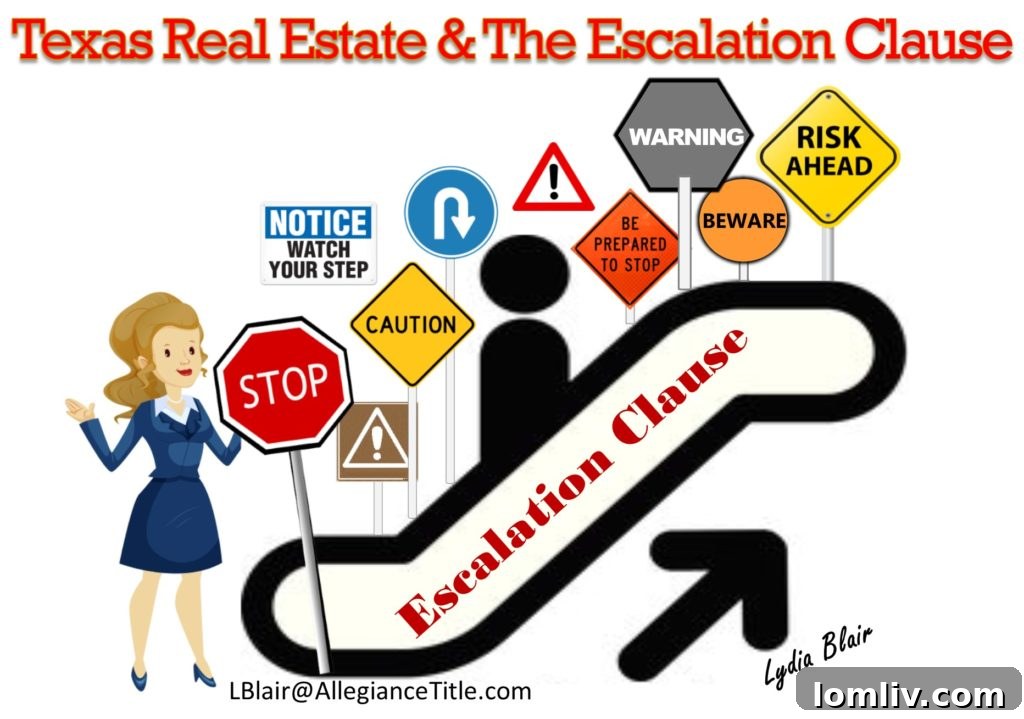
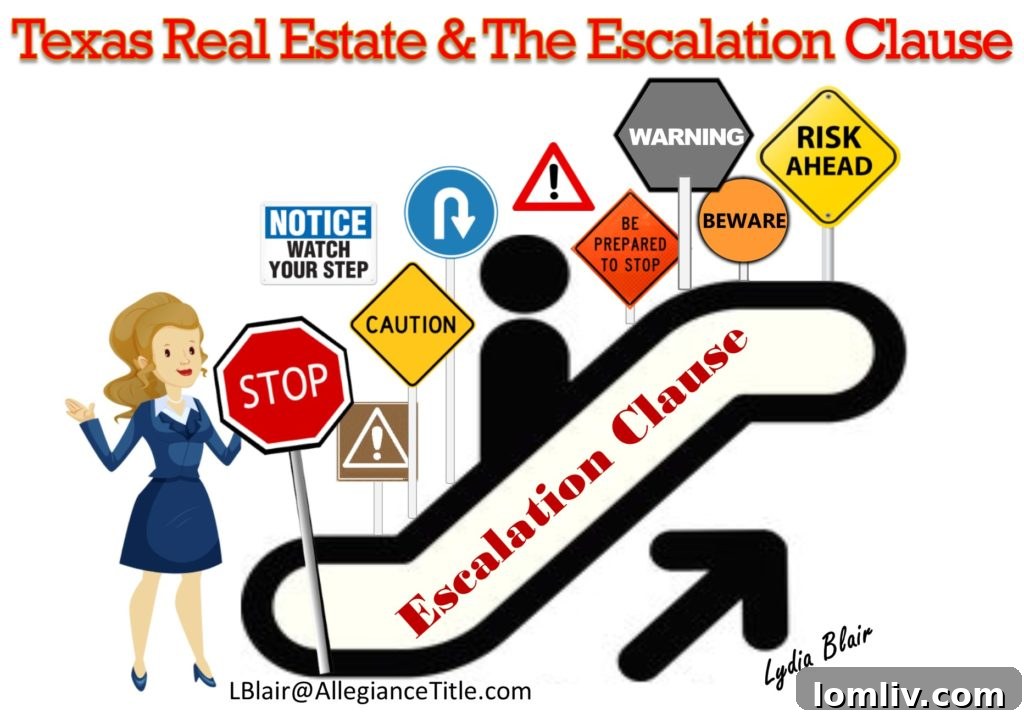
In today’s highly competitive real estate market, where inventory is low and buyer demand is high, it’s common for properties to attract multiple offers. This intense environment often leads to bidding wars, pushing buyers to explore various tactics to make their offers stand out. One such tactic that frequently surfaces is the use of an escalation clause. While it might seem like a clever strategy to secure a desired property or achieve the highest possible sale price, a closer look reveals that escalation clauses are fraught with potential pitfalls and are generally ill-advised for the vast majority of residential real estate transactions.
This comprehensive guide aims to shed light on why real estate professionals, including leading associations like the Texas Association of Realtors, strongly discourage the use of escalation clauses. We’ll delve into the inherent problems, ethical considerations, and practical complications that arise when these clauses are introduced into a contract. Our goal is not to criticize individual buyers or sellers but to provide clarity and empower you with the knowledge to navigate complex real estate negotiations with confidence and avoid unnecessary risks.
What Exactly is an Escalation Clause?
An escalation clause is a specific provision within a buyer’s offer that automatically increases their proposed purchase price if the seller receives a higher competing offer. In essence, it tells the seller, “I’m willing to pay X dollars for your home, but if someone else offers more, I’m prepared to increase my offer by a specified increment (e.g., $1,000) above that competing offer, up to a maximum price of Y.”
For example, a buyer might offer $300,000 for a home with an escalation clause stating they will pay $1,500 more than any higher offer received, not to exceed $320,000. The theoretical appeal is clear: it allows a buyer to potentially outbid competitors without having to guess the highest offer, and it promises a seller a potentially higher sale price. However, as we will explore, the theoretical simplicity rarely translates into practical advantage in real-world scenarios.
The Allure and The Reality: Why They Seem Appealing Yet Are Problematic
On the surface, an escalation clause can appear to be a win-win. For a buyer, it offers a perceived edge in a multi-offer situation, theoretically ensuring they don’t lose out on a property by a small margin. For a seller, it dangles the promise of the highest possible price, seemingly without extra negotiation effort. Yet, the reality is far more complex. These clauses introduce ambiguity, ethical dilemmas, and a host of potential legal and financial complications that can derail a transaction, leave parties feeling exploited, or worse, lead to costly disputes.
Why Real Estate Professionals Strongly Advise Against Escalation Clauses
The reasons for widespread professional disapproval of escalation clauses are numerous and significant. They touch upon fundamental principles of contract law, ethical conduct, transparency, and sound negotiation strategies. Let’s explore the critical problems inherent in their use:
1. The “Open Wallet” Syndrome: Overpayment Risks and Seller Expectations
When a buyer includes an escalation clause with a cap (a maximum price they are willing to pay), they are essentially disclosing their highest acceptable price upfront. This is akin to a buyer opening their wallet and inviting the seller to “help yourself” to the maximum amount. In many cases, the seller and their agent will view this cap as the buyer’s true willingness to pay and may simply counter-offer at that maximum price, regardless of whether a genuinely higher competing offer exists or warrants such an increase. This removes any guesswork for the seller and instantly establishes their expectation, often leading the buyer to pay more than they might have otherwise, or more than is truly necessary to secure the property. It eliminates the buyer’s negotiating leverage from the outset and can lead to significant buyer’s remorse.
2. Breaching Confidentiality and Ethical Dilemmas for Agents
Real estate contracts are confidential documents. The terms and conditions of one buyer’s offer, including the price, are typically not to be disclosed to other competing buyers without explicit written consent from all parties involved. This ethical cornerstone is vital for maintaining fair and honest dealings. An escalation clause, by its very nature, often requires the seller or their agent to reveal the details of a competing offer to trigger the escalation. This puts the seller’s agent in a precarious position, potentially violating their ethical duties to the other bidding parties and creating legal liabilities. While realtors can disclose that multiple offers exist, revealing specific amounts or terms without proper authorization is a serious breach of trust and professional standards.
3. The Verification Challenge: Proving Legitimate Competing Offers
One of the most significant problems with escalation clauses is the difficulty, if not impossibility, for the buyer to verify the legitimacy of a competing offer. How does the buyer with the escalation clause know they are truly competing against a bona fide, sincere offer and not a fabricated or “phoney” offer solicited by the seller or their agent purely to drive up the price? The buyer has no assured mechanism to confirm that the other offer is genuine, comes from a truly interested and qualified party, or isn’t from a friend or relative of the seller. This lack of transparency and the potential for manipulation leave the buyer vulnerable to overpaying without true justification, eroding trust and setting the stage for future disputes.
4. Complicating the “Highest and Best” Offer Strategy
A seller’s agent has a fiduciary duty to secure the best possible deal for their client. In a multiple-offer scenario, the standard and most ethical practice is to invite all interested parties to submit their “highest and best” offer by a specified deadline. This approach encourages buyers to put their strongest offer forward upfront, leading to clear, definitive bids that can be directly compared. However, when an escalation clause is present, it complicates this process. At what point does a seller truly have a specific, highest dollar amount offer? If multiple offers include escalation clauses, the process becomes convoluted, making it difficult to determine the actual highest price and evaluate the overall strength of each offer. It shifts the burden of calculation and comparison in an undue manner, often prolonging negotiations and creating uncertainty.
5. The Essential Need for Price Certainty in Contracts
A fundamental principle of any legally binding contract, especially in real estate, is clarity and certainty of terms. The sales price, as one of the most critical elements, must be definitively agreed upon by both buyer and seller. An escalation clause, however, introduces an element of fluidity and uncertainty into the purchase price. When a contract with an escalation clause is initially executed, the final sales price might be unknown. It could be $1,000, $10,000, or even $100,000 more than the buyer’s initial base offer. This ambiguity can cause significant problems with mortgage lenders, who require a specific, agreed-upon sales price for loan underwriting and appraisal purposes. It also leaves both parties in a state of limbo until the escalation is triggered and a final price determined, which can complicate financing, appraisals, and overall contract reliability.
6. Not a True Offer: The Right-of-First-Refusal Pitfall
From a seller’s perspective, an offer with an escalation clause is not a firm, definitive offer for a specific amount. Instead, it functions more like a conditional request for a “right-of-first-refusal.” It asks the seller to go out and secure another offer, then gives the original buyer the option to beat it. Savvy home sellers and their agents typically prefer a straightforward, clear, and exact dollar amount offer with definite terms that they can accept outright. Offers laden with escalation clauses often signal to the seller that the buyer is less serious about committing to a specific price or is trying to avoid directly competing, leading many sellers to disregard such offers in favor of simpler, stronger bids.
7. The Appraisal Gap Risk: Overvaluing the Property
One of the most practical and significant financial risks associated with escalation clauses is the potential for an appraisal gap. When an escalation clause drives the purchase price significantly above the initial offer, there’s a higher likelihood that the final agreed-upon price will exceed the property’s appraised value. Mortgage lenders will only finance up to the appraised value of a home. If the sales price is $350,000 but the appraisal comes in at $330,000, the buyer is responsible for covering the $20,000 difference out-of-pocket, unless they can renegotiate with the seller or terminate the contract. Escalation clauses make it easier for buyers to commit to prices that may not be supported by the market, putting them at substantial financial risk.
8. The Shadow of Buyer’s Remorse and Contract Termination
The emotional intensity of a bidding war can lead buyers to commit to prices they later regret. When an escalation clause pushes the purchase price higher than initially intended, buyer’s remorse can set in quickly, even before the ink is dry on the contract. Many contracts include an “option period,” during which a buyer can terminate the agreement for any reason. If a buyer feels they’ve overpaid due to an escalation clause, they might exercise this option, leaving the seller back at square one, having lost valuable time and momentum. Sellers are wise to remember that the highest purchase price isn’t always the best offer if it comes with a high risk of termination.
Smarter Strategies for Buyers in Competitive Markets
Instead of relying on a problematic escalation clause, buyers can employ more effective and ethical strategies to make their offers competitive and appealing:
- Strong, Clean Offer: Submit your absolute “highest and best” offer upfront with clear, concise terms.
- Robust Earnest Money: A higher earnest money deposit signals serious commitment to the seller.
- Proof of Funds/Pre-Approval: Include a strong pre-approval letter from a reputable lender or proof of cash funds to demonstrate financial capability.
- Waive Contingencies (with caution): If comfortable and well-advised, consider waiving certain contingencies like financing or appraisal (though this carries significant risk and should only be done after careful consideration with legal counsel).
- Flexible Closing Date: Offer a closing date that aligns with the seller’s preferences, if possible.
- Personal Letter: A heartfelt letter to the seller, explaining why you love their home, can sometimes create an emotional connection.
Effective Strategies for Sellers in Multiple Offer Situations
Sellers faced with multiple offers should work closely with their agent to implement a clear and fair process:
- Set a “Highest and Best” Deadline: Request all interested buyers to submit their strongest, non-escalated offers by a specific date and time.
- Evaluate Offers Holistically: Don’t just focus on price. Consider the financing type, contingencies, closing date, and earnest money deposit.
- Counter Strategically: If offers are close, or if you want to push for a slightly higher price, counter the most attractive offer(s) with specific, definitive terms.
- Maintain Confidentiality: Your agent should never disclose the terms of one offer to another party without proper authorization.
Conclusion: Clarity, Certainty, and Ethical Practice Prevail
While the allure of an escalation clause might be strong in a seller’s market, its practical implementation is fraught with challenges and ethical dilemmas. For both buyers and sellers, these clauses introduce unnecessary complexity, uncertainty, and potential for dispute. Real estate transactions are significant financial and emotional undertakings that demand clarity, transparency, and certainty of terms. Professionals in the industry overwhelmingly agree that straightforward, definitive offers, where all terms including the purchase price are explicitly stated, serve the best interests of all parties involved. By avoiding escalation clauses and opting for well-structured, clean offers, buyers and sellers can navigate the competitive landscape more effectively, ethically, and with greater peace of mind, leading to smoother transactions and more satisfactory outcomes.
The opinions expressed are of the individual author for informational purposes only and not for the purpose of providing legal advice. Contact an attorney for any particular issue.
Lydia Blair (formerly Lydia Player) was a successful Realtor for 10 years before jumping to the title side of the business in 2015. Prior to selling real estate, she bought, remodeled and sold homes (before house flipping was an expression). She’s been through the real estate closing process countless times as either a buyer, a seller, a Realtor, and an Escrow Officer. As an Escrow Officer for Allegiance Title at Preston Center, she likes solving problems and cutting through red tape. The most fun part of her job is handing people keys or a check.