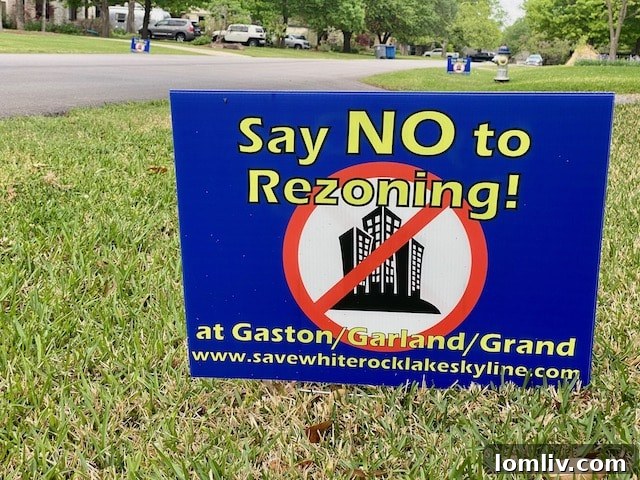
East Dallas Community Rallies Against Trailhead Development: Unpacking the City Council’s Decision
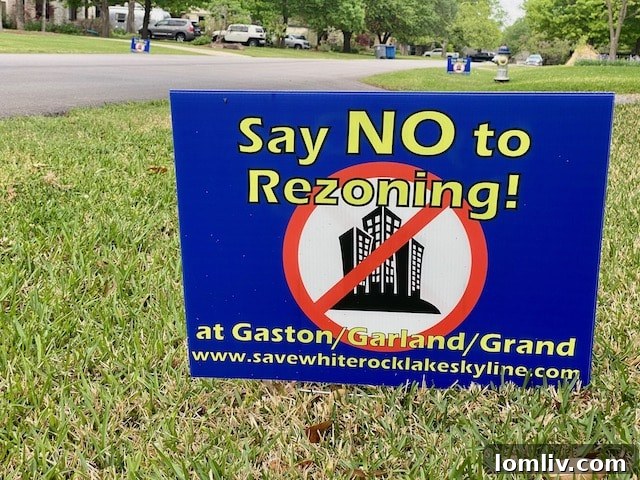
East Dallas is a vibrant tapestry of neighborhoods, each boasting a distinct character and a fiercely protective community spirit. At the heart of this spirit lies the treasured White Rock Lake, a natural oasis that residents consistently champion against any perceived threat. The passionate engagement of District 9 residents, known for their powerful grassroots organizing, is particularly evident when it comes to preserving the integrity and accessibility of this beloved landmark. Therefore, it came as a significant shock to many when a major rezoning request for a new development, the “Trailhead” by Mill Creek, located at the critical intersection of Garland, Grand, and Gaston Avenues, received unanimous approval from the Dallas City Council.
This decision ignited a wave of disappointment, particularly among those represented by District 9 City Council member Paula Blackmon. Residents, who had vocally and consistently expressed their opposition to the project, felt blindsided by a vote that seemed to disregard their collective concerns. The proposed development, poised to transform a key area near the Santa Fe Trail and White Rock Lake, has become a flashpoint in the ongoing debate between urban growth, housing demands, and the preservation of cherished community assets and neighborhood character.
The Roots of Opposition: Community Voices and Plan Commission Concerns
The controversy surrounding the Trailhead development is not new. Months before the final City Council vote, the community had mobilized with extraordinary vigor. Residents expressed profound apprehension regarding the project’s scale and its potential impact on a historically significant area. Their concerns were multi-faceted, ranging from the immediate visual impact of increased building height and density to the broader implications for local infrastructure and quality of life.
The sheer volume of community outpouring was evident during the crucial Dallas City Plan Commission meeting in April. When the development’s rezoning case was presented, the opposition from White Rock Lake-area residents was not merely vocal but overwhelmingly persuasive. Their arguments highlighted several critical red flags: the proposed height of the buildings, the overall density of the development, its perceived lack of compatibility with the existing neighborhood aesthetic, and the inevitable strain it would place on already congested traffic arteries. These legitimate concerns resonated strongly with the Plan Commission, leading to a decisive vote where nine commissioners moved to deny the project, effectively putting a hold on the Trailhead’s progress. This initial victory for the community underscored the validity of their objections and provided a temporary reassurance that their voices were being heard.

The Plan Commission’s decision was a clear affirmation that the development, in its original form, presented significant challenges that needed addressing. The community had hoped this strong recommendation would guide the City Council’s final deliberations, leading to either a rejection of the project or a demand for substantial revisions that would align with neighborhood expectations and the commission’s expert assessment. However, the subsequent unanimous vote by the City Council painted a different picture, one that left many residents feeling disregarded and questioning the effectiveness of their advocacy.
A Representative’s Vote: Blackmon’s Explanation and Community Disquiet
Following the Dallas City Council’s unexpected unanimous vote to approve the rezoning for the Trailhead development, a palpable sense of disillusionment swept through District 9. Many residents felt that Council member Paula Blackmon’s vote diverged significantly from the platform on which she had campaigned, and more critically, from the overwhelming sentiment of her constituents and the reasoned objections raised by the City Plan Commission. The immediate aftermath saw a flurry of outreach from concerned citizens, eager for an explanation. Yet, despite numerous attempts to connect, a direct response from their representative was notably absent for several days.
The core question for many was simple yet profound: Why would their representative support a development that the district’s own plan commissioner had rejected, especially when nearly half of the issues identified by the commission remained unaddressed? This perceived lack of alignment between constituent concerns, expert recommendations, and the final vote sparked considerable debate about the nature of urban representation and accountability.
After sustained efforts to obtain clarification, Council member Blackmon finally provided a statement, outlining her rationale for supporting the rezoning. Her response offered an insight into the complexities of urban planning decisions, balancing community input with broader city objectives and professional recommendations.
I feel I have worked to bring what is best for our community … basically, city council unanimously approved a zoning change for The Trailhead at the Intersection of 3G in District 2. After a few weeks of speaking to planners, transportation professionals, reading emails, listening to concerns, and reviewing development plans, I voted to support the zoning change as recommended by city staff with some changes to height (decrease), pedestrian enhancements, and access to affordability. This proposed development focuses on the Santa Fe Trail — a trail the city and private citizens have placed a significant investment in. The height has been reduced to 6 stories with a max of 75 ft with many pedestrian enhancements such as bike racks and sidewalks, significant setbacks, and housing units that will support a diverse workforce here in East Dallas. We are in a housing shortage in Dallas and we need more units that focus on multi-modal options. We need a developer who will work with us to give us the best and this is the highest and best use for this property. I know you may not be in agreement with this but a development that could come into this area by right would not be good in my opinion. I hope you understand and over time will gain an appreciation of this development. Thanks again for writing me.
Deconstructing the Council Member’s Stance: Balancing Growth and Community Needs
Council member Blackmon’s statement reveals a multi-faceted approach to her decision, emphasizing a commitment to what she believes is “best for our community” through a lens that encompasses city-wide needs and expert recommendations. She highlights the unanimous support from the entire City Council, suggesting a broader consensus among elected officials regarding the project’s overall merit and necessity. This collective endorsement, she implies, stems from extensive due diligence, including consultations with city planners and transportation professionals, meticulous review of development plans, and a careful consideration of constituent emails and concerns.
A key aspect of her argument rests on the modifications secured for the project. Blackmon points to a decrease in building height (to a maximum of 6 stories or 75 feet), the inclusion of significant pedestrian enhancements like bike racks and sidewalks, and considerable setbacks, all aimed at mitigating the initial concerns about density and neighborhood compatibility. Furthermore, the inclusion of “housing units that will support a diverse workforce” and a focus on “access to affordability” addresses critical socio-economic needs within Dallas, a city grappling with a well-documented housing shortage. The development’s emphasis on multi-modal options aligns with contemporary urban planning principles that prioritize walkability, cycling, and public transit over sole reliance on private vehicles, particularly pertinent for a site directly adjacent to the vital Santa Fe Trail.
Blackmon frames the Trailhead development as a strategic investment in an area adjacent to a significant public asset – the Santa Fe Trail – which has seen substantial public and private investment. She asserts that this specific proposal represents the “highest and best use” for the property, suggesting it optimizes the site’s potential while delivering tangible benefits. Perhaps the most compelling part of her rationale, from a strategic perspective, is her “lesser of two evils” argument. She contends that denying this negotiated development might lead to a less desirable “by right” development, one that would proceed without the benefit of the community-driven modifications and concessions achieved through the rezoning process. This implies that while not perfect, the approved plan is the most favorable outcome given the development pressures on the site. She concludes by expressing hope that residents will eventually understand and appreciate the long-term benefits of this development, acknowledging the immediate disagreement but appealing to a future perspective.
The Broader Implications: Urban Development, Representation, and the Future of East Dallas
The Trailhead development saga is more than just a local rezoning battle; it’s a microcosm of the complex challenges facing rapidly growing urban centers like Dallas. The incident underscores the inherent tension between the urgent need for more housing, particularly affordable and diverse options, and the equally vital imperative to preserve existing neighborhood character, manage infrastructure strain, and protect cherished natural resources like White Rock Lake. City Council members, including Paula Blackmon, are tasked with the unenviable job of navigating these competing demands, often having to make decisions that, while perhaps beneficial for the broader city, may not align perfectly with the immediate desires of a vocal segment of their constituency.
The emphasis on “multi-modal options” and pedestrian enhancements in Blackmon’s statement reflects a modern urban planning philosophy that seeks to create more sustainable, livable communities less reliant on automobiles. Developments like the Trailhead, strategically located near trails and potential transit hubs, are often seen by city planners as crucial steps toward achieving these goals, creating vibrant mixed-use spaces that integrate living, working, and recreation. However, the community’s initial opposition highlights that even well-intentioned development must meticulously consider its localized impact and engage deeply with residents to build trust and address specific concerns about scale, design, and environmental footprint.
The ongoing dialogue about the Trailhead project will undoubtedly shape future discussions around urban development in East Dallas. It serves as a reminder of the power of grassroots activism in bringing critical issues to light, even when the ultimate decision goes against community sentiment. It also emphasizes the crucial role of communication and transparency from elected officials in explaining complex decisions to their constituents. As Dallas continues to expand, striking the right balance between accommodating growth and safeguarding the unique qualities that make its neighborhoods desirable will remain a persistent challenge.
Looking Ahead: The Final Steps
With the unanimous support of the Dallas City Council, the Trailhead development is now set to appear on the consent agenda for the June 23 Dallas City Council meeting. This placement typically indicates that the project is considered routine and will pass without further extensive debate. While the community’s vocal opposition may not have swayed the final vote, their sustained advocacy has undoubtedly brought greater scrutiny to urban development processes in East Dallas and will likely influence how future projects are proposed, debated, and ultimately decided. The Trailhead development, once completed, will stand as a tangible representation of these ongoing urban planning dilemmas and the complex interplay between community aspirations and the imperatives of city growth.