The landscape for innovative real estate models is constantly shifting, and one prominent player, UK-based flat-fee brokerage Purplebricks, is currently navigating particularly turbulent waters. Known for disrupting traditional real estate commission structures, Purplebricks has expanded its footprint into key U.S. states including California, Arizona, Florida, and New York. While once heralded as a beacon of change, recent developments suggest the company faces significant challenges in replicating its international success within the fiercely competitive American market.
There was speculation about Purplebricks’ potential expansion into other robust U.S. markets, such as Dallas and the broader Texas region. However, the latest news surrounding the company’s performance and strategic shifts may cast a shadow over such ambitious plans. Understanding the trajectory of Purplebricks requires a closer look at its unique business model and how it contrasts with both traditional brokerages and other emerging real estate technologies.
It’s crucial to clarify that Purplebricks is NOT an iBuyer. Unlike iBuyers, which offer instant cash purchases for homes, Purplebricks operates as a flat-fee brokerage. This model positions it closer to other disruptors in the U.S. market, such as Door and Trelora. These companies collectively challenge the long-standing commission-based system, which typically involves a 6 percent agent commission (split between buyer and seller agents), by offering a fixed fee for listing and selling a property. This approach aims to provide home sellers with substantial savings compared to traditional brokerage fees.
Initially, Purplebricks positioned itself on the premise of offering a comprehensive real estate experience for a fixed, upfront fee significantly lower than conventional commissions. The company’s flat fee for selling a house in the U.S. had recently increased to $3,600, up from an initial $3,200. This fee structure promised sellers a full-service experience, encompassing professional photography, marketing, and agent support, all for thousands less than the prevailing market rates. To put this in perspective, Dallas-based Door, a direct competitor in the flat-fee space, charged $5,000 for a similar service. The core appeal of Purplebricks, and flat-fee models in general, lies in this transparent, cost-saving proposition, directly targeting the high costs associated with traditional real estate transactions.
However, the journey for Purplebricks in the U.S. has been anything but smooth. A pivotal shift in strategy was reported by Inman just a month ago, indicating a significant departure from its original disruptive model. This adjustment suggests a recognition of the unique complexities and deeply entrenched customs of the American real estate market.
Flat-fee brokerage Purplebricks confirmed a substantial change in its U.S. business model, moving to offer varying listing fees to home sellers by region. Crucially, these fees would now only be charged upon the successful sale of a home, rather than as an upfront payment. This strategic pivot, which launched recently, brings Purplebricks U.S. much closer to the traditional industry model where real estate agents are compensated only when a deal successfully closes. This change marks a significant divergence from the disruptive, upfront-fee model the company employs in its native U.K., highlighting the challenges of transplanting a business strategy across different market ecosystems. The shift means agents will now be incentivized by successful transactions, aligning their interests more closely with those of the seller.
Purplebricks made its grand entrance into the U.S. market in 2017, a year that saw the company actively engaging with key industry players and making its presence felt. It was during this period that they presented at NAREE (National Association of Real Estate Editors), signaling their serious intent to penetrate the American market. California was strategically chosen as the initial launchpad, a decision underpinned by the state’s robust housing market and exceptionally high transaction volumes, which translate to significant commission earnings for agents annually. This lucrative environment, coupled with a tech-savvy population, made California an ideal testing ground for Purplebricks’ innovative model. To spearhead this ambitious expansion, Purplebricks recruited Eric Eckardt, a seasoned veteran in real estate technology, to serve as its U.S. CEO, tasked with positioning the company for long-term success and rapid growth.
The company’s initial US strategy, as outlined during its California launch, aimed for a controlled rollout, with plans to accelerate coverage across other key states once a strong brand presence was established. Their vision was clear: to capture a share of the massive U.S. real estate market by offering a compelling alternative to the traditional commission model, promising transparency and savings to home sellers. The aggressive expansion plan saw Purplebricks quickly grow its operational footprint and workforce.
In its more recent earnings report, Purplebricks proudly announced a team of 140 sales consultants and real estate experts operating across seven U.S. states, an expansion from its initial four. The company asserted it was on track to meet its ambitious revenue goals for the period. However, a notable omission from this report was the actual revelation of its revenue figures for the third quarter of 2018, a detail that often raises eyebrows among investors and market analysts. Eric Eckardt, then Purplebricks U.S. CEO, reiterated the company’s commitment to offering U.S. consumers a significant cost advantage. He emphasized that despite some upward adjustments, their flat fees remained well below the national average commission rate of 5 to 6 percent, while simultaneously offering their agents “more flexibility to build their businesses.” A quick check using the company’s zip-code finder revealed a radical variation in flat fees, ranging from $3,600 in bustling New York City to a higher $5,950 in the competitive Los Angeles market, reflecting diverse operational costs and market dynamics.
Despite these strategic adjustments and claims of progress, the pace of change may not have been swift enough to avert mounting challenges. Inman, a leading real estate news outlet, reported a dramatic downturn for Purplebricks. Last week, the company’s shares experienced record losses, revenue expectations were significantly trimmed, and the company saw the departure of two key top executives. This sudden turmoil sent shockwaves through the market, highlighting the precarious nature of disrupting established industries.
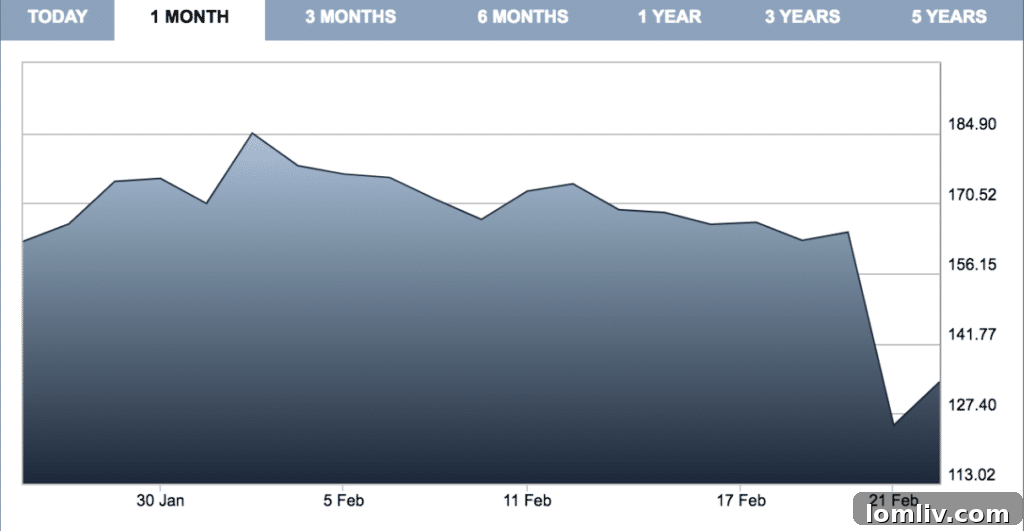
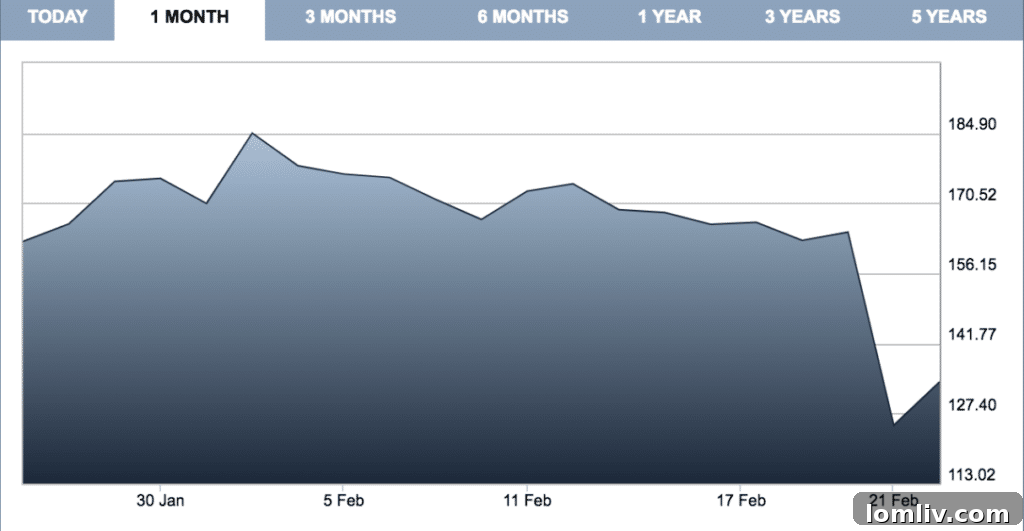
As a publicly traded entity on the London Stock Exchange, the U.K.-based company’s stock performance is a crucial indicator of its health and investor confidence. Purplebricks shares plummeted from 164 pounds (approximately $214) on a Wednesday to a grim low of just 125 pounds (roughly $163) by Thursday of last week, according to Inman’s detailed reporting. This precipitous drop erased a staggering quarter of Purplebricks’ market value in a single day, marking the largest single-day hit the company had endured since its shares first began trading publicly in late 2015. The severe market reaction underscored investor apprehension regarding the company’s future prospects and its ability to execute its ambitious global strategy.
The significant stock drop was closely followed by the announcement of the departures of two highly influential CEOs: U.K. CEO Lee Wainwright and U.S. CEO Eric Eckardt. While Lee Wainwright’s departure was attributed to “personal reasons,” no specific explanation was provided for Eric Eckardt’s exit, leaving many to speculate about the underlying causes amidst the company’s struggles. The loss of such senior leadership at a critical juncture further complicates Purplebricks’ efforts to stabilize its operations and regain market trust.
In the immediate aftermath, the question of leadership continuity arose. Vic Darvey, Purplebricks’ Chief Operating Officer, stepped in to assume the role of interim CEO for the U.K. operations, providing some stability during the transition. Concurrently, Michael Bruce, the company’s global CEO, took on the direct day-to-day management responsibilities for the U.S. division, signaling a hands-on approach to address the challenges in its crucial growth market. However, the company has remained notably silent regarding its plans to fill the two newly vacated CEO positions, contributing to ongoing uncertainty among stakeholders.
Compounding the leadership changes and market turmoil, the company also revised its financial outlook, now expecting significantly lower earnings. The maximum projected earnings for the current fiscal year were capped at 140 million pounds (approximately $183 million), a notable decrease from the previous year’s performance. This revised forecast solidifies the narrative of a company grappling with significant headwinds across its international operations.
Inman’s analysis of the company’s official statement painted a broader, sobering picture of a market environment fraught with challenges and obstacles across all its key operating regions.
The statement elaborated on the difficulties faced by Purplebricks in its home market, noting that the “housing market has continued to be challenging for the estate agency industry” in the U.K. Beyond its domestic struggles, the company also reported significant “headwinds” in the Australian market, where the “anticipated amount of [recognizable] revenue will not be sufficient to meet expectations for this financial year.” Most critically for its global expansion strategy, the U.S. market exhibited a “slower than expected response” to the company’s marketing efforts. Consequently, the Board concluded that “the amount of U.S. revenue will not be sufficient to meet its expectations in this financial year,” a stark admission of the difficulties encountered in penetrating the highly competitive American real estate landscape.
Industry observers have consistently highlighted Purplebricks’ substantial investment in breaking into new U.S. markets. This aggressive spending spree occurred at a time when the housing market, while seemingly strong, was arguably entering its final phase of robust growth – a period often referred to as the “last rhumba” before a potential slowdown. The company’s extensive advertising campaigns were specifically designed to force a significant paradigm shift in how consumers perceived and engaged in real estate transactions, aiming to fundamentally alter ingrained behaviors and expectations.
Now, with the tweaked Purplebricks’ business model – particularly the move away from upfront fees and towards success-based compensation for agents – all eyes are on how this revised strategy will fare in a fluctuating or potentially weakening U.S. housing market. This scenario echoes a long-standing observation made by veteran real estate analysts about all flat-fee brokers: they tend to thrive when homes sell rapidly and the market is hot, allowing sellers to clearly see the savings from a fixed fee. However, in a slower market characterized by increasing days on market, the perceived value proposition of a flat-fee model diminishes. In such conditions, sellers often seek more hands-on involvement, expert negotiation, and the assurance that a commission-based agent, with “skin in the game,” will work tirelessly until a sale is achieved. The true test for Purplebricks, and indeed for the entire flat-fee brokerage sector, will be its ability to demonstrate sustained value and adapt its offering to the cyclical nature of the real estate industry, regardless of market conditions.