- The Small Business Administration (SBA) processed an astounding “more than 14 years’ worth of loans in less than 14 days,” showcasing unprecedented demand.
- Small and regional banks played a pivotal role, successfully processing 76% of the approved relief loans.
- A substantial portion, 49,000 loans totaling $8 billion, was allocated to the real estate subsector.
- Independent contractors faced significant challenges, including murky guidelines and a severely limited application window before funds were depleted.
- Crucial discussions are actively underway in Congress for another round of essential relief funding.
As the first wave of federal stimulus checks began landing in millions of American bank accounts, a critical development unfolded for the nation’s small businesses. The U.S. Small Business Administration (SBA) officially announced a halt to new applications for two of its most vital coronavirus relief initiatives: the Paycheck Protection Program (PPP) and the Economic Injury Disaster Loan (EIDL). This immediate cessation of new submissions was a direct consequence of the complete depletion of available appropriations funding, sending ripples of concern through the small business community already grappling with the profound economic impact of the COVID-19 pandemic. The rapid exhaustion of these funds underscored both the immense need for support and the overwhelming demand that far outstripped initial governmental allocations, highlighting the severe economic distress faced by businesses nationwide.
In a joint statement that conveyed the urgency and scale of the situation, U.S. Treasury Secretary Steven T. Mnuchin and U.S. Small Business Administration Administrator Jovita Carranza revealed the extraordinary speed at which these programs were executed. “The SBA has processed more than 14 years’ worth of loans in less than 14 days,” they affirmed, a testament to the unprecedented operational velocity and the sheer volume of applications. This remarkable feat, while demonstrating the SBA’s capacity to mobilize swiftly, also starkly illustrated the profound depth of the economic crisis. The swift disbursement of funds, though critical for immediate relief, ultimately meant that the initial $349 billion allocated for PPP and $10 billion for EIDL were exhausted much faster than anticipated, leaving countless businesses without timely access to crucial financial lifelines.
Secretary Mnuchin and Administrator Carranza passionately urged Congress to swiftly appropriate additional funds, emphasizing the imperative need “to protect millions more paychecks.” They unequivocally labeled both the Paycheck Protection Program (PPP) and Economic Injury Disaster Loans (EIDL) as “critical” pillars of the nation’s broader economic recovery strategy. These programs were meticulously designed as essential lifelines, aiming to provide much-needed capital to small businesses. Their primary objectives included empowering businesses to retain their employees, cover essential operational expenses, and effectively navigate the severe disruptions caused by the global health crisis. Without the immediate provision of continued support, the risk of widespread layoffs and irreversible business closures loomed large, threatening to deepen the economic recession and prolong recovery efforts.
The federal government’s flagship Paycheck Protection Program offered a uniquely powerful incentive: comprehensive loan forgiveness for small business owners who committed to maintaining their employee payrolls. This innovative design was paramount, strategically aiming to prevent mass unemployment by allowing businesses to convert their loans into non-repayable grants, provided specific conditions primarily related to payroll maintenance and other qualified expenses were met. As of April 13, SBA data revealed that an astonishing approximate 1 million loans, collectively amounting to a substantial $247 billion, had already been earmarked through the PPP. However, by April 16, a mere three days later, the SBA made the stark announcement that its entire $349 billion budget for PPP loans, initially provided as a cornerstone of the larger $2.3 trillion CARES Act, had been fully committed. This unprecedented rate of absorption highlighted the overwhelming demand and unequivocally underscored the urgent need for further congressional action to replenish the program and extend its reach.
Complementing the PPP, the Economic Injury Disaster Loan (EIDL) program received a substantial $10 billion in dedicated funds, specifically earmarked for businesses grappling with immediate financial hardship. This program was meticulously structured to provide businesses with critical working capital, offering up to $10,000 in advance grants. The SBA explicitly stated that these EIDL advance funds would be made available within a few days of a successful application, providing immediate liquidity. Crucially, these advances were designed not to be repaid, offering direct, non-repayable relief to businesses facing immediate cash flow shortages due to the disaster’s impact, thereby helping them bridge the gap for essential operating expenses such as rent, utilities, and other overheads.
Despite the critical and urgent nature of these programs, their initial rollout was not without significant operational and logistical challenges. While approximately 4,700 lending institutions across the nation were officially participating in the PPP, widespread media reports and extensive anecdotal evidence from small business owners suggested that many struggled significantly to access the promised funds. A primary reason cited was the persistent wait for further clarification and detailed guidance from the federal government, particularly for banks attempting to navigate complex, rapidly evolving guidelines and new lending protocols. This pervasive uncertainty led to considerable delays in both the processing of applications and the eventual disbursement of funds, understandably frustrating business owners who were desperate for timely and decisive financial assistance.
The complexities and operational hurdles were particularly pronounced for independent contractors and self-employed individuals, a massive and often vulnerable segment of the American workforce. Several local real estate professionals interviewed expressed ongoing confusion regarding the precise eligibility criteria for SBA coronavirus relief, a lack of clarity that regrettably resulted in many delaying or entirely refraining from applying. Under the SBA’s initial guidelines, both real estate agents and companies filing taxes with traditional W2 forms, as well as independent contractors utilizing 1099 forms, were indeed deemed eligible for Paycheck Protection loans. However, a critical disparity existed in the application timeline: W2 workers could begin applying on April 3, while 1099 workers were not able to submit their applications until April 10. This seven-day delay proved devastating for many, as the SBA’s allotted funds for the PPP ran out completely by April 16, leaving a very narrow four-day window for independent contractors to attempt to secure vital funding, a timeframe far too short for many to navigate the process effectively.
Further insights into the program’s actual effectiveness and myriad challenges emerged from COVIDLoanTracker.com, an invaluable independent resource aggregating data directly from small business survey respondents who had applied for PPP loans. Their findings painted a concerning picture, indicating that a mere 4 percent of small businesses that applied had actually received funds at that point. This stark figure highlighted a significant and troubling disconnect between the volume of applications and successful disbursements, strongly suggesting systemic bottlenecks in the processing system or widespread issues with banks struggling to process the sheer, unprecedented volume of applications efficiently and consistently.
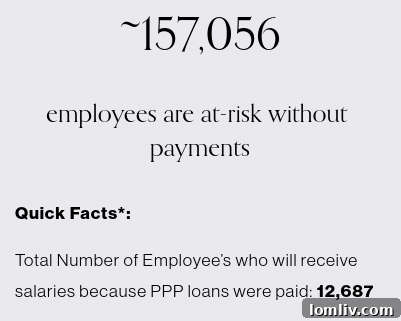
The human and economic cost of these delays and processing challenges was substantial and immediately apparent. According to COVIDLoanTracker data, without the timely infusion of these critical funds, approximately 157,000 employees were at immediate and tangible risk of being laid off, as small business owners struggled desperately to meet their payroll obligations and keep their doors open. This figure, though significant, represented only a fraction of the total number of employees potentially impacted nationwide, underscoring the widespread economic vulnerability across various sectors. While the average wait time for approved applications to receive funds was reported to be approximately 5 days, many banks reported extensive and growing backlogs of applications awaiting review and processing, further exacerbating the uncertainty. Banks were legally mandated to disburse approved loans to recipients within 10 days of loan approval, but fulfilling this requirement proved exceptionally challenging amidst the unprecedented and overwhelming demand.
Survey respondents consistently reported a difficult and often frustrating experience navigating the intricate loan application process. Common grievances included pervasive technical failures on application portals, and, critically, widespread confusion among the banks themselves regarding the precise qualifications and application procedures specifically for 1099 independent contractors. This prevalent lack of clear guidance from the outset created significant administrative and financial hurdles for a demographic that often relies heavily on individual earnings and typically lacks the robust administrative infrastructure common in larger, more established businesses, making compliance and application particularly challenging.
In response to the growing confusion and relentless advocacy efforts from various business groups, the SBA issued much-needed clarification on April 14, specifically addressing the eligibility of 1099 workers. The updated guidance confirmed that self-employed individuals who filed Schedule C with their federal income taxes and were actively operating on February 15, 2020, were indeed eligible for PPP loans. A notable exception, however, applied to partners in a partnership. This crucial clarification, while undoubtedly welcome, came quite late in the program’s tragically short lifespan, leaving many questions about its practical impact on those who had already missed the initial, fleeting funding window.
For eligible self-employed loan recipients, the PPP loan could be innovatively utilized for “owner compensation replacement,” with the forgivable amount meticulously calculated based on eight weeks of net profits, mirroring the payroll-focused intent of the program. However, even with this updated guidance, a degree of ambiguity frustratingly persisted regarding whether the *entire* amount of loans for 1099 workers would ultimately be forgivable. Any portion of a PPP loan that did not meet the stringent forgiveness criteria was structured to be repaid over a manageable two-year period – following a generous six-month deferral period – at a notably low interest rate of 1%. Navigating these complex calculations for maximizing loan proceeds and ensuring forgiveness proved an intricate challenge, often requiring detailed financial analysis, as extensively detailed by various financial experts and resources. The average PPP loan size, as officially reported by the SBA, was approximately $239,152, reflecting the diverse range of small businesses and their varying financial needs during the crisis.
Further granular analysis by COVIDLoanTracker.com shed critical light on the distribution of processing efforts among different financial institutions. Their comprehensive data revealed that small and regional banks played an overwhelmingly dominant role in the initial phase, processing an impressive 76 percent of all approved PPP loans. In stark contrast, larger banking giants like JP Morgan Chase processed only 10 percent of the loans, while Bank of America and Wells Fargo each managed a mere 1 percent of the total PPP disbursements. This significant disparity highlighted the inherent agility and strong community focus of smaller banks in rapidly responding to the urgent needs of local businesses, often leveraging long-established relationships to expedite applications and provide more personalized service during a chaotic period.
The Economic Injury Disaster Loan (EIDL) program, unlike the PPP, operated through a more direct channel, with funds disbursed directly from the SBA to approved applicants. EIDL funds were specifically designed to cover a broader range of operational expenses beyond just payroll, including critical fixed debts, accounts payable, and other general operating costs that businesses were unable to meet due to the disaster’s severe economic impact. However, this direct application process also faced its own unique set of challenges, particularly during the early stages of the rollout, as many SBA-preferred lending institutions did not have their online application portals fully ready and operational by the official April 3rd start date for SBA lending, inadvertently causing further delays and frustration for countless applicants.
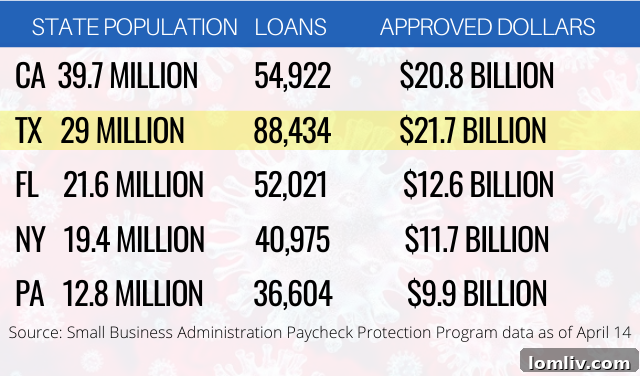
On a regional level, the immediate and profound impact of these programs was keenly felt across various states. In Texas, for instance, SBA data indicated that a remarkable 88,434 Texans had been approved for Paycheck Protection Program loans, collectively amounting to a substantial $21 billion in relief. COVIDLoanTracker data further positioned Texas as one of the leading states in terms of loan success rates, with an impressive 54 percent of loan applications from the state receiving approval. This regional success story offered a much-needed glimmer of hope amidst the broader national funding challenges and demonstrated effective state-level coordination.
COVIDLoanTracker.com itself emerged as a powerful grassroots initiative, born out of necessity by Miami small business owners Duncan and Rita MacDonald-Korth. They developed and launched this innovative data tracker as a vital “checks and balances contribution to the democracy,” providing much-needed transparency and crucial real-time insights into the often-opaque application and disbursement process of these critical federal relief programs. Their user-friendly platform quickly became an essential tool for applicants seeking status updates, policymakers evaluating program efficacy, and media outlets reporting on the economic recovery, effectively identifying pain points and areas needing improvement.
For countless small business owners and self-employed individuals across the nation, including a vast number of real estate professionals, these funds were nothing short of critical. Many in these essential sectors experienced significant and sudden losses of income directly as a result of the stringent COVID-19 restrictions and subsequent economic downturn, making immediate access to PPP and EIDL loans absolutely essential for their survival, for maintaining their workforce, and for their ability to contribute to the broader economic stability.
Breaking down the loan distribution by sector further illustrates the widespread impact of the crisis and the targeted nature of the relief efforts. Approximately 114,000 PPP loans, totaling $33 billion, were specifically earmarked for the construction subsector, a vital component of the nation’s infrastructure and job market. Within the broader real estate industry, specifically the real estate, rental, and leasing subsector, nearly 49,000 loans were approved, injecting almost $8 billion into a sector severely affected by market uncertainties, widespread lockdowns, and restrictions on property viewings and transactions. These figures underscore the critical role these federal programs played in stabilizing key industries and preventing more widespread economic collapse.
Despite the initial rollout and widespread demand, concerns quickly mounted regarding changes to the EIDL program that could disproportionately affect certain groups. On Monday, Vince Malta, the then-President of the National Association of Realtors (NAR), voiced strong criticisms, urgently calling on Congress to provide significantly more funding for small business loans. Malta specifically highlighted how a recent change to the EIDL loan limit and funding formula could “leave Realtors out in the cold,” threatening the livelihoods of many independent real estate professionals who are crucial drivers of local economies.
“This sharp departure from CARES Act language is meant to expand access to the program, but it completely alters the nature of the loan and the advance grant, dramatically reducing effectiveness for businesses in need,” Malta articulated emphatically in a letter addressed to congressional leaders. He further emphasized, “Especially impacted by this change are independent contractors who have no employees and whose EDIL grants are essentially rendered unforgivable.” This unforeseen shift in policy created considerable uncertainty and financial strain for a large segment of the real estate workforce who predominantly operate as independent contractors, severely diminishing the intended immediate, non-repayable relief of the EIDL advance.
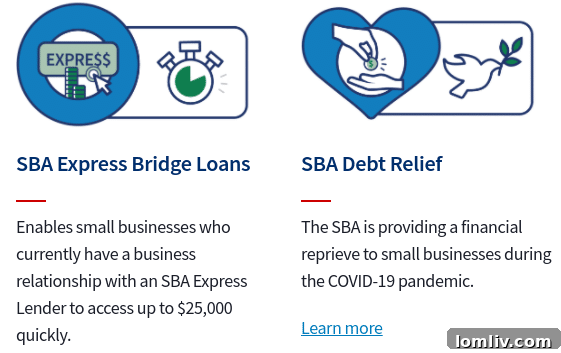
While the highly demanded PPP and EIDL programs faced immediate funding depletion, other vital SBA initiatives remained accessible and continued to offer crucial support to businesses in need. The SBA Express Bridge Loans and SBA Debt Relief programs continued to serve as crucial alternatives or interim solutions, providing much-needed stability during this period of profound economic uncertainty and rapid change.
The Express Bridge Loan Pilot Program provided a critical short-term lifeline for small businesses that already had an established business relationship with an SBA Express Lender. This expedited program allowed eligible businesses to quickly access up to $25,000, offering immediate relief from temporary revenue loss and operational disruptions. These bridge loans were specifically designed to fill the financial gap for businesses while they diligently awaited decisions and disbursements from a direct SBA Economic Injury Disaster Loan application. For any small business facing urgent cash needs and requiring rapid capital injection, the SBA Express Disaster Bridge Loan offered a swift, albeit smaller, infusion of funds to sustain essential operations and prevent immediate collapse.
Additionally, as a significant component of the SBA’s broader debt relief efforts, the agency committed to automatically paying the principal, interest, and any associated fees on specific existing microloans for an extended period of six months. This valuable relief also graciously extended to new microloans that were issued prior to September 27, 2020. This proactive initiative provided direct and tangible financial alleviation to countless businesses already carrying existing SBA debt, substantially reducing their immediate financial burden and strategically allowing them to reallocate precious resources towards critical survival strategies and robust recovery efforts during the incredibly challenging economic climate.
What Happens Next for Small Business Relief?
In the immediate wake of the rapid and complete depletion of funds for both the Paycheck Protection Program and Economic Injury Disaster Loans, both the SBA and numerous leading lending institutions across the country have strenuously urged Congress to allocate significantly more appropriations. The consensus among economic experts and business advocates is unequivocally clear: without a crucial second wave of funding, countless small businesses face an existential threat, jeopardizing millions of jobs and severely impeding the broader national economic recovery. By late Thursday, President Trump publicly confirmed that active and critical negotiations were indeed underway for another crucial round of funds, signaling a political acknowledgment of the profound and urgent economic need.
While the SBA is currently not accepting new applications for either the PPP or EIDL loans, and many banks have similarly paused new submissions, there remains a glimmer of hope for those who diligently applied before the programs officially ran out of funds. Numerous banks have confirmed that they are continuing to diligently process applications that were previously submitted and are already in their pipeline. Business owners who have already applied are strongly advised to maintain close and regular contact with their respective lenders for ongoing updates regarding the status of their applications, as the arduous journey through these unprecedented financial challenges continues to unfold.