The Battle for Aldredge House: Preserving History Amidst Neighborly Conflict on Swiss Avenue
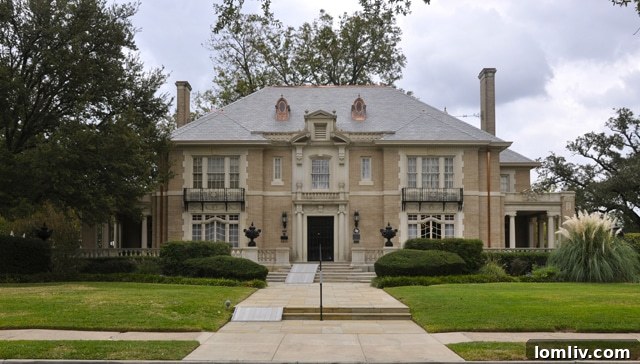
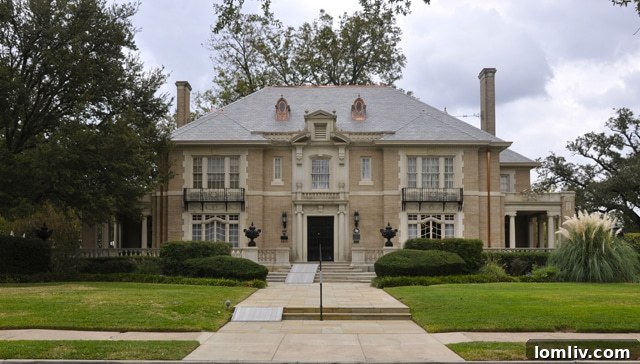
The Aldredge House, a distinguished architectural gem nestled on Dallas’s historic Swiss Avenue, stands as a testament to timeless beauty and diligent preservation efforts by its stewards, the Dallas County Medical Society Alliance (DCMSA). However, this venerable estate now finds itself at the epicenter of a heated dispute, as its long-standing use as a bustling events venue—primarily for weddings and various meetings—has become an unbearable point of contention for its immediate neighbors. This escalating conflict transcends mere trivialities, moving beyond anecdotal complaints about “stray panties after a bridal party send-off,” and delves deep into fundamental questions of residential peace, private property rights, and the delicate balance between historic preservation and community living.
As Jim Dunkerley, a vocal neighbor, articulated following a pivotal September 23rd Landmark Commission meeting, where the Aldredge House secured approval for preservation criteria encompassing four of its rooms: “It’s about neighbors being able to enjoy their private property.” This initial victory for the DCMSA was merely the opening salvo in what has been described as a “war between neighbors.” Today marks a critical turning point, a veritable “D-Day” for the Aldredge House, as the Board of Adjustment prepares to hear arguments that could irrevocably alter its future.
The core of the dispute revolves around the Aldredge House’s non-conforming use permit, which allows it to operate as an events venue in a predominantly residential zone. Chris Hamilton, representing the aggrieved neighbors, along with others, will present a compelling case for the revocation of this permit. Should their efforts succeed, it would signal an definitive end to the weddings, galas, and corporate meetings that have long defined the Aldredge House’s operational model. Such an outcome carries profound implications, not only for the DCMSA’s financial strategy but potentially for the very existence of the Aldredge House as a publicly accessible historic site.
A Rich History and Architectural Legacy on Swiss Avenue
Built in 1917, the Aldredge House is a magnificent example of neo-classical architecture, a contributing property to the Swiss Avenue Historic District, Dallas’s first historic district. Its stately columns, elegant interiors, and meticulously maintained grounds reflect a bygone era of grandeur and sophistication. For decades, the Aldredge House has served as more than just a private residence; under the stewardship of the Dallas County Medical Society Alliance, it has functioned as a significant cultural and community asset. The DCMSA, a non-profit organization, took ownership of the property with the explicit mission to preserve this architectural treasure and utilize it as a gathering place that also generates crucial funds for its upkeep and various charitable initiatives.
The cost of maintaining a historic property of this scale is substantial, requiring continuous investment in restoration, utilities, and general maintenance. For the DCMSA, leveraging the house as an events venue – hosting numerous weddings, receptions, corporate functions, and community meetings – has been the primary and most viable strategy to secure the necessary funding for its preservation efforts. This model allows the public to experience the beauty of the Aldredge House while simultaneously ensuring its longevity for future generations. Supporters of the DCMSA argue that without the revenue generated from these events, the ability to preserve such an iconic Dallas landmark would be severely compromised, potentially leading to its decline or even sale.
The Genesis of Discord: Residential Tranquility Versus Event Vibrancy
While the Aldredge House’s beauty and historical significance are universally acknowledged, its commercial activities have progressively clashed with the serene residential character of Swiss Avenue. The neighbors’ grievances are numerous and deeply felt, painting a picture of a neighborhood under siege. Central among these complaints are the persistent issues of noise pollution, particularly during evening events when music, revelry, and amplified speeches echo through the quiet streets. This disturbance often extends late into the night, impinging on the residents’ ability to enjoy peaceful evenings in their own homes.
Beyond noise, the frequent events bring with them a host of other challenges. Increased traffic congestion, especially on narrow residential streets, becomes a regular occurrence, posing inconveniences and safety concerns for local residents. Parking shortages are exacerbated, as event guests often occupy limited street parking spaces, making it difficult for neighbors and their visitors. Furthermore, issues of privacy have been raised, with neighbors reporting instances of guests trespassing or behaving boisterously in ways that infringe upon their personal space and sense of security. The very nature of hosting 30 to 50 large-scale events annually, ranging from exuberant weddings to professional gatherings, fundamentally alters the daily experience of living adjacent to such a property.
Jim Dunkerley, Chris Hamilton, and a coalition of other residents including Sarah Dodd, David Dean, Stephanie Stanley, and Barbara McDaniel, assert that their quality of life has significantly deteriorated due to the scale and frequency of these commercial operations. They argue that while they appreciate the Aldredge House’s historical value, its current operating model prioritizes profit and public access over the fundamental right of residents to quiet enjoyment of their private property. Their plea to the Board of Adjustment is not to condemn the house, but to restore the residential sanctity of their neighborhood by curtailing commercial activities that have grown beyond acceptable limits.
A Rocky Road to Resolution: Failed Compromise Efforts
The path to this critical hearing has been fraught with tension and repeated, yet unsuccessful, attempts at finding common ground. For months, representatives from both sides have engaged in arduous negotiations, each claiming the other was unwilling to yield an inch. Following the Landmark Commission meeting, Wendy Hansen, Chair of the Dallas County Medical Society Alliance Aldredge House Committee, and neighbor Chris Hamilton both expressed frustration at the stalemate, confirming that despite numerous discussions, a compromise remained elusive.
One notable attempt involved meetings between DCMSA representatives, Hamilton, and other neighbors to devise a proposed Planned Development (PD) district. This plan was intended to outline specific parameters for the Aldredge House’s operations, hoping to satisfy both parties by setting clear boundaries for event frequency, hours, and other mitigating measures. However, Hamilton recounted that these lengthy discussions, stretching from morning until late at night, ultimately yielded no progress. The gap between the desires of the event venue operators and the demands for residential peace proved too wide to bridge.
In a notable gesture of goodwill and a demonstration of their commitment to the house’s preservation, neighbors reportedly offered to host one or two major galas annually. These events would be community-organized fundraisers, with residents themselves pledging financial contributions, to help sustain the Aldredge House. Hamilton emphasized the logic of this proposition: “Surely one or two big events a year would be easier on the historic home rather than 30 to 50 weddings and meetings.” He even offered personal financial support, noting, “I offered to pay for it with my own money — and did you see some of the people who were in the audience today? Some of these people have a lot more money than we do, but they’re not offering to pay for a fundraiser.” Despite this significant offer, the DCMSA reportedly declined, indicating their reliance on a higher volume of events for financial viability.
Further mediation was scheduled for the morning preceding the Landmark Commission meeting, a last-ditch effort to broker an agreement. However, this crucial session was abruptly canceled by representatives of the Aldredge House, further exacerbating tensions. Instead of mediation, the DCMSA arrived at the commission meeting in full force, with approximately 100 supporters prominently displaying green buttons and Mardi Gras beads as a visible show of solidarity. Among these formidable advocates were prominent Dallas figures such as Lindalyn Adams, Virginia McAlester, Ruth Altschuler, and David Preziosi, all of whom spoke passionately in favor of the Aldredge House receiving official Dallas landmark status and continuing its operations.
Landmark Decisions and the Call for Cooperation
Despite the palpable tension and the clear divisions, the Landmark Commission ultimately voted to approve the Aldredge House’s request regarding preservation criteria. This decision, while a partial victory for the DCMSA, came with a poignant and widely echoed sentiment from Commission Chair Kathryn Seale. Reflecting a hope shared by many who observed the escalating dispute, Seale implored both sides to find a path forward: “I hope that you both can work together to find a resolution.” This call for collaboration underscored the commission’s recognition that while the house’s historical value was affirmed, the underlying community conflict remained unresolved and required a cooperative solution.
However, the prospect of such collaboration appears increasingly distant. In a strategic move to amplify their grievances and rally public support ahead of the Board of Adjustment meeting, the neighbors, spearheaded by Sarah Dodd and her colleagues, decided to escalate their efforts. They released a compelling video detailing the disruptive nature of the events hosted at Aldredge House, showcasing instances of loud, boisterous receptions and the tangible impact on their daily lives. This “going nuclear” tactic was designed to vividly illustrate the constant disturbances and underscore the urgency of their plea for the revocation of the non-conforming use permit. The video served as a powerful testament to the neighbors’ deep-seated frustrations and their determination to reclaim the peace and quiet of their homes.
The Broader Implications: A Precedent for Historic Preservation and Urban Living
The high-stakes hearing before the Board of Adjustment today at 1 p.m. is not merely a localized dispute between a historic house and its neighbors; it carries significant broader implications for historic preservation, urban planning, and community living within Dallas and beyond. The decision reached will set a precedent for how historic properties, often situated within residential districts, can balance their need for financial sustainability through commercial ventures with the rights and expectations of surrounding residents. It highlights the inherent challenge of maintaining a diverse urban fabric where historical treasures can thrive without unduly encroaching upon the quality of life in residential areas.
This case forces a critical examination of non-conforming use permits – their necessity, their limitations, and the conditions under which they should be revoked or modified. It underscores the complexity of zoning regulations in established urban environments, where the lines between commercial enterprise, public good, and private sanctity often blur. The outcome will influence how other historic homes, museums, or cultural institutions operating in similar contexts might need to adapt their models or engage with their communities. It’s a microcosm of a larger societal debate: how do we honor and preserve our past while adapting to the evolving demands and sensitivities of modern urban living?
Seeking a Sustainable Future: The Path Forward
As the Board of Adjustment convenes, the question of a mutual resolution hangs heavy in the air. The potential outcomes are stark: a revocation of the permit, a modification with stricter limitations, or a continuation of the status quo. Each scenario presents its own set of challenges and triumphs for the respective parties. For the Aldredge House, a revocation would necessitate a complete re-evaluation of its operational and financial model, perhaps pushing it towards alternative, less frequent fundraising efforts, or even a different type of ownership or use. For the neighbors, it would signify a victory in their quest for peace, but also potentially leave the Aldredge House in a precarious position.
The path forward, as Kathryn Seale suggested, ideally involves compromise and creative problem-solving. Could the Aldredge House explore alternative funding models, perhaps through a more robust endowment, increased membership programs, or philanthropic support that reduces its reliance on frequent, large-scale events? Could stricter noise ordinances, improved soundproofing, revised operating hours, and enhanced traffic management plans be implemented and rigorously enforced to mitigate the impact on neighbors? The spirit of “Festivus tradition — the airing of the grievances” might capture the current mood, but a lasting solution will require genuine dialogue and a commitment from both sides to find a sustainable equilibrium.
Ultimately, the saga of the Aldredge House is a poignant reminder that even the most beautiful and historically significant properties exist within a living, breathing community. Its future hinges not just on legal decisions, but on the capacity for its custodians and its neighbors to forge a new understanding that honors both the preservation of its past and the peaceful enjoyment of the present by all who reside on Swiss Avenue.