The Lumber Crisis: Navigating Soaring Prices and Housing Affordability Challenges
The intricate dance between supply and demand dictates the pulse of the housing market, and few commodities illustrate this dynamic better than lumber. For years, the North American lumber trade has been a contentious battleground, often involving tariffs designed to protect domestic industries from what some deemed unfair competition. When President Trump authorized a tariff on Canadian softwood lumber, the move was largely framed as a defensive measure. The goal was to bolster U.S. sawmills and keep more construction dollars within national borders, stemming the tide of cheaper imports that had steadily gained market share.
However, the global landscape shifted dramatically with the onset of the coronavirus pandemic. What began as a strategic tariff soon intertwined with unforeseen challenges, creating a perfect storm that has profoundly impacted the American housing sector. The pandemic wreaked havoc on labor forces, leading to staffing shortages across industries, including vital sawmills. Many facilities went idle in anticipation of a significant economic slowdown due to COVID-19 lockdowns and restrictions. This cautious approach, while understandable at the time, left U.S. sawmills ill-equipped to handle the sudden and robust resurgence in housing demand that followed, driven by factors like historically low interest rates, a desire for more space during remote work, and a general shift in consumer spending towards home improvements.
Fast forward approximately twenty months into the global pandemic, and the expectation might have been that America’s sawmills would have long since stabilized, achieving a healthy balance between the escalating demand for lumber and a robust, consistent supply. Regrettably, this optimistic scenario has not materialized. The lumber market remains volatile, characterized by persistent supply chain disruptions, labor shortages, and unprecedented price swings that continue to challenge builders and prospective homeowners alike. The inability of domestic supply to keep pace with demand has created a bottleneck, directly contributing to inflated construction costs and extended project timelines.
Compounding the existing labor shortages and the struggle of domestic sawmills to ramp up production, the Biden administration made a significant policy decision last November. In a move that surprised many in the construction industry, the tariff on Canadian softwood lumber imports was nearly doubled. This substantial increase has placed an even greater financial burden on imported lumber, a critical component of U.S. construction, particularly when domestic supply cannot meet demand. The combined effect of these factors – persistent labor issues, domestic production lags, and amplified tariffs – is causing a severe squeeze on housing starts nationwide. This problem is not merely an inconvenience; it threatens to prolong and deepen America’s already pressing housing affordability concerns, making the dream of homeownership increasingly elusive for many families.
Understanding the Economic Impact of Lumber Tariffs and Supply Chain Disruptions
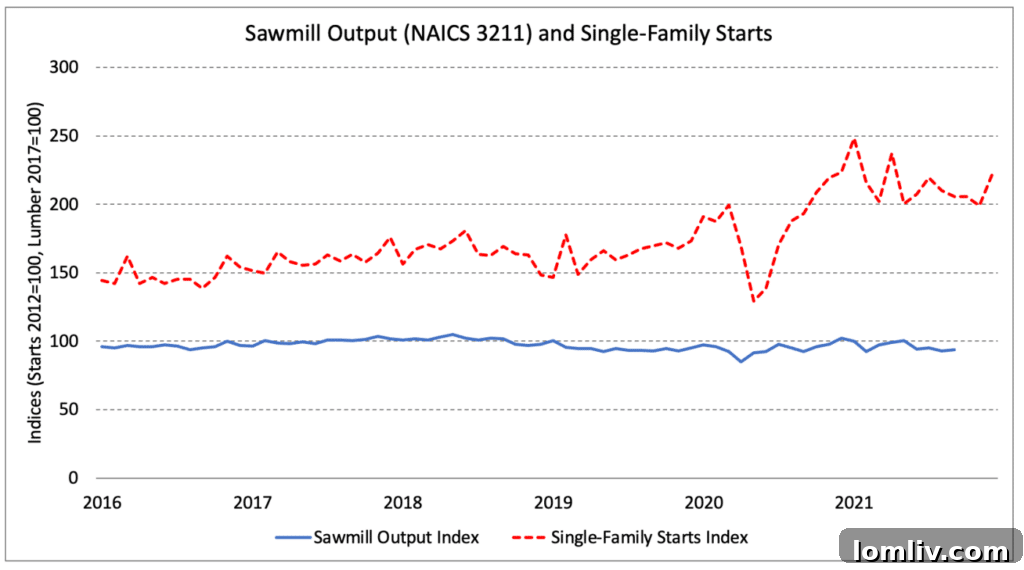
The economic ramifications of these converging challenges are far-reaching. A detailed report from Eye on Housing, the authoritative blog of the National Association of Home Builders (NAHB), provided compelling data from various agencies that underscore the severity of the ongoing situation. The numbers clearly indicate that domestic sawmill output continues to lag significantly behind the surging demand for new home construction, creating an unsustainable imbalance that drives up costs across the board. This persistent deficit directly impacts the ability of builders to complete projects on time and within budget, ultimately affecting housing inventory and prices.
Phil Crone, Executive Officer at the Dallas Builders Association, articulated the frustration within the industry, stating, “These figures clearly indicate that domestic sawmills remain unable to answer the bell on housing demand. With crippling tariffs that they advocated for hurting the ability of Canadian lumber to help solve the problem, housing is less attainable for thousands of families.” This sentiment reflects a widespread concern among builders: tariffs, originally intended to foster domestic growth, are inadvertently exacerbating the supply crisis by limiting access to a crucial alternative source of lumber. The irony is not lost on an industry struggling to meet the housing needs of a growing population.
The Volatile Ride of Lumber Prices: A Blow to Homebuyers and Builders
The journey of lumber prices over the past couple of years has been nothing short of a roller coaster. While there was a noticeable, albeit temporary, reprieve in 2021 when lumber costs dropped precipitously from their earlier peaks, this relief was short-lived. Industry figures and market analyses reveal that prices have since made a drastic and alarming rebound, surging once again to levels perilously close to, and at times even surpassing, their unprecedented 2020 peak. For those who delayed construction projects or missed the fleeting opportunity to stock up on materials during the brief dip, the window of affordability has unfortunately slammed shut. This volatility injects immense uncertainty into construction budgeting and project timelines, making it incredibly difficult for builders to provide stable price estimates to their clients.
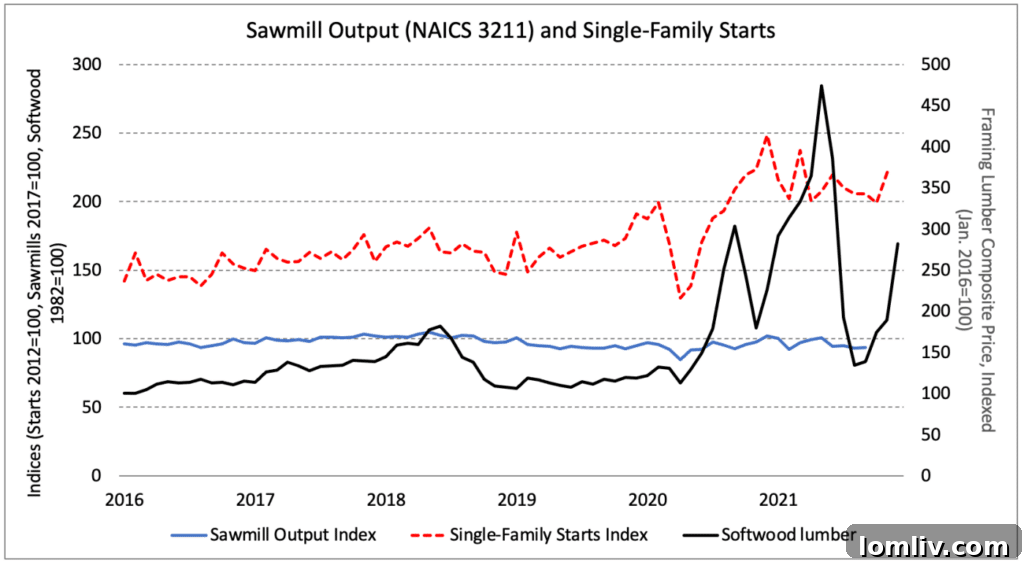
The direct impact on homebuyers is stark and immediate. Rino Soave, founder of Infinity Homes, highlighted this alarming trend in a WXYZ report, illustrating how quickly costs have escalated. “Now that same house you could have bought maybe 18 months ago for 220 is now probably close to 280,” Soave explained. “So it is a big spike. And the fear is the attainability of housing is going to be out of reach for some people.” This significant jump in home prices translates directly into higher mortgage payments, larger down payments, and increased financial barriers for aspiring homeowners, especially those entering the market for the first time or those with moderate incomes. The dream of homeownership, a cornerstone of the American economy and societal stability, becomes increasingly distant.
The broader implications of these skyrocketing costs extend beyond individual transactions. A sustained period of high lumber prices and reduced housing starts could lead to a chronic undersupply of homes, further inflating property values and deepening the affordability crisis across the nation. This situation creates a challenging environment for urban planning, economic development, and social equity, as access to stable, affordable housing becomes increasingly stratified, impacting communities and economies for years to come.
Exploring Innovative Framing Alternatives in Modern Construction
Given the persistent challenges in the traditional wood lumber market, the construction industry is increasingly exploring and adopting alternative framing methods. While a significant number of homes in various regions globally and domestically utilize materials like concrete and steel for their structural framing, traditional wood framing has historically remained the overwhelmingly dominant choice for American builders. Its widespread use is attributed to its relative affordability, ease of construction, excellent insulation properties, and readily available skilled labor for its installation. Wood has been the default material for residential construction for centuries, establishing a deep-rooted preference.
According to comprehensive data from the NAHB, wood-framed construction accounted for approximately 90 percent of all new homes completed in 2019. This demonstrates its entrenched position as the go-to material for residential structures. In contrast, concrete-framed homes represented about 10 percent of the market, while steel-framed homes made up a minuscule fraction, less than half a percent. These statistics paint a clear picture of wood’s historical stronghold, highlighting the magnitude of any shift away from this traditional material.
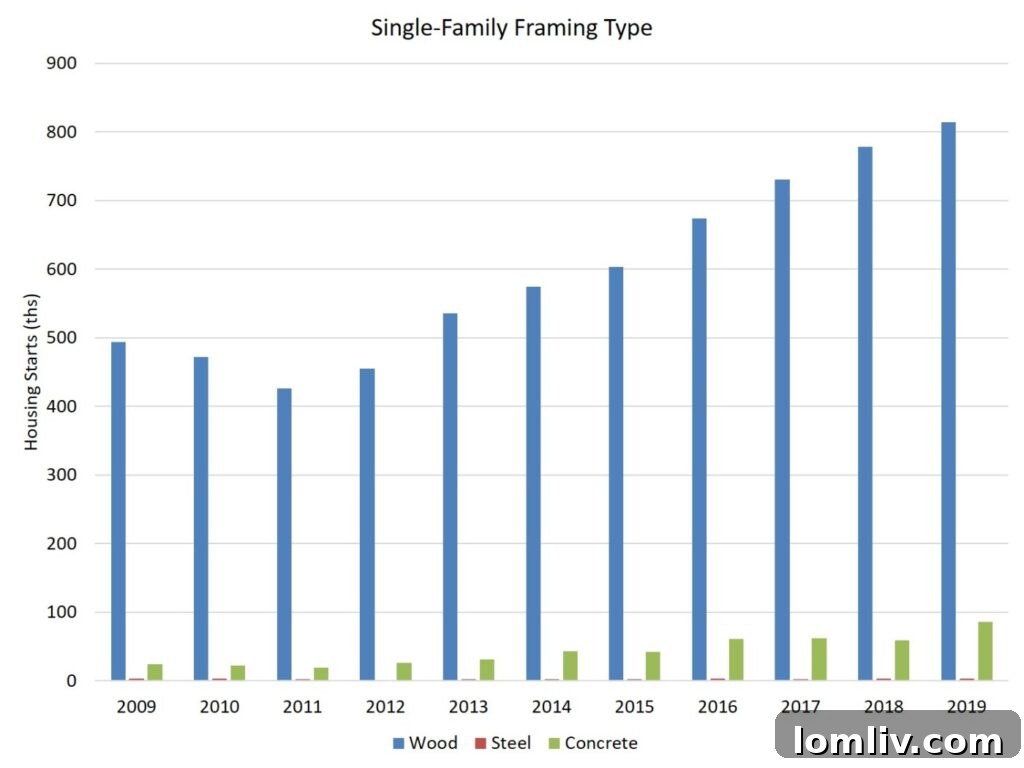
However, recent trends indicate a noticeable shift, particularly towards concrete framing. This isn’t just a minor fluctuation; concrete-framed homes have experienced accelerated growth in recent years. The total number of concrete-framed completions jumped by an impressive 46% between 2018 and 2019, rising from 59,000 to 86,000 units. Looking at the longer term, the gains over the last decade are even more striking: from 2009 to 2019, the total number of concrete-framed homes increased by a remarkable 258%, effectively doubling its market share from 5% to 10% of new builds. This substantial growth signals a growing acceptance and practical application of concrete as a viable and competitive framing material.
Several factors are contributing to this shift. Geographically, concrete-framed homes are more prevalent in the Southern United States, where they constituted 17% of all homes completed in the region. This regional preference is partly driven by stringent hurricane-related building codes in storm-prone areas, where the superior strength and resilience of concrete offer enhanced protection against extreme weather events. Yet, the overall national gain for concrete framing isn’t solely due to the general shift in home building towards the South, which only saw its share increase from 50% in 2009 to 55% in 2019. The growth is also significantly fueled by an increased adoption of concrete framing within the Southern states themselves, where its market share rose from 8% in 2009 to the aforementioned 17%, indicating a change in builder preference and consumer demand.
“However, concrete-framed homes experienced accelerated growth. The total was up 46%, increasing from 59,000 completions in 2018 to 86,000 in 2019. The gains over the last 10 years are more striking. From 2009 to 2019, the concrete-framed total increased by 258% and the market share doubled from 5% to 10%.”
“Some of these gains came from a shift in geography. Concrete-framed homes are more common in the South. In fact, such homes made up 17% of all homes completed in the South. But the shift to home building in the U.S. South was not the only factor, as the share of all homes in the U.S. built in this region increased from 50% in 2009 to just 55% in 2019. The national gain for concrete-framed housing was also driven by share gains within the South itself, rising from 8% in 2009 to 17% mentioned above.”
“Hurricane-related building codes are thus part of the explanation, but the run-up in lumber prices in 2018 may have also moved the needle. And given the historic acceleration of lumber prices in 2020, more builders will be investigating alternative framing methods, including steel and concrete.”
Robert Dietz, Eye on Housing
The Benefits and Drawbacks of Concrete and Steel Framing as Alternatives
As Robert Dietz of Eye on Housing eloquently pointed out, while stringent building codes in certain regions play a significant role, the dramatic and sustained escalation of lumber prices, particularly the “historic acceleration” witnessed in 2020 and its subsequent sharp rebound, is a powerful catalyst. This economic pressure is compelling more builders to seriously investigate and adopt alternative framing methods, moving beyond the traditional reliance on wood to mitigate financial risks and ensure project viability.
Concrete Framing: Often utilized in various forms such as Insulated Concrete Forms (ICFs), precast panels, or concrete masonry units (CMUs), concrete offers exceptional durability, fire resistance, and superior sound insulation. Its inherent thermal mass can also contribute to energy efficiency by moderating indoor temperatures. In regions prone to severe weather, like hurricanes or tornadoes, concrete provides an unparalleled level of structural integrity and resilience, a major selling point for homebuyers seeking peace of mind. However, concrete construction typically involves higher upfront material costs, requires specialized labor and equipment, and can sometimes extend construction timelines compared to traditional wood framing. Despite these challenges, its long-term benefits in terms of safety, durability, and potentially lower maintenance costs are making it an increasingly attractive option.
Steel Framing: Light-gauge steel framing is another viable alternative gaining traction in both residential and commercial construction. Steel boasts impressive strength-to-weight ratios, is non-combustible, and inherently resistant to pests like termites, rot, and mold. It offers excellent dimensional stability, meaning it won’t warp, shrink, or rot over time, contributing to a more precise and long-lasting structure with fewer callbacks. The manufacturing process for steel framing can also be highly efficient, leading to less on-site waste and faster fabrication. On the flip side, steel can be more expensive than wood, requires specific installation techniques and tools, and has higher thermal conductivity, necessitating careful insulation strategies to prevent thermal bridging and ensure energy efficiency. Nevertheless, as wood prices remain elevated and volatile, steel becomes a more competitive and appealing option for many projects seeking stability and performance.
The Road Ahead: Navigating Towards a More Stable Housing Market
The current lumber crisis is a multifaceted problem with no easy solutions. It requires a concerted effort from policymakers, industry leaders, and builders to navigate towards a more stable and affordable housing market. Addressing the tariffs on Canadian lumber, which contribute significantly to inflated costs, could provide immediate relief by increasing supply and introducing more competitive pricing. Simultaneously, investing in domestic sawmill capacity and modernizing production processes are crucial long-term strategies to enhance self-sufficiency and reduce reliance on imports, fostering a more robust national supply chain.
Furthermore, supporting workforce development programs to train skilled labor for sawmills and construction sites can help alleviate persistent labor shortages, which continue to be a significant bottleneck in the entire supply chain. For builders, embracing innovation in materials and construction techniques, such as the growing adoption of concrete and steel framing or exploring modular and prefabricated construction methods, offers viable pathways to mitigate reliance on volatile lumber prices and potentially accelerate build times. These alternative approaches not only provide cost stability but can also lead to more durable and energy-efficient homes.
Ultimately, the goal is to ensure that housing remains attainable for a broad spectrum of the population. The current challenges highlight the fragility of global supply chains and the profound impact that economic and geopolitical decisions can have on everyday lives and the aspiration of homeownership. By diversifying material options, optimizing domestic production capabilities, and recalibrating trade policies, the industry can hopefully build a more resilient, sustainable, and equitable future for homeownership in America, ensuring that the dream of a home is within reach for more families.