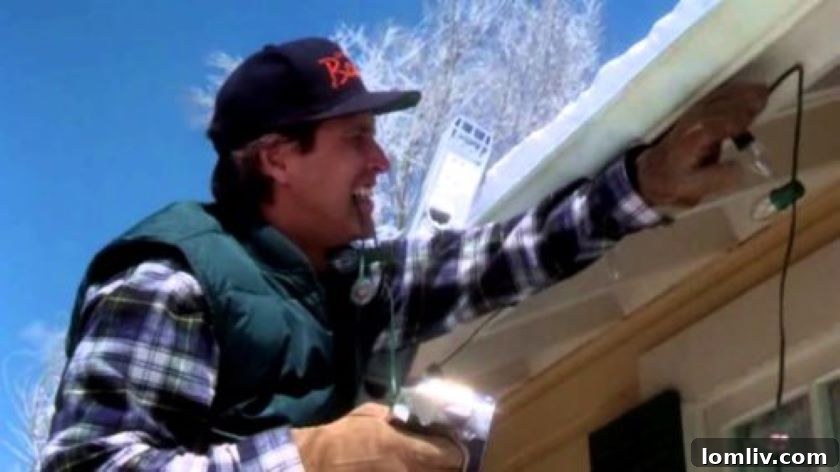
As the festive glow of the holidays slowly recedes, many of us find ourselves in a delightful limbo between the New Year’s fresh start and the lingering remnants of celebration. For me, January 1st doesn’t instantly usher in a period of intense resolution-making or a vigorous “Let’s conquer 2024!” mindset. With kids still reveling in their break, holiday decorations still adorning every nook and cranny, and a fridge overflowing with delicious leftovers, the practicalities of adulting often take a backseat.
Our homes, too, bear the charming chaos of the season. Gifts and wrapping paper might still be scattered, and the laundry pile seems to have declared its own holiday truce. It’s a time for cozy reflections, not necessarily for embarking on a rigorous New Year’s home improvement resolutions. So, if you’re looking for profound insights into home upkeep, you might need to check back in a week or so. Right now, we’re still very much in holiday mode, indulging in what many consider the quintessential holiday movie: “Christmas Vacation.” (And yes, I welcome any good-natured debate on that in the comments section!)
During my annual “Christmas Vacation” watch party, amidst the laughter and nostalgia, a professional observation struck me: the Griswolds’ home is a veritable case study in why regular home inspections are not just a good idea, but an absolute necessity. Join me as we take a lighthearted, yet surprisingly insightful, tour through some of the more glaring home safety and structural issues that plague the Griswold residence, offering valuable lessons for every homeowner.
That Staple Gun: A Recipe for Roof and Electrical Disaster
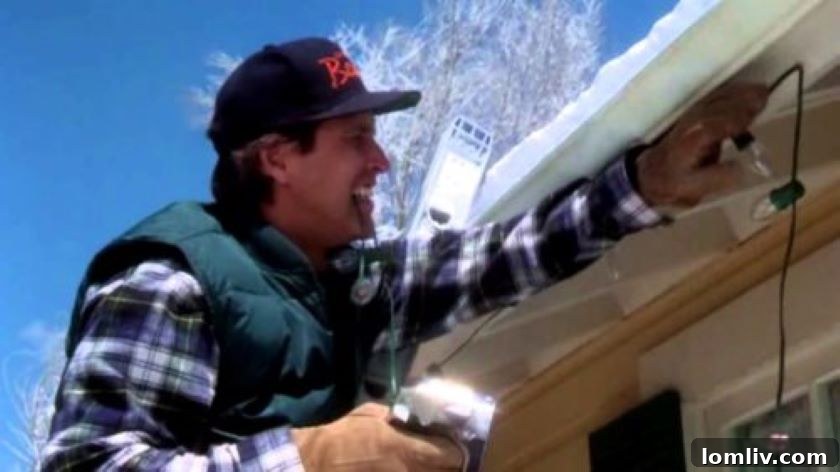
Clark Griswold’s legendary ambition to create the most spectacular Christmas light display is truly admirable, if not entirely sane. However, his method of achieving this blinding brilliance is a textbook example of what not to do when decorating your home’s exterior. We’re talking, of course, about his zealous use of a staple gun to affix those countless strands of lights to his roof.
From a home inspection standpoint, stapling lights directly to your roof shingles is an egregious offense. Firstly, each staple creates a puncture wound in your shingles. These tiny holes, while seemingly insignificant, are gateways for moisture. Over time, rain and melting snow can seep through these punctures, leading to water damage in your attic and roof decking. This moisture can foster mold growth, compromise the structural integrity of your roof, and even lead to costly leaks that manifest long after the holiday season has passed. Furthermore, the staples themselves can rust, expanding the holes and exacerbating the problem. A damaged roof not only reduces your home’s curb appeal but can significantly devalue it and lead to extensive repair bills.
Secondly, and perhaps even more critically, stapling electrical cords poses a severe fire and electrocution risk. The sharp prongs of a staple can easily strip the plastic insulation off the wiring, exposing the live wires beneath. This can result in a short circuit, an electrical fire, or a dangerous shock hazard to anyone coming into contact with the faulty lights. For safe and secure outdoor holiday lighting, always opt for approved plastic clips that attach to gutters or shingles without causing damage, or use adhesive hooks designed for exterior use. Prioritize safety by using only outdoor-rated lights and extension cords, and ensure all outdoor outlets are Ground Fault Circuit Interrupter (GFCI) protected to prevent electrical shock.
So Many Plugs: The Perils of Electrical Overload
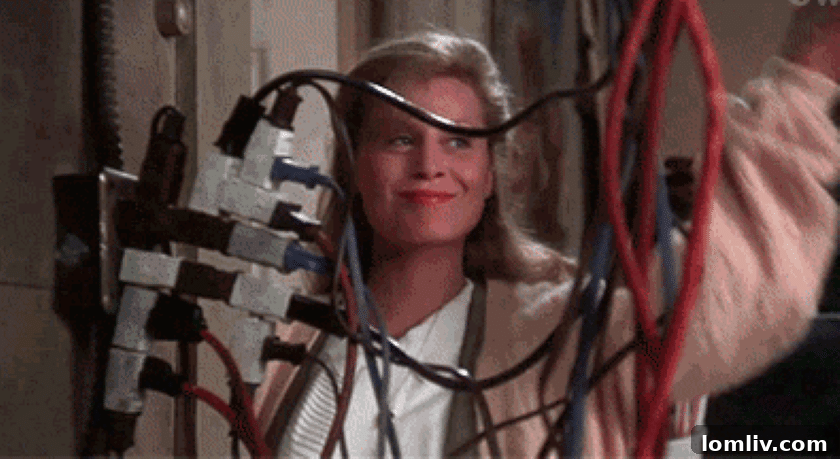
The moment Clark finally achieves his dazzling display, only for it to repeatedly fail until he bypasses the main switch, is iconic. But the underlying issue—connecting an astronomical number of lights to a single circuit—is a serious electrical hazard that homeowners must never replicate. The image of dozens of plugs cascading into one outlet might be comedic gold in the movie, but in real life, it’s a recipe for disaster.
Every electrical circuit in your home is designed to handle a specific amount of electrical current, measured in amps, before its circuit breaker trips. This breaker acts as a vital safety mechanism, cutting power to prevent overheating of wires, which could lead to an electrical fire. When you plug too many devices or light strands into a single outlet or circuit, you draw more current than the circuit can safely handle, causing an overload. The Griswolds’ blinding, spark-inducing display would undoubtedly trip a functioning circuit breaker in seconds. If the breaker were faulty or bypassed (as Clark ultimately does), the wires within the walls could overheat, melt their insulation, and ignite the surrounding building materials.
To safely illuminate your home during the holidays, it’s crucial to distribute your lighting load across multiple outlets and, ideally, different circuits. Consider using energy-efficient LED lights, which consume significantly less power than traditional incandescent bulbs, allowing you to string more lights with less risk. Always use heavy-duty, outdoor-rated extension cords and connect them to surge protectors rather than simply daisy-chaining multiple power strips, which offer no overload protection. A surge protector can shield your electronics from sudden power spikes, but it won’t prevent a circuit overload if too much wattage is being drawn. If you’re planning an extensive light display, consulting a qualified electrician is a wise investment to ensure your home’s electrical system can safely support it without posing a fire risk.
Trapped in The Attic: More Than Just a Minor Inconvenience
Clark’s unfortunate adventure in the attic, where he gets accidentally locked in by his well-meaning mother-in-law, highlights several critical home safety and building code issues that often go unnoticed by the average homeowner. Beyond the comedic timing of a sliding ladder hitting him in the face, the situation points to serious deficiencies.
Firstly, an attic door that cannot be opened from the inside constitutes a significant safety hazard and a potential code violation. Building codes typically require that all habitable spaces, including attics if they are used for storage or accessed regularly, have easily operable exits for emergency egress. Being trapped in an attic, especially if there’s a fire or other emergency, could have dire consequences. Home inspectors always check attic access points for proper functionality and safety, ensuring they are not only secure but also easily opened from both sides when applicable. Furthermore, the ladder itself, precariously sliding and causing injury, underscores the importance of a properly installed and secured attic ladder that meets safety standards, preventing falls and accidental injuries.
Secondly, the complete absence of visible insulation in the Griswold’s attic is a glaring red flag, particularly given their Chicago location. Proper attic insulation is paramount for energy efficiency, especially in climates with extreme temperature fluctuations. Without adequate insulation, heat rapidly escapes during the cold Chicago winters, leading to exorbitant heating bills. Conversely, during hot summers, uninsulated attics can become superheated, radiating warmth into the living spaces below and forcing air conditioning systems to work overtime. A well-insulated attic helps maintain a consistent indoor temperature, reduces energy consumption, and prevents issues like ice dams on the roof. A thorough home inspection will always assess the insulation levels and recommend improvements to ensure your home is energy-efficient and comfortable year-round.
Residential Sewer Abuse: The Unseen Dangers of Improper Waste Disposal
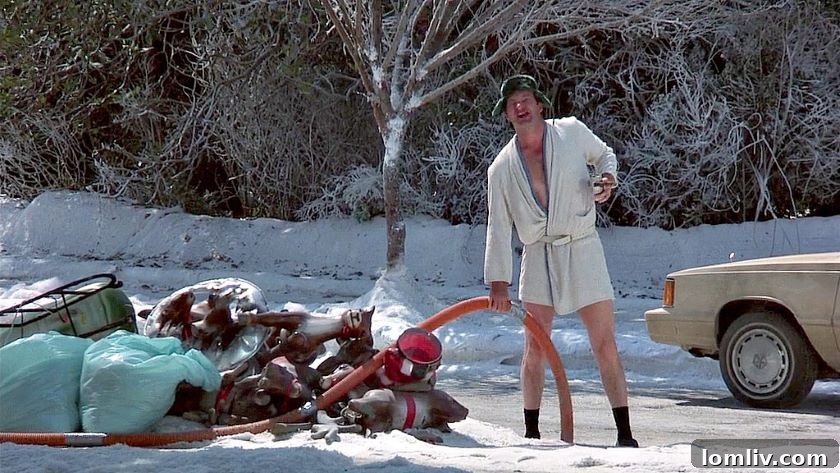
Ah, Cousin Eddie. His character, both disgusting and undeniably iconic, provides one of the movie’s most memorable and dangerous moments: the emptying of his RV’s sewage tank directly into the street gutter. While played for laughs, this scene vividly illustrates the severe real-world consequences of improper waste disposal, leading to the infamous methane gas explosion caused by Uncle Lewis’s cigar.
It’s a common misconception, perpetuated by terms like “storm sewer,” that street gutters are suitable for waste disposal. In reality, street gutters are storm drains, designed solely to collect rainwater and direct it, often untreated, into local waterways, rivers, and eventually, the ocean. Dumping any kind of waste, especially human sewage, into storm drains introduces harmful bacteria, viruses, and pollutants directly into our ecosystems, endangering aquatic life and potentially contaminating drinking water sources. Residential sewage, on the other hand, flows through a completely separate, closed system of sanitary sewer lines that transport waste to treatment plants for processing before it can be safely returned to the environment.
The methane gas buildup, as depicted in the film, is also a very real and serious hazard. Methane is a byproduct of anaerobic decomposition, common in sewage systems. In confined spaces, such as underground sewer lines or poorly ventilated areas, methane can accumulate to dangerous levels. It is highly flammable and, as the movie comically demonstrates, can be ignited by an open flame, leading to explosive results. Beyond the explosion risk, methane is also an asphyxiant, meaning it can displace oxygen and pose a suffocation risk in enclosed spaces. Proper disposal of RV waste is critical; it should always be emptied at designated dump stations found at campgrounds or specialized facilities, ensuring that waste is treated safely and responsibly.
Fun Fact About Diving Boards: The Evolution of Pool Safety
In Clark’s delightful daydream of a perfect, bonus-funded pool experience, complete with his family enjoying a pristine diving board, Cousin Eddie inevitably crashes the fantasy. This fleeting image, however, brings to light a significant trend in modern home pool design and safety: the noticeable decline in residential diving boards. It’s not just a passing fad; it’s a direct result of evolving safety standards and a deeper understanding of injury prevention.
For decades, diving boards were a staple of backyard pools, synonymous with summer fun. However, the recreational joy came with a hidden cost: a high incidence of serious, often life-altering, diving injuries. Shallow water diving, improper diving techniques, and horseplay around diving boards frequently led to head, neck, and spinal cord injuries, resulting in paralysis or even death. These tragic incidents prompted a reevaluation of pool design and safety regulations across the country.
As a result, modern standards for installing diving boards have become much more stringent. To safely accommodate a diving board, pools now require greater depths and longer clear areas to prevent divers from hitting the bottom or sides. For instance, in Texas, a home pool typically needs to be at least 7.6 feet deep and 38 feet long to safely feature a diving board. Most contemporary residential pools, however, are designed to be shallower—often less than 6 feet deep and under 35 feet long. This shift is driven by several factors: shallower pools are generally less expensive to build, maintain, and heat, and critically, they are considered inherently safer by reducing the risk of diving-related injuries. While the allure of a diving board might persist, the move towards safer, shallower pool designs reflects a commitment to prioritizing injury prevention and ensuring that backyard pools remain a source of joy, not peril. Home inspections often include an assessment of pool safety features, including proper depth markings, fencing, and the presence of safety equipment.
As you can see, the Griswold home, while a source of endless holiday cheer and comedic genius, is also a stark reminder of the myriad potential hazards that can exist within our own homes. From electrical nightmares to plumbing faux pas and structural shortcomings, the movie inadvertently serves as an entertaining (and extreme) lesson in home inspection essentials.
So, as you continue to savor the tail end of the holiday season, perhaps curled up with “Christmas Vacation,” I invite you to not only enjoy the timeless humor but also to view the Griswold household through a homeowner’s lens. What other inspection notes would you add to this list? Share your observations in the comments below, and remember: while Clark Griswold’s intentions were always good, a little knowledge (and perhaps a professional home inspection) can go a long way in ensuring your home is both festive and fundamentally safe!