Preserving Aldredge House: Navigating Community, Preservation, and Funding Challenges on Swiss Avenue
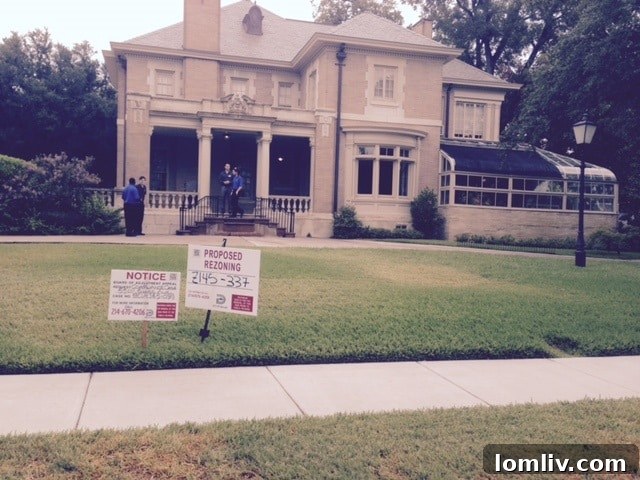
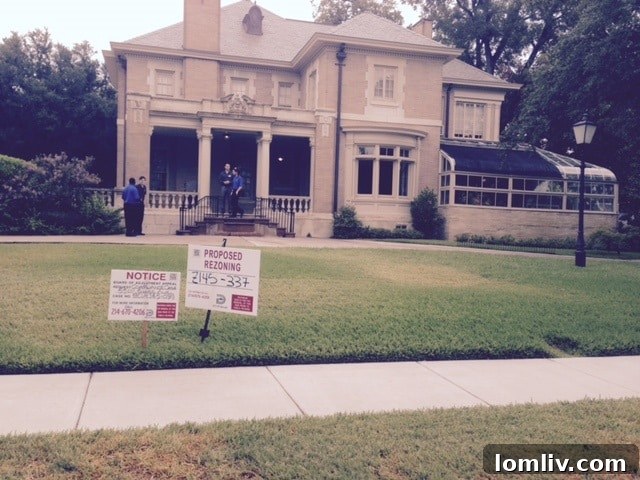
The Aldredge House, a magnificent gem nestled within Dallas’s historic Swiss Avenue district, stands as a testament to the city’s rich architectural heritage. However, its continued preservation is entangled in a complex web of community relations, funding imperatives, and the inherent challenges of maintaining a significant historical property in a bustling urban environment. The dilemma facing Aldredge House and the DCMSA Alliance, its dedicated stewards, is multifaceted, sparking passionate discussions among neighbors, preservationists, and city officials.
A Legacy of Fundraising and Community Support
For decades, the DCMSA Alliance has championed the Aldredge House, utilizing it not only as a historical showcase but also as a venue for crucial fundraising efforts. These events are not merely social gatherings; they are the lifeblood that supports the extensive maintenance required by such a grand, historic structure. Recent efforts highlight the Alliance’s formidable fundraising capabilities and the unwavering commitment of its members.
Update: Precious Jo North, a friend and fellow Alliance member, recently clarified the impressive success of a past home tour. While initial recollections placed the funds raised around $30,000, the actual figure was a remarkable $112,000, marking it as the second-highest fundraiser in DCMSA history! This outstanding achievement underscores the dedication and hard work of co-chair Sandi Ciarochi and her entire team. Similarly, a “Prescription Texas Luncheon” featuring then-Governor Rick Perry once generated over $150,000. These figures are not just numbers; they represent the significant financial power and community support essential for the sustained preservation of Aldredge House.
Such substantial fundraising prowess is precisely the kind of sustainable power needed to safeguard Aldredge House for future generations. It prompts a critical question: how can we consistently harness this potential to secure the home’s long-term future amidst evolving urban dynamics?
Navigating the Neighborly Divide on Swiss Avenue
The path to preservation is rarely without its challenges, and for Aldredge House, recent years have seen a complex dynamic emerge with its immediate neighbors on Swiss Avenue. As a historical property hosting events, the house inevitably impacts its surroundings. While the Alliance itself is dedicated to fostering positive community relationships, issues can arise, often through unforeseen circumstances.
It’s acknowledged that neighborly relations have recently been strained on Swiss Avenue. This was not, however, a direct failing of the Alliance’s intentions or policies. The root of many recent grievances traced back to the actions of a sub-contractor. Discovering such issues is akin to uncovering misconduct by an employee acting behind your back; once the problem is identified, a significant amount of effort is required for rectification and rebuilding trust. The consequences of a third party’s actions can unfortunately reflect poorly on the primary organization, despite their best efforts to maintain standards.
The frustration stemming from this situation is palpable, particularly when considering the dedication required to manage such a historic property. It highlights the intricate balance organizations must strike between delegating tasks and maintaining meticulous oversight to prevent unforeseen complications that can damage hard-won community goodwill.
The Generous Yet Insufficient Offer: Sustaining a Landmark
In light of the ongoing discussions, neighbors have commendably extended offers to host gala fundraisers for Aldredge House. These are undoubtedly kind gestures, born from a desire to support a cherished local landmark. However, the financial realities of historic preservation dictate that sporadic gala events, while appreciated, may not be sufficient to ensure the long-term viability of a property like Aldredge House.
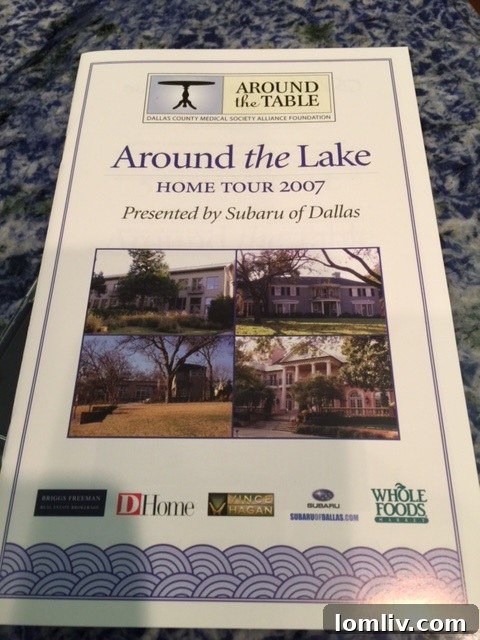
Recalling personal experience, chairing a Home Tour for Aldredge House in 2007 on behalf of the Alliance involved months of intensive work and preparation, ultimately raising approximately $112,000. While a significant sum, the effort was immensely time-consuming and exhausting. The inherent problem with relying solely on occasional, large-scale events is that the immense costs of maintaining and preserving a historic home are ongoing and substantial. These costs encompass everything from structural repairs and HVAC systems to period-appropriate renovations and general upkeep, far exceeding what a few events can consistently cover.
Moreover, economic downturns are an inevitable part of financial cycles. When the economy falters, discretionary spending shifts dramatically. People, when faced with economic uncertainty, tend to prioritize donations to critical causes like cancer research or organizations supporting hungry and homeless children – and Dallas is fortunate to host many such deserving charities. While historic preservation is vital, it often becomes a lower priority in times of hardship. This stark reality underscores the urgent need for diverse, sustainable funding models that can weather economic fluctuations and provide a stable financial foundation for Aldredge House into the future.
Swiss Avenue: A Tapestry of History and Activity
Swiss Avenue itself is a district unlike any other in Dallas. Designated as a historic district, it’s characterized by its stunning array of early 20th-century mansions and a vibrant community life. Those choosing to reside here are immersed in a dynamic environment, not a secluded, country-like existence. The area is a hub of activity, frequently hosting home tours, fundraisers, and religious events throughout the year. This constant flux is part of the street’s unique charm and its commitment to public engagement and preservation.
While the occasional stray item—a tossed beer bottle or, perhaps, even more surprising finds—might appear after an event, it’s worth noting that many such “contrabands” often originate from areas beyond the immediate vicinity of wedding guests, particularly in the still-developing neighborhoods bordering Swiss Avenue. This observation invites residents to consider the broader urban context rather than solely attributing all issues to Aldredge House events.
The inability for some neighbors to reconcile their anger over perceived disruptions with the undeniable positive contributions of the Alliance and Aldredge House to the community is deeply saddening. However, it’s also understandable that living next door to an event venue, where outside noise might disturb a sleeping baby, presents a distinct challenge. This underscores the need for effective communication and mutually agreeable compromises that respect both the preservation efforts and the peace of mind of residents.
The Evolving Landscape of Events and Urban Living
The nature of events hosted at Aldredge House, particularly weddings, has also been a point of discussion. While some events might have, at times, exceeded desired noise levels – a situation the Alliance has since taken significant strides to rectify – the broader trend of wedding frequency itself is shifting. Millennials, for instance, are increasingly re-evaluating the necessity and traditional format of weddings, which may naturally lead to a reduction in demand for such large-scale events over time.
Ultimately, this entire discussion circles back to fundamental real estate principles: property rights, zoning regulations, and the challenges of managing diverse uses within residential areas. Can a homeowner operate a business from their residence? This question is particularly pertinent on Swiss Avenue, where many homeowners likely engage in home-based enterprises. It’s a contemporary challenge cities nationwide are grappling with, from the rise of the Airbnb phenomenon to complex zoning dilemmas.
The enforcement of these regulations poses a significant hurdle for municipalities, especially those, like Dallas, that already face limited funds even for essential infrastructure such as road repairs. How can cities effectively police every home-based business or short-term rental without adequate resources? This question becomes even more intricate in a designated Historic District like Swiss Avenue, where the paramount goal is to preserve and protect its unique character.
The Precedent of Preservation: David Dean’s Closet Controversy
The complexities of navigating development and preservation within a historic district are not new to Swiss Avenue. Even prominent figures have faced scrutiny. David Dean, a former Dallas City Council member and respected resident, encountered a significant challenge a few years prior when he sought to enlarge his master closet to a substantial 450 square feet. This seemingly private domestic alteration sparked a public debate that resonated throughout the historic district.
Dean’s case serves as a poignant illustration of the stringent regulations governing alterations within historic districts. In August of that year, the Landmark Commission denied his request for the add-on, a decision vehemently protested by his Swiss Avenue neighbors. Reports indicate that the Dean case nearly fractured the Swiss Avenue Historic District Association itself. Commissioners ultimately ruled that the proposed closet enlargement was not in keeping with the historic character of the home and the neighborhood. More critically, they feared that approving such a significant alteration to an exterior of a home would establish a dangerous precedent for the district, where maintaining the architectural integrity is paramount.
This episode highlights the delicate balance between individual property rights and the collective responsibility to uphold the historical authenticity of a designated district. It underscores the challenges Aldredge House faces in a similar context, where its operations must align with both its historic designation and the expectations of its neighbors.
Moving Forward: A Call for Dialogue and Resolution
As the Board of Adjustment hearing approaches, it’s clear that the situation surrounding Aldredge House has unfortunately escalated into a nasty public battle. This outcome is profoundly disappointing. It begs the question: if highly educated, civilized, and well-meaning individuals cannot find common ground and collaboratively resolve their differences, what hope is there for navigating more complex societal challenges?
A significant part of the current predicament stems from the actions of a vendor, a fact that generates considerable frustration. While no longer on the DCMS board, the author expresses a desire for greater accountability and transparency regarding Culinaire, the contractor implicated in some of the past issues.
The Aldredge House is more than just a building; it’s a vital piece of Dallas’s past and an active contributor to its present. Its future hinges on the ability of all stakeholders—the DCMSA Alliance, the neighbors, and city officials—to engage in constructive dialogue, acknowledge each other’s perspectives, and forge sustainable solutions. Only through such collaborative efforts can Aldredge House continue to thrive, serving its community and preserving its legacy for generations to come, without perpetually being embroiled in conflict. The path to resolution lies in open communication, mutual respect, and a shared commitment to the enduring value of this historic landmark.