Mortgage Report: Navigating Interest Rates After Strong Job Growth – Lock or Float Your Rate?
The financial markets recently buzzed with the release of the latest U.S. jobs and unemployment figures, signaling a robust economic landscape. The nation added an impressive 223,000 jobs in May, propelling the unemployment rate down to a remarkably low 3.8 percent. This positive economic news, while a boon for the broader economy and leading to a notable shift of funds from the bond market back into the stock market, carries significant implications for mortgage interest rates. For current and prospective homeowners, the pressing question remains: how will these changes affect borrowing costs, and is now the time to lock in a rate or let it float?
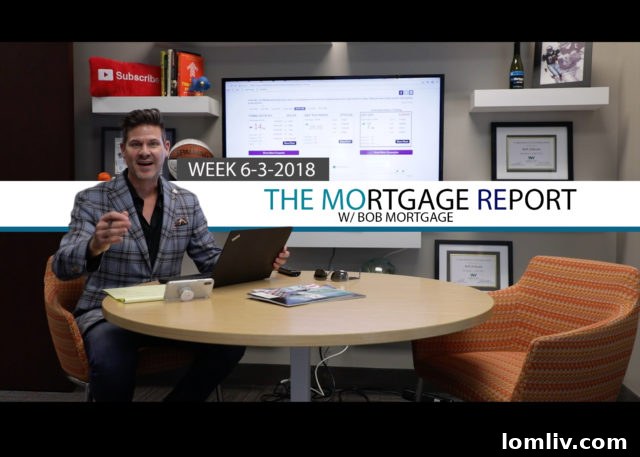
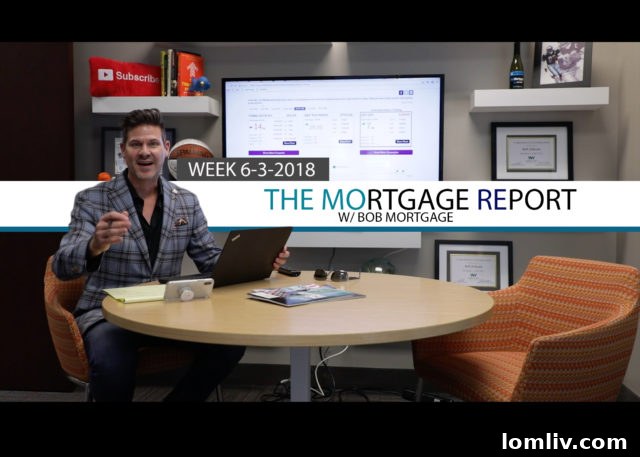
Understanding the intricate relationship between economic performance, central bank policies, and mortgage rates is crucial in today’s dynamic environment. A strong labor market often indicates underlying economic strength, which can influence inflation expectations and, consequently, the Federal Reserve’s stance on interest rates. These shifts directly impact the cost of borrowing for home loans. Given the constant flux in these indicators, timely and expert guidance is more valuable than ever. We are delighted to present this week’s comprehensive analysis from our most trusted mortgage expert, Bob Johnson, widely recognized as BobMortgage.
Understanding Economic Indicators: Jobs, Inflation, and the Federal Reserve’s Influence
The U.S. jobs report is a cornerstone economic indicator, offering profound insights into the nation’s economic health. When the economy experiences significant job creation, such as the 223,000 new positions reported in May, and the unemployment rate reaches multi-decade lows like 3.8 percent, it typically signifies a tightening labor market. This phenomenon often leads to increased wage growth as companies compete for a shrinking pool of available talent, which can then contribute to inflationary pressures across the economy.
The Federal Reserve (the Fed), as the central bank of the United States, operates with a dual mandate: to maximize employment and maintain price stability (i.e., control inflation). When strong economic data, particularly from the labor market, suggests that inflation risks are on the rise, the Fed often signals or initiates measures to cool down the economy. This usually involves adjusting the federal funds rate, a short-term benchmark rate that influences lending costs throughout the financial system. While the federal funds rate is not directly tied to mortgage rates, its movements profoundly impact the yields on longer-term instruments like 10-year Treasury bonds, which serve as a critical benchmark for 30-year fixed mortgage rates.
The recent robust jobs data reinforces the narrative of a resilient economy, potentially providing the Fed with more justification to maintain or even tighten monetary policy in its efforts to manage inflation. For the mortgage market, this generally implies a heightened likelihood of stable or potentially rising interest rates. This makes strategic planning for homebuyers and those considering refinancing more urgent. Each new economic report adds another layer of complexity to the overall picture, shaping future interest rate forecasts and directly affecting the affordability of homeownership and monthly mortgage payments.
The Mortgage Market in Flux: How Interest Rates Respond to Economic Shifts
Mortgage interest rates are not static figures but rather highly responsive to a complex array of economic forces, inflation expectations, and the ebb and flow of the bond market. Specifically, the market for Mortgage-Backed Securities (MBS) is a primary driver. When positive economic news, such as a strong jobs report, signals a robust economy, investors often shift their capital from the perceived safety of bonds (including MBS) to the higher potential returns of the stock market. This selling pressure on bonds causes their prices to fall and their yields to rise.
Since mortgage rates are intrinsically linked to these bond yields, an increase in bond yields typically translates into an increase in mortgage interest rates. This direct correlation means that what happens in the broader economy and financial markets can have an immediate and tangible impact on your home loan. Even a slight fluctuation, say a quarter-point increase in an interest rate, can significantly alter the overall cost of a mortgage, potentially adding thousands of dollars over the lifetime of the loan and affecting monthly payments. Therefore, staying informed about these market dynamics and having access to expert analysis is absolutely essential for making sound financial decisions in the housing sector.
Lock or Float: A Pivotal Decision for Your Home Loan
In a fluctuating interest rate environment, one of the most critical decisions for anyone pursuing a home loan or refinance is whether to “lock” their mortgage rate or “let it float.” This choice can have substantial financial implications, potentially saving or costing you a significant amount over the term of your loan. Let’s explore both options in detail to help you understand their nuances.
What Does “Locking” a Mortgage Rate Entail?
When you opt to “lock” your mortgage rate, your lender commits to a specific interest rate for a predetermined period, typically ranging from 30 to 60 days, though longer terms may be available. This provides you with certainty; regardless of whether market rates increase during your loan’s processing period, your agreed-upon rate will remain unchanged. Locking your rate offers a vital safeguard against adverse market movements and is often recommended when you anticipate a rise in interest rates or simply prefer the peace of mind that comes with a fixed rate while your loan undergoes underwriting.
What Does “Floating” a Mortgage Rate Mean?
Conversely, “floating” your mortgage rate means you choose not to secure it immediately. Instead, you allow your rate to fluctuate with market conditions until a strategic point, usually closer to your loan’s closing date. This strategy can be advantageous if you believe that interest rates are likely to decline before your loan is finalized. If rates do fall, you could potentially secure a lower rate than what was initially offered. However, the inherent risk is that market rates could rise, resulting in a higher rate than you might have obtained by locking in earlier.
Expert Considerations: When to Lock and When to Float
- Consider Locking If:
- You foresee an upward trend in mortgage interest rates, driven by strong economic indicators, inflationary pressures, or signals from the Federal Reserve.
- Your loan closing date is approaching rapidly, and you wish to mitigate the risk of last-minute rate volatility.
- Budgeting certainty is paramount for you, and you need a guaranteed monthly payment amount.
- The current rate offered is at the upper limit of what you comfortably afford, making any further increase problematic.
- Consider Floating If:
- You anticipate a potential decline in interest rates before your loan closes, possibly due to signs of economic weakening or a more dovish stance from the Federal Reserve.
- You have an extended closing window, which provides more time for potential favorable rate movements.
- You possess a higher tolerance for risk and are comfortable with the possibility of rates moving against you, in exchange for the chance to secure a lower rate.
Ultimately, the decision to lock or float your mortgage rate is a highly personal one, contingent on your individual risk tolerance, current financial circumstances, and your outlook on future market trends. This complex decision highlights the invaluable role of seasoned mortgage expertise.
Meet Your Trusted Mortgage Expert: Bob Johnson (AKA BobMortgage)
In times of significant economic change and market uncertainty, the guidance of a seasoned professional is not merely beneficial—it’s absolutely essential. We are incredibly fortunate to bring you the unparalleled insights of our most trusted mortgage expert, Bob Johnson, widely known throughout the industry as BobMortgage. With decades of experience navigating the intricate complexities of the mortgage market, Bob possesses a unique talent for translating complex financial data into clear, actionable advice that empowers his clients to make informed decisions.
BobMortgage has built a formidable reputation for his deep understanding of macroeconomic trends, his meticulous analysis of interest rate forecasts, and his steadfast commitment to helping individuals achieve their homeownership and financial goals. Whether you are contemplating your first home purchase, looking to refinance an existing loan, or considering real estate as an investment, Bob’s timely and accurate reporting provides invaluable clarity and instills confidence. His pragmatic approach, coupled with his exceptional communication skills, makes even the most daunting mortgage scenarios understandable and manageable. Be sure not to miss his invaluable perspectives in this week’s Mortgage Report.
Proudly Presented by Wallick & Volk: The Nation’s Oldest Private Lender
This insightful Mortgage Report, along with the expert analysis it provides, is proudly presented by Wallick & Volk, an institution that stands as a beacon of trust, longevity, and exceptional service in the lending industry. As the nation’s oldest private lender, Wallick & Volk carries a rich legacy of stability and profound expertise, built over generations. Founded on core principles of integrity and a unwavering commitment to client-centric solutions, they have consistently adapted to the ever-evolving financial landscape, always placing the needs of their borrowers at the forefront.
Choosing a mortgage lender represents one of the most significant financial decisions you will undertake. Partnering with a distinguished company like Wallick & Volk ensures that you benefit from a storied history of successful lending, a comprehensive suite of diverse mortgage products, and a dedicated team committed to providing personalized service. Their unwavering dedication to guiding clients through every stage of the home financing journey, from initial consultation to the final closing, truly distinguishes them in the market. We encourage you to explore their extensive offerings and experience the unique advantage that comes with working with a lender that has not only endured but thrived through the test of time. Visit wvmbaddison.com today to discover how Wallick & Volk can expertly assist you with all your mortgage needs.
Stay informed and empower your financial decisions in the dynamic world of real estate and mortgages. Continue to tune into the Mortgage Report for ongoing updates and expert analysis that truly makes a meaningful difference in your home financing journey.