In an era increasingly defined by climate consciousness and the urgent need for sustainable development, innovative financial solutions are emerging to drive environmental change. Among the most impactful is Property Assessed Clean Energy (PACE) financing, a groundbreaking initiative designed to make energy-efficient upgrades more accessible for property owners. Recently, the New York Times highlighted the burgeoning growth of this green financing mechanism, along with the significant capital influx now available for lending. While the Times often focuses on national or international trends, a closer look reveals how states like Texas, and specifically dynamic urban centers such as Dallas, are leveraging the PACE program to foster a greener, more sustainable built environment.
Understanding PACE Financing: A Catalyst for Sustainable Property Development
Established in 2008, PACE provides a unique financing structure for both new and existing commercial and multi-family buildings, empowering property owners to implement critical energy efficiency improvements. This can encompass a wide range of upgrades, from enhancing water conservation systems and optimizing electrical consumption to modernizing natural gas infrastructure and integrating renewable energy sources. Unlike conventional bank loans, PACE is not a direct lender but rather a program that facilitates financing from various sources, including traditional banks, private equity firms, and dedicated PACE investment funds, for eligible property owners. States and municipalities typically establish independent nonprofit PACE operations, which act as vital clearinghouses, connecting property owners with capital providers and administering the program’s outcomes, ensuring compliance and measuring impact.
The Distinct Advantages of PACE Loans
What sets PACE financing apart from standard funding avenues are its exceptionally favorable terms. Property owners can benefit from significantly low interest rates, often half the prevailing market rates, combined with remarkably long repayment periods, extending up to 30 years at a fixed interest rate. In Texas, the average loan term typically ranges from 10 to 20 years, providing long-term financial stability. Crucially, PACE is generally not the primary lienholder, typically supporting up to 20 percent of a project’s total costs. A key distinguishing feature is how repayments are structured: they are consolidated with other property-related bills, such as property taxes. This unique structure means that when a property is sold, the PACE obligation is seamlessly transferred to the new owner. This aspect is particularly attractive for energy efficiency improvements.
Consider, for example, the installation of solar panels. While they dramatically reduce or even eliminate electric bills, an owner who invests in them might struggle to recoup the full cost upon sale, as they would essentially be asking a buyer to pay upfront for future, non-existent utility savings. With PACE, the financial burden is distributed over time, allowing each owner to pay for the energy savings they directly benefit from, much like a recurring utility bill itself. This equitable distribution of costs and benefits makes sustainable upgrades a more viable and attractive investment for commercial and multi-family property owners.
The National Surge in Green Financing: PACE’s Remarkable Growth
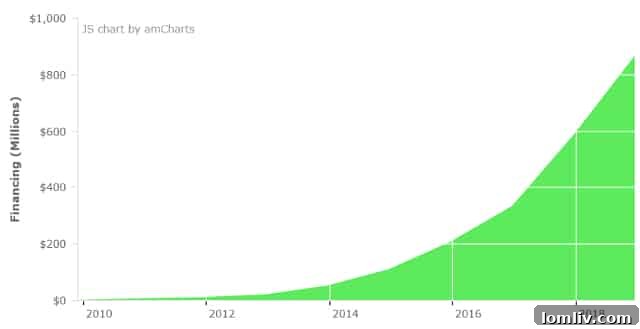
Despite an initially challenging period marked by unfamiliarity among traditional financial institutions (as banks grappled with the novel lien structure), PACE loans are now experiencing an unprecedented boom across the United States. As highlighted by the New York Times, the program, which originated in Berkeley, California, in 2008, saw a total of $208 million in loans between its inception and 2015. However, the subsequent period from 2016 to 2018 witnessed a monumental increase, with nationwide PACE funding surging to $660 million. This represents an astonishing tripling of investment in half the time, underscoring the rapid mainstream adoption and growing recognition of PACE as a powerful tool for greening America’s infrastructure.
It comes as no surprise that California, the birthplace of PACE, continues to lead the nation in project volume, having utilized an impressive $293 million in PACE funds since the program’s inception. Texas, while a later adopter, has quickly ascended the ranks, currently holding the sixth position nationally with $43 million in PACE-assisted projects to date. This rapid acceleration in Texas reflects a burgeoning commitment to energy efficiency and sustainable development within the state.
One of the primary drivers behind this remarkable growth has been the increasing availability of financing. The relatively attractive rates of return offered by PACE loans, especially when compared to other low-risk bank investments like CDs and money markets, have attracted capital from a diverse array of sources. From traditional banks and private equity firms to specialized PACE investment funds, capital is flowing into the program. The inherent security of PACE loans, which are structured as primary liens on the property, provides a robust layer of protection for investors in the event of bankruptcy. Furthermore, endorsements from influential entities like banks and even the U.S. Department of Housing and Urban Development (HUD) have solidified PACE’s reputation as a sound and secure investment. Given the stringent qualification criteria applied to projects, concerns about a potential “bubble” in the PACE market are largely unfounded, ensuring its sustained, responsible growth.

Texas Takes the Lead: PACE’s Impact Across the Lone Star State
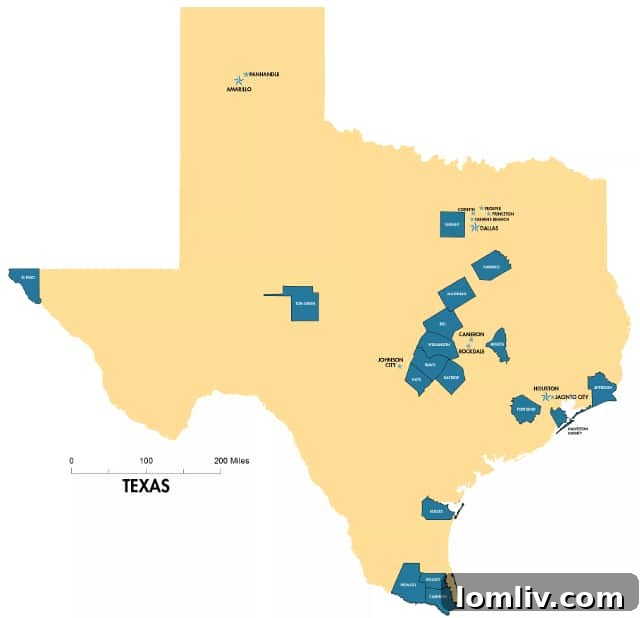
At the heart of Texas’s PACE success is the Texas PACE Authority (TPA). This dedicated non-profit organization plays a crucial role in overseeing PACE programs across 23 local municipalities and counties, including significant players like Tarrant County and the City of Dallas (though notably, not Dallas County itself). Beyond its administrative function, the TPA serves as a vital steward of a statewide training program, educating developers, landowners, and financial institutions on the intricacies and benefits of PACE. Furthermore, the TPA developed and maintains the highly successful “PACE in a Box” program, an invaluable resource that streamlines the process and makes it considerably easier for stakeholders to navigate the system and implement projects.
In 2016, its inaugural year of operation, the TPA facilitated approximately $4 million in PACE loans. This volume more than doubled by 2018, reaching an impressive $9.22 million in PACE-assisted funding. While 2017 stands out as an exceptional year, with nearly $30 million in projects, this unusual spike can largely be attributed to a single, transformative project in Dallas – a testament to the city’s ambition and leadership in green development.
Dallas’s Flagship PACE Projects: Setting a Green Benchmark
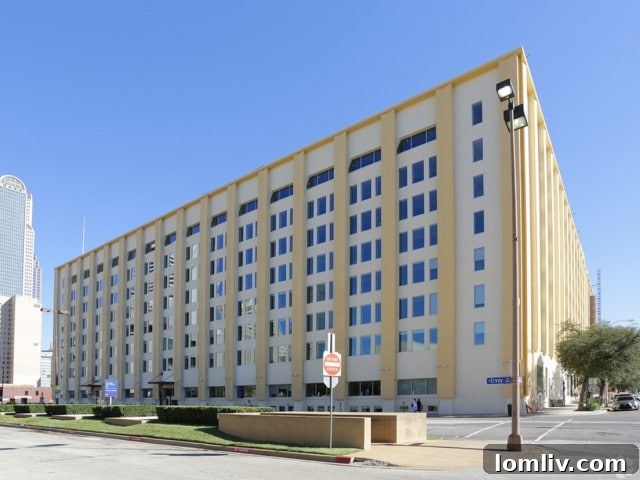
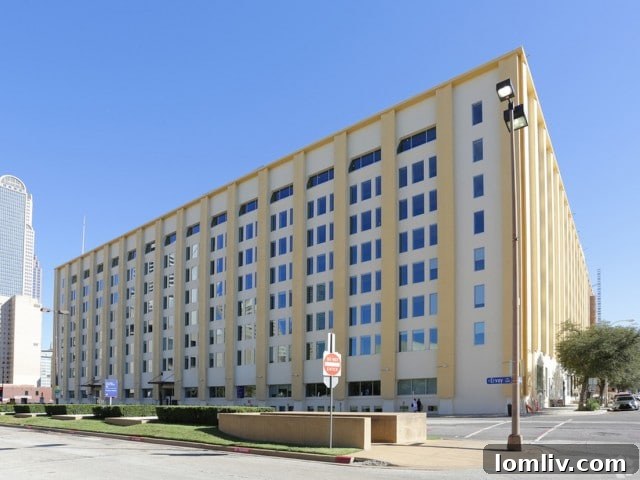
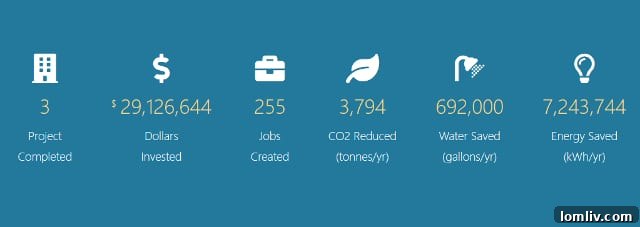
The renovation and restoration of the iconic 1910 Butler Brothers mercantile warehouse building, strategically located on South Ervay between Dallas City Hall and the library, stands as a shining example of PACE’s potential. This monumental project secured an astounding $24 million in PACE-related funding, making Dallas’s first PACE project also the largest in the entire state. This bold undertaking transformed a derelict historical structure into a vibrant, mixed-use apartment and hotel complex.

Today, the Butler Brothers Building annually saves an impressive 6.6 million kilowatt-hours of electricity and 700,000 gallons of water, effectively reducing expected utility bills by a remarkable 40 percent. This environmental triumph is complemented by economic success, garnering three prestigious awards for sustainability (CoreNet Global), best public-private partnership (D CEO magazine), and most creative financing (Dallas Business Journal). It’s a clear demonstration of how PACE can breathe new life into historical assets while championing cutting-edge sustainability.
The following year, Dallas continued to lead, this time by pioneering the smallest PACE project (at the time) with a $74,000 investment made by Dallas Paint and Body Shop. This project involved installing solar panels and LED lighting, resulting in a significant 33 percent reduction in electricity consumption for the business. Owner Felix Flores confidently stated that the utility savings would comfortably cover the loan repayments, highlighting the immediate financial benefits for small businesses. This project also marked a significant milestone as the first Latino-owned business to leverage PACE, demonstrating the program’s inclusive reach. The upgrades at Dallas Paint and Body Shop alone saved an additional 40,572 kilowatt-hours, underscoring that even smaller projects can yield substantial energy savings.
To date, Texas projects have collectively secured over $49.76 million in funding across the state. A staggering 60 percent of these funds have been utilized by Dallas projects, leading to substantial reductions in average utility usage: 79 percent for natural gas, 40 percent for water, and 57 percent for electricity—totaling an impressive 19,690,710 kilowatt-hours saved. This represents one-third of the entire state-level electricity reductions achieved through PACE. Despite Texas beginning its PACE journey in 2013, eight years after California’s initial launch in 2008, Dallas quickly embraced the program in May 2016 and has since become a powerful advocate and implementer of green financing initiatives.
However, it’s worth acknowledging the impactful contributions of smaller counties. For instance, Brazos County, with a modest $68,851 in PACE investments, has achieved astonishing results, saving 15,092,171 kilowatt-hours – an impressive 24 percent of the state’s total electricity savings. This clearly illustrates that even projects of modest scale can generate immense environmental benefits and demonstrate remarkable efficiency in resource utilization.
On a lighter note, PACE has extended its outreach to the Texas-Mexico border, focusing on El Paso, Cameron, Hidalgo, and Willacy Counties. One might whimsically ponder whether the installation of solar panels along border infrastructure could secure funding via PACE, rather than through traditional means, reflecting the innovative potential of this green financing model.
The Texas PACE Authority: Driving Future Sustainability
The Texas PACE Authority (TPA) operates as a non-profit organization, sustaining its operations through project fees and generous donations. Key contributors to its mission include the Meadows Foundation, the Rockefeller Brothers Fund, the State Energy Conservation Office (SECO), and the Mitchell Foundation, among others. The TPA is lauded for its operational efficiency, boasting some of the lowest administrative rates nationwide, ensuring that the maximum amount of funding is directed towards actual project implementation and impact.
Addressing Gaps and Looking Ahead
One notable limitation within Texas’s current PACE program is the absence of provisions to apply qualifying project dollars to new residential construction. This oversight becomes particularly significant as construction costs continue to rise, placing increasing strain on developers to offer reasonable rents while simultaneously integrating advanced, energy-saving technologies. A core tenet of PACE since its inception was to enable the rehabilitation of energy-intensive multi-family residential buildings, thereby reducing their operational costs and helping to keep rents affordable for tenants. This fundamental goal—of making housing more sustainable and accessible—is arguably just as critical, if not more so, in the context of new residential developments.
As author Amit Kalantri wisely observed, “In modern time slowness is a new sickness.” It is gratifying to witness PACE gaining substantial momentum in Texas, especially after a period of initial legislative inertia (the Texas legislature approved it in 2013, but implementation took time). The rapid adoption and successful deployment of PACE financing across the state signal a promising future for green infrastructure. Dallas, in particular, deserves commendation for its proactive leadership in leveraging PACE to drive impressive energy efficiency improvements and cultivate a more sustainable urban landscape. As more municipalities and property owners realize the profound economic and environmental benefits, PACE is poised to become an even more powerful force in shaping Texas’s sustainable future.

About the Author: My focus areas encompass high-rises, HOAs, and renovation projects. I also hold a deep appreciation for modern and historical architecture, always balancing these aesthetics against the dynamic principles of the YIMBY (Yes In My Backyard) movement. My commitment to insightful real estate commentary has been recognized by the National Association of Real Estate Editors, which awarded my writing three Bronze awards in 2016, 2017, and 2018, along with two Silver awards in 2016 and 2017. If you have a compelling story to share or even a marriage proposal to make, feel free to reach out via email at [email protected]. You’re welcome to look for me on Facebook and Twitter, though you might find my online presence elusive.