Dallas is actively addressing its critical need for affordable housing, a challenge amplified by rapid population growth and increasing living costs. In a significant move this week, the Dallas City Council approved four new housing developments leveraging the Public Facility Corporation (PFC) financing structure. This innovative mechanism is hailed by council members as a vital tool for delivering much-needed affordable homes for the city’s essential workforce, ensuring that those who keep Dallas running can afford to live within its boundaries.
The urgency of the situation was underscored during the recent council meeting. District 1 Councilman Chad West poignantly asked, “Is there any other way we’re getting affordable housing? Are developers building it for free?” The straightforward response from Kyle Hines, Assistant Director of Housing and Neighborhood Revitalization, was a resounding, “No.” This exchange highlighted the stark reality that without creative financial tools like PFCs, the construction of affordable housing units would largely cease, leaving a growing gap in housing options for middle and low-income families.
The PFC model offers a strategic pathway to overcome the financial barriers often associated with developing affordable housing, ensuring that critical projects can move forward despite market pressures. By providing incentives, the city can attract developers to build housing that meets specific affordability criteria, directly benefiting residents who struggle with the escalating costs of living in a thriving metropolitan area.
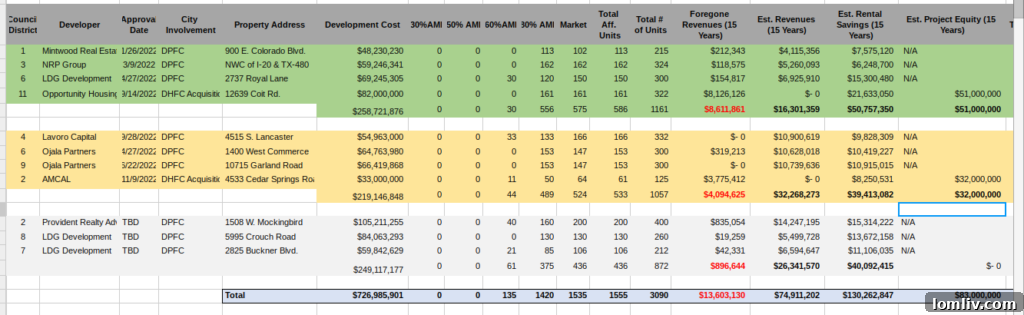
However, the PFC approach is not without its detractors. District 12 Councilwoman Cara Mendelsohn has consistently voted against these projects, which now total an even dozen across the city. Her primary concern centers on the long-term fiscal implications for Dallas. Mendelsohn argues that taking developments off the city’s tax rolls for an extended period, typically 75 years under the PFC structure, undermines the city’s ability to fund essential public services.
“This is not an equity issue,” Mendelsohn firmly stated, reframing the debate. “This is about fiscal responsibility and how we fund affordable housing. We have to ensure our city is strong for the long term. If we continue to give tax abatements and continue to take items off our tax roll, we can’t provide the services that the residents need. I think we all know where we stand. I’m not going to vote for them. I reject the notion that it’s about equity when it’s actually about funding the city. We haven’t even returned our libraries to pre-COVID because we don’t have the general fund dollars to do it.” Her argument emphasizes the critical balance between immediate housing needs and the sustained financial health required to maintain and improve city infrastructure and services for all residents.
Understanding the Public Facility Corporation (PFC) Mechanism
A Public Facility Corporation (PFC) is a governmental entity created under Texas law to facilitate public projects, including affordable housing. While PFC projects indeed offer a significant 75-year tax abatement for developers, this structure is designed to yield multifaceted benefits for the city. In return for the long-term tax exemption, the city typically receives a substantial one-time payment upfront, along with ongoing annual lease payments. This ensures a consistent revenue stream, even if not through traditional property taxes, and incentivizes developers to undertake projects that would otherwise be financially unfeasible without such a structure.
Advocates for the PFC model emphasize that these projects are crucial for generating much-needed affordable housing units that simply wouldn’t be built through conventional market mechanisms. The high cost of land, construction, and fluctuating material prices often push developers towards luxury or market-rate housing, making affordable options scarce. PFCs bridge this gap by lowering the overall cost for developers, allowing them to allocate resources towards creating units with affordability requirements.
Councilman West reiterated the economic logic behind this approach, speaking to daltxrealestate.com after the council meeting. “Staff has shown me the data and financial analysis,” he explained. “It would cost the taxpayers infinitely more if we were to subsidize affordable housing through bond funds or general funds.” This perspective highlights that while tax abatements represent foregone revenue, they are a more fiscally responsible alternative compared to direct subsidies, which would draw heavily from general city funds or require voter-approved bonds, placing a greater immediate burden on taxpayers.
It is important to differentiate PFC projects from other affordable housing initiatives, such as Housing Finance Corporation (HFC) projects. In HFC models, exemplified by developments like The Briscoe, the city typically owns both the land and the building. Rent payments from these properties are then used to buy down bonds that the HFC utilized to acquire or construct the building. This distinction is crucial: PFCs involve a developer retaining long-term ownership with a tax abatement and lease payments to the city, whereas HFCs typically involve direct city ownership and bond financing. Both, however, serve the overarching goal of expanding Dallas’s affordable housing inventory.
A common thread between both PFC and HFC projects is their commitment to mixed-income communities. Both structures mandate that a portion of the units be offered at market rates, while the remaining units are made available to renters whose incomes are at 80 percent or below the Area Median Income (AMI). This mixed-income approach is designed to foster diverse, vibrant communities and prevent the concentration of poverty, thereby promoting social and economic integration within Dallas neighborhoods.
Four Pivotal Projects Approved by Dallas City Council
At the recent Dallas City Council meeting, the Public Facility Corporation was officially authorized to acquire, develop, and own the following four critical housing developments, each strategically located to address specific community needs and contribute to the city’s broader affordable housing strategy:
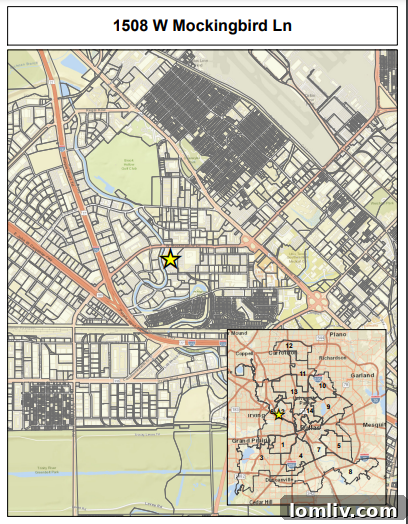
- 1508 Mockingbird Lane: A significant mixed-income, multifamily development situated at 1508 West Mockingbird Lane. This project is poised to bring substantial housing relief to a key area of Dallas, offering diverse living options. The estimated revenue foregone, calculated over 15 years, for this development is projected at $835,055.
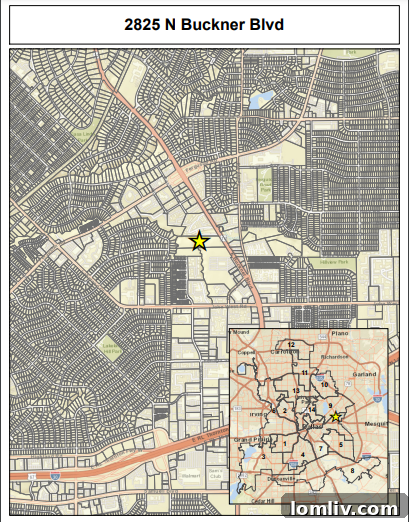
- The Legacy at White Rock: Located at 2825 North Buckner Blvd., this mixed-income, multifamily development will enhance housing options near the scenic White Rock Lake area. Its strategic placement aims to serve a wide range of residents. The estimated revenue foregone for this project stands at $42,331.
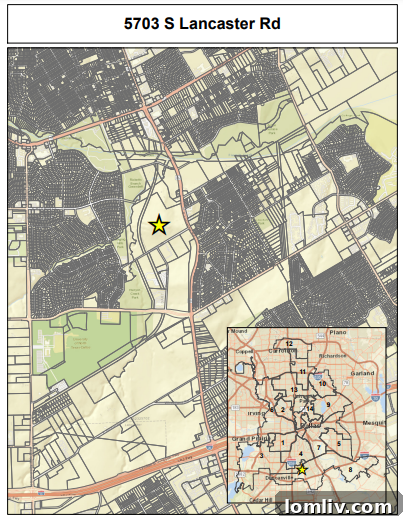
- The Reserve at Lancaster: This project is a mixed-income townhome development found at 5703 South Lancaster Road. Townhomes offer an attractive alternative to traditional apartments, providing more space and a sense of community. The estimated revenue foregone is a modest $19,259.
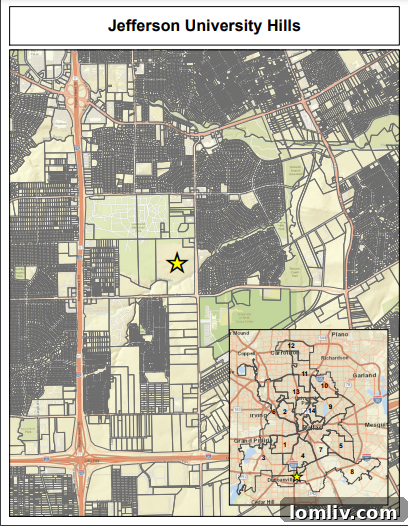
- Jefferson University Hills: Positioned at the northwest corner of University Hills Boulevard and East Camp Wisdom Road, this mixed-income, multifamily development is set to become a cornerstone of housing in its area. Its location is strategic for accessibility and community integration. The estimated revenue foregone for Jefferson University Hills is $72,768.
The “estimated revenue foregone” figure, which prompted considerable discussion, is a calculation based on 15 years of projected taxes. It’s crucial to understand why this 15-year period is used for calculation rather than the full 75-year tax abatement. Lease agreements between the PFC and developers are typically reviewed and subject to potential renegotiation or restructuring at the 15-year mark. This interval provides a periodic opportunity for the city to assess the project’s performance, adjust terms if necessary, and ensure continued alignment with Dallas’s affordable housing goals. Despite these review periods, Councilmember Mendelsohn cast the lone dissenting vote against each of the four projects, underscoring her consistent concerns about the fiscal impact of these long-term tax abatements on the city’s overall budget.
The Strategic Imperative of the 75-Year Lease Term
The longevity of the tax abatement, specifically the 75-year term, is a frequent point of discussion and often misunderstood. During the council meeting, District 9 Councilwoman Paula Blackmon sought clarification on why properties are effectively removed from the tax rolls for such an extended period. Kyle Hines from the Housing and Neighborhood Revitalization department provided a detailed explanation, emphasizing the financial and legal necessities for this long-term commitment.
Hines clarified that while the city retains significant flexibility—including the ability to remove income restrictions and revert properties to the tax rolls, or to refinance and recapitalize projects—this flexibility is balanced against the need to provide developers with long-term ownership security from the outset. “We have looked to shorten the lease term,” Hines stated, “but we need to have at least 75 years for debt and equity providers to receive what is an effective transfer of title to the property. Seventy-five years allows the investor and developer to have effective control of the land.”
This extended period is critical for several reasons. For large-scale housing developments, especially those with affordability mandates, securing financing is complex. Lenders and investors require a guarantee of long-term stability and control over the asset to justify their substantial investments. A 75-year lease term acts as this assurance, making these projects attractive to the private capital necessary for their realization. Without this lengthy commitment, the financial risk for developers and their partners would be too high, making it nearly impossible to attract the necessary funding to build affordable housing on the scale that Dallas requires. It’s a pragmatic approach to incentivize private sector participation in a public good, ensuring that the city’s vision for affordable housing can actually be built.
Equity, Affordability, and Bridging the North-South Gap in Dallas
The debate surrounding PFC projects extends beyond fiscal mechanics to touch on deep-seated issues of equity and historical disparities within Dallas. In what appeared to be a direct response to Councilwoman Mendelsohn’s assertion that the matter was not about equity, Mayor Pro Tem Carolyn King Arnold called for a record vote. Her intention was clear: to publicly identify those council members who were actively supporting the PFC projects, especially those earmarked for the southern sector of Dallas.
“This is an item that comes up in the southern sector where we are pushing for affordable housing, infrastructure, and economic development,” Mayor Pro Tem Arnold emphasized. “I want to make sure our public understands who is supportive of us as we talk about equity in this city.” Her statement underscored the crucial role these projects play in redressing long-standing imbalances, particularly in South Dallas, an area historically underserved by investment and facing significant socioeconomic challenges. Providing affordable, quality housing here is seen as a foundational step towards broader revitalization and equitable growth.
District 6 Councilman Omar Narvaez further amplified the equity argument, framing the issue as a choice between prioritizing profits and prioritizing people. “At the end of the day it comes down to dollars,” he acknowledged. “There are some with a lot of privilege that only care about dollars and profits. There are some who disagree with that notion and we don’t put profits before people.” This passionate defense highlights the social imperative behind the PFC projects, positioning them not just as financial instruments, but as tools for social justice and community empowerment.
Narvaez specifically pointed to the positive impact of The Reserve at Lancaster, a development slated to feature 260 townhome units. He highlighted how such projects could transform the area. “They will be spending money and working in the area,” he said of the future tenants. “It is a job center with UNT Dallas, the inland port, and a lot of big-business companies. We always hear that the biggest issue with South Dallas is that we don’t have places to live. I look at this as an incentive to get some people to move to far south Dallas. When you have mixed-income [housing], that area starts to thrive.” By providing housing options close to burgeoning job centers and educational institutions, these developments are expected to attract new residents, stimulate local economies, and foster more resilient, mixed-income communities in parts of Dallas that have long awaited significant investment and revitalization.
In conclusion, the Dallas City Council’s continued embrace of the Public Facility Corporation model reflects a strategic and complex approach to tackling the city’s affordable housing crisis. While fiscal responsibility remains a valid concern, the prevailing sentiment among many council members is that innovative financing mechanisms are indispensable to provide housing for Dallas’s workforce and to foster more equitable growth across all its sectors, particularly in historically marginalized communities. The debate underscores the delicate balance between financial prudence and the urgent human need for stable, affordable homes, a balance Dallas continues to navigate as it plans for a prosperous and inclusive future.