By Kevin McMahon
Guest Contributor
In recent discussions concerning the future of our neighborhood, guest writer Barbara Dewberry voiced her staunch opposition to the City Plan Commission’s proposed updates for PD-15 zoning. While I respect her perspective, I believe it’s crucial to present an alternative viewpoint and highlight the significant merits of the CPC’s proposal. Before delving into the specifics, I wish to share a personal connection that shapes my understanding of this complex issue: I am a former resident of Preston Place.
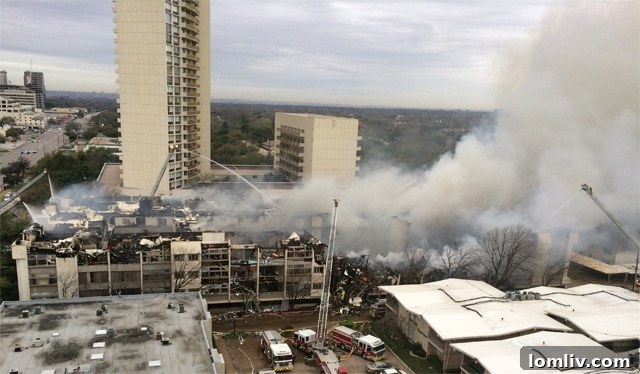
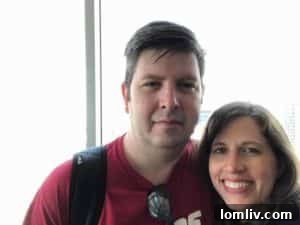
My wife and I called Preston Place home for approximately four years. It was our very first home purchase, a place where we invested not just financially, but emotionally and physically. We undertook extensive renovations, dedicating countless nights and weekends to transform our unit into a space we truly envisioned as our long-term home. We weren’t merely flipping a property; we poured our hearts into every detail, anticipating many years of memories within those walls. Then, on one fateful Friday night, we watched in horror with our then five-year-old son as an indifferent fire consumed all our hard work, our plans, and a significant part of our future.
Now, two and a half years after that devastating event, I observe another destructive force at play within our community. This force manifests as a potent combination of hyperbole and an unfounded fear of change, forming the very bedrock of much of the opposition to the City Plan Commission’s forward-thinking proposal. Ms. Dewberry’s arguments, in my view, regrettably exemplify this detrimental hyperbole, obscuring the genuine benefits and careful considerations embedded within the CPC’s plan for sustainable neighborhood development.
Let’s address some of the central concerns raised by opponents. Ms. Dewberry, for instance, expresses fear that the CPC’s proposal mandates private properties to allocate land for public parks. I want to be unequivocally clear: nowhere in the CPC’s detailed proposal is there any language suggesting such a requirement. The proposal’s focus on green space is quite different and far more beneficial. It introduces significant, much-needed updates to the existing zoning regarding improved streetscapes and open areas. These elements are not just arbitrary additions; they represent a strong, articulated desire from the neighborhood itself for a more aesthetically pleasing, pedestrian-friendly, and environmentally conscious environment. The plain reality is that these vital improvements — from enhanced landscaping to dedicated open spaces — simply will not materialize unless the outdated current zoning is proactively updated. Furthermore, the updated zoning is crucial for preserving our existing tree canopy. Without the specific setback and green space requirements outlined in the CPC’s proposal, it is highly probable that many mature trees currently gracing our neighborhood could be removed due to the lack of protective provisions in the current, archaic zoning regulations. This new plan, therefore, is not about imposing public parks, but about fostering a greener, more livable urban fabric.
The City Plan Commission’s proposal for building height and density in PD-15 is thoughtfully designed to be consistent with the established architectural landscape, specifically aligning with the two existing towers already within the PD-15 area. Intriguingly, one of these existing high-rises is where Ms. Dewberry herself resides, demonstrating that the proposal is not introducing an alien concept but rather a harmonious integration.
Concerns about increased traffic volume are also frequently cited by opponents. However, these worries are effectively mitigated by a professional, independent traffic study. This comprehensive analysis, commissioned directly by the city planning commission, concluded that the expected increase in traffic as a direct result of the CPC’s proposal would be statistically insignificant. The additional vehicle trips generated would be negligible when compared to the substantial daily traffic volume already carried by Northwest Highway. This objective data provides a clear counterpoint to speculative fears, assuring residents that the proposed changes will not lead to gridlock or significantly worsen existing traffic conditions.
Finally, Ms. Dewberry concludes her argument with an appeal for the city council to reject the proposal, advocating for homeowners and developers to reconvene and devise a new plan. The profound irony embedded in this statement cannot be overstated. For the better part of two exhaustive years, the six distinct properties within the PD-15 zone have been diligently engaged in precisely this endeavor: working collaboratively to forge a mutually acceptable plan. The City Plan Commission’s current proposal emerged only because a persistent minority of these property owners remained absolutely rigid, unflinchingly opposed to every single idea, every compromise, and every iteration of a plan put forth during that extended period. When it became abundantly clear that the only ‘change’ acceptable to this unyielding minority was, in fact, no change at all, the CPC staff, drawing heavily on substantial neighborhood input and community workshops, meticulously crafted its own proposal. This carefully considered plan was subsequently and overwhelmingly passed by CPC members in June, a testament to its broad acceptance among those truly seeking progress.
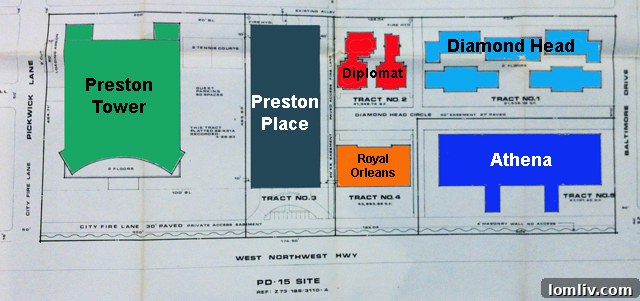
Throughout this arduous and protracted process, a recurring and often thinly veiled implication from some opponents has been that Preston Place residents are somehow acting selfishly by seeking to recoup an investment that represented years of diligent work, careful planning, and significant financial discipline. This perspective fundamentally misrepresents the situation. Consider this analogy: a parched individual in a vast desert is not selfish for filling their canteen at a life-giving oasis; true selfishness emerges only when that individual actively denies others the opportunity to quench their own thirst. Similarly, the residents of Preston Place are not attempting to deny anyone unit counts, or impose arbitrary height restrictions, or hoard green space, or block road access, or infringe upon property rights, or monopolize any other genuinely scarce resource. Our plea is for fair recovery and the ability to rebuild our lives.
Instead, I urge every stakeholder to critically ask themselves: just what exactly IS the truly scarce resource at the very heart of this contentious matter? Who currently wields control over it, and, more importantly, who is actively seeking to deny access to it for others? The answer, I believe, lies in the ability to recover, to rebuild, and to move forward, a right that has been unjustly withheld from many.
Meanwhile, the Preston Place residents endure an agonizing financial purgatory, their lives indefinitely on hold until this critical zoning question is decisively resolved. For my own family, the journey has been particularly challenging. We have been forced to relocate twice in our determined effort to remain within the neighborhood we love. Adding to our burden, we had just paid off our mortgage a mere two months before the catastrophic fire, a milestone achieved after years of frugal living and considerable financial sacrifices. Yet, today, we find ourselves tragically back in debt, rebuilding from scratch. The situation for many of our former neighbors is even more profoundly dire. Two and a half years post-fire, some are still enduring the transient existence of living out of hotel rooms. Others, unable to afford suitable housing, are relying on the kindness of relatives for shelter. A heartbreaking number are still making mortgage payments on units that no longer exist. In the most tragic turn, two of our cherished former residents have passed away during this agonizing wait, never seeing a resolution. To return to square one, to have all the incremental progress of the past two years completely undone, would be a second, unimaginable devastation to these resilient residents. Furthermore, it would be an irresponsible betrayal of those within the PD who have demonstrated unwavering diligence and thoughtful commitment to making lasting, positive improvements to our collective neighborhood.
It’s important to acknowledge that the CPC proposal, while a significant step forward, may not fully align with every single preference I personally hold. For instance, I might prefer even greater allowances for density and height, coupled with fewer restrictions on setbacks or parking. However, my central point remains: the critical distinction lies in working constructively towards a solution versus simply issuing an absolute ‘no’ to every proposition. In our current societal climate, it’s increasingly common to pull no punches in opposing any idea that doesn’t precisely meet 100% of our individual wishes. The concept of compromise, regrettably, has become a pejorative term, and fear often conditions us to prevent it at all costs. Yet, by adopting such an inflexible and rigid stance, we frequently overlook a crucial truth: inaction, at times, can be the single most powerful determinant of our future, and almost invariably, not in a positive way.
An old lyric profoundly articulates this sentiment: “If you choose not to decide, you still have made a choice.” Rather than actively attempting to positively influence this vital process, some individuals have become so entrenched in their opposition to everything that their efforts, paradoxically, threaten to “save” the neighborhood only by tearing its fabric apart. This adversarial approach has unfortunately pitted one property against another, turning neighbor against neighbor, creating unnecessary division where unity is most needed for recovery and progress.
It is my fervent hope that the Dallas City Council will finally bring this protracted matter to a just and definitive close by adopting the City Plan Commission’s thoughtful and comprehensive proposal. Doing so will not only allow the long-suffering Preston Place residents to finally move forward with rebuilding their lives but will also enable the entire neighborhood to begin the essential process of healing and to achieve the crucial improvements it has so earnestly sought. It’s time for action, for compassion, and for a brighter future for PD-15.
Kevin McMahon has lived in Dallas for about eight years and works in the airline industry.