Texas: The Lone Star State Continues to Dazzle, Drawing Influx of New Residents with DFW Leading the Charge
Texas stands as a beacon of opportunity and growth, consistently attracting hundreds of thousands of new residents year after year. The latest data from the Texas Relocation Report, compiled by Texas REALTORS®, paints a vivid picture of this dynamic trend, highlighting the state’s undeniable allure. In 2017 alone, Texas welcomed a staggering 524,511 new inhabitants, cementing its status as a top destination for those seeking a fresh start and vibrant communities. Among these newcomers, a significant portion—230,118 individuals—chose to call the sprawling Dallas-Fort Worth-Arlington Metropolitan Statistical Area (DFW MSA) their new home, underscoring the region’s burgeoning appeal.
Released on Valentine’s Day, a fitting time to celebrate new connections and beginnings, the report meticulously analyzed migration data sourced from the U.S. Census Bureau and U-Haul. Its findings were clear: Texas ranked an impressive second in the entire nation for relocation activity in 2017. Within this vibrant landscape, the DFW area emerged as the undisputed magnet, attracting more people than any other metropolitan region in the state. This sustained influx of talent and ambition speaks volumes about the economic vitality and quality of life that Texas, and particularly DFW, offers.
Understanding the Texas Relocation Phenomenon: Why Everyone’s Moving South
The sustained popularity of Texas as a relocation hub is no accident. Tray Bates, the esteemed 2019 chairman of Texas REALTORS®, articulated the core reasons behind this phenomenon in a public statement. “Texas remained a hotbed of relocation activity in 2017 due in part to our diverse job opportunities, record-breaking housing market, and booming economy,” Bates remarked. These three pillars—a robust job market, accessible housing, and a thriving economy—form the bedrock of Texas’s appeal, creating an environment ripe for personal and professional growth.
The state’s economic engine is powered by a diverse array of industries, including energy, technology, aerospace, healthcare, and manufacturing. This broad spectrum ensures a wealth of employment opportunities across various skill sets and experience levels, drawing professionals from all corners of the country. Furthermore, Texas boasts a business-friendly environment, characterized by favorable tax policies and less restrictive regulations, which encourages companies to relocate or expand within its borders, further fueling job creation. This synergy between diverse industries and supportive policies creates a virtuous cycle of economic prosperity that continually attracts new residents seeking career advancement and stability.
Beyond employment, the housing market in Texas has long been a significant draw. While prices in major metropolitan areas have seen appreciation, the overall cost of living, particularly housing, remains remarkably competitive compared to coastal states like California or New York. This affordability allows residents to enjoy a higher quality of life, often enabling them to purchase larger homes or invest in real estate sooner than they might elsewhere. The blend of robust job prospects and attainable homeownership creates a compelling proposition for individuals and families looking to put down roots and build equity.
This consistent appeal is evident in the long-term trends. 2017 marked the fifth consecutive year that Texas welcomed over half a million new residents from out of state. This remarkable streak underscores the enduring strength of the state’s economy and its lifestyle offerings. Industry experts and real estate professionals anticipate that this upward trend will not only continue but potentially accelerate in the coming years, as more people discover the unparalleled advantages of living in the Lone Star State.
DFW: The Epicenter of Texas Growth and Opportunity
While Texas as a whole is a magnet for relocation, the Dallas-Fort Worth-Arlington Metropolitan Statistical Area stands out as a true epicenter of this growth. Attracting nearly half of all new Texans in 2017, DFW’s magnetic pull is a testament to its vibrant urban centers, diverse economic landscape, and dynamic cultural scene. The DFW metroplex is a hub for major corporations, boasting a significant concentration of Fortune 500 companies, particularly in finance, technology, logistics, and aviation. This corporate presence translates into a vast array of high-paying jobs and career advancement opportunities across various sectors.
Beyond its economic prowess, DFW offers a high quality of life with a relatively lower cost of living compared to other major U.S. cities. Residents enjoy access to world-class dining, entertainment, sports, and cultural institutions, alongside extensive park systems and recreational facilities. The region’s robust infrastructure, including major international airports, efficient highway systems, and developing public transit, further enhances its appeal, making it easy to navigate and connect with the rest of the world. The blend of urban sophistication and suburban comfort, coupled with strong community ties, makes DFW an ideal location for individuals and families seeking a balanced and prosperous lifestyle.
A Deeper Dive into Migration Patterns: Where New Texans Are Coming From
Despite being the second-most popular state for relocation, it’s worth noting that Texas’s net gain of residents from out-of-state in 2017 stood at 57,173. This figure, while significant, was actually less than the 87,656 net gain recorded in 2016. This slight decrease in net migration, however, does not diminish the overall trend of substantial population growth and the state’s enduring attractiveness. It merely highlights the dynamic nature of migration patterns, which can fluctuate year by year due to various economic and social factors.
Delving into the origins of these new Texans provides fascinating insights. Unsurprisingly, California led the charge, with a staggering 63,175 individuals making the move from the Golden State to Texas. This trend reflects a broader narrative of Californians seeking more affordable living, lower taxes, and ample job opportunities in a state known for its economic dynamism. Florida ranked second, contributing 33,740 new residents, followed by Louisiana, Illinois, and New York. These states, often characterized by higher costs of living or different economic landscapes, consistently see a significant outflow of residents choosing Texas as their next chapter.
Focusing on specific urban areas, the Los Angeles, New York City, and Chicago metropolitan regions were the previous hometowns for the majority of these new Texans. This indicates a strong gravitational pull from major coastal and Rust Belt cities towards Texas, driven by a combination of economic incentives, lifestyle choices, and the promise of a more attainable standard of living. For many, the move to Texas represents an opportunity to escape the high living expenses and intense competition of established mega-cities, without sacrificing career prospects or access to diverse amenities. The state offers a compelling alternative, providing both economic upward mobility and a welcoming community atmosphere.
The Other Side of the Coin: Outbound Migration from Texas
While Texas is a magnet for newcomers, it’s also a state from which a substantial number of people choose to move. In 2017, 467,338 individuals left Texas for other states, placing it third nationally in terms of outbound migration. This figure, while high, is a natural consequence of having such a large and dynamic population. People move for a myriad of reasons: family ties, new job opportunities in specific niches, retirement, or a change of pace. It’s important to view outbound migration not just as a loss, but as part of the continuous flow of people across the country, influenced by individual circumstances and evolving life stages.
The top destinations for Texans leaving the state were, perhaps surprisingly, many of the same states that feed residents into Texas: California, Oklahoma, Florida, Colorado, and Louisiana. This indicates a complex and reciprocal migration pattern. For instance, while many Californians move to Texas for economic reasons, some Texans may move to California for specific career opportunities in industries like entertainment or high-tech, or to be closer to family. Similarly, proximity plays a significant role, with neighboring states like Oklahoma and Louisiana naturally attracting former Texans for various reasons, including family connections, specific regional job markets, or a preference for a different environment. This two-way street of migration underscores the interconnectedness of the national population landscape.
County-Level Insights: North Texas Dominance in Population Gains
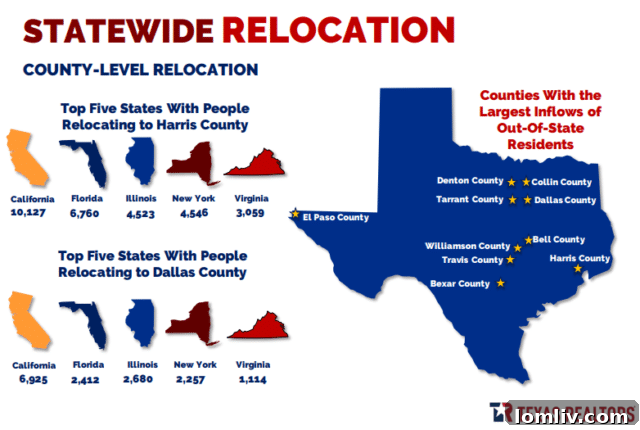
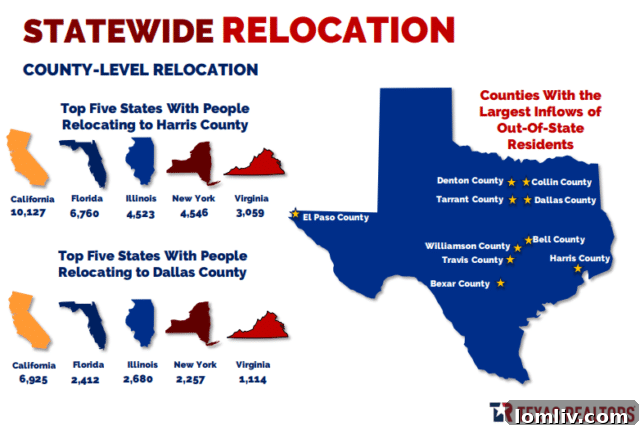
A closer look at the county level reveals even more granular details about where growth is concentrated within Texas. Harris County, home to Houston, recorded the largest net gain of out-of-state residents, welcoming 83,282 new inhabitants. This highlights Houston’s powerful economic engine, driven by the energy sector, healthcare, and port activities, making it a major attraction for professionals and families alike.
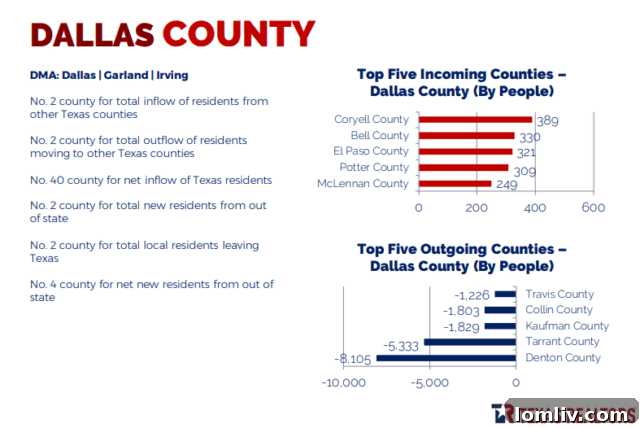
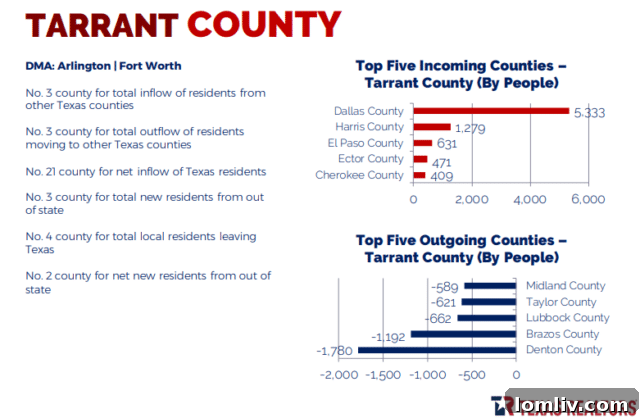
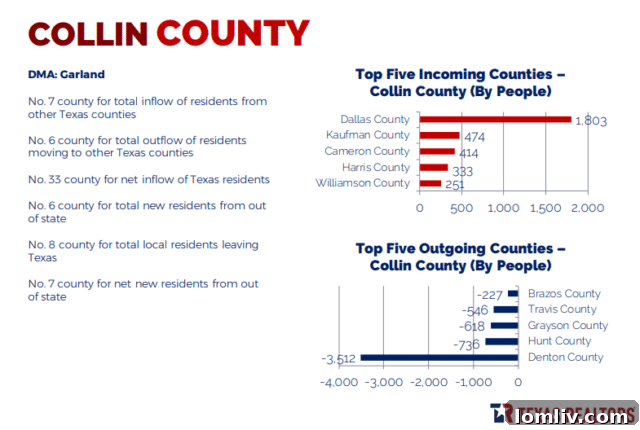
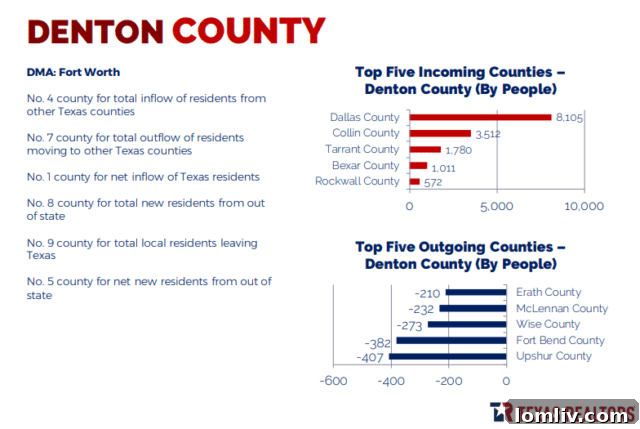
However, the report also underscored the remarkable growth in North Texas. Four of the top 10 counties with the highest net gain of out-of-state residents were situated in this thriving region: Dallas, Tarrant, Collin, and Denton counties. This concentration of growth within North Texas further solidifies the DFW metroplex’s role as a primary destination for newcomers. Dallas County, with its vibrant urban core and diverse economy, continues to attract a steady stream of residents. Tarrant County, anchored by Fort Worth, offers a unique blend of Western heritage and modern urban development, appealing to a broad demographic.
Collin County and Denton County, located in the northern suburbs of DFW, have experienced explosive growth over the past decade. These counties are characterized by excellent school districts, master-planned communities, and rapidly expanding corporate campuses, making them particularly attractive to families and professionals seeking a high quality of life within a suburban setting. The combined strength of these North Texas counties demonstrates a diversified growth strategy, where both urban centers and suburban communities are flourishing, creating a comprehensive ecosystem that caters to a wide range of preferences and needs. This balanced growth across different county types ensures that the DFW region can sustainably absorb and integrate its growing population.
Sustaining the Boom: Preserving Texas’s Favorable Conditions
The continuous influx of residents and businesses brings both immense opportunities and significant challenges. Tray Bates, representing Texas REALTORS®, emphasized the critical importance of proactive measures to sustain this growth. “As more residents and businesses choose to put down roots in Texas, we need to preserve our favorable conditions to buy, sell, rent and own real estate here,” Bates stated. This sentiment highlights the responsibility of policymakers and industry stakeholders to ensure that Texas remains an attractive and accessible place for everyone.
Preserving favorable conditions involves a multifaceted approach. It includes maintaining a competitive tax environment that encourages business investment and job creation, thereby sustaining the strong economy that draws people to the state. Equally important is thoughtful urban planning and infrastructure development to accommodate the growing population. This means investing in roads, public transportation, water systems, and utilities to prevent strain on existing resources. Furthermore, ensuring a healthy and balanced housing market—one that offers a range of affordable and diverse housing options—is crucial. This includes supporting new construction, promoting sustainable development, and addressing regulatory barriers that could inflate housing costs.
Texas REALTORS® play a pivotal role in this endeavor. As Bates affirmed, “As always, Texas REALTORS® will take the lead in advocating for policies at the state Capitol and in our communities that support our increasing population and strong economy.” Their advocacy efforts are vital in shaping legislative decisions that impact property rights, housing affordability, and community development. By championing policies that foster a stable and accessible real estate market, they contribute significantly to the long-term prosperity and quality of life for all Texans. This commitment ensures that the state can continue to welcome new residents and businesses while maintaining the very conditions that made it so appealing in the first place.
Conclusion: Texas’s Enduring Appeal and Future Growth
The 2017 Texas Relocation Report unequivocally demonstrates Texas’s enduring power as a national magnet for population growth. With over half a million new residents in a single year, and the Dallas-Fort Worth-Arlington metroplex leading the way in attracting a significant portion of these newcomers, the Lone Star State continues to prove its economic resilience and lifestyle appeal. Diverse job opportunities, an attractive housing market, and a booming economy form the bedrock of this success, drawing individuals and families primarily from populous states like California, Florida, and New York.
While a minor dip in net migration was observed in 2017 and some Texans chose to move elsewhere, these fluctuations are part of a larger, positive trend of robust growth. The concentrated gains in North Texas counties—Dallas, Tarrant, Collin, and Denton—further highlight the region’s dynamic environment and its capacity to absorb and thrive with a growing population. As Texas looks to the future, the commitment of organizations like Texas REALTORS® to advocate for policies that preserve favorable real estate conditions and support infrastructure development will be crucial. By addressing the challenges that accompany rapid expansion, Texas can ensure that its vibrant economy, appealing lifestyle, and welcoming communities continue to attract and retain residents for generations to come, solidifying its position as a top destination in the nation.