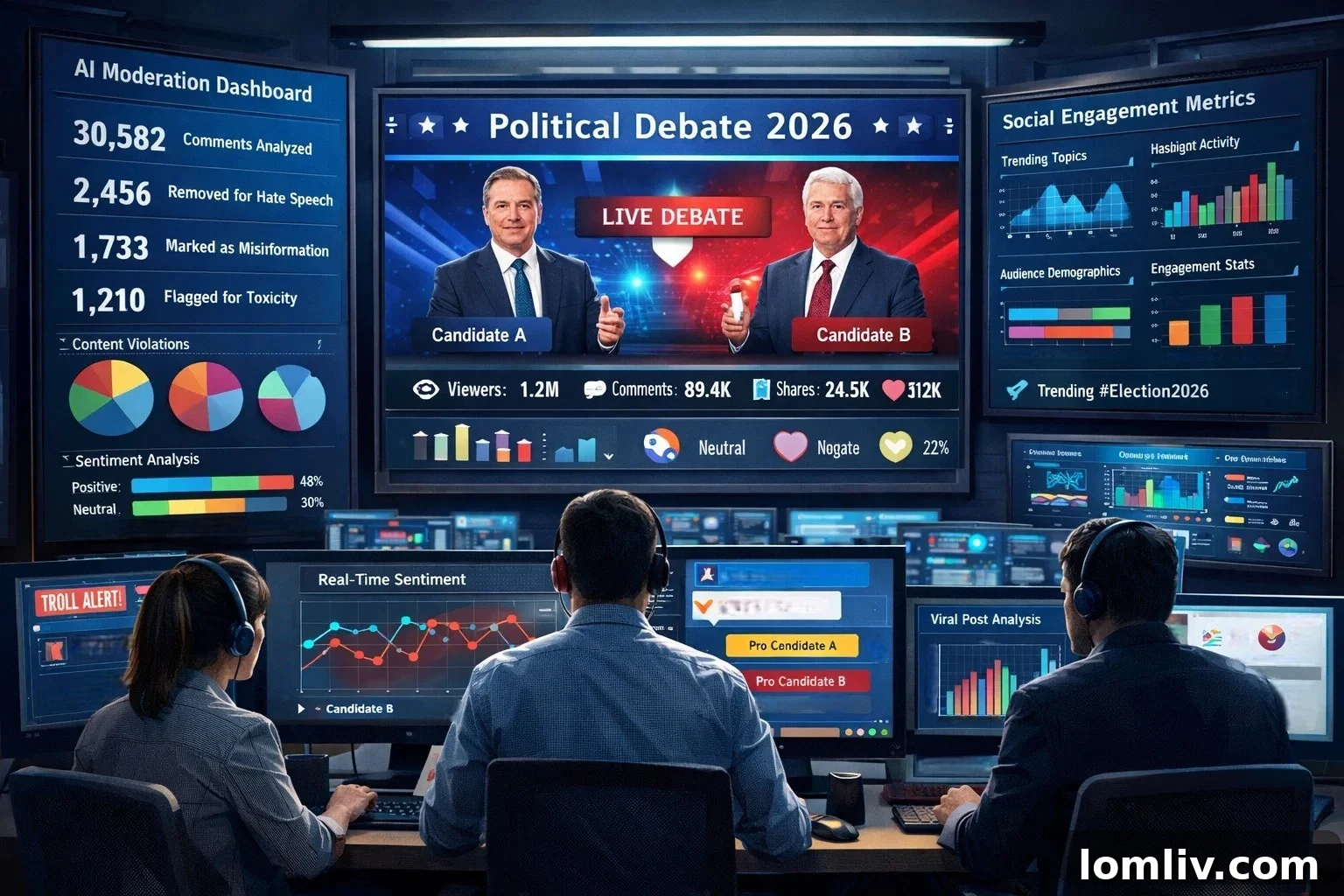
Online platforms have transcended their initial purpose as mere networking tools, evolving into dynamic arenas where opinions are forged and ideas propagate at an astonishing speed. As we navigate towards 2026, the landscape of online politics is undergoing a profound transformation, driven by shifts in user behavior, sophisticated new algorithms, and the pervasive rise of artificial intelligence. The traditional authority and credibility once solely held by legacy media outlets are now increasingly being derived directly from social engagement and digital influence, marking a significant paradigm shift in how political discourse is shaped and perceived.
The intricate ways in which individuals interact online are not just shaping what content they encounter, but also profoundly influencing their reactions and perspectives, both on a localized community level and across broader global scales. For anyone actively involved in or closely observing contemporary politics, a comprehensive understanding of these burgeoning trends is not merely beneficial—it is an absolute prerequisite for navigating the complex digital environment effectively.
The Unprecedented Importance of Meaningful Interaction in Digital Politics
In the current digital age, standard marketing metrics, such as simple likes or basic views, are increasingly being superseded by more nuanced engagement indicators, especially within the realm of political content delivery. Platforms are now prioritizing the speed and depth of user interaction, focusing on metrics like the rate of comments a post generates, the quality of discussions, and the duration users remain actively engaged with specific content, rather than solely counting superficial impressions or initial shares. This evolution means that political conversations now gain traction and spread organically based on how quickly and genuinely users participate, rather than just the initial broadcast reach of a post.
Consequently, political campaign strategists, content creators, and public figures are actively recalibrating their approaches. Their primary objective is no longer merely to broadcast a message to a wide audience, but rather to ignite and sustain authentic conversations. The ultimate goal is to generate discussions that are deemed valuable by algorithmic systems, thereby receiving preferential treatment and wider distribution. This fundamental shift completely redefines the dynamics of online debates, dictating how they originate, gain momentum, and maintain their relevance in an ever-crowded digital sphere. Campaigns are now meticulously designed to encourage user-generated content, foster vibrant comment sections, and facilitate live discussions, all aimed at tapping into the algorithmic preference for deep, rapid engagement.
FAQ: How do sophisticated engagement metrics influence political visibility? Algorithms are designed to actively push content that stimulates immediate, sustained conversation and user interaction, rewarding depth of engagement over passive consumption. Content that sparks genuine discussion, rather than just receiving a fleeting glance or a solitary ‘like,’ is exponentially more likely to be amplified and reach a larger, more invested audience.
Will Algorithms Prioritize Emotion Over Factual Discourse in 2026?
- **Emotional Resonance Drives Amplification:** Modern algorithms are increasingly tailored to reward content that elicits strong emotional reactions, whether positive or negative, often at the expense of balanced, nuanced explanations. This is because emotional responses tend to trigger faster and more widespread user actions like sharing, commenting, and reacting.
- **Speed Over Substance:** The demand for immediate replies and rapid engagement inadvertently prioritizes strong, often polarizing opinions over thoughtful, deep policy discussions. Platforms favor content that generates instant reactions, which can lead to a ‘race to the bottom’ in terms of complexity and factual rigor.
- **Advanced Tracking for Affective States:** Sophisticated tracking tools are now capable of identifying content that evokes immediate excitement, anger, surprise, or other intense emotions. This data guides algorithmic promotion, pushing emotionally charged posts to wider audiences.
- **Thoughtful Content Buried by Rapid Reactions:** Content designed for quick, emotional reactions can easily overwhelm and bury more considered, thoughtful comments or analyses within a feed. The ephemeral nature of online discourse means that in-depth perspectives often struggle to compete with instant gratification.
- **Sustained Engagement Through Emotional Hooks:** Data models strongly favor posts that successfully retain user attention and participation for extended periods. Emotional content often provides a stronger hook, encouraging users to watch videos longer, read through comment threads, and contribute their own views, thereby feeding the algorithm’s desire for sustained engagement.
- **Viral Content’s Emotional Core:** The phenomenon of content “going viral” frequently depends more on its ability to tap into the collective mood or emotional state of the audience than on the factual accuracy or objective merit of its message. Emotional contagion plays a significant role in rapid dissemination.
FAQ: Are emotionally charged posts inherently more visible than factual ones? Yes, due to how current algorithms are structured. Emotional reactions consistently trigger faster sharing signals, higher comment rates, and more immediate user engagement, which are key indicators for algorithmic amplification. This creates an environment where content designed to evoke strong feelings often outperforms fact-based or highly analytical content in terms of initial reach and virality, presenting a significant challenge for balanced political discourse.
AI Moderation and the Future of Debate Control
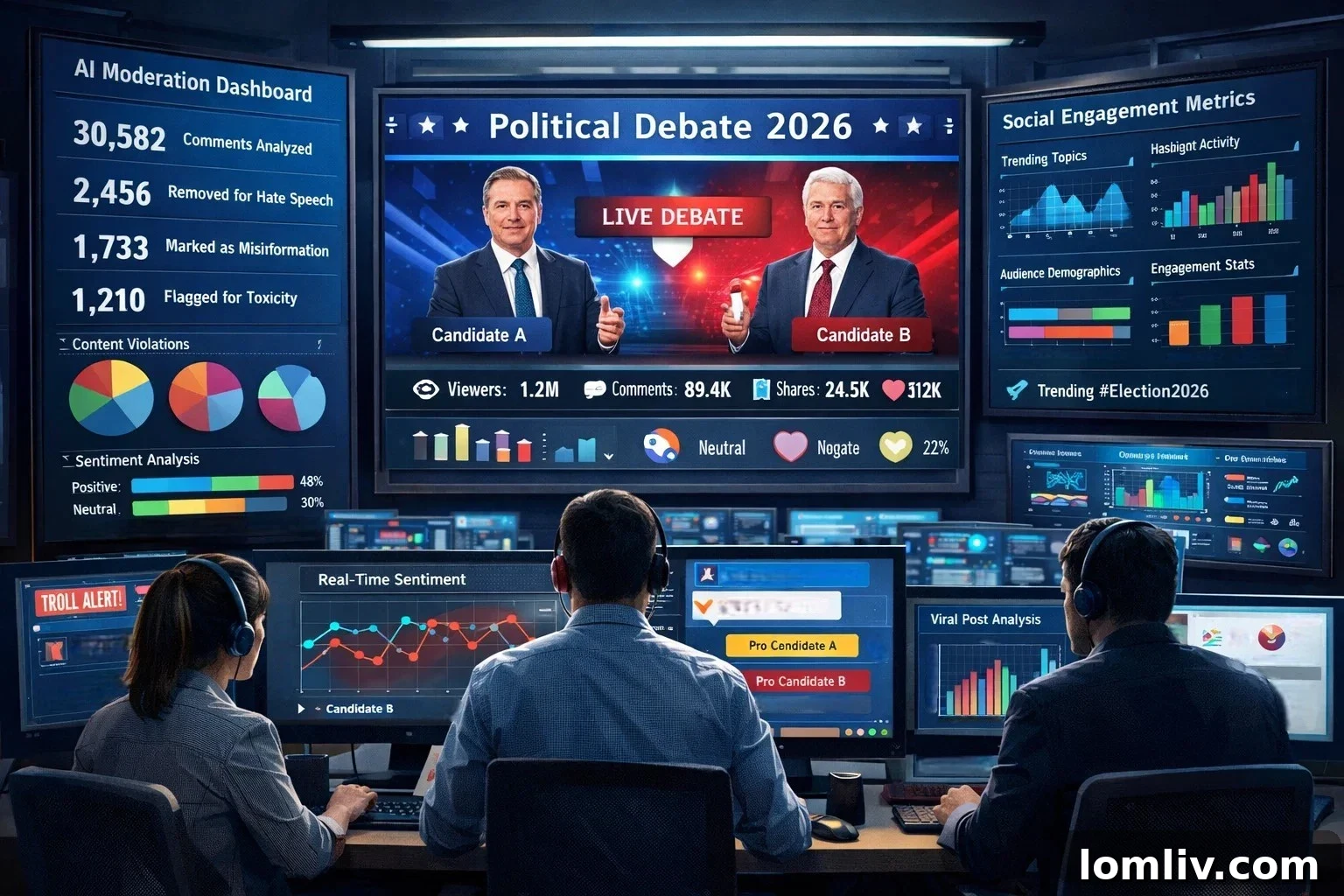
Artificial intelligence is rapidly revolutionizing the way public and private conversations are managed and facilitated across digital platforms. Automated systems, employing advanced natural language processing and machine learning, meticulously scan vast amounts of language patterns to not only identify potential violations of community guidelines but also dynamically adjust the visibility and reach of content in real-time. By 2026, these AI-driven systems are projected to possess a far more sophisticated understanding of conversational context, enabling them to discern nuanced differences between genuinely harmful speech, such as hate speech or incitement, and the legitimate vigorous exchange inherent in a healthy political debate.
This evolving capability of AI directly and profoundly impacts political discussions. The implementation of accurate, transparent, and fair moderation practices is critical for fostering trust within online communities. When users perceive a digital space as equitable and free from undue bias, their willingness to participate openly and constructively significantly increases. Conversely, if there is a pervasive sense of algorithmic bias, censorship, or inconsistent enforcement, users are highly likely to disengage or migrate to alternative platforms that promise a fairer environment. Therefore, striking a delicate and effective balance between ensuring user safety and upholding the principles of free speech will remain a central, complex, and defining challenge for online political strategies in the years to come.
Short-Form Content: A Catalyst for Rapid Opinion Shifts
- **Simplification of Complexity:** Short-form videos excel at distilling highly complex political issues into easily digestible, simple narratives. This format prioritizes emotional appeal and memorability over comprehensive factual detail, making intricate topics accessible but potentially oversimplified.
- **Instantaneous Attention Grabs:** The fundamental design of short-form content emphasizes rapid storytelling, engineered to capture user attention within mere seconds. This brief window necessitates punchy, impactful messaging, often leveraging strong visuals and concise audio clips to convey a political point quickly.
- **Visual Primacy in Persuasion:** Visual elements possess an inherent ability to shape opinions significantly faster and more profoundly than lengthy textual explanations. A compelling image or a brief video sequence can convey emotion, context, and a message almost instantly, bypassing the need for extensive reading or critical analysis.
- **Contextual Erosion During Viral Spread:** Short clips are inherently designed for rapid dissemination across various platforms. However, this speed often comes at the cost of original context, with clips frequently becoming decontextualized, misinterpreted, or even intentionally manipulated as they travel virally across different networks and audiences.
- **Immediate Reaction Over Deliberation:** The fast-paced nature of short-form content and its accompanying comment sections often pushes users toward immediate, visceral reactions rather than encouraging thoughtful consideration or deeper critical thinking about the issues at hand. This environment favors instant engagement over considered reflection.
- **Influencer-Driven Policy Interpretation:** Political influencers, leveraging their vast reach and perceived authenticity within short-form formats, increasingly play a critical role in guiding how large segments of their audiences understand and interpret major policy proposals and political events. Their interpretation can often supersede traditional media analysis.
FAQ: Why does short-form content wield such significant influence in modern politics? Its power stems from its unparalleled ability to spread with incredible speed and to shape initial public opinions long before individuals typically engage in deeper research or critical analysis. The ease of consumption and high shareability make it an incredibly potent, albeit often oversimplified, tool for political messaging and narrative control.
The Undeniable Influence of Micro-Communities on Large Political Narratives
In the evolving digital ecosystem, smaller, highly focused online groups are rapidly accumulating substantial influence over mainstream political discourse. These micro-communities, often coalescing around shared beliefs, specific interests, or niche ideologies, generate intensely concentrated engagement that algorithmic systems interpret as highly relevant and authoritative. This high-fidelity interaction within smaller, dedicated groups allows them to amplify specific viewpoints and narratives, which then, through various mechanisms of digital spread, inevitably spill over and permeate broader public conversations.
Throughout the current year and into 2026, these micro-networks are poised to play an even more significant role in determining trending topics and shaping public perception, largely because their concentrated and consistent participation often appears more authentic and organic to platform algorithms. Political strategists and campaigns are keenly observing these spaces, utilizing them as early warning systems to detect nascent public sentiment, identify emerging issues, and gauge the traction of specific narratives. As these highly engaged groups become more organized and sophisticated in their digital tactics, their collective voice can exert enough pressure to rapidly shift national trends and reshape public discourse within a matter of hours, demonstrating a decentralized but powerful form of political influence.
FAQ: Do small, niche communities genuinely influence wider political debates? Absolutely. The phenomenon of high, concentrated engagement within these micro-communities can effectively transform a once-niche viewpoint or specialized topic into a massive, widely discussed trending topic. Their ability to generate authentic, sustained interaction makes them powerful engines for narrative amplification, eventually penetrating and influencing the broader public consciousness and media agenda.
Authenticity Metrics and the Restoration of Public Trust
- **Transparency as a Credibility Cornerstone:** Openness and transparency with the audience are becoming non-negotiable foundations for building and maintaining credibility within political discourse online. Sharing sources, methodologies, and motivations directly fosters user trust.
- **Verified Identities Enhance Confidence:** The implementation of verified digital identities for political actors, journalists, and active participants significantly increases user confidence during public discussions. Knowing who is speaking combats anonymity-driven misinformation and enhances accountability.
- **Consistent Communication Builds Loyalty:** Maintaining a consistent and reliable communication strategy over time is crucial for cultivating long-term loyalty and trust within a community. Erratic or contradictory messaging erodes credibility.
- **Instant Feedback for Accountability:** The immediate and public nature of online feedback mechanisms provides a powerful tool for holding individuals and organizations accountable for their statements and actions. This constant scrutiny encourages more responsible communication.
- **Authenticity Scores to Combat Bots:** Advanced authenticity scores, derived from complex data analysis of user behavior patterns, are increasingly vital in helping platforms identify and block automated bot accounts or coordinated inauthentic behavior, thereby purifying the digital environment.
- **Trust Indicators Guide Reliable Information:** The development and deployment of clear “trust indicators” (e.g., source ratings, fact-check labels, community notes) actively assist users in navigating complex information landscapes, guiding them toward more reliable and verified information sources.
FAQ: Why is authenticity of paramount importance in online political discourse? Trust is the bedrock of meaningful engagement. When users perceive authenticity, they are more encouraged to participate actively, openly, and constructively. This fosters genuine conversations, mitigates the spread of misinformation, and supports the development of a more credible and robust digital public sphere.
The Strategic Outlook for Digital Political Engagement in 2026
By 2026, the digital spaces where political discourse unfolds will be largely governed by sophisticated interaction metrics that meticulously determine which voices gain prominence and manage to rise above the pervasive noise. Future political conversations will depend heavily on the strategic cultivation of organized, meaningful participation and the implementation of balanced, transparent moderation practices to maintain any semblance of credibility. While viral content will undoubtedly continue to leverage emotional hooks for rapid spread, achieving long-term impact and sustained influence will demand actual, tangible, and meaningful audience participation, moving beyond fleeting reactions.
Political groups and campaigns that prioritize and actively encourage real, two-way conversations will be far more effective in shaping and owning the narrative than those relying on traditional, one-way broadcasting models. Strategic planning must therefore fundamentally pivot towards ethical growth, seamlessly integrating highly targeted content with genuine, reciprocal audience interaction to ensure continued relevance and resonance. Ultimately, those individuals, organizations, and political entities that demonstrate an agile capacity to adapt to these transformative changes will emerge as the undisputed leaders in the complex and dynamic landscape of digital political discussions.
The Imperative of Data Disclosure and Transparency
In the rapidly evolving landscape of online politics, clear, accessible, and ethical data practices are increasingly becoming the fundamental cornerstone of healthy and trustworthy digital discussions. As engagement systems grow in complexity and algorithmic influence expands, users are demanding greater clarity and insight into precisely how posts are ranked, why certain topics gain traction, and how their data is being utilized. In response, leading platforms are beginning to roll out comprehensive analytics dashboards and transparency reports that offer users and creators unprecedented visibility into content reach, audience behavior patterns, and algorithmic decision-making. When individuals are empowered with a clearer understanding of how visibility works and what drives content amplification, they are naturally inclined to take more responsibility for the content they share and the information they consume.
For political communicators, demonstrating unwavering credibility will increasingly hinge on their willingness to clearly disclose their data sources, the evidence underpinning their claims, and their methodologies. By 2026, transparency will cease to be merely an optional best practice; it will become the decisive differentiator between a trusted, authoritative voice and a manipulative, disingenuous campaign. A commitment to open data practices will be essential for fostering public trust and ensuring a more accountable and informed political discourse online.
FAQ: What makes transparency so critically important in contemporary political conversations? Transparent data practices are absolutely essential because they systematically build credibility and actively encourage responsible, informed engagement from the audience. When the mechanisms of information flow are clear, users are more likely to trust the content, hold creators accountable, and participate in a more constructive and responsible manner, which is vital for a healthy digital democracy.
How Interactive Features Are Reshaping Civic Participation
A new generation of interactive digital tools is fundamentally transforming the way individuals participate in public discourse and civic life. Audiences are no longer passive recipients of information; they are now empowered to contribute instantly and meaningfully through a diverse array of features, including embedded poll stickers, real-time live comment threads, and collaborative community notes that allow for shared fact-checking and context provision. These innovative features effectively bridge the traditional gap between content creators and their audience, evolving content consumption from a one-way broadcast into a vibrant, dynamic two-way conversation.
Modern politics, particularly in its digital manifestations, is increasingly characterized as a complex, multi-faceted discussion where real-time feedback mechanisms literally shape and guide the unfolding narrative. As platforms continue to refine and perfect these interactive tools throughout 2026, political strategy will become significantly more organized, agile, and robustly driven by real-time data and audience insights. Interactive formats will become instrumental in actively pushing people beyond the realm of mindless scrolling, compelling them instead to become engaged, active participants who directly contribute to the direction and substance of political dialogue.
FAQ: How can interactive digital tools profoundly affect political debate? They radically transform the audience from passive consumers of information into active, engaged participants who directly contribute to, and help shape, the ongoing direction and evolution of the conversation. This fosters a more dynamic, democratic, and responsive form of political engagement.
Anticipatory Analytics and the Precision of Trend Prediction
The development of advanced predictive systems is revolutionizing political strategy by enabling strategists to identify and anticipate popular topics and public sentiment shifts long before they actually begin to trend widely. Digital strategists can now leverage sophisticated data analytics to predict shifts in public interest by meticulously analyzing factors such as engagement speed, the emotional tone of online discussions, and emerging linguistic patterns. Armed with this profound understanding, political communicators are empowered to adopt a proactive stance, strategically timing their campaigns and framing their messages in anticipation of public sentiment, rather than merely reacting to breaking news.
By 2026, predictive analytics will become an absolutely essential tool for precise campaign timing, effective message framing, and the agile deployment of political communications. While this technology offers unparalleled efficiency and strategic advantage, its application must always be guided by strict ethical considerations to prevent its misuse for manipulative purposes or the erosion of democratic processes. When deployed responsibly and transparently, these forecasting tools possess the immense potential to foster healthier, more informed conversations and facilitate the timely dissemination of critical information across diverse digital spaces, ultimately contributing to a more responsive and data-driven political landscape.