The Evolving Dream Home: How Economic Realities and Millennial Preferences are Reshaping the Housing Market
The modern housing landscape is a complex tapestry woven with aspirations, economic realities, and shifting generational priorities. What constitutes the ideal home size today? Which demographics are actively participating in the housing market, particularly as buyers or builders? And what socio-economic factors are truly driving current construction trends? To answer these crucial questions, we turn to the insights provided by authoritative sources like the National Association of Home Builders (NAHB).
Unpacking the Ideal Home Size: A Snapshot of Today’s Housing Market
A recent survey by the NAHB, encompassing 4,326 recent and prospective home buyers, sheds light on prevailing preferences. The median size of homes people currently inhabit or aspire to build stands at 1,859 square feet. Interestingly, when participants were asked about their ideal home size, the preference grew to an average of 2,020 square feet, approximately 9 percent larger than the current median. This data clearly indicates a widespread desire among Americans for more spacious living environments, challenging popular notions that suggest a universal shift towards smaller, more minimalist dwellings.
The Reality of New Home Construction: Bigger Than Ever
Despite the growing conversation around sustainability and downsizing, the actual trend in new construction tells a different story. According to NAHB data, which cites the U.S. Census Bureau, the average size of a newly constructed house in 2015 reached a record 2,721 square feet. This figure pushes perilously close to the 3,000-square-foot mark, underscoring a significant upswing in the scale of new residential builds. These substantial homes often come equipped with an impressive array of features:
- Nearly half of these new builds boast four or more bedrooms.
- An impressive 38 percent include at least three full bathrooms, often complemented by an additional powder room.
- A significant 24 percent feature garages spacious enough to accommodate three or more vehicles.
The average sales price for a home of this caliber hovers around $351,000, which, depending on the region, can be a considerable investment. This trend appears to run contrary to the widely discussed “Tiny House Movement,” suggesting a disparity between popular lifestyle ideals and the realities of what is being built and purchased in the market.
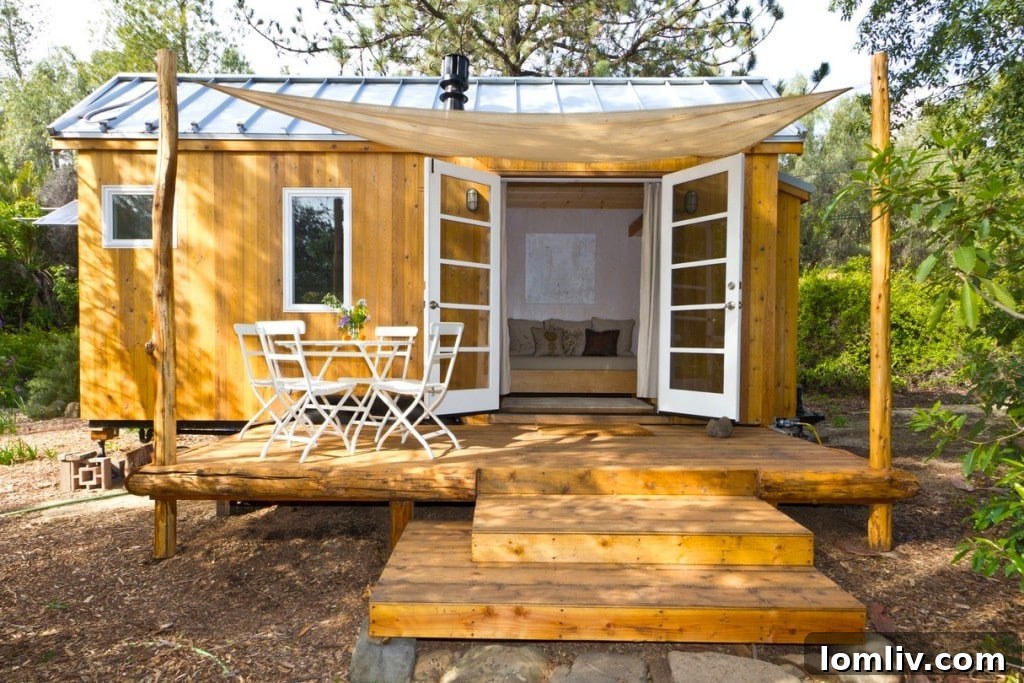
Beyond the Tiny House Hype: Who’s Actually Building?
The seemingly contradictory data — a desire for moderately larger homes, new construction trending significantly bigger, yet the buzz around tiny living — can be reconciled by examining who is actually driving the current construction boom. As Dow Jones MarketWatch points out, the hefty figures for new home sizes are largely influenced by a specific demographic:
It isn’t that all Americans, in general, are clamoring for huge homes. Rather, it’s mainly the wealthy that are building right now, and they’re building big—skewing the overall average.
This insight is crucial. It reveals that the average size of newly constructed homes is not a reflection of the general population’s purchasing power or aspirations, but rather a statistical distortion caused by a segment of affluent buyers who possess the financial capacity to build custom, larger residences. This phenomenon creates a significant disconnect between what is available in new housing stock and what is affordable or desirable for the broader market, particularly for younger generations.
The Millennial Factor: Reshaping the Housing Landscape
Absent from New Builds, But Still Key Players
When it comes to the new-home market, Millennials — generally defined as individuals between the ages of 25 and 40 — have been conspicuously absent. Financial hurdles, including student loan debt, stagnant wage growth, and a competitive job market, have significantly impacted their ability to save for down payments and secure mortgages for new construction. Rose Quint, Assistant Vice President for Survey Research in Economics and Housing Policy at the NAHB, notes that roughly 15% of Americans in the 25-34 age bracket were still living with their parents in recent years. This statistic highlights the profound economic pressures facing this generation.
For a full decade, homeownership rates among young Americans, who traditionally would be entering the market for smaller, entry-level homes, have been in decline. Jessica Lautz, Manager of Member and Consumer Survey for the National Association of Realtors, confirms that the percentage of first-time homebuyers has reached a 30-year low. Despite various initiatives aimed at easing mortgage credit for first-time buyers, such as conventional mortgages with 3% down payment programs and reduced mortgage insurance premiums for FHA-backed loans, these young buyers largely remained on the sidelines.
“Their share has to come back [to new home buying] before they will impact those [home size] numbers,” Quint said. Despite measures intended to loosen mortgage credit for first-time buyers, including a 3% down payment program for conventional mortgages and lower mortgage insurance premiums for Federal Housing Administration-backed mortgages, these young buyers were still largely missing last year.
This group’s absence from the new construction market means their preferences are not yet influencing the average size of newly built homes. However, it’s important to distinguish between buying *new* homes and buying homes *overall*. Jonathan Smoke, Chief Economist at Realtor.com and a Millennial himself, asserts, “Millennials are the biggest age group buying homes today. We are on the leading edge of that wave. We have a lot more to come.” This suggests that while they might not be driving new builds, they are a dominant force in the existing housing market, often opting for remodeling over new purchases.
This preference for existing homes often stems from a desire to live in urban environments, where older housing stock is more prevalent, or simply due to the more accessible price points of pre-owned properties.
Millennials’ Unique Home Buying Philosophy: Personalization and Prudence
Millennials are known for their desire to infuse their personal style into their living spaces. A Better Homes and Gardens survey found that a significant 63% of Millennials prioritize a home customized to their tastes and needs. Furthermore, 60% believe that having a home that is a true reflection of their identity is far more important to their generation than it was to their parents’. While older generations certainly valued personal style, the intensity and expectation of immediate personalization seem to be heightened among Millennials.
This generation is also remarkably fiscally savvy. Their active participation in sharing economy platforms like Airbnb and their embrace of previously owned goods purchased through online marketplaces like Facebook demonstrate a keen eye for value and a willingness to explore alternatives to traditional consumption. This economic prudence extends directly to their approach to homeownership. A notable 60% of Millennials are willing to compromise on certain aspects of their ideal home in order to stay within budget. This pragmatism is a defining characteristic of their home-buying journey.
Strategic Compromises for Affordability
The compromises Millennials are willing to make are often strategic, aimed at balancing their desires with financial realities. The most significant compromise for many is a smaller lot size, a trade-off they readily accept to ensure a home fits their budget. Other common ways they whittle down the cost of a home include:
- Less Square Footage: Opting for more modest interior spaces.
- Unfinished Spaces: Purchasing homes with areas that can be finished later, allowing for phased renovation and cost management.
- Location: Choosing properties further away from prime shopping and entertainment districts, often accepting a longer commute to work, especially appealing when gas prices are lower.
- Fewer Amenities: Prioritizing essential features over luxury extras.
Environmental Consciousness: A Measured Priority
Despite being a well-educated group often associated with environmental awareness, only 14% of Millennials surveyed expressed significant concern about their home’s environmental impact to the extent that they would pay more to lessen it. For those who were willing, the “magic number” was an average of $10,732 more for a home if it translated into saving $1,000 annually on utilities and energy costs. This suggests a practical, return-on-investment approach to green features rather than an open-ended commitment to environmental stewardship at any cost.
Conclusion: Navigating the Future of Homeownership
The contemporary housing market is a dynamic arena shaped by contrasting forces. While a wealthy segment continues to build ever-larger homes, skewing national averages, the influential Millennial generation is forging its own path to homeownership. Facing economic headwinds, Millennials are prioritizing affordability, personalization, and strategic compromises. They are not necessarily clamoring for smaller homes in the “tiny house” sense, but they are certainly seeking budget-friendly solutions that allow them to live in preferred locations and personalize their space without breaking the bank. Their impact, while currently less visible in new construction data, is profoundly felt in the existing housing market and through the increasing trend of home renovation. As this generation continues to mature and their purchasing power grows, their unique preferences will undoubtedly reshape the future of housing, demanding a market that is more adaptable, accessible, and aligned with a practical, personalized vision of the dream home.