Nestled in the heart of North Texas, Colleyville stands as a beacon of luxury and refined living. Its tree-lined streets, expansive green spaces, and meticulously maintained estates paint a picture of an idyllic suburban paradise. Among its most prestigious enclaves is Montclair Parc, a community renowned for its exquisite homes and a tranquil, park-like atmosphere. Montclair Drive, in particular, epitomizes this elegance, boasting beautiful residences set on oversized lots within the highly acclaimed Grapevine-Colleyville Independent School District.
The real estate market in Colleyville reflects its desirability. According to data compiled from the North Texas Real Estate Information Systems (NTREIS) by seasoned Realtor Fran Hoover, a broker associate with Keller Williams Southlake, the average price of a home listed in Colleyville over the past two years soared to an impressive $978,458. The median price, often a more accurate representation of market trends, stood firmly at $875,000. These figures underscore Colleyville’s status as a high-value real estate market, where discerning buyers seek unparalleled quality of life and exceptional properties. Homes along Montclair Drive typically command prices well above even these robust averages, showcasing the street’s elite standing within the community.
Given this context of opulent estates and soaring property values, an advertised listing on Montclair Drive for an astonishingly low price of $14,000 naturally catches the eye. A figure representing mere pennies on the dollar compared to its neighbors, this listing at 5613 Montclair Drive seems almost too good to be true. And as the adage goes, if it seems too good to be true, it almost certainly is.
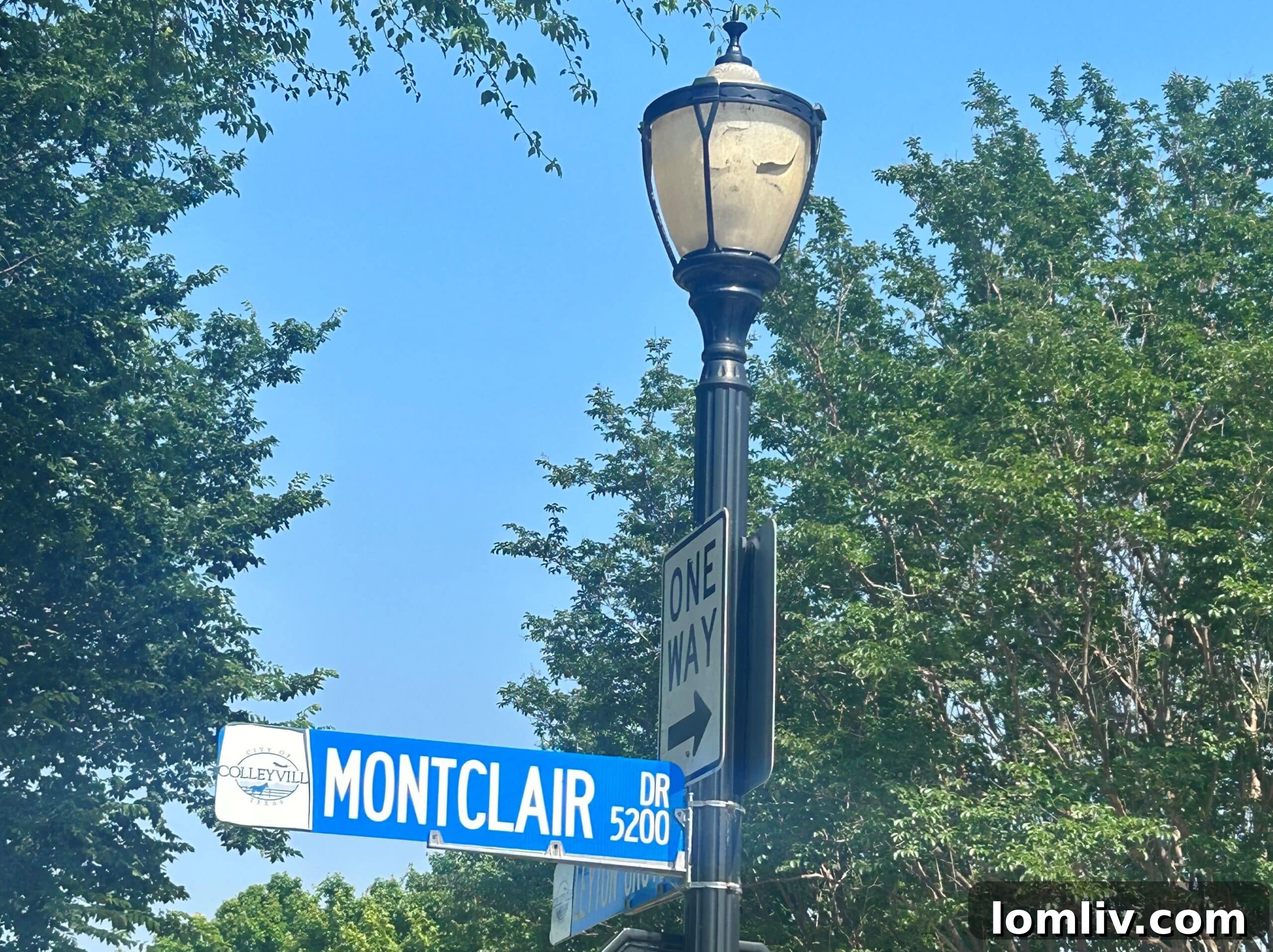
Unpacking the Mystery: A Closer Look at 5613 Montclair Drive
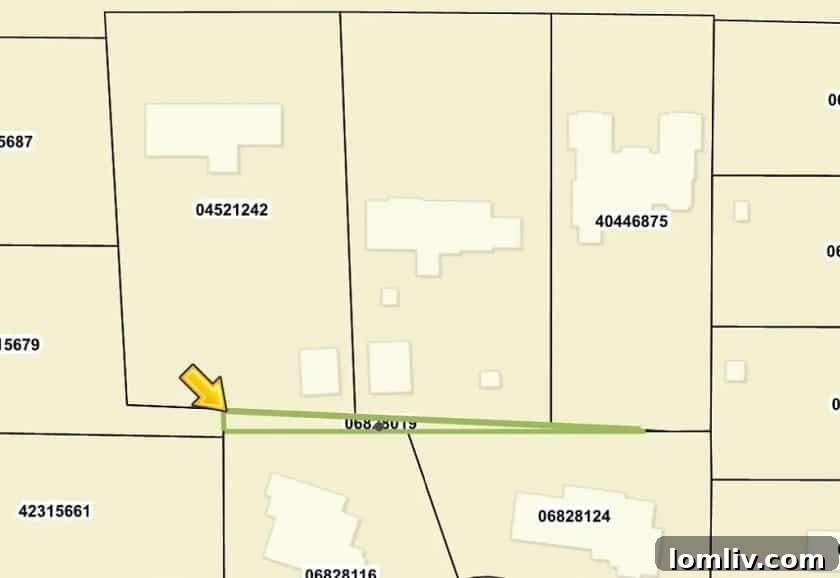
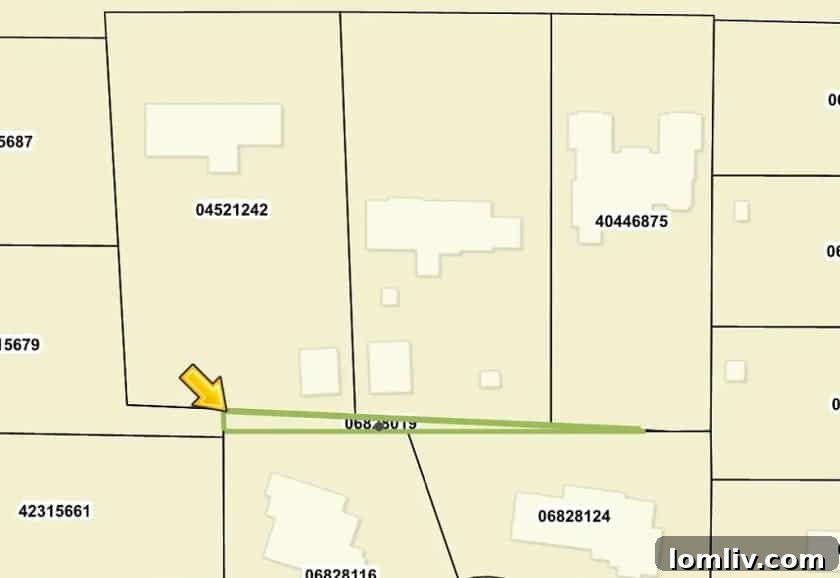
A deeper dive into the specifics of this intriguing Colleyville listing quickly reveals the reasons behind its eyebrow-raising price tag. The property in question spans a mere 0.11 of an acre, translating to approximately 4,791.6 square feet. While this acreage might seem substantial in some urban settings, it pales in comparison to the multi-acre estates typical of Montclair Drive. Furthermore, a glance at the property’s plat map reveals a truly unique and challenging shape: a remarkably long, narrow, and acutely angled sliver of land, reminiscent of a stretched-out piece of pizza. This unusual geometry presents immediate and profound challenges for any prospective development.
The practical implications of such a parcel are extensive. Even the simplest of structures, like a modest “she-shed” or a compact garage, would be extraordinarily difficult to “shoe-horn” onto this land. Building codes, setback requirements, and utility easements typically demand certain dimensions and clearances that this property simply cannot provide. Imagine trying to design a functional home on a lot where the width might be only a fraction of its length, potentially narrower than many driveways. The architectural and engineering hurdles would be immense, requiring highly specialized and likely costly solutions, if any are even feasible.
The listing agent, Lexington Wright with Northern Crain Realty, offered a candid assessment, declining a formal interview but providing a crucial email statement: “There is very little information on this track [sic] and it appears to be landlocked. Potential buyers are encouraged to do their due diligence before submitting an offer.” The term “landlocked” is a critical red flag in real estate, signifying a property that has no direct legal access to a public road. This lack of ingress and egress can effectively render a parcel unusable, as homeowners or builders would have no legal right to cross adjacent properties to reach their own. Without an established easement or agreement, development becomes impossible, and even basic access for maintenance or emergency services is nonexistent. This fundamental lack of access strips the property of virtually all inherent value, regardless of its prestigious address.
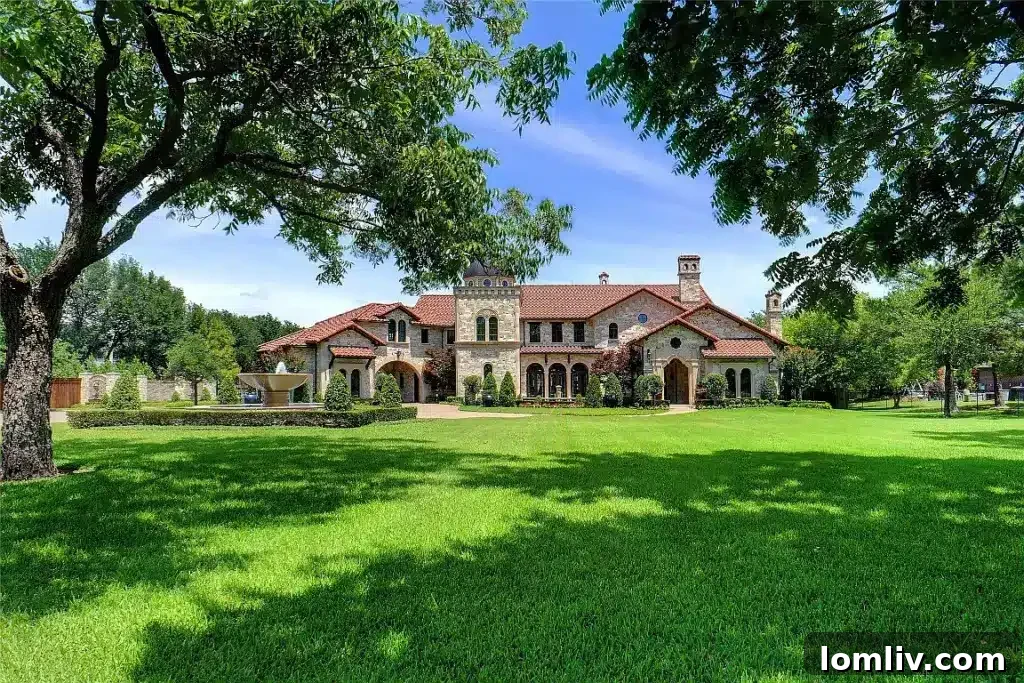
The stark contrast between this challenging parcel and its surroundings cannot be overstated. Just across the street from this peculiar lot lies the esteemed Montclair Parc, a gated community where homes boast a median sales price exceeding $1.4 million. Similarly, the neighboring Leyton Grove community also sees median home prices hovering around the $1.4 million mark. For a vivid illustration of the area’s grandeur, consider a magnificent estate listed at 5513 Montclair Drive. This sprawling residence features six bedrooms, ten bathrooms, and an impressive 11,531 square feet of living space, all situated on a much more generous 2.2 acres. Its price tag? A staggering $8.25 million. Such comparisons highlight the profound disparity in value and usability, raising the undeniable question: how many bathrooms or bedrooms could one possibly envision on a sliver of land barely more than one-tenth of an acre, particularly one with no guaranteed access?
Beyond Location: The Unyielding Importance of Access and Legalities in Real Estate
While the mantra “location, location, location” is undeniably paramount in real estate, another triumvirate holds equal, if not greater, importance, especially when dealing with unusual properties: “access, access, access.” As Realtor Fran Hoover astutely warns, the ability to legally and physically enter and exit a property (ingress and egress) is absolutely critical. Without proper access, even the most prime location can be rendered worthless. This isn’t merely a convenience; it’s a foundational requirement for any usable property.
“From my perspective as a Realtor, a listing like this immediately triggers a series of questions: ‘Who would realistically want to buy this property?'” Hoover states, underscoring the immediate skepticism an experienced professional would harbor. “Ultimately, anyone considering such a unique and potentially problematic parcel would absolutely require exceptionally competent legal counsel.” This isn’t just a recommendation; it’s an imperative. Navigating the complexities of a landlocked property involves a maze of legal challenges, from establishing easements to negotiating with adjacent landowners, and potentially even litigating to secure access rights.
The absence of legal access means that the property owner cannot build, cultivate, or even safely visit their land without trespassing on someone else’s property. This can lead to protracted disputes, expensive legal battles, and ultimately, a property that remains an unusable asset. Furthermore, lenders are highly unlikely to finance the purchase or construction on a landlocked parcel, making traditional real estate transactions virtually impossible. The potential for future disputes, title issues, and the sheer difficulty of obtaining necessary permits for development are massive deterrents.
Beyond access, the sheer unconventionality of the lot’s shape introduces further complications. Local zoning ordinances and building codes often have strict requirements regarding lot dimensions, minimum frontage, and building envelopes. A “pizza-shaped” lot may violate several of these regulations, making it exceedingly difficult, if not impossible, to secure building permits for any meaningful structure. Variances can be sought, but these processes are often lengthy, expensive, and have no guarantee of success, especially for such extreme cases.
The Allure of the “Bargain” vs. The Reality of the “Problem Property”
For many, the idea of owning a piece of Colleyville, especially on an esteemed street like Montclair Drive, for a mere $14,000, can be incredibly tempting. It evokes fantasies of a hidden gem, a savvy investment that will yield immense returns. However, the reality of this “pizza-shaped” and potentially landlocked parcel stands in stark contrast to such dreams. In high-value real estate markets, an unusually low price almost invariably signals significant underlying problems, rather than an undiscovered opportunity.
The due diligence process for such a property must be exhaustive. It would involve not just a standard title search but also a comprehensive survey to accurately delineate boundaries and confirm the property’s shape and actual dimensions. Critically, a legal expert would need to review all local ordinances, zoning restrictions, and historical property records to determine if any form of access easement exists or could realistically be obtained. This level of investigation often incurs significant costs, potentially outweighing the initial “bargain” price of the land itself. Without these critical steps, a buyer risks investing in a piece of property that, while technically owned, offers no practical utility or future development potential.
Even for an adjacent homeowner considering acquiring this lot for expansion, the landlocked status remains a formidable hurdle. Merging the lot with an existing property would require navigating complex legal procedures and ensuring that the combined parcel meets all municipal requirements. It’s not a simple matter of buying the land and adding it to your backyard; the landlocked nature often complicates even this scenario, as the right to access the original skinny lot might still be contested or non-existent, even if it’s then physically part of a larger, accessible property. The financial outlay for legal fees, surveys, and potential negotiations for easements could easily surpass the initial purchase price, transforming a seemingly cheap acquisition into an expensive liability.
Ultimately, the story of 5613 Montclair Drive serves as a potent reminder for anyone venturing into the real estate market. While the allure of a low price in a coveted location is strong, it’s essential to look beyond the numbers and conduct thorough research. In real estate, as in life, some things are simply too good to be true. The “bargain” on Montclair Drive, with its unique shape and fundamental access challenges, stands as a testament to the fact that even in the most prestigious neighborhoods, not every piece of land is created equal, and some come with complexities that far outweigh their apparent value.
Before making any offer on such an anomalous property, prospective buyers should heed the warnings of experienced professionals like Fran Hoover and the listing agent. The potential for a financially draining legal quagmire, coupled with the near impossibility of development, means that this $14,000 “deal” could quickly become a very expensive lesson in the critical importance of due diligence, legal access, and practical usability in property acquisition. It’s a prime example of how even a sliver of land in luxury Colleyville can represent a significant challenge rather than a golden opportunity.