Navigating the Labyrinth of Modern Home Building: A Deep Dive into Texas Housing Challenges
The dream of building a custom home has long been a cornerstone of the American ethos, a symbol of personal achievement and tailored living. However, in the wake of the global COVID-19 pandemic, this aspiration has transformed into a complex and often frustrating journey for many. News outlets across the nation, including The Washington Post, have diligently chronicled the escalating struggles within the housing economy, highlighting how unforeseen forces have reshaped the landscape of residential construction.
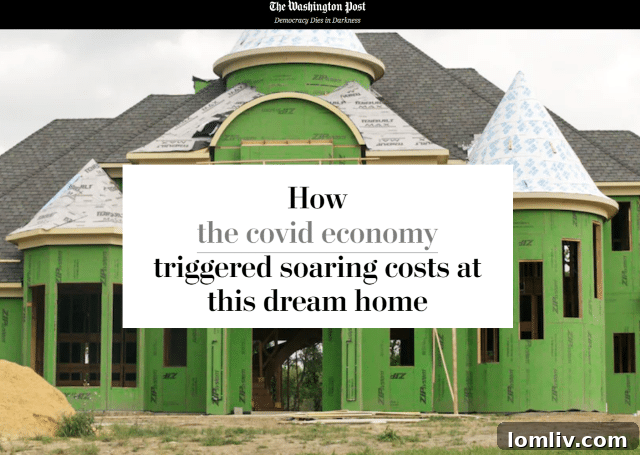
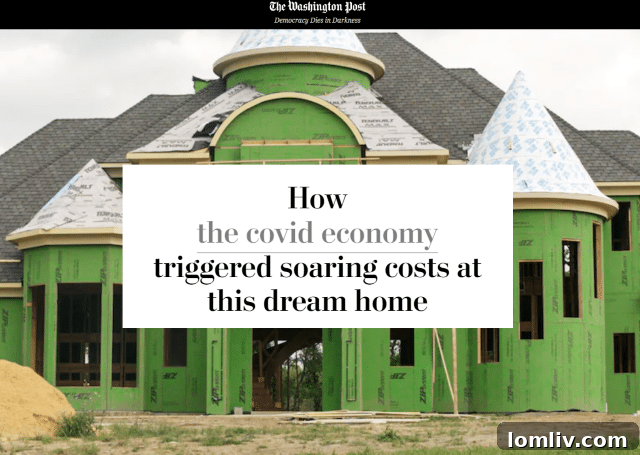
One compelling narrative, prominently featured in a Post story titled “How [various factors] triggered soaring costs at this dream home,” brought to the forefront the plight of an Orlando couple. Inspired by the captivating home transformations seen on HGTV in 2018, this couple embarked on an ambitious quest to construct their ideal residence in the vibrant Dallas area. What began as an exciting venture, however, quickly morphed into a grueling test of patience and financial resilience, leaving their luxury-laden dream home far from completion years later.
New: On a lakefront lot outside of Dallas, the chaotic, unpredictable, topsy turvy forces of the covid economy are colliding at one dream home
I spent a year following the builders, owners and suppliers facing soaring prices and massive delays:https://t.co/9gKF6vBEVh
— Rachel Leah Siegel (@rachsieg) August 8, 2022
This extensive article, summarized by The Post as: “This is the story of how the unusual forces shaping the covid economy collide under one (very expensive) Texas roof,” meticulously unravels the challenges faced by the LaChance family. Their journey began in 2020 with the purchase of a picturesque lakefront lot for $260,000, setting an initial budget of approximately $3 million for their custom build. This substantial investment and meticulous planning, however, proved insufficient to insulate them from the perfect storm brewing in the broader economy.
The Confluence of Economic Headwinds: Why Home Building Costs Soared
The LaChances’ experience is a microcosm of a much larger, systemic issue that has plagued the construction industry since 2020. A devastating combination of labor shortages, unprecedented price escalations, intricate supply-chain snarls, manufacturing bottlenecks, and pervasive inflation has created a maelstrom of headaches for both homeowners and builders alike. Joshua Correa, a seasoned Dallas-native home builder overseeing the LaChances’ project, articulated the domino effect of these challenges to The Post, stating, “It was like a chain reaction. Everybody started charging more — for everything.” This sentiment echoes throughout the industry, painting a grim picture for anyone attempting to build or renovate a home.
Labor Shortages: The Vanishing Workforce
One of the most critical factors driving up costs and extending timelines is the persistent shortage of skilled labor. The construction industry has struggled for years with an aging workforce and a dwindling pipeline of new talent. The pandemic exacerbated this issue, as many workers left the trades or opted for more stable employment. This scarcity of electricians, plumbers, carpenters, and other specialized craftspeople means that available labor commands higher wages, and scheduling becomes a complex puzzle, often leading to significant delays and premium costs for expedited services. Builders are forced to bid higher for fewer hands, directly impacting project budgets.
Supply Chain Disruptions: A Global Problem with Local Impact
The delicate global supply chain, once a seamless facilitator of goods, fractured dramatically during the pandemic. Factories shut down, shipping routes became congested, and raw material extraction slowed. For home construction, this meant critical components like lumber, steel, concrete, windows, appliances, and even roofing materials faced unpredictable delays and dramatic price spikes. A simple window order could take months instead of weeks, halting progress and accruing carrying costs. These disruptions created a volatile market where prices changed almost daily, making fixed-price contracts nearly impossible to manage for builders and adding layers of uncertainty for homeowners.
Inflationary Pressures: Eroding Purchasing Power
Beyond material and labor costs, broader macroeconomic inflation has played a significant role. The injection of fiscal stimulus and loose monetary policies during the pandemic, coupled with heightened consumer demand, led to a general increase in prices across all sectors. For construction, this meant that everything from fuel for machinery to administrative overhead became more expensive, further squeezing budgets. The LaChances’ initial $3 million budget, set in 2020, quickly lost its purchasing power as inflation eroded the value of every dollar, turning what seemed like a generous sum into an increasingly inadequate one.
Echoes from the Past: A Timeless Struggle
The LaChances’ predicament bears a striking, albeit unfortunate, resemblance to the classic 1948 comedy, Mr. Blandings Builds His Dream House. In this beloved film, Cary Grant and Myrna Loy portray a New York couple who purchase a dilapidated estate in rural New England, only to embark on a nightmare construction project riddled with unforeseen costs, material delays, and a seemingly endless stream of complications. While the movie provided comedic relief, the underlying frustrations of home building are eerily similar across the decades, demonstrating that some challenges are simply part of the construction process.
However, unlike the fictional Blandings, the LaChances find little humor in their real-life dilemma. The economic forces at play today introduce a layer of complexity and severity that far surpasses the comedic mishaps of post-war America. Reporter Rachel Leah Siegel, a Dallas native and economics correspondent for The Post, dedicated an entire year to documenting this unfolding crisis. Her immersive reporting involved closely tracking the builders, owners, and suppliers grappling with these unprecedented price hikes and monumental delays in North Texas, offering an unfiltered view into the realities of modern home construction.
The Public’s Unsympathetic Eye: Why Reactions Differ
The detailed account of the LaChances’ struggles, despite its extensive coverage and prime placement as the most-read article in The Post’s Economy section, garnered a surprisingly strong and often critical reaction from the public. Before comments were closed, nearly 2,000 readers weighed in, with the majority expressing little sympathy for the couple. This sentiment was mirrored on The Post’s Facebook page, where over 250 comments predominantly voiced negative opinions.
This lack of public empathy can be attributed to several factors. For many average readers, the initial budget of $3 million for a custom lakefront home in Dallas represents a level of luxury far removed from their own financial realities. As millions struggle with basic housing affordability, rising rents, and the challenge of saving for a down payment on a modest home, the tribulations of a family building a multi-million-dollar “dream home” can seem out of touch. The perception often shifts from concern for hardship to an implicit judgment of perceived extravagance, especially when contrasting it with the broader housing crisis affecting lower and middle-income families.
Furthermore, some readers might view the LaChances’ story as a cautionary tale about overspending or unrealistic expectations, rather than a narrative of innocent victims caught in economic crosscurrents. In a time of heightened economic anxiety, stories of significant personal wealth encountering setbacks might be met with resentment rather than compassion, reflecting deeper societal discussions about wealth inequality and access to resources.
Beyond a Single Story: Broader Implications for the Texas Housing Market
While the LaChances’ experience is uniquely personal, it illuminates a critical juncture for the broader Texas housing market. The Dallas-Fort Worth metroplex, in particular, has witnessed explosive growth over the past decade, fueled by corporate relocations, job opportunities, and a comparatively lower cost of living (at least historically). This demand, coupled with the supply-side constraints highlighted by The Post, creates a potent cocktail for sustained high prices and an affordability crisis that extends far beyond luxury builds.
First-time homebuyers, in particular, bear the brunt of these market dynamics. Rising construction costs mean new entry-level homes are more expensive to build, pushing prices higher across the board. Existing home prices are also buoyed by a lack of inventory, as fewer people are building, and current homeowners are reluctant to sell in a high-interest-rate environment. This creates a challenging ecosystem where the American dream of homeownership becomes increasingly elusive for a significant portion of the population.
The LaChances’ story, therefore, serves as a vital economic indicator, signaling the complexities and fragilities inherent in the modern real estate landscape. It underscores the ripple effects of global events on local economies and individual aspirations, demanding a closer look at sustainable development practices, labor force training, and resilient supply chains.
Looking Ahead: Towards Stability in Home Building?
The path forward for the home building industry remains uncertain, but there are signs of adaptation and evolving strategies. Builders are exploring new technologies like modular construction and prefabrication to mitigate labor shortages and improve efficiency. Efforts are also underway to diversify supply chains and source materials more locally to reduce susceptibility to global disruptions. However, these changes take time to implement and scale.
For prospective homeowners, the key takeaway is the necessity of flexibility, detailed planning, and a substantial contingency budget. The era of predictable construction costs and timelines may be on pause for the foreseeable future. As the Texas housing market continues to evolve, understanding the underlying economic forces at play will be crucial for anyone daring to build their dream home in this new, unpredictable environment.
The narratives from The Washington Post and similar reports serve not only as cautionary tales but also as essential educational tools. They empower consumers and industry professionals alike with the knowledge needed to navigate a housing market that has dramatically shifted, ensuring that the dream of homeownership, in whatever form it takes, remains attainable for future generations, even if the path to achieving it is now more winding and fraught with challenges than ever before.