Unmasking the Flaws in Property Valuation: The Hidden Impact of Deed Restrictions and Planned Developments
In the intricate world of real estate, property valuation is a foundational element determining everything from sale prices to tax burdens. However, for many property owners, the process often feels like a mysterious black box, leading to assessments that can seem arbitrary or, worse, profoundly unfair. This feeling of being “just a number” to taxing authorities like the Dallas Central Appraisal District (DCAD) is a familiar one, often accompanied by a dollar sign. Yet, a deeper dive into their methodology reveals that property owners are not just numbers, but also percentages – and this mathematical nuance can significantly impact your bottom line, especially when critical factors like deed restrictions and Planned Development (PD) limitations are overlooked.
Understanding how property is valued is crucial. DCAD, like many appraisal districts, calculates a total market value for a property by combining two primary components: the value of the land and the value of “improvements” – which primarily refers to any structures built upon the land. This straightforward equation is often presented as: Land Value (A) + Improvement Value (B) = Total Assessed Value (C). On the surface, this formula appears logical and equitable.
The Subtle Influence of the Land-to-Improvement Ratio
Beyond the basic sum, there’s a lesser-known but equally critical element at play: the ratio between land and improvement values. While many might assume that land and structures appreciate at similar rates, this ratio implies something more profound. It suggests that land should constitute a specific percentage of the total property value, relative to its improvements. When this ratio deviates significantly from what the appraisal district considers ideal, adjustments are made. Ostensibly, this process aims to maintain balance and consistency across valuations. However, this seemingly benign adjustment mechanism can become problematic, particularly when the initial premise – that land and structures fit neatly within a predefined ratio – is flawed from the start, or when external factors fundamentally alter a property’s potential.
Consider a scenario where a property owner has significantly overbuilt or extensively improved their structure relative to the size or utility of their land area. Should the standard land-to-improvement ratio still apply rigidly? Or should such unique circumstances warrant a challenge to the assessment? Typically, discerning discrepancies can be straightforward if you compare your land values to those of neighboring, unrestricted parcels. If a clear imbalance emerges, a basis for protest exists.
The Critical Overlook: Deed Restrictions and PD Limitations
The situation escalates dramatically when a property is subject to municipal or civil deed restrictions, or falls within a Planned Development (PD) district. These legal constraints dictate what can and cannot be done with a property, often significantly impacting its potential market value. The crucial question then becomes: Does DCAD factor these restrictions into its valuation process? The evidence, regrettably, suggests that they often do not.
Case Study: The Economic Impact of Liquor Control Overlay Districts
To illustrate this point, let’s examine the concept of “wet” versus “dry” parcels. Imagine owning a parcel of land in a designated “dry” area where the sale of alcohol is prohibited, while your immediate neighbor operates a thriving liquor store or bar on a “wet” parcel. Should your dry parcel be taxed at the same rate as the wet parcels? Logically, the answer is no. The dry restriction inherently impairs your parcel’s commercial potential and, consequently, its market value compared to neighboring unrestricted properties. The inability to capitalize on a lucrative market segment directly reduces the property’s desirability and profitability.
Conversely, if all parcels in an area were “wet” but an owner chose not to engage in a liquor-related business, that would be a personal business decision, not an uncontrollable impairment to the property’s inherent value. The key distinction lies in whether the limitation is a choice or a legally imposed barrier. These specific geographic areas are often referred to as Liquor Control Overlay Districts. However, civilly imposed dryness, stemming from a property’s deed, often goes untracked by appraisal districts like DCAD, meaning the resultant value impairment is entirely overlooked in the assessment calculation.
Residential World: The Shallowness of Calculation Persists
This same oversight and shallow approach to valuation are unfortunately prevalent within the residential real estate sector as well, particularly concerning Planned Development (PD) districts. PDs are specific zoning classifications that dictate precise land use, building envelopes, density, and even architectural styles within defined areas. They are established to achieve particular urban planning goals but can also impose significant limitations on property owners.
The Preston Place Saga: A Revealing Example of PD-15’s Impact
Consider the case of Preston Place, a condominium complex located within PD-15. This particular Planned Development strictly limits what can be built on each parcel to precisely what was there originally. When Preston Place’s 60 units tragically burned down, the community, alongside city officials, faced an arduous battle over whether to permit reconstruction exceeding the original building’s height, lot coverage, unit count, or even exterior façade. The only path for immediate reconstruction without extensive PD approval would have been to replicate the exact structure that was destroyed.
In such a unique scenario, the underlying land value of the Preston Place parcel is intrinsically linked to the potential for that exact structure to exist. Without the legal ability to build anything other than an identical replacement (or gain new approvals), the land’s standalone value is severely constrained. Can land value truly appreciate when its development potential is so rigidly confined? The building’s value might fluctuate with market dynamics, but the land’s value should, theoretically, remain stagnant or even decrease without legally binding intervention that expands its utility. Valuing property based on “coulda, woulda, shoulda” scenarios, where future approvals are uncertain, is fundamentally unsound.
Yet, factoring in these complex nuances proves challenging for appraisal districts because they often do not systematically track the hundreds, if not thousands, of PDs within their jurisdiction and how these restrictions specifically impair the land they encompass. Some PDs, like Oak Lawn’s PD-193, might not significantly alter underlying zoning, but many others impose profound limitations that directly affect property value.
The Unfathomable Jump in Land Value Amidst Destruction
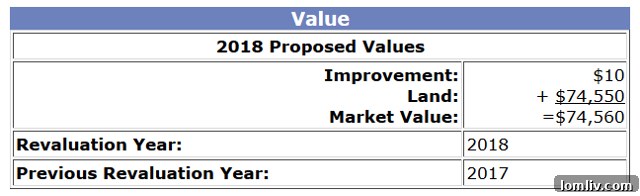
The Preston Place narrative becomes even more perplexing when examining its 2018 valuations. Despite the fire’s destruction, which diminished individual unit values to a nominal placeholder of $10 per unit, the land value experienced an inexplicable surge. One unit’s land portion, valued at $44,730 in 2017, dramatically jumped by $30,000 to $74,550. In a year when the sole structure providing the land its value (due to PD restrictions) was obliterated, the land’s value astonishingly rose by 66 percent. This defies basic market logic.
Some might speculate that a pending sales contract for the redeveloped property influenced this valuation. However, this assumption is flawed on multiple counts. Firstly, DCAD would not have specific knowledge of a private contract’s details. Secondly, and more critically, any such contract would invariably be contingent upon the PD restrictions being satisfactorily amended – an outcome that is far from guaranteed. The land had not changed hands, nor had its fundamental legal potential been altered. Appraisal districts cannot, and should not, levy taxes based on speculative future legal actions or potential outcomes, much like one cannot be taxed today for a lottery win that may or may not occur tomorrow.
A Pattern of Shifting Values: The Land-Building Teeter-Totter
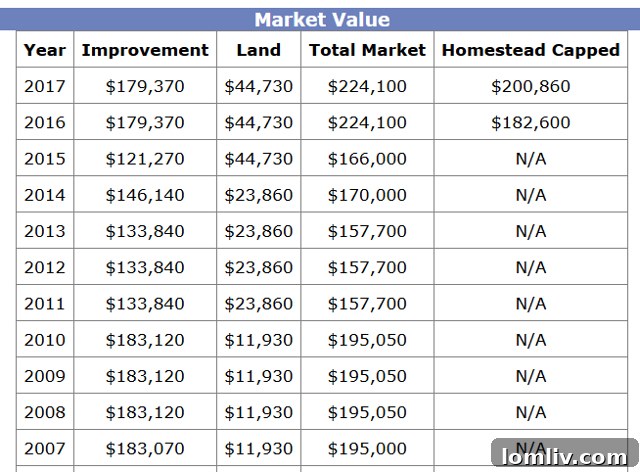
This isn’t an isolated incident for Preston Place. In 2011, belatedly reacting to the prior recession, DCAD reduced the valuation of a single condominium unit by $50,000. Yet, in the very same year, they doubled the associated land value. Again, in 2015, the unit’s value was devalued by $20,870, only for the land value to be increased by an identical amount, effectively maintaining the overall valuation. The subsequent year saw the unit’s value rebound sharply by $58,100, while the land value remained static.
This recurrent “teeter-totter” effect between land and building values points to a systemic issue. In multi-family complexes, it appears the land value is often treated as an irreducible floor valuation. During economic downturns or other market fluctuations, it’s typically the structure’s value that is adjusted downwards. By simultaneously increasing the land value, DCAD renders a significant portion of the A+B=C equation largely immune to depreciation, irrespective of the physical or legal realities of the property. This strategy was particularly evident in a recent year that saw substantial increases in high-rise land values across the board.
The “Ratio Over Rational” Dilemma: DCAD’s Perspective
This approach is not only questionable but, within the stringent confines of PD-15’s limitations, it is fundamentally flawed. Observing another unburned building within PD-15, a similar pattern emerged: the land valuation for my development-locked condo tripled this year, marking the first increase in many years. Initially, I had attributed the prolonged stagnation of land valuation to DCAD’s understanding of the PD’s inherent limitations. My assumption, it turned out, was incorrect.
During a discussion with Ken Nolan, DCAD’s chief appraiser, I presented my conundrum regarding land valuation increases despite the severe restrictions imposed by PD-15. His explanation, delivered by an appraiser following our meeting, wasn’t a debate about the merits of my perspective but rather an assertion of their methodology. The core of their argument rested on the belief that the assessed land value ratio had fallen “out of whack” with the assessed value of the structure. Their increase in land value was presented as a corrective measure to make the mathematical ratio align, and furthermore, the appraisal district primarily concerns itself with the total assessed value of both land and structures, implying that property owners should adopt the same holistic view.
However, this perspective overlooks a crucial distinction. When land is legally restricted to a singular, unvarying purpose, its value is profoundly impacted. It’s akin to a dedicated garbage dump. While million-dollar homes might be built nearby, the dump’s land can only ever be a dump. Should the dump cease operations, its land would have little to no inherent value unless its use could be legally changed. The same logic applies to properties under severe deed restrictions or PD limitations.
Moreover, it makes a significant difference when one realizes that reductions in land value are exceptionally rare compared to the more common depreciation of building structures. This fundamental disparity severely curtails a landowner’s ability to meaningfully influence one half of the critical A+B=C equation used in determining assessed real estate valuations. It skews the system, making it harder for owners of restricted properties to achieve a fair and accurate assessment.
If you believe this perspective is unsound, I invite you to share your reasoning and insights in the comments section below.

About the Author and Contact Information
My expertise centers around high-rises, homeowners’ associations (HOAs), and property renovations. I also maintain a keen interest in the interplay between modern and historical architecture, especially in balance with evolving movements like YIMBY (Yes In My Backyard). My commitment to insightful real estate commentary has been recognized by the National Association of Real Estate Editors, which honored my writing with three Bronze awards in 2016, 2017, and 2018, alongside two Silver awards in 2016 and 2017.
Do you have a compelling story to share, a question about real estate, or even a marriage proposal? Feel free to reach out via email at [email protected]. You’re also welcome to search for me on Facebook and Twitter, though finding me might prove to be an amusing challenge!