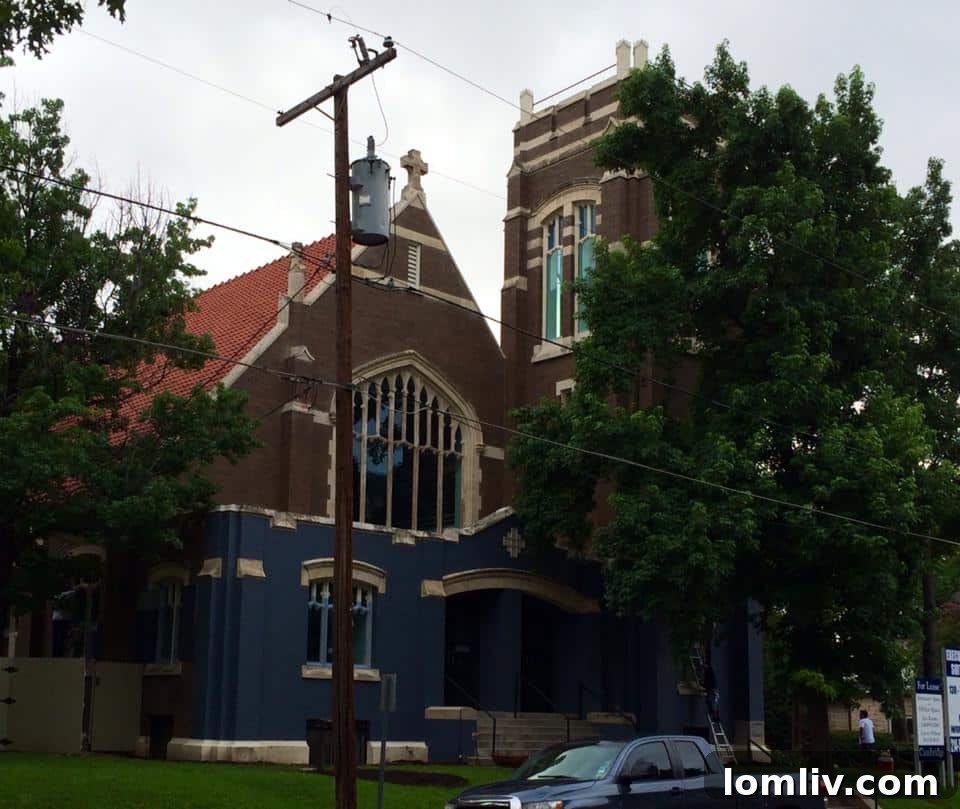
The Bold Blue Statement: 2700 Fairmount Street’s Striking Renovation Sparks Debate in Dallas
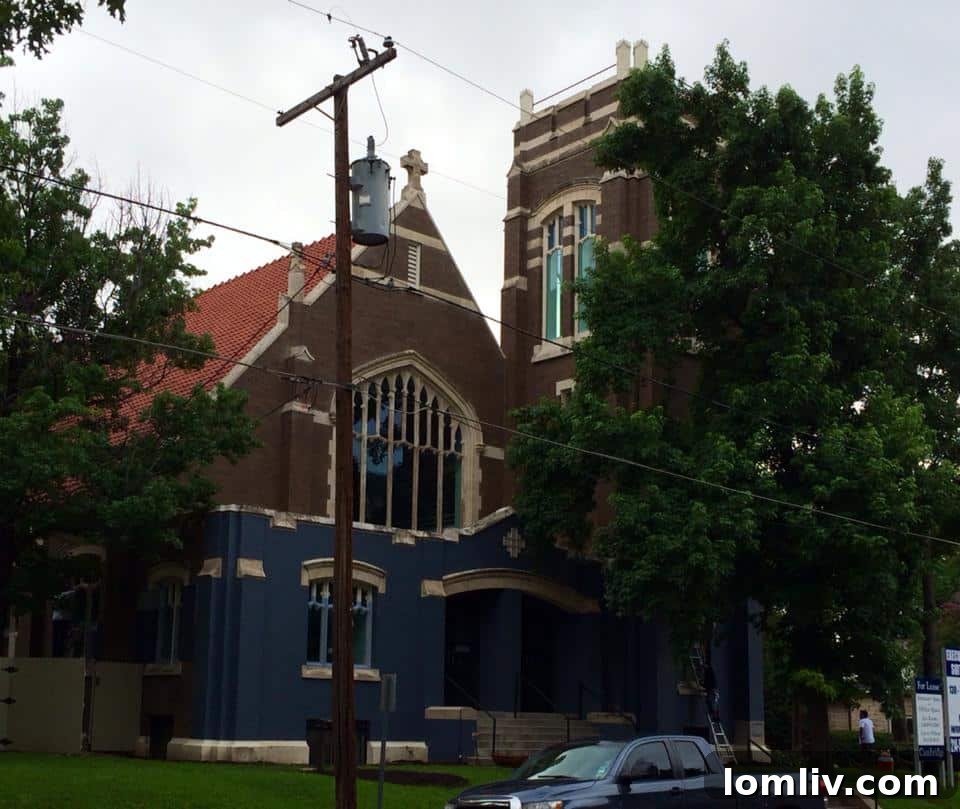
Dallas’s historic Fairmount Street, known for its blend of architectural heritage and modern vibrancy, is currently home to a transformation that has ignited fervent discussion. At the heart of this conversation is 2700 Fairmount, a stately 1910 church building embarking on a dramatic aesthetic journey. What once stood as a testament to early 20th-century ecclesiastical architecture is now undergoing a striking metamorphosis, drawing both praise and consternation as it sheds its traditional facade for an unexpected hue: blue. The revelation that acclaimed designer Gary Riggs is orchestrating this bold change has only intensified the community’s focus, turning this historic structure into a canvas for a spirited debate on preservation, modernity, and artistic vision.
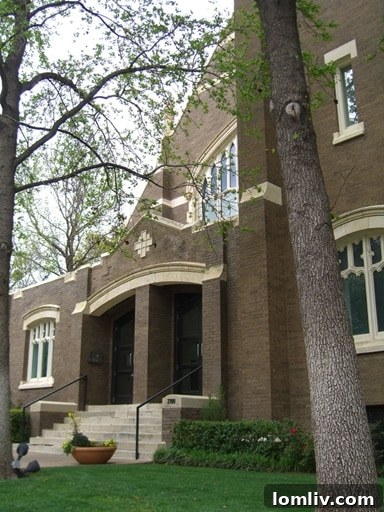
The journey of 2700 Fairmount from a place of worship to a contemporary office space is a narrative common in evolving urban landscapes. Originally constructed in 1910, this edifice, affectionately known as “The Church of Fairmont,” has long been a quiet sentinel on Fairmount Street, observing the ebb and flow of Dallas’s development. Its original architecture likely embodied the prevailing styles of its era, perhaps a blend of Gothic Revival or Romanesque influences, characterized by sturdy masonry, intricate window detailing, and a dignified presence. For over a century, its very stones have absorbed the stories of the community, standing as a tangible link to Dallas’s past. Over time, as demographics shifted and urban needs changed, the building was “creatively and effectively renovated into tasteful, eclectic office space,” according to its past off-market listing. This conversion allowed the building to retain its structural integrity while adapting to the demands of a bustling commercial district, breathing new life into a cherished piece of history.
A Daring Artistic Vision: The Choice of Blue and Gary Riggs’ Influence
The decision to paint such a venerable structure blue is undeniably provocative. For many, a historic building carries an inherent expectation of colors that respect its original palette and material — muted tones, earthy hues, or the natural color of stone and brick. A vibrant blue, however, shatters these preconceptions. This audacious choice has been attributed to none other than Gary Riggs, a name synonymous with distinctive and often avant-garde design. Riggs, known for his ability to infuse spaces with unique character and a modern sensibility, has evidently approached 2700 Fairmount with a similar philosophy. His involvement elevates the project beyond a simple repaint, transforming it into a deliberate artistic statement that challenges traditional notions of restoration.
The initial reaction from the community has been one of surprise, often followed by a mix of curiosity and critique. For proponents, this blue could be seen as a courageous move, injecting new life and a distinctive identity into an otherwise conventional office building. It creates a landmark, a conversation starter, and a beacon of contemporary design within a historical context. It signals a forward-thinking approach, embracing the idea that historic structures can evolve visually to remain relevant and appealing in a dynamic urban environment. The selection of blue might also be a strategic branding decision, making the property instantly recognizable and memorable in a competitive real estate market.
Conversely, many voice concerns about the potential loss of historical authenticity. Critics argue that painting over original stone or brick with such a strong, non-traditional color can erase a building’s inherent character and dilute its historical narrative. They contend that the charm of a 1910 structure lies in its aged patina, the natural textures, and the very materials chosen by its original builders. To some, the blue represents a jarring disconnect, an aesthetic imposition that overshadows the building’s intrinsic beauty and its place within the historic fabric of Fairmount Street. The debate often boils down to a fundamental question: at what point does modernization become erasure?
Strategic Location in a Thriving Dallas Corridor
Beyond its striking new exterior, the strategic importance of 2700 Fairmount cannot be overstated. Located in a prime Dallas corridor, the property benefits from its advantageous PD9 zoning, which designates it as a Planned Development District allowing for a versatile array of retail and office uses. This flexibility is a significant draw for businesses seeking a dynamic environment with robust foot traffic and high visibility. The ability to accommodate diverse commercial ventures—from boutique retail to professional offices—ensures the building’s continued economic viability and relevance in a rapidly evolving market.
The building’s exceptional accessibility is another key factor. It stands within comfortable walking distance of some of Dallas’s most prestigious and bustling destinations. The iconic Crescent, a symbol of luxury and corporate prowess, is just a stone’s throw away, bringing with it a sophisticated clientele and a vibrant business ecosystem. Further enhancing its appeal is its proximity to McKinney Avenue, renowned for its energetic retail scene, upscale boutiques, and diverse culinary offerings. This means tenants and their clients have immediate access to a wealth of dining, shopping, and entertainment options, enriching their daily experience.
Moreover, the property is nestled near the upscale Turtle Creek and Cedar Springs areas, known for their affluent residential communities and burgeoning commercial hubs. This strategic positioning places 2700 Fairmount at the crossroads of affluent neighborhoods and key business districts, making it an exceptionally desirable address for companies aiming for prestige and convenience. The inclusion of additional parking across the street at 2518 Mahon Street further addresses a perennial urban challenge, providing essential infrastructure that enhances the property’s attractiveness to prospective tenants and visitors alike, ensuring seamless accessibility in a dense urban setting.
The Renovation Journey: From Neglect to Revival
The current renovation, spearheaded by new owners, is not merely an aesthetic overhaul but also a significant revitalization effort. Reports from previous tenants indicated that the building had not always been maintained to the highest standards. One departing tenant candidly shared insights, noting a period where the building “hasn’t been the best kept up.” This context provides a deeper understanding of the new owners’ motivations; the blue paint, while visually striking, is part of a broader initiative to thoroughly “spruce up” the property and enhance its overall appeal and functionality.
The renovation encompasses several critical improvements designed to address both structural and aesthetic deficiencies. A key part of this process involves the meticulous washing of the sandstone surrounding the windows. Sandstone, a classic building material for structures of this vintage, often accumulates grime and pollution over decades, dulling its natural beauty. Professional cleaning can restore its original luster, revealing the intricate details and texture that contribute to the building’s historic character. While the cleaning itself is a universally applauded effort, the suggestion of potentially “re-painting the windows” raises another layer of complexity. Depending on the original window materials and the chosen paint, this step could either enhance protection and visual harmony or further distance the building from its original material palette, hence the “GULP!” of apprehension for preservationists.
Beyond the facade, the new ownership is also dedicated to improving the landscaping around the property. Well-maintained and thoughtfully designed landscaping can dramatically elevate a building’s curb appeal, creating a welcoming and professional atmosphere. This holistic approach signals a commitment to not only modernizing the interior and exterior but also to integrating the building more harmoniously with its surroundings. The careful consideration of the paint color itself was a protracted process; “They have tried a whole lot of colors on a back wall before settling on this color,” indicating a deliberate, if ultimately controversial, decision-making process rather than a whimsical choice. This meticulous selection process underscores the owners’ dedication to creating a specific, impactful aesthetic, even if it diverges significantly from traditional expectations.
Preservation vs. Progress: The Enduring Architectural Dilemma
The transformation of 2700 Fairmount embodies a perennial architectural dilemma: how do we balance the imperative of historic preservation with the demands of modern development and individual artistic expression? Historic buildings are not merely old structures; they are cultural artifacts that anchor a community to its past, providing a sense of identity and continuity. However, they also occupy valuable urban real estate and must remain economically viable to avoid dereliction. This tension often leads to creative solutions, but sometimes to decisions that challenge established notions of heritage.
For some, the “Church of Fairmont” is more than just an office building; it is a piece of Dallas’s legacy. Its original purpose, its materials, and its aged appearance tell a story. Painting it blue, no matter how professionally done, is perceived as altering this narrative irrevocably. It changes the visual language of the building, potentially removing it from its historical context and placing it firmly in the realm of contemporary design. This can be particularly contentious in areas like Fairmount Street, which possess a distinct historical charm that many residents and preservation advocates strive to protect.
On the other hand, the argument for adaptive reuse and modernization holds considerable weight. A building that cannot adapt often falls into disrepair, becoming an eyesore or eventually succumbing to demolition. The new owners’ investment in sprucing up the building, cleaning its sandstone, and improving its landscaping demonstrates a commitment to its longevity. The choice of blue, in this light, could be interpreted as a bold statement of renewal, a way to ensure the building commands attention and thrives in a competitive market. It represents a belief that evolution is necessary for survival, even for historic structures.
The ongoing discussion around 2700 Fairmount reflects a larger conversation happening in cities worldwide: how can we honor our architectural heritage while allowing for innovation and growth? There is no single answer, and often, the most interesting urban landscapes are those that embrace this tension, blending the old with the new in unexpected ways. Whether the blue facade of 2700 Fairmount will ultimately be celebrated as a pioneering act of urban design or decried as a misstep in preservation remains to be seen. What is certain is that this historic building, now clad in a vibrant new hue, has unequivocally established itself as a focal point of discussion in the dynamic Dallas architectural scene.