The closing of a real estate transaction is often seen as the finish line, but sometimes, a unique arrangement allows the seller a brief encore in the property: a seller lease-back. While offering considerable flexibility for sellers, this increasingly common practice can sometimes make real estate agents apprehensive due to the potential complexities and pitfalls that may accompany it.
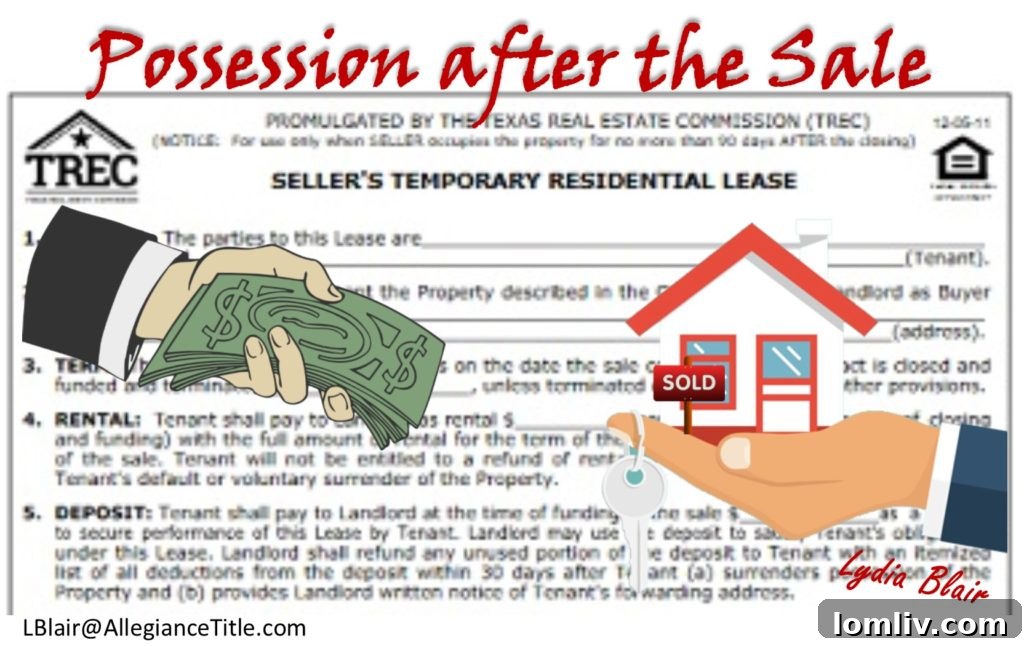
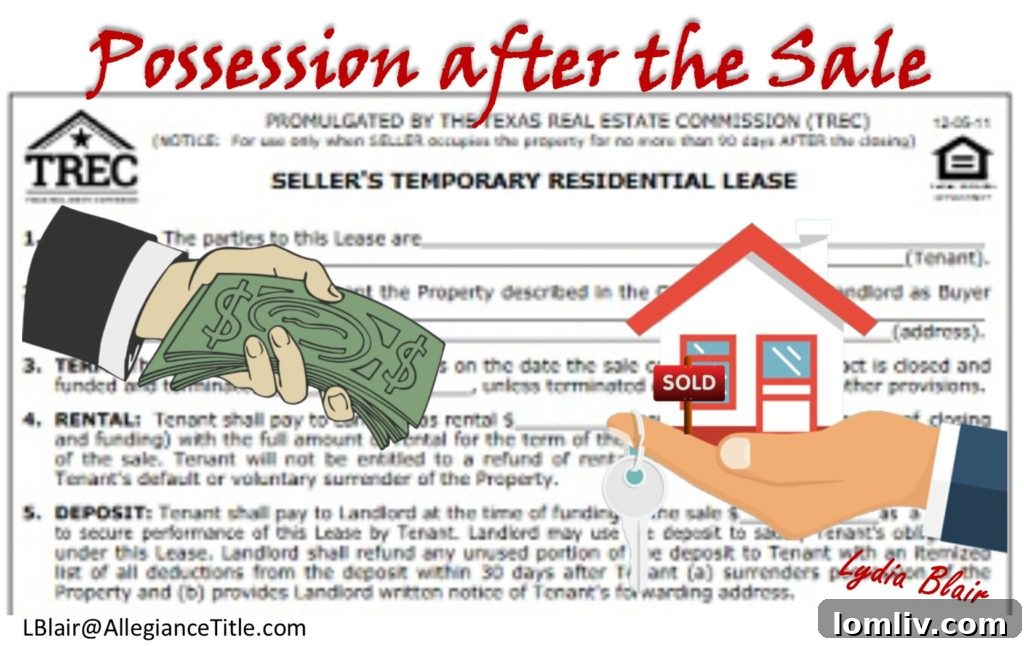
A Seller’s Temporary Residential Lease, also known as a post-closing occupancy agreement, is a contractual arrangement allowing the seller to remain in the home after the official closing of the sale. This period typically ranges from just a few days to a maximum of 90 days, providing a crucial bridge for sellers who require additional time before fully vacating the premises. This mechanism is designed to facilitate a smoother transition for all parties involved, offering delayed possession of the property to the buyer.
The reasons a seller might request such an arrangement are diverse and often practical. They might be waiting for the school year to conclude, coordinating the logistics of a complex move, or simply awaiting the completion of their new home. For some, it offers peace of mind, ensuring the transaction has fully closed and funds are securely in their bank account before they commit to moving out. While seemingly straightforward, these agreements transform the dynamics, turning the buyer into a temporary landlord and the seller into a tenant, necessitating careful consideration of each party’s new roles and responsibilities.
Understanding and Negotiating a Seller Lease-Back Agreement
Navigating the intricacies of a seller lease-back requires clear communication and a well-defined legal framework. In many regions, standardized forms, such as the TREC Seller’s Temporary Residential Lease form in Texas, streamline this process. These forms are typically concise, often just two pages, and are specifically designed for situations where the seller occupies the property for a limited period, usually not exceeding 90 days post-closing. The agreement meticulously outlines critical details including the daily rental amount, the required security deposit, and who bears the responsibility for utility payments, ensuring all expectations are set upfront.
The lease formally commences once the sale of the property has closed and the funds have been disbursed, concluding on a specific date mutually agreed upon and explicitly stated within the document. During this period, the dynamics of the transaction shift profoundly: the buyer assumes the role of the landlord, and the seller becomes the tenant. Consequently, standard landlord-tenant regulations generally apply, governing everything from property maintenance to dispute resolution. Financial aspects are typically handled efficiently, with the entire rental amount and security deposit often paid by the seller upfront at closing. These funds are then credited to the buyer on the settlement statement, usually managed by the title company, simplifying the financial transfer and ensuring transparency.
Determining the Daily Rental Rate and Security Deposit
A pivotal aspect of the temporary lease is the assignment of a daily rental rate and a security deposit amount. The daily rental rate is subject to negotiation and can vary significantly. In some instances, for very short lease-back periods, it might be a nominal fee, such as $1 per day. More commonly, however, the rate is calculated to fairly compensate the buyer for the expenses they incur while owning a home they cannot yet occupy. This calculation often considers the buyer’s carrying costs for the property.
The “PITI” Principle in Rent Calculation
It is widely considered fair and reasonable for the seller to cover the buyer’s Principal, Interest, Taxes, and Insurance (PITI) as rent during the lease-back period. PITI is an acronym for Principal, Interest, Taxes, and Insurance, representing the core components of a homeowner’s monthly mortgage payment. To arrive at an equitable daily rental rate, the buyer’s total monthly mortgage payment, which includes principal, interest, property taxes, homeowner’s insurance premiums, and any applicable Homeowners Association (HOA) dues, is divided by the number of days in that month. This method ensures the seller is contributing directly to the costs the buyer is shouldering.
A crucial piece of advice for drafting the agreement is to avoid simply inserting the acronym “PITI” into the contract for the lease amount. Instead, perform the calculation and insert an actual, precise numerical figure. The buyer’s PITI can fluctuate based on variables such as their down payment amount or their specific interest rate. Using a concrete figure eliminates potential ambiguities and prevents future disputes or quibbling over the exact PITI amount, fostering clarity and avoiding misunderstandings post-closing.
The Indispensable Security Deposit
Beyond the rental payment, a robust temporary lease agreement must include a sufficient security deposit. This amount, paid by the seller (now the tenant) to the buyer (now the landlord), serves as a safeguard against potential damages to the property or to ensure the fulfillment of other tenant obligations outlined in the lease. Analogous to traditional rental agreements, deductions for damages—beyond normal wear and tear—can be made from this security deposit at the conclusion of the lease period. Therefore, it is imperative that the security deposit is substantial enough to cover potential property damages, as the likelihood of collecting additional funds for damages after the seller has fully vacated the premises can be challenging.
Another critical clause to incorporate into the lease is a daily holdover rate. This specific amount comes into effect if the seller/tenant remains in the property beyond the agreed-upon lease termination date. The holdover rate should be deliberately set high – often in the range of $200 to $500 per day – to act as a powerful deterrent, strongly discouraging the seller from extending their stay beyond the stipulated timeframe. Such a steep charge provides a compelling financial incentive for the seller to vacate the property promptly and on schedule.
The fundamental intent of a temporary lease is to legally obligate the seller/tenant to maintain the property in its current, contracted condition, allowing only for normal wear and tear. This means the property should be delivered to the buyer in the same state it was at closing. However, unexpected situations, such as a major appliance breaking down or a plumbing issue arising during the lease-back period, can present difficult challenges. Typically, the seller/tenant is made responsible for all expenses related to repairing and maintaining the property while they occupy it. This obligation reinforces the requirement that the seller must turn over the property in the condition agreed upon in the purchase contract. This includes routine upkeep, such as ensuring the lawn is watered, and the landscaping remains in good condition, preventing any deterioration of the property’s appeal or functionality before the buyer fully takes possession.
Crucial Insurance Considerations in a Lease-Back Scenario
One of the most overlooked yet critically important aspects of a seller lease-back is its impact on insurance policies for both the buyer and the seller. Neglecting this area can lead to severe financial repercussions should an unforeseen event occur. Both parties must proactively consult with their respective insurance providers to understand the implications of this temporary occupancy arrangement.
Consider a dire scenario where the leased-back house suffers significant damage, such as a fire, during the seller’s occupancy. Many standard homeowner’s insurance policies are designed to cover owner-occupied residences and may not extend coverage to situations where the property is effectively being rented out. For the buyer, it is absolutely essential to ensure that their homeowner’s insurance policy is in place and active as of the closing date. Furthermore, they should confirm with their insurer that the policy provides adequate coverage for a property occupied by a tenant (the seller) and understand any specific requirements or endorsements needed to address this landlord-tenant dynamic. Some policies may require a special landlord rider or a non-owner occupied dwelling policy during the lease-back period to fully protect the buyer’s investment and liability.
Equally important are the seller’s insurance responsibilities. While they are no longer the owner, they are still occupying the property. The seller should ideally maintain their existing homeowner’s insurance policy during the lease-back period, even if it might transition to a non-owner occupied policy type, to cover the structure and their personal liability. Alternatively, or in addition, obtaining a renter’s insurance policy is highly advisable to protect their personal possessions against theft, damage, or loss, and to provide liability coverage for any incidents that might occur due to their actions or negligence within the property during their tenancy. Without appropriate coverage, either party could face catastrophic financial losses for property damage, personal injury, or liability claims.
The Importance of Walkthroughs and Addressing Damages
In a traditional home sale without a lease-back, buyers typically conduct a final walkthrough just before closing to verify the property is in the agreed-upon condition. Even with a seller lease-back, buyers should still perform a thorough walkthrough before closing, as scheduled. This ensures that the property is in satisfactory condition at the point of ownership transfer. However, the unique challenge with a lease-back arises if damages are discovered after closing but before the seller has fully vacated and the buyer takes physical possession. If significant damages are found after the seller moves out, and the security deposit is insufficient to cover the repair costs, the buyer’s recourse can become considerably more complicated and potentially expensive, often necessitating legal intervention.
Navigating Potential Pitfalls: Nightmare Fodder?
While tales of sellers refusing to vacate or intentionally damaging property are certainly unsettling, it’s important to note that such “nightmare scenarios” are not the norm. Most lease-back arrangements conclude amicably and without significant issues. However, prudence dictates that both buyers and sellers remain fully aware of the potential drawbacks and complexities that can arise. The temporary lease-back arrangement introduces a layer of risk that both parties must acknowledge and proactively manage.
Should a buyer encounter significant issues—such as the seller failing to move out on time, leaving the home in a state of disrepair beyond normal wear and tear, or causing substantial damage—they will invariably need to seek professional legal advice. It is a critical distinction to understand that neither the buyer’s real estate agent nor the title company is legally positioned or equipped to assist a buyer in collecting additional funds from sellers for damages or overdue rent after the closing process has been finalized. Their roles are primarily to facilitate the transaction and manage the transfer of ownership. Any disputes requiring financial compensation or legal enforcement of the lease terms fall outside their purview and necessitate the expertise of an attorney specializing in real estate law or landlord-tenant disputes.
For buyers, mitigating these risks involves due diligence: ensuring the lease agreement is exceptionally clear, comprehensive, and includes robust clauses for holdover fees and property condition. It also means securing a sufficient security deposit and verifying adequate insurance coverage. For sellers, understanding and adhering to their responsibilities as tenants, including timely vacating and maintaining the property, is paramount to avoiding costly legal battles and preserving their reputation. Ultimately, while seller lease-backs offer valuable flexibility, they demand meticulous planning, precise documentation, and a clear understanding of legal obligations to ensure a smooth and successful transition for all parties involved in the home sale.
Lydia Blair (formerly Lydia Player) was a successful Realtor for 10 years before jumping to the title side of the business in 2015. Prior to selling real estate, she bought, remodeled and sold homes (before house flipping was an expression). She’s been through the real estate closing process countless times as either a buyer, a seller, a Realtor, and an Escrow Officer. As an Escrow Officer for Allegiance Title at Preston Center, she likes solving problems and cutting through red tape. The most fun part of her job is handing people keys or a check.