
The Dark Side of NYC Housing: Unmasking Illegal Micro-Apartments and the Perilous Hunt for Affordable Living
Living in an apartment, especially in a bustling metropolis, often comes with its unique set of challenges. For many, it’s a rite of passage, a stepping stone to independence. But for others, it can quickly devolve into a frustrating, even infuriating, experience marked by thin walls, inconsiderate neighbors, and landlords who stretch the boundaries of decency. If you’ve been fortunate enough to avoid the pitfalls of subpar apartment living – perhaps born into a family with palatial estates and no pressure to venture out on your own prematurely – we commend your good fortune. For the rest of us, the tales of apartment woes are all too real.

The Unthinkable Reality: Manhattan’s Illegal Micro-Apartments
While many of us have our own horror stories about landlords – and believe me, I’ve had my share, including a memorable incident with a landlord who inexplicably used my shower because she “liked my soap” while her goat, Martin Sheen, made a meal of my underwear – these pale in comparison to the sheer audacity of what transpired recently in Manhattan. The New York City buildings department recently cracked down on two landlords who pushed the envelope of residential living to an alarming, and highly illegal, extreme: the creation of dangerous micro-apartments that redefine the term “cramped quarters.”
The scale of these illicit operations is truly astounding, highlighting a deeply concerning trend in New York City’s cutthroat housing market. These aren’t just small apartments; they are meticulously, and illegally, carved-out cubicles barely fit for human habitation, posing serious health and safety risks to their unsuspecting occupants.
As theNew York Postvividly detailed:
“A Lower East Side condo owner turned his small apartment into a mini-village — by converting it into an illegal duplex with 11 sub-units that had ceilings as low as 4 ¹/₂ feet high, officials said Friday.
The illegal micro apartments at 165 Henry Street are so cramped that condo owner Xue Ping Ni even put up bubble wrap as protection to keep residents from hitting their heads on the many low-hanging pipes.”
A Blatant Disregard for Safety and Legality
You might instinctively think, “Surely, this can’t be legal.” And you would be absolutely correct. Converting two Manhattan condos into a staggering eighteen separate, unapproved living units is unequivocally against building codes, zoning laws, and basic human decency. This isn’t merely a minor infraction; it’s a severe violation that endangers lives and underscores a landlord’s brazen pursuit of profit at the expense of tenant welfare. The New York City Department of Buildings (DOB) rightly intervened, but the very existence of such a setup raises profound questions about oversight and enforcement in one of the world’s most competitive real estate markets.
The situation extended beyond Xue Ping Ni. Another landlord, Jin Ya Lin, was found to have created an additional set of sub-units in a neighboring apartment, collectively transforming what should have been two spacious condos into a labyrinth of 18 cramped dwellings. To put this into stark perspective, the entire building legally accommodates only 27 apartments. This means that two individuals managed to create nearly as many units as the rest of the legitimate apartments combined, all within a fraction of the sanctioned space. Ni’s apartment, for example, was reportedly only 634 square feet in total – an area typically considered small for a single studio apartment, let alone housing eleven individual “units.”
The living conditions described by residents were nothing short of appalling. One tenant, reportedly paying $600 a month for his minuscule abode, highlighted the severe lack of privacy and basic amenities. One of these illegally subdivided apartments featured only one legal bathroom supplemented by a makeshift, unhygienic alternative, while the other provided a single bathroom to serve the needs of all its numerous residents. Imagine the daily queues, the hygiene concerns, and the sheer discomfort of sharing such minimal facilities among so many individuals.
Abigail Kunitz, a spokesperson for the Department of Buildings, confirmed the abysmal conditions to NPR, stating that “The ceiling heights were 4.5 feet to 6 feet tall on each level, depending on where you were standing.” This isn’t just a tight squeeze; it’s a deliberate design choice to maximize occupancy at the cost of human comfort and safety. Essentially, tenants were living in what could only be described as a real-life “Munchkinland,” where unless you were representing the Lollipop Guild, you would find yourself perpetually stooping, unable to stand upright in your not-even-an-eighth-of-an-apartment.
The Desperate Search for Affordable Housing in NYC
What makes this situation particularly heartbreaking and infuriating is the underlying desperation it reveals. The fact that individuals would willingly pay $600 a month for the privilege of a barely legal bathroom and a living space akin to the world’s worst bottom bunk speaks volumes about the severe affordable housing crisis plaguing New York City. For many, this exorbitant sum for such meager conditions represents not a choice, but the only accessible option in a market where legitimate, affordable housing is a rare commodity. The demand for housing far outstrips supply, driving rents sky-high and creating a fertile ground for unscrupulous landlords to exploit vulnerable tenants.
The city’s housing landscape is a complex tapestry woven with threads of gentrification, stagnant wages, and relentless population growth. New York remains one of the most expensive cities in the world, and for low to middle-income residents, finding a decent, safe, and affordable place to live often feels like an impossible dream. This desperation fuels the market for illegal conversions, where basic safety standards are ignored, and living conditions deteriorate to inhumane levels. Tenants, often new immigrants or those with limited resources, may be unaware of their rights or fear retaliation, making them easy targets for landlords who operate outside the law.
Where Do We Draw the Line? From Tiny Homes to Uninhabitable Spaces
The concept of “tiny homes” has gained popularity, advocating for minimalist living and sustainable housing solutions. However, there’s a crucial distinction between a thoughtfully designed, legal tiny home and an illegal, unsafe micro-apartment. While tiny homes embrace efficiency and functionality within a compact footprint, these Manhattan subdivisions represent a grotesque distortion of that ideal. They prioritize maximum profit over minimum human dignity, reducing living spaces to claustrophobic cells with inadequate ventilation, plumbing, and fire safety measures. The thought of living in such conditions makes one ponder: could you genuinely adapt to a micro-apartment like those discovered? Perhaps you could for a short, transitional period, but the long-term mental and physical toll would be immense.
To truly grasp the absurdity, we can humorously imagine some beloved television apartments if they were subjected to such illegal conversions:
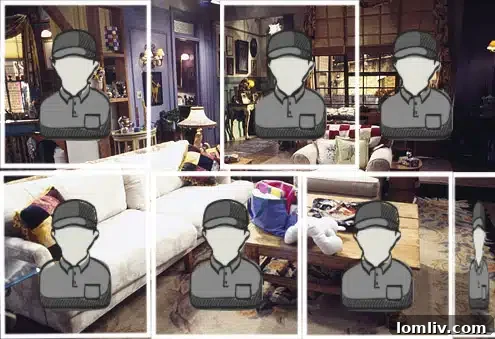
Monica and Rachel’s famously spacious living room from “Friends,” for instance, could theoretically house six very short people and one extremely short, exceptionally skinny person in separate, makeshift units.
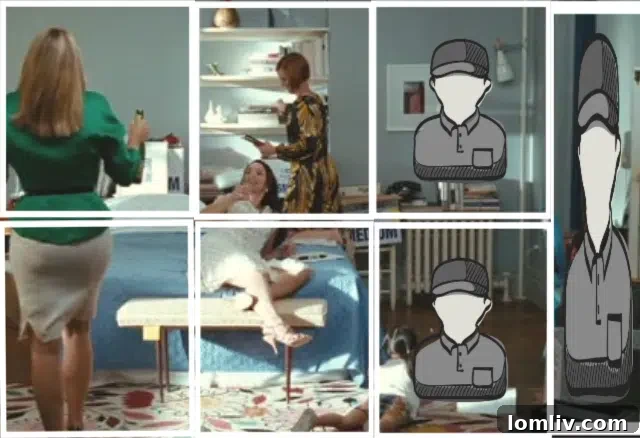
Carrie Bradshaw’s iconic bedroom from “Sex and the City” might just squeeze in most of a Miranda and the head of a Charlotte in one unit, three-quarters of a Charlotte in another, the top half of Samantha in a third, her bottom half in a fourth, plus two random short individuals, and one very tall person who’s condemned to only ever stand up.
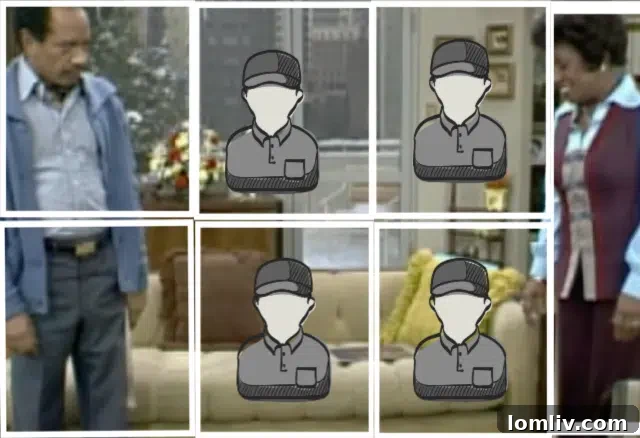
Even “The Jeffersons” luxurious living room wouldn’t be safe from this kind of subdivision.
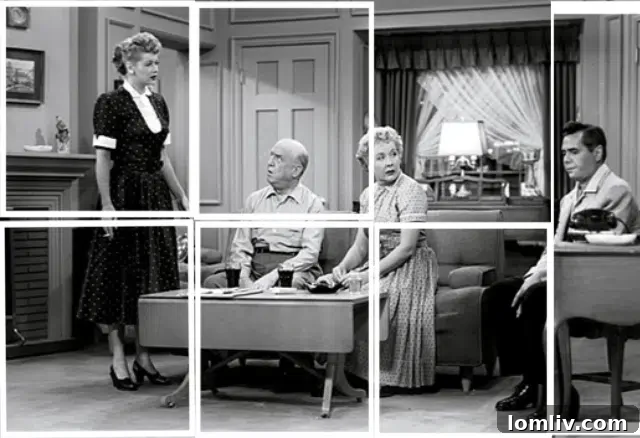
And poor Lucy Ricardo’s apartment from “I Love Lucy” would likely be transformed into a series of highly flammable, poorly ventilated cubicles. These lighthearted hypotheticals underscore the grim reality of what these illegal micro-apartments represent: not innovative living, but exploitation.
A Call for Action: Protecting Tenants and Upholding Standards
The bust of these illegal micro-apartments in Manhattan serves as a stark reminder of the urgent need for robust tenant protections, stricter enforcement of building codes, and a comprehensive approach to addressing the affordable housing crisis. While the lure of cheap rent is understandable in a city like New York, no one should have to compromise their safety, health, or dignity for a place to live. Such egregious violations of housing standards not only put individual tenants at risk but also undermine the integrity of the housing market and the well-being of the wider community.
It is imperative that city authorities remain vigilant, actively investigate suspicious housing arrangements, and impose severe penalties on landlords who exploit the desperate need for shelter. Furthermore, long-term solutions for affordable housing are critical to prevent such illicit operations from flourishing. This includes advocating for more accessible and legal housing options, providing resources for tenant education, and strengthening legal aid for those who fall victim to predatory practices. The goal should be to ensure that every resident of New York City, regardless of their income, has access to safe, habitable, and dignified living conditions. The challenges are immense, but the human cost of inaction is simply too high.