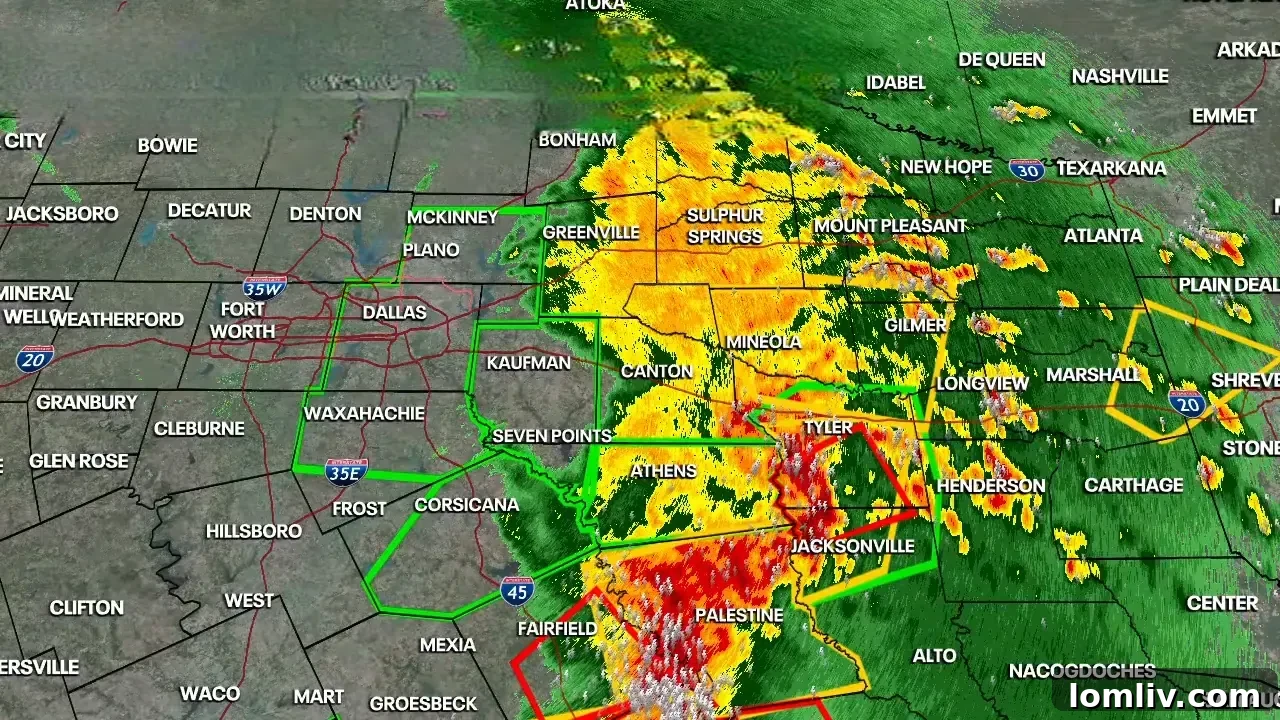
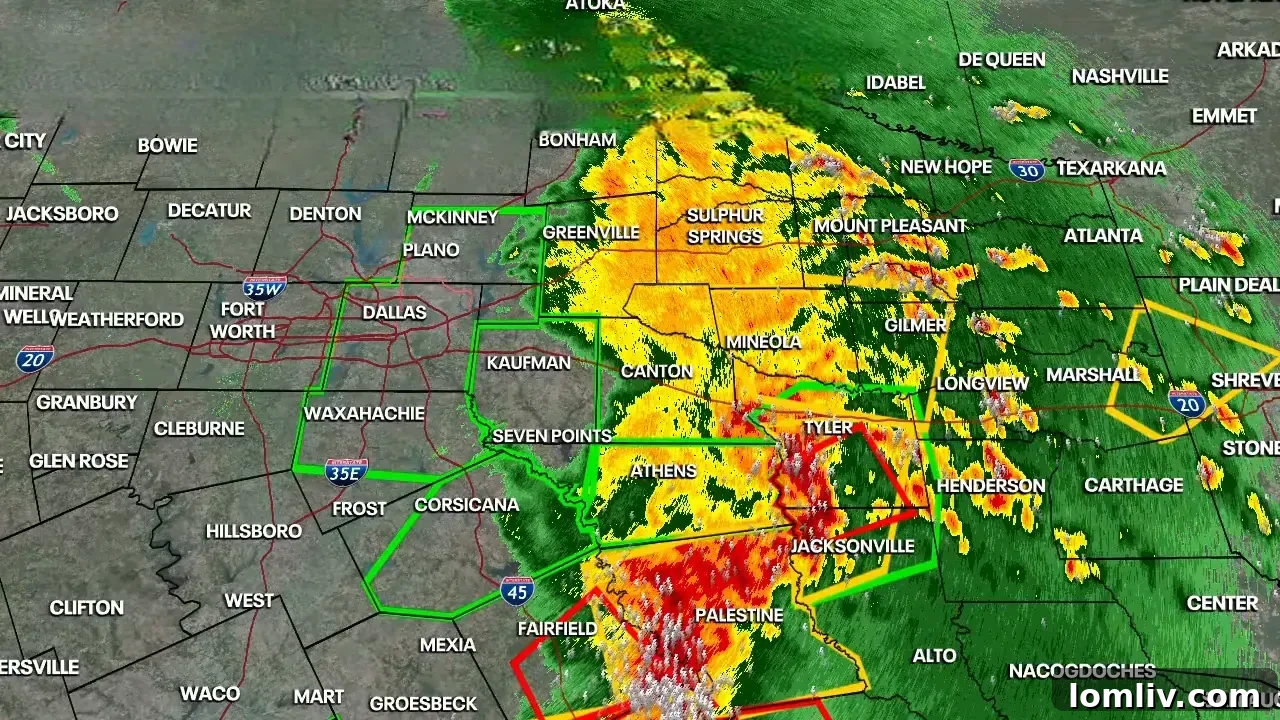
Dallas, Texas — The serene skies over North Texas abruptly gave way to a palpable sense of urgency recently, as residents across Anderson and Henderson counties were plunged into high alert. The National Weather Service (NWS) swiftly issued a **Tornado Warning**, a critical advisory that remained in effect until 2:00 p.m. on Tuesday. This wasn’t a routine weather alert; it was a direct response to sophisticated radar detecting clear signs of rotation within severe thunderstorms and corroborated by immediate reports of dangerous weather systems actively moving through the region. Local officials wasted no time in amplifying the NWS’s urgent message, imploring all residents in the path of the storm to take immediate and decisive life-saving actions.
Such a warning is far more serious than a “tornado watch,” which merely indicates conditions are favorable for tornadoes to develop. A **Tornado Warning** signifies an imminent threat: a tornado has either been sighted by trained spotters on the ground or has been strongly indicated by advanced weather radar. For communities in the historically active “Tornado Alley,” understanding the gravity of these warnings and reacting promptly is not just recommended, it’s absolutely crucial for ensuring safety and minimizing potential catastrophe. The speed at which these storms can evolve means every second counts, making pre-planned responses and up-to-date information invaluable.
Navigating the Immediate Threat: Understanding a Tornado Warning
When the National Weather Service, particularly its Fort Worth office, issues a tornado warning, it signals an immediate and severe danger. It means a severe thunderstorm has developed characteristics highly capable of producing a tornado, or that a tornado has already formed and is actively threatening populated areas. The recent alert for North Anderson County and southeastern Henderson County underscored a specific, rapidly evolving peril: a potent thunderstorm, initially detected near Frankston, approximately 18 miles southeast of Athens, was tracking aggressively northeastward at a speed of 50 mph. Such high-speed movement drastically reduces the window for preparation, making an existing emergency plan indispensable.
The NWS utilizes cutting-edge radar technology to continuously monitor atmospheric conditions, meticulously scanning for the telltale signatures of potential tornadoes, such as mesocyclones—rotating updrafts within a supercell thunderstorm. When these indicators align with ground-based observations or eyewitness accounts, a warning is issued with paramount urgency. This vital information is then disseminated through a multi-faceted network, including local broadcast media, comprehensive emergency alert systems, and the ever-reliable NOAA Weather Radio, ensuring that residents have every opportunity to receive timely updates and take shelter.
Essential Safety Protocols During a Tornado Warning
The sound of a tornado siren or the notification of a warning can be unsettling, but immediate and informed action can dramatically mitigate risks. The National Weather Service provides clear, concise guidelines designed to maximize personal safety:
- Seek Robust Shelter Without Delay: Your highest priority is to move to the lowest, most interior part of a sturdy building. This ideal location could be a basement, a purpose-built storm cellar, or an interior room on the ground floor. The objective is to position as many walls as possible between yourself and the exterior elements of the storm.
- Maintain Distance from Windows: Windows are inherently vulnerable to the extreme pressures of high winds and flying debris. Shards of glass, once shattered, transform into dangerous projectiles. Consequently, it is imperative to stay well away from all windows, exterior doors, and any outer walls.
- Utilize Interior Rooms for Maximum Protection: In residences that lack basements or storm shelters, an interior room such as a small bathroom, a closet, or a central hallway on the lowest level offers the best available protection. Once inside, take cover under a heavy piece of furniture, like a robust table, and protect your head and neck with your arms, a blanket, or a mattress.
- Shield Against Debris: Even within a structurally sound building, the danger of flying debris is significant. If accessible, wear a helmet; otherwise, use blankets, pillows, or even mattresses to create an additional layer of protection over your head and body.
- Stay Tuned to Official Information Channels: Continuously monitor local news broadcasts, activate an emergency radio, or tune into NOAA Weather Radio. These official sources provide real-time updates regarding the storm’s trajectory, the expected duration of the warning, and, crucially, when it has been officially deemed safe to exit your shelter.
For individuals residing in **mobile homes, recreational vehicles, or other temporary structures**, the level of danger is extraordinarily high. These types of dwellings offer negligible protection against the destructive forces unleashed by a tornado. The NWS emphatically advises these residents to evacuate immediately upon receiving a warning and to seek robust shelter in a designated community storm shelter, a sturdy public building, or the site-built home of a trusted neighbor or friend. Critically, identifying and planning your evacuation route and destination *well in advance* of any warning being issued is a non-negotiable step.
A Unified Front: Emergency Management and First Responders
Behind every effective tornado warning is an intricate web of dedicated professionals and community organizations working in concert to safeguard lives and property. In the specific context of Anderson and Henderson counties, local emergency management teams were immediately activated. Their multifaceted responsibilities extend far beyond the mere dissemination of warnings; they encompass the strategic coordination of vital resources, proactive preparation for potential widespread damage, and the precise staging of first responders to ensure swift and efficient deployment.
Sheriff’s deputies, fire departments, and emergency medical services (EMS) personnel were placed on immediate standby, poised to respond with alacrity to any reported incidents of damage or injury. This pre-emptive positioning is particularly critical in more rural areas, where typical response times might otherwise be extended. Their organized presence provides a crucial layer of reassurance to the affected populace, instilling confidence that professional assistance is not only prepared but strategically located to render aid as soon as it is safe to do so. This exemplary, coordinated effort among federal weather agencies, state-level emergency services, and local first responders forms the bedrock of robust disaster preparedness and response throughout Texas.
Texas’s Legacy: Life in Tornado Alley
Texas holds a prominent and often challenging position within “Tornado Alley,” a geographically defined corridor that stretches from the Lone Star State northward through the vast expanse of the Great Plains. This unique meteorological setting means Texas experiences an elevated frequency of tornadoes, with the spring months typically marking the peak of this severe weather season. The precise atmospheric conditions that foster such intense storm development involve the volatile convergence of warm, moisture-laden air originating from the Gulf of Mexico, dry air masses descending from the arid desert Southwest, and cooler, denser air fronts pushing in from the Rocky Mountains. This volatile mix creates an inherently unstable environment, highly conducive to the formation of powerful, tornado-producing thunderstorms.
Throughout its rich and often tempestuous history, Texas has borne witness to numerous devastating tornado events, tragically resulting in significant loss of life and extensive property damage. These historical precedents serve as stark reminders of the immense power of nature and emphatically underscore the indispensable value of the NWS’s continuous advancements in forecasting and warning capabilities. Over recent decades, these technological and methodological improvements have led to significantly earlier warnings and more precise predictions of tornado paths. However, it is crucial to recognize that technological sophistication alone is insufficient; public awareness, coupled with unwavering adherence to established safety protocols, remains the single most critical factor in mitigating casualties and saving lives when facing the fury of a tornado.
Beyond the Roar: Navigating the Aftermath of a Tornado Warning
Even once a tornado warning has officially expired, the period immediately following a severe storm can present a new array of latent dangers. It is absolutely imperative to await official clearance from emergency services before venturing outdoors or assessing your surroundings. Rushing out prematurely can expose you to unforeseen hazards. Some of the most immediate and critical post-storm dangers include:
- Downed Power Lines: Always assume any downed power line is live and thus extremely dangerous. Maintain a safe distance and immediately report its location to your local utility company.
- Potential Gas Leaks: The distinct odor of natural gas or an audible hissing sound strongly indicates a gas leak. If detected, evacuate the area immediately and contact your gas provider. Do not attempt to locate or repair the source yourself.
- Compromised Structural Integrity: Exercise extreme caution around any damaged buildings or structures. They may have weakened foundations, unstable walls, or loose debris that could collapse unexpectedly.
- Hidden Injuries: Prioritize checking on all family members and close neighbors. Provide basic first aid if it is safe for you to do so, and promptly contact professional medical assistance when necessary.
Should your property have sustained any damage, diligently document it with comprehensive photographs and videos. This detailed record will be invaluable for insurance claims. Additionally, report any significant damage to your local emergency management agencies or the sheriff’s department. This critical information assists authorities in accurately assessing the broader scale of the disaster and effectively allocating much-needed recovery resources. The process of community recovery is frequently a long-term endeavor, necessitating the collaborative efforts of local government, non-profit organizations, and dedicated volunteers working in concert to rebuild and provide essential support to affected residents.
Proactive Preparedness: A Continuous Commitment
While an immediate and effective response during a tornado warning is paramount, true and comprehensive tornado safety is cultivated long before any storm clouds even begin to gather. Proactive preparedness is not a one-time task but rather a continuous, lifelong commitment that every resident in severe weather-prone regions, especially Texans, should wholeheartedly embrace:
- Develop a Comprehensive Family Emergency Plan: Engage all household members in a discussion about where to seek shelter, the specific actions to take, and how to effectively communicate if a tornado strikes and separates you. Designate both an internal safe meeting point within your home and an external one in your neighborhood.
- Assemble a Well-Stocked Emergency Kit: Prepare a readily accessible kit containing essential items such as non-perishable food, an ample supply of water (at least one gallon per person per day for a minimum of three days), a battery-powered or hand-crank radio, reliable flashlights, spare batteries for all devices, a fully equipped first-aid kit, a whistle for signaling, dust masks, moist towelettes, durable garbage bags with plastic ties for sanitation, a wrench or pliers to turn off utilities, a manual can opener, up-to-date local maps, and copies of important personal documents. Remember to include specialized items for infants, elderly family members, or pets.
- Prioritize Staying Informed: Invest in a NOAA Weather Radio equipped with a tone alert function, which automatically activates upon receiving warnings. Download reputable weather applications on your smartphone that provide location-specific alerts and real-time updates. Make it a habit to pay close attention to routine daily weather forecasts.
- Familiarize Yourself with Local Alert Systems: Understand the specific methods your community employs to issue warnings, such as outdoor sirens, reverse 911 calls, or text message alert systems. Knowing these will ensure you receive critical information promptly.
- Conduct Regular Practice Drills: Periodically practice your family’s tornado drill, particularly involving children. This consistent practice ensures that every member of the household knows precisely what actions to take and where to go when a tornado warning is officially issued.
Conclusion: Sustained Vigilance in the Face of Nature’s Unpredictability
The recent tornado warning impacting Anderson and Henderson counties serves as a potent and unequivocal reminder of the unpredictable and formidable power of nature. While, fortunately, the immediate threat passed without confirmed tornado touchdowns, the incident profoundly underscores the indispensable role played by the National Weather Service in providing timely, life-saving warnings. Furthermore, it highlights the paramount importance of public awareness and proactive preparedness within communities. Texas residents, particularly those situated within severe weather-prone regions, must maintain an unwavering state of vigilance, conscientiously take all issued warnings with the utmost seriousness, and consistently ensure that their family emergency plans are both current and thoroughly understood by everyone.
By collectively embracing an understanding of potential dangers, adhering diligently to established safety protocols, and being adequately prepared with essential resources, communities can substantially bolster their resilience against the destructive force of severe weather events. Ultimately, the safety and well-being of every individual, alongside the collective strength and recovery capabilities of the community, are intrinsically dependent upon shared responsibility and a commitment to proactive, informed measures. Stay informed, stay prepared, and above all, stay safe.