Navigating Free Speech and Community Standards: The Unfolding Yard Sign Wars
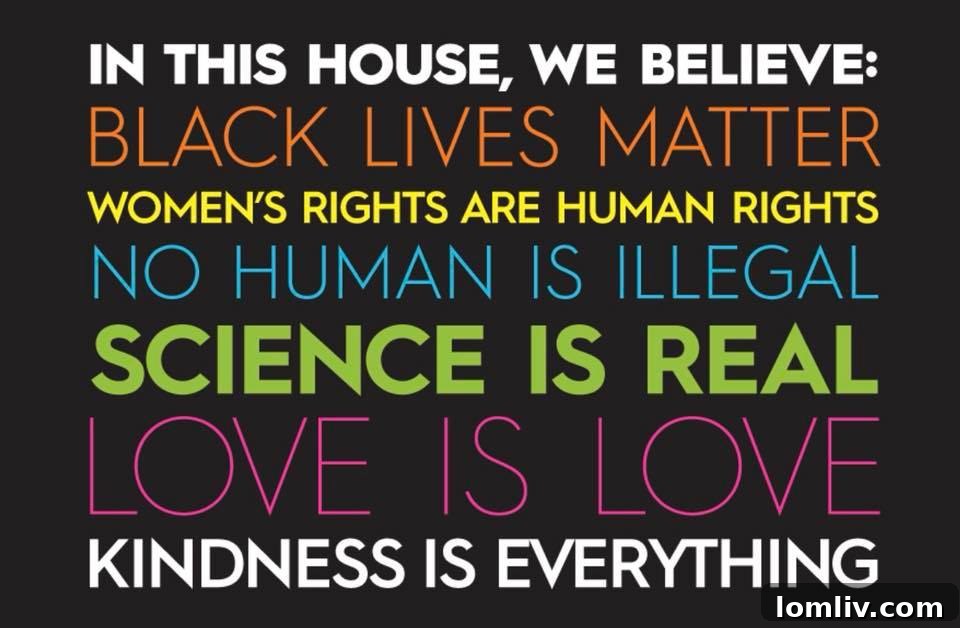
In a dynamic display of local activism and community tension, a compelling “sign war” has erupted in at least one East Dallas neighborhood, Enclave at Grove Hill. At the heart of this dispute is a yard sign, prominently displayed by a resident, which has sparked considerable debate, drawing accusations of being “offensive” from some neighbors. The sign stands in front of the home of Adam Bazaldua, a local political activist, candidate, and culinary arts educator, known for his staunch belief in freedom of speech, particularly during election cycles.
Despite objections and official violation notices from his Homeowners Association (HOA), Adam remains resolute, stating his intention to keep the sign displayed until after the upcoming election. His stance underscores a growing national conversation about the boundaries of free expression within the often-restrictive covenants of community living.
The Heart of the Dispute: A Sign for Kindness and Equality
Adam recounts the sequence of events with a mix of frustration and bewilderment. “This sign sits proudly in our family’s yard, displayed next to my daughter’s school sign and behind a Beto sign,” he shared. “This week, we received an HOA violation, citing that our sign is ‘offensive’ according to a neighbor who lodged a complaint. Is it not ironic, then, that the complainant has a Cruz sign in her yard?” he questioned, highlighting what he perceives as a clear double standard.
He further expressed his disbelief on social media, stating, “I’m offended by the fact that anyone can find these statements offensive! The Covenants and Restrictions clearly state that Political Signs can be erected to support candidates, political parties, sponsorships, political issues or proposals. Yet, our HOA president claims these aren’t the ‘right kind’ of political issues to be protected by that language and deems it offensive.” This raises critical questions about the interpretation of HOA rules and the arbitrary nature of what is considered acceptable political discourse within a community.
Beyond Politics: A Call for Societal Kindness
The incident in Enclave at Grove Hill transcends a mere political disagreement; it delves into the deeper societal fabric of kindness and respect. Adam articulated his concerns, reflecting on the broader cultural shifts he observes. “I just think it’s sad how it appears we have gone backwards lately in society,” he confided. “The current political climate has established a standard of division and an entitlement to not be kind to those we disagree with. This sign directly addresses that sentiment. There is absolutely nothing offensive about promoting equality and kindness.”
His willingness to compromise, agreeing to remove the sign post-election, was still not enough to placate his critics. “Apparently, me exercising my First Amendment right offends some of my neighbors,” he noted, underscoring the profound challenges faced when individual liberties clash with community sensibilities and perceived comfort levels.
Precedents and Power Plays: The Hamilton, Texas Incident
This East Dallas conflict is not an isolated incident but rather a microcosm of larger, often heated, battles over political expression. Earlier this month, a similar, more confrontational event unfolded in Hamilton, Texas, approximately 100 miles southwest of Fort Worth. There, a woman reported that Texas Agriculture Commissioner Sid Miller allegedly orchestrated the forcible removal of a political sign from her yard by local police.
The sign in question featured a striking image: the GOP elephant logo with its trunk humorously (or controversially, depending on perspective) positioned up the dress of a female figure, accompanied by the word “Help” and the phrase “Your vote matters.” In the background of her yard were campaign signs for prominent Democratic candidates, including Lupe Valdez, Beto O’Rourke, Julie Oliver, and Miller’s challenger, Kim Olson.
During the intense period of the Kavanaugh hearings, Commissioner Miller took to his Facebook page, mistakenly asserting a connection between the sign and Judge Kavanaugh’s family. He wrote, “This is in Hamilton, Texas and is supposed to be Judge Kavanaugh’s young daughter. Notice my opponent’s sign in the background. The Democrat sleaze knows NO bounds!”
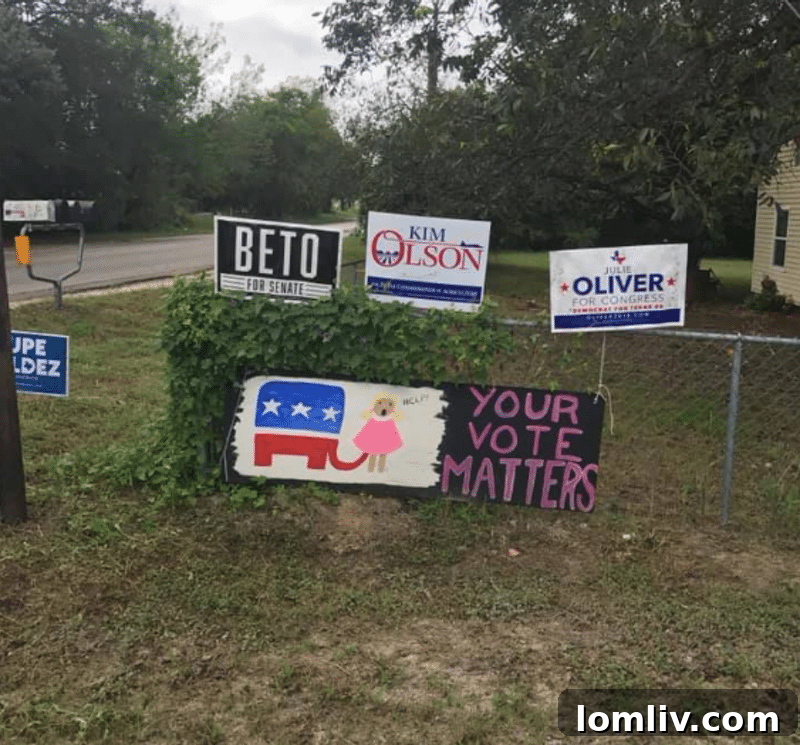
However, the sign’s creator, Marian Stanford, quickly clarified that her artwork had no association with Judge Kavanaugh’s daughter. She stated that the sign was inspired by a Washington Post cartoon, a commentary on broader political issues rather than a personal attack. Despite her explanation, the Hamilton police reportedly confiscated her sign, raising significant concerns about the proper role of law enforcement in disputes over political expression on private property. Such actions echo uncomfortable parallels to incidents where local officials or political rivals attempt to suppress opposing viewpoints, reminiscent of past campaigns where opponents strong-armed businesses into removing signs.
The Legal Landscape: HOA Covenants vs. Constitutional Rights
The clash between individual freedom of speech and HOA regulations is a complex legal terrain. While HOAs have the authority to establish and enforce covenants to maintain community aesthetics and order, these powers are not absolute. They must operate within the confines of state and federal laws, which often protect certain forms of expression, particularly political speech.
Many states, including Texas, have laws that limit an HOA’s ability to restrict political signs, especially during election periods. These laws typically aim to balance the community’s interest in uniformity with a homeowner’s constitutional right to free expression. The interpretation of “offensive” in an HOA context can be highly subjective and, if challenged, may not hold up if it infringes on protected speech that doesn’t violate specific, non-discriminatory, and clearly defined rules (e.g., related to size, placement, or structural integrity).
HOAs must be careful not to implement or enforce rules that are vague, arbitrary, or discriminatory, particularly when applied to political content. The “right kind” of political issue, as mentioned by Adam’s HOA president, could be perceived as a form of content-based discrimination, which is typically viewed with skepticism by courts. Generally, an HOA can regulate the *manner* of speech (e.g., sign size, duration of display) but not the *content* of the speech itself, especially if it’s political in nature and not inciting violence or defamation.
Community Cohesion in a Polarized Climate
Beyond the legal battles, these yard sign disputes highlight a deeper societal challenge: maintaining community cohesion amidst intense political polarization. When neighbors become adversaries over differing viewpoints, the fabric of local communities can fray. These incidents often transform personal property into battlegrounds for national ideologies, impacting everyday interactions and fostering an environment of mistrust rather than collaboration.
The “sign wars” are a stark reminder that political divides extend far beyond election campaigns, seeping into our homes, our yards, and our relationships with those who live next door. They underscore the urgent need for communities to foster dialogue, encourage empathy, and reinforce the importance of respectful disagreement. Homeowners and HOAs alike must find ways to navigate these tensions, recognizing that a healthy community values both order and the vibrant exchange of ideas.
Finding Common Ground: Pathways to Resolution
For homeowners, understanding their rights and their HOA’s bylaws is crucial. Engaging in respectful dialogue, seeking mediation, or, if necessary, exploring legal avenues are all potential pathways to resolution. For HOAs, transparency, consistency in rule enforcement, and a clear understanding of legal limitations are paramount. Developing guidelines that protect property values and community aesthetics while respecting freedom of expression requires careful consideration and an inclusive approach.
Perhaps the most important takeaway from these situations is the enduring value of kindness and mutual respect. As Adam Bazaldua’s sign suggests, promoting equality and kindness should not be an offensive act. In an era marked by division, the simple act of extending courtesy and acknowledging the diverse perspectives within a community can be a powerful antidote to discord.
As early voting gets underway, these “sign wars” serve as a potent reminder of the passions ignited by elections and the delicate balance between individual rights and collective living. Are political signs causing problems in your neighborhood? How do you navigate these issues in your community or as you show listings to potential homeowners? These questions resonate deeply, urging us to reflect on how we can collectively foster environments where free speech thrives alongside neighborly harmony.