

The Lone Star State continues to make headlines across both education and real estate sectors, with Dallas Independent School District (ISD) high schools earning national acclaim and the Texas housing market revealing compelling trends for buyers and sellers alike. This comprehensive roundup delves into the recent achievements of Dallas ISD’s standout institutions, provides an insightful look into the latest Texas Homebuyers and Sellers Report, and examines the crucial metric of housing inventory, offering a panoramic view of the state’s dynamic landscape. Whether you’re a prospective homeowner, a seasoned investor, or simply interested in the economic pulse of Texas, these updates provide valuable context for understanding current trends and future outlooks.
Dallas ISD High Schools Soar: Nationally Recognized for Academic Excellence
The academic prowess of the Dallas Independent School District has once again been recognized on a national scale, with two of its highly distinguished magnet schools, the School of Science and Engineering (SEM) and the School for the Talented and Gifted (TAG), securing coveted spots within the prestigious top 20 of U.S. News & World Report‘s annual rankings of the Best High Schools. This esteemed recognition highlights the district’s unwavering commitment to delivering exceptional educational opportunities that rigorously prepare students for future success in higher education, STEM fields, and diverse professional careers.
Both SEM and TAG are conveniently located at the renowned Yvonne A. Ewell Townview Center, a central hub of academic excellence in Dallas. In the most recent rankings, SEM achieved an impressive 12th place nationally, while TAG closely followed at 16th. This dual achievement is a significant testament to the quality of instruction, the rigor of the curriculum, and the supportive, intellectually stimulating learning environments fostered within Dallas ISD. These schools are designed to challenge and inspire, cultivating critical thinking, innovation, and leadership among their students.
Remarkably, Texas emerged as a national leader in these rankings, boasting three schools within the top 20 across the entire United States. Two of these highly-ranked institutions proudly belong to Dallas ISD, underscoring the district’s disproportionate impact on national educational standards. This strong showing positions Dallas and its schools as beacons of academic achievement, attracting families who prioritize top-tier education and seeking an environment where their children can thrive academically and personally.
Beyond the national spotlight, Dallas ISD’s excellence resonates strongly within the state. The district celebrated an outstanding five schools among the top 20 in Texas. These include SEM (ranked 1st in Texas), TAG (2nd), Irma Rangel Young Women’s Leadership School (6th), Booker T. Washington High School for the Performing and Visual Arts (14th), and Judge Barefoot Sanders Law Magnet (17th). Such widespread recognition across diverse academic and artistic specializations demonstrates the impressive breadth and depth of quality programs available throughout the district, catering to a wide array of student interests, talents, and career aspirations. From advanced scientific research to groundbreaking artistic expression and rigorous legal studies, Dallas ISD offers pathways to success for every student.
Tiffany Huitt, executive director of magnet schools in Dallas ISD and a former principal of SEM, articulated the district’s guiding philosophy, stating, “It speaks to the quality of the programming that we have and offer in Dallas ISD. We’re continuously researching the best way to implement learning initiatives.” Her statement underscores a proactive and forward-thinking approach to education, where continuous improvement, innovative teaching methodologies, and data-driven strategies are paramount. This dedication ensures that Dallas ISD remains at the forefront of educational innovation, consistently adapting to provide students with the best possible learning experiences that are relevant to a rapidly changing world.
Huitt further emphasized the collaborative spirit driving these successes: “You have a community of people working really hard who want the best for these students, and what you see is the result of that in the rankings every single year.” This highlights the collective effort and profound commitment of educators, administrators, parents, and community stakeholders who are deeply invested in student outcomes. The consistent high rankings are not merely a fortunate occurrence but a direct consequence of sustained dedication, a shared vision for educational excellence, and a supportive ecosystem that empowers students to reach their full potential.
Moreover, the district’s commitment to improvement extends far beyond its highest-ranked institutions. Huitt noted that even schools not making the coveted top lists have shown significant year-over-year progress. “It’s not just academically, but programmatically, you can look across the rankings and see a number of schools, while they may not be in the top 20, they are improving in their rankings from the year prior,” she explained. This holistic approach to educational development ensures that quality is enhancing across the board, benefiting a broader spectrum of students and strengthening the entire Dallas ISD system. The excellence and continuous improvement of Dallas ISD schools are not just a point of pride for the community but also a significant factor contributing to the attractiveness of Dallas as a residential destination, often influencing real estate decisions for families seeking top-tier educational opportunities.
Source: Dallas ISD
Texas Real Estate Insights: Unpacking the Latest Homebuyers and Sellers Report
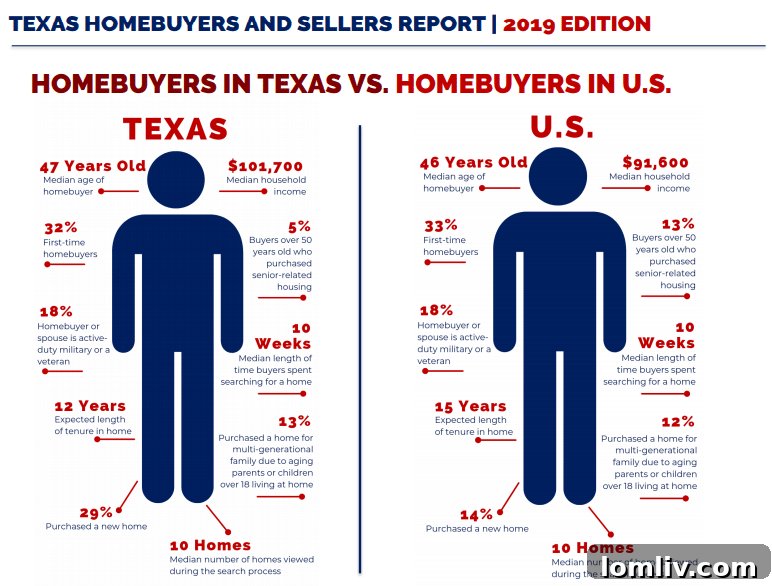
The dynamic landscape of the Texas housing market is continually shaped by the decisions and demographics of its residents. A comprehensive analysis of these trends is provided by the annual 2019 Texas Homebuyers and Sellers Report, released by Texas Realtors. This indispensable report offers a deep dive into the behaviors and perceptions of real estate consumers across the state, shedding light on critical factors that drive the market, including income levels, age demographics, and overall sentiment towards property ownership. For anyone looking to buy or sell property in Texas, understanding these underlying currents is essential for strategic planning.
One of the report’s key findings reveals a notable trend: the average Texas seller spends approximately 10 years in each home they purchase. This extended period of homeownership suggests a degree of stability and long-term commitment among Texas residents, potentially reflecting robust economic conditions that encourage settlement, or perhaps a natural progression of life stages such as raising families and establishing roots. Understanding this tenure is crucial for forecasting market supply and demand, as it indicates when homes are likely to re-enter the market and contributes to the overall stability of the housing sector.
When homeowners decide to sell, their motivations are diverse, yet certain patterns emerge. The primary driver for selling, according to the report, is the desire to be closer to friends and family, accounting for 22 percent of sellers. This underscores the strong community and family ties prevalent in Texas, suggesting that lifestyle and personal connections often outweigh purely financial considerations in major life decisions. Following closely, 17 percent of sellers cited job relocation as their reason, highlighting the impact of Texas’s active and growing job market and its role in population mobility. Other factors, such as changing family size, the desire for a larger or smaller home, or retirement, also play significant roles in sellers’ decisions, contributing to a fluid and responsive market dynamic.
From a financial perspective, the report offers compelling data that speaks volumes about the strength of the Texas market. The median sales price for homes sold was an impressive $70,000 more than what sellers originally paid for their properties. This substantial appreciation reinforces previous reports indicating that Texas homeowners enjoy some of the highest levels of home equity in the nation. High home equity not only provides significant financial security for sellers but also fuels market activity by enabling them to reinvest in new properties, upgrade their living situations, or utilize their equity for other financial endeavors. This healthy equity growth is a strong indicator of the Texas real estate market’s resilience, desirability, and long-term investment potential.
The speed of transactions also speaks volumes about prevailing market conditions. On average, homes in Texas remained on the market for approximately one month. This relatively swift sales cycle signals a competitive environment where demand often meets or exceeds supply, substantially benefiting sellers with quicker transactions and often multiple offers. For buyers, it suggests the need for preparedness, prompt decision-making, and often pre-approved financing in a fast-paced market where desirable properties move quickly.
The report also provides vital insights into the buyer demographic, painting a clear picture of who is purchasing homes in Texas. Nearly a third of all buyers were first-time homebuyers, with a median age of 32. This statistic is particularly encouraging, as a strong presence of first-time buyers indicates a healthy and accessible market for new entrants, crucial for sustained growth and a dynamic housing ladder. The overall median age of homebuyers in Texas was 47, suggesting a balanced mix of younger, first-time buyers and more experienced, repeat buyers, each with distinct needs, preferences, and financial capabilities. Understanding these age groups helps real estate professionals tailor their services and marketing strategies effectively to meet diverse client needs.
Furthermore, the report details the composition of Texas homebuyers, offering a glimpse into household formation trends. Married couples constitute the largest segment, at 68 percent, reflecting traditional family structures dominating homeownership in the state. Single females represent 15 percent of buyers, highlighting a growing trend of independent women investing in real estate and achieving financial autonomy. Single males account for 9 percent, showcasing another important segment of the market. These detailed demographic breakdowns are essential for understanding current and predicting future housing demands, ensuring that the Texas real estate market remains responsive and adaptable to its diverse and evolving population.
Source: Texas Homebuyers and Sellers Report
Understanding Texas Housing Inventory: A Key Market Indicator
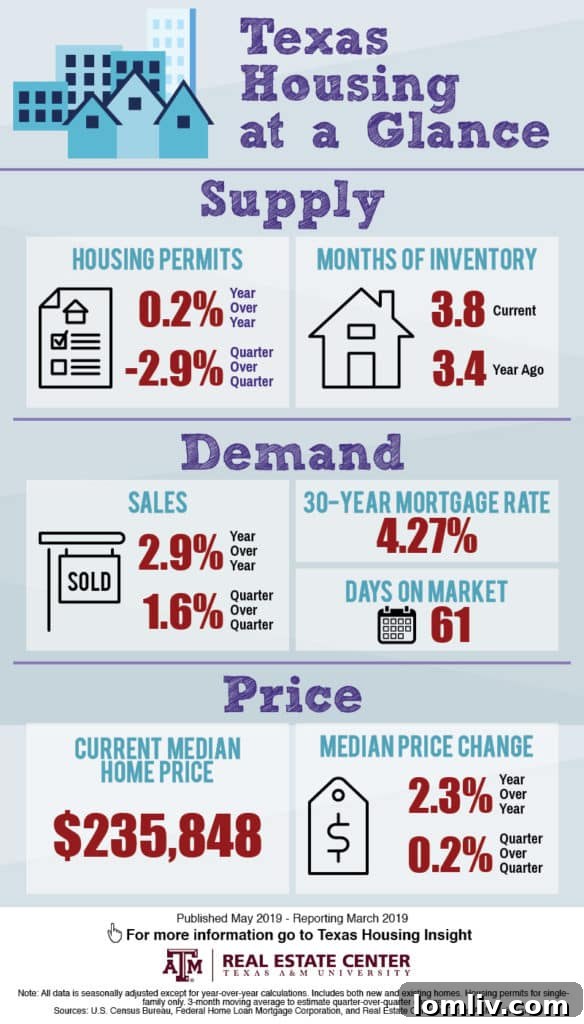
Beyond sales prices and buyer demographics, a crucial metric for understanding the health and future direction of any real estate market is the “months of inventory.” This figure represents the estimated time it would take for all currently available homes on the market to be sold, given the average rate of sales from the previous 12 months. A balanced market, where neither buyers nor sellers have a significant advantage, is typically characterized by approximately 6 to 6.5 months of inventory. Anything significantly below this often indicates a robust seller’s market, where demand outstrips supply, leading to potentially higher prices, increased competition, and quicker sales. Conversely, a figure significantly above this suggests a buyer’s market, with more homes available than active buyers, which can lead to price reductions and longer selling times for properties.
According to the latest insights available at the time of the report, the months of inventory in the Texas housing market have been observed to be “inching up” from the previous year. This subtle yet significant shift suggests a gradual rebalancing of supply and demand dynamics within the state. While the specific numerical figure isn’t detailed in the original snippet, the trend of increasing inventory indicates that more homes are becoming available for sale relative to the pace at which they are being purchased. This positive shift could be influenced by several factors, including a healthy increase in new home construction across urban and suburban areas, more homeowners deciding to list their properties due to improved equity or changing life circumstances, or a slight moderation in buyer demand, perhaps due to factors such as rising interest rates or evolving economic conditions.
For prospective buyers, an uptick in inventory generally translates to more choices and potentially more negotiation power. It allows for a less rushed decision-making process, enabling them to thoroughly evaluate properties and find a home that better fits their specific needs without the intense competition often seen in very low-inventory markets. This can lead to a more satisfactory and less stressful purchasing experience. For sellers, while a slight increase in inventory doesn’t necessarily signal a downturn, it does imply a need for more competitive pricing, strategic marketing, and well-staged properties to stand out from the growing pool of listings. It transitions the market from an extreme seller’s advantage to a more moderately paced and competitive environment.
Monitoring months of inventory is vital for real estate professionals, policymakers, and potential homeowners alike. It provides a forward-looking indicator of market trends, helping all stakeholders to make informed decisions regarding investments, development, and personal housing choices. A healthy and stable level of inventory ensures market liquidity and accessibility, preventing extreme price fluctuations and fostering sustainable growth within the housing sector. The image provided visually supports this crucial trend, depicting the movement in housing inventory, which is a key component in assessing the overall vitality, stability, and future trajectory of the Texas real estate sector. This careful observation of supply dynamics, combined with detailed insights into buyer and seller behavior, paints a comprehensive and nuanced picture of Texas’s ever-evolving and robust housing market.