The year 2020 presented unprecedented challenges across global industries, yet some sectors, particularly those leveraging digital innovation, demonstrated remarkable resilience and even significant growth. Amidst the economic uncertainty spurred by the COVID-19 pandemic, businesses like e-commerce giants, cloud-computing providers, and essential supermarkets experienced an accelerated shift in consumer behavior, positioning them for sustained success. In this evolving landscape, Opendoor, a pioneer in the proptech space, emerged not just as a survivor but as a thriving force, fundamentally redefining how homes are bought and sold.
Opendoor’s ascent was punctuated by a landmark moment: its official unveiling of a substantial $4.8 billion initial public offering (IPO), realized through a merger with Social Capital Hedosophia Holdings Corp. II. This strategic move signaled a profound validation for the iBuyer model and underscored the growing investor confidence in technology-driven real estate solutions. Since its inception in San Francisco in 2014, Opendoor has diligently built a reputation for efficiency and convenience, processing an impressive 600,000 requested home offers and establishing itself as a leader in the digital transformation of real estate transactions.
Revolutionizing Home Transactions: Opendoor’s Instant Offer Model Transforms the Market
At the core of Opendoor’s innovation is its instant-offer program, a streamlined approach to home buying and selling that bypasses many of the traditional market’s pain points. This model is readily available across Dallas-Fort Worth and over 20 other major metropolitan areas, offering unparalleled convenience to homeowners. From its operational hub in Dallas’s Mockingbird Station office, Opendoor has successfully facilitated the sale of more than 6,000 homes for customers in the region, demonstrating its profound local impact. Beyond D-FW, the company boasts a robust presence across Texas, with additional offices strategically located in Austin, Houston, and San Antonio, cementing its role as a key player in the state’s dynamic housing market.
Opendoor’s influence extends beyond individual transactions. The company actively contributes to local economies, proudly stating on its website that it has injected over $75 million into the D-FW small-business economy since 2015. This commitment highlights how proptech companies can create broader economic benefits through their operations, including utilizing local contractors for home repairs and services. The backdrop for Opendoor’s success has been a remarkably buoyant housing market, particularly in North Texas and nationwide. Fueled by historically low-interest mortgage rates, the demand for existing homes has remained robust, providing fertile ground for Opendoor’s rapid growth.
Strategic Vision: Unpacking Opendoor’s Monumental IPO and Market Outlook
While an Opendoor spokeswoman noted the company’s inability to comment directly before the merger, insights into the strategic rationale behind the IPO were eloquently provided by Social Capital CEO Chamath Palihapitiya. In a compelling appearance on CNBC’s Squawk Box, Palihapitiya outlined five critical factors that not only justified the IPO but also painted a clear picture of Opendoor’s long-term growth potential within the evolving real estate landscape:
- Constrained Supply in Housing: A persistent lack of resale inventory, coupled with an insufficient expansion of new-home construction, has created a seller’s market characterized by high demand and limited options. Opendoor’s ability to quickly acquire and refresh homes helps to alleviate some of this pressure, offering sellers a guaranteed exit and potentially adding to available inventory.
- Relocation Driven by Tax Policy: Increasing state taxes and the partial elimination of state and local tax (SALT) deductions have prompted many homeowners to reconsider their residency. This trend fuels relocation decisions, and Opendoor offers a swift, predictable solution for those looking to sell their current homes quickly before moving.
- Acceleration of Remote Work Trends: The dramatic shift to remote work models has profoundly impacted housing preferences. Individuals and families are now re-evaluating their living situations, seeking more space, different geographies, or improved amenities. This acceleration of work-from-home culture drives greater mobility, making Opendoor’s streamlined selling process particularly appealing.
- Millennial Entry into the Housing Market: A massive demographic wave of approximately 75 million millennials is actively entering the housing market, representing a significant and sustained demand for homeownership. This generation, often digital-native, is more inclined to embrace technology-driven solutions like Opendoor, valuing convenience and transparency.
- Sustained Low-Interest Rates: The Federal Reserve’s policy of maintaining near-zero interest rates for an extended period ensures that mortgage rates remain highly attractive. This affordability factor continues to stimulate buyer demand, ensuring a healthy market for Opendoor’s renovated homes.
My investment thesis in a nutshell…why $IPOB is merging with @Opendoor and helping bring this amazing company public. https://t.co/swYKGKzxMX
— Chamath Palihapitiya (@chamath) September 15, 2020
“This is a business very much proven and ready for prime time,” Palihapitiya asserted, underscoring the maturity and scalability of Opendoor’s model.
Opendoor’s operational strategy is refreshingly straightforward and incredibly effective: it positions itself as a crucial middleman in the real estate transaction, distinctly different from a traditional matchmaker. Instead of the cumbersome process of homeowners preparing their property for showings and navigating multiple potential buyers, they can simply visit Opendoor.com. Here, they are presented with clear options to obtain a competitive quote or an instant cash offer for their home. This direct approach empowers sellers, giving them certainty and control over their timeline. Opendoor then has the flexibility to either directly purchase the home or assist the seller in listing it on the open market through their network.
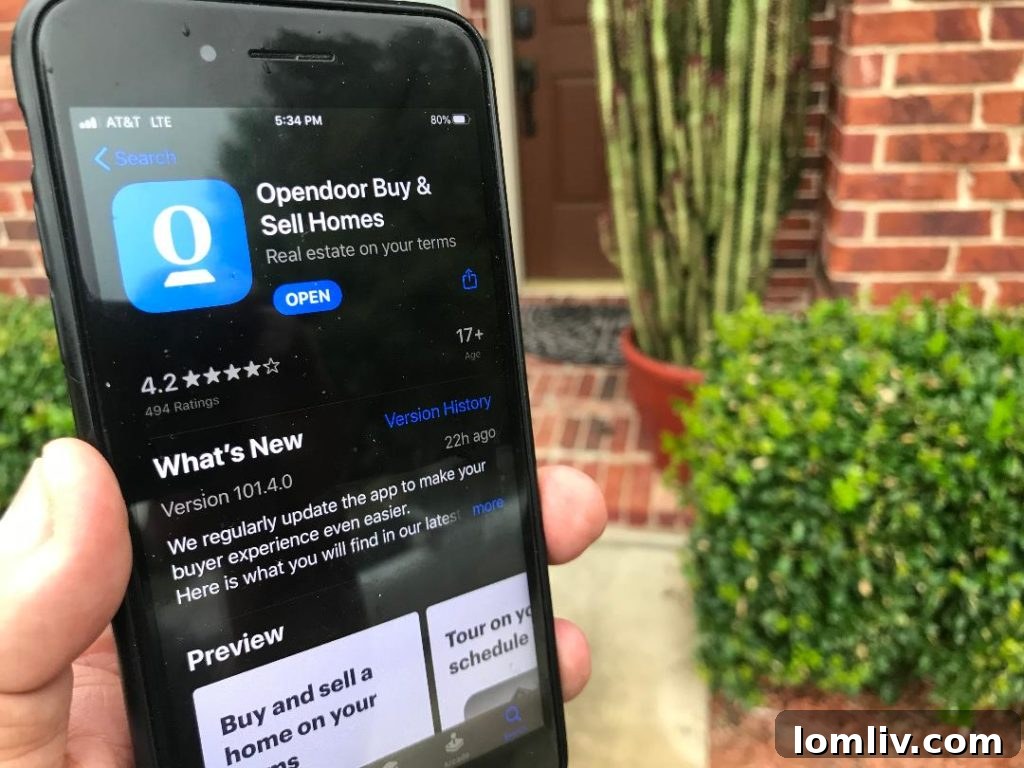
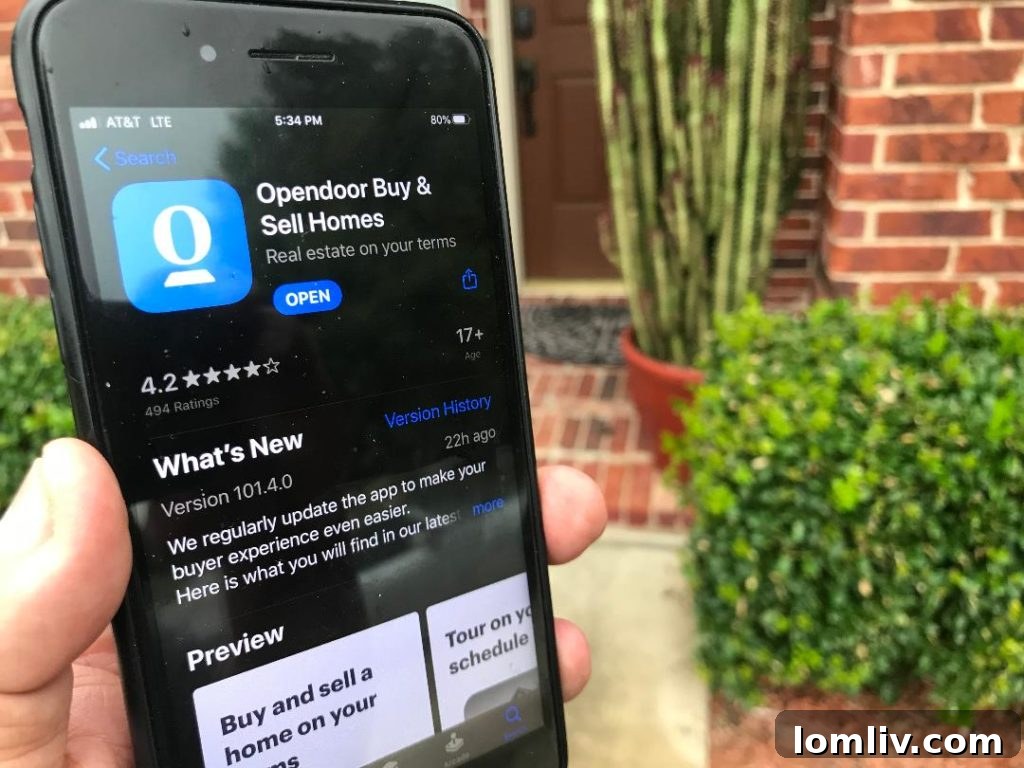
One of Opendoor’s most compelling propositions is its ability to manage and synchronize closing dates. This innovative feature helps homeowners avoid the common stresses and financial burdens associated with selling and buying simultaneously, such as the need for “double-moves” or the significant cost of “double-mortgages.” By streamlining this often-complex transition, Opendoor offers a truly seamless experience. Furthermore, in an era where health and safety are paramount, particularly post-COVID-19, Opendoor places a strong emphasis on adhering to proper safety guidelines for property tours and purchases. The company’s proprietary app facilitates scheduling private self-tours, allowing potential buyers to view properties at their convenience and comfort, further enhancing the digital-first experience.
After acquiring a home, Opendoor frequently undertakes necessary repairs or strategic upgrades to enhance its market appeal and value before re-listing it for sale. This process not only ensures that buyers are acquiring well-maintained properties but also contributes to neighborhood revitalization. Opendoor generates its revenue through a transparent 5 percent service fee charged to sellers, in addition to capitalizing on the price spread inherent in the home-selling transaction. This dual-pronged revenue model underscores its financial viability and strategic positioning in the market.
The sentiment from traditional real estate professionals often reflects a pragmatic understanding of Opendoor’s utility. Valli Sears-Jones, a seasoned real estate agent from Grand Prairie, Texas, affirms Opendoor’s value proposition for her agency and clients. “We operate out of the box, so we know not every client is going to be the same, not every transaction is the same,” she explains. “Opendoor, like all these other iBuyer [brokerages], help us out when our clients need to sell and sell fast.” This highlights how iBuyers can serve as a valuable tool for agents, particularly when dealing with clients who prioritize speed and certainty over traditional market exposure.
Navigating the Future: Insights from Industry Experts on the iBuyer Landscape
For those seeking a deeper understanding of what the Opendoor IPO signifies for the broader real estate industry and its future trajectory, a dedicated webinar offered invaluable insights. Mike DelPrete, a renowned real-estate tech strategist and scholar-in-residence at the University of Colorado, presented a comprehensive analysis, drawing upon his extensive expertise in the proptech sector. The hour-long session provided a detailed breakdown of the implications of Opendoor’s public offering, its market position, and the evolving landscape of digital real estate.
During the webinar, DelPrete meticulously analyzed the latest charts and national iBuyer data, offering critical perspectives on Opendoor’s competitive environment and the inherent challenges facing this innovative business model. He delved into “the new Opendoor playbook,” exploring how the company adapts its strategies to market shifts and technological advancements. Attendees gained a clearer picture of not only Opendoor’s current operations but also its potential for future growth, expansion into new markets, and the integration of ancillary services such as mortgage and title solutions. This type of expert analysis is crucial for understanding the intricate dynamics of a rapidly evolving sector, where technology continues to reshape traditional industries.
Opendoor stands as a testament to the power of innovation in real estate. By offering a direct, data-driven, and highly convenient alternative to traditional home selling, it has carved out a significant niche and garnered substantial investor confidence. Its journey from a startup to a publicly traded company valued in the billions reflects a broader trend of consumers seeking more streamlined, transparent, and technology-enabled solutions for major life transactions. As the housing market continues to evolve, propelled by demographic shifts and technological progress, Opendoor remains at the forefront, poised to further redefine the experience of buying and selling a home.