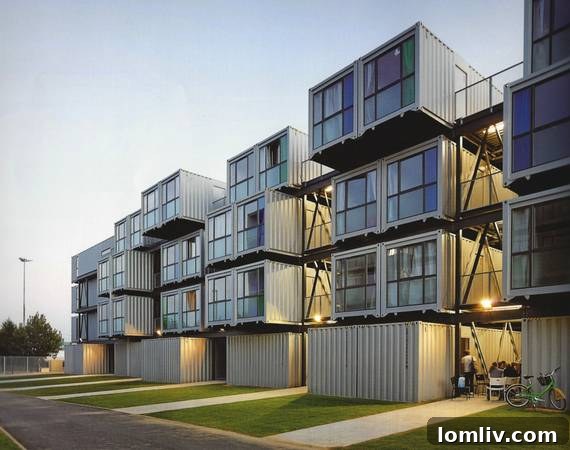
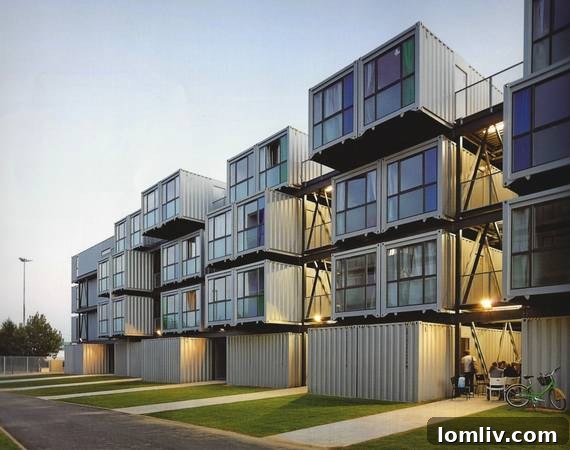
Shipping Container Homes: Beyond the Trend, A Sustainable Future?
The world of architecture and urban development is constantly evolving, with new trends emerging and challenging conventional thinking. Among these, the concept of shipping container architecture has undoubtedly captured significant attention. Once viewed by some as a fleeting fad, similar to the ephemeral appeal of shell art, the debate surrounding shipping container homes continues to stir passionate discussion. Indeed, as the old adage goes, opinions are like fingerprints – everyone has them, and they are rarely identical. My previous assertion regarding the transient nature of shipping container architecture certainly sparked a lively exchange, prompting a wave of diverse perspectives from readers eager to share their insights and champion this innovative building method.
The feedback I received wasn’t just brief commentary; it included deeply impassioned pleas for a re-evaluation of the potential that shipping containers hold for modern living and sustainable development. These voices highlighted the need to look beyond surface-level trends and delve into the practicalities, economic advantages, and environmental benefits that this unique approach to construction can offer. It became clear that to truly understand the phenomenon of container homes, one must consider the perspectives of those who see them not just as a passing novelty, but as a viable, dynamic solution for contemporary housing challenges.
The Cedars Project: A Vision for Live/Work Container Spaces
One particular project that ignited much of this discussion is the “ModPod” community proposed by Buzzworks in The Cedars, an emerging neighborhood known for its vibrant atmosphere in Dallas. This initiative aims to create live/work spaces entirely from shipping containers, pushing the boundaries of what is traditionally considered residential or commercial architecture. To gain a deeper understanding, I turned to Ashley Stanley, a staunch advocate for this project, who offered a compelling counter-narrative to my initial skepticism.
Shipping containers as housing is over? Oh no my friend, they have just begun! The Cedars project is not a PV14 house. The units are not made of shipping containers. They are shipping containers. There will be an HVAC system. You will not be baked. Regarding the size, it’s not for you. I get that. But I would live there with my baby and my dog. I currently live in 494 sq. ft. and sometimes think I have too much space.
Here’s the thing … I hear this all day long: “It’s just me and I want to live in Downtown for under $1,000. I don’t care about the size of the space.” When that regularly comes across your desk, you start to wonder how you could create a hip, modern, unique style of living that would attract those types of people. And who are they? They are the dreamers, the creators, the thinkers, and the makers. This “ModPod” community will be zoned for a live/work space. You may live on the 2nd floor and run your web design business on the 6th floor with your buddies who code.
It’s for the select few who get the minimalist lifestyle. You asked for my thoughts and here they are. I am promoting this project wholeheartedly because I believe The Cedars is the next Uptown for Business Owners, Founders, and CEO’s who just need a place to lay their head when they are in Dallas because tomorrow they have to be in Dubai and next week they are road trippin’ it to Canada. Oh yea, and vacationing in Colorado to go rock climbing all while communicating with their team through Periscope and Slack.
Ashley Stanley’s Compelling Argument for Micro-Living
Ashley’s insights provided a robust defense for the burgeoning trend of shipping container architecture. Her core argument is that rather than being a passing fancy, container homes are at the forefront of an architectural revolution. She passionately clarified that the units in The Cedars project aren’t merely “made from” shipping containers; they *are* the containers themselves, repurposed with ingenuity and purpose. This distinction emphasizes the direct reuse and inherent structural integrity of the containers, contributing to their appeal as sustainable building blocks for modern live/work spaces.
One of the most immediate concerns often raised about container living, particularly in climates prone to extreme heat, is comfort. Ashley directly addressed this, assuring that robust HVAC systems would be integral to the design, dispelling fears of inhabitants being “baked” inside metal boxes. Furthermore, she eloquently articulated that while the compact size might not appeal to everyone, it perfectly caters to a growing demographic embracing the minimalist lifestyle. Her personal anecdote of comfortably living in 494 square feet, even with a baby and a dog, powerfully illustrates the feasibility and desirability of smaller living spaces for certain individuals and families.
Beyond personal preferences, Ashley highlighted a significant market gap: the demand for affordable, stylish downtown living options. She regularly encounters individuals seeking urban residences under $1,000, who prioritize location and modern aesthetics over expansive square footage. These are the “dreamers, creators, thinkers, and makers” – a dynamic group of entrepreneurs, artists, and innovators who thrive in collaborative, inspiring environments. The “ModPod” community is specifically designed to attract this demographic, offering flexible live/work zoning. Imagine living on one floor and operating your web design startup or creative studio just a few floors above, fostering a vibrant ecosystem of collaboration and convenience. This unique blend of residential and commercial functionality within a single structure is a testament to the versatility of container architecture.
Ashley’s vision extends even further, positioning The Cedars as the “next Uptown” for a new generation of global business owners, founders, and CEOs. These are individuals with dynamic, international lifestyles, needing a comfortable, efficient base in Dallas between trips to Dubai, Canada, or a rock-climbing adventure in Colorado – all while staying connected with their teams remotely. Her perspective underscores that container homes, when thoughtfully designed, can meet the sophisticated demands of the modern, mobile professional, offering a blend of affordability, functionality, and undeniable style, making them a strong contender in the market for innovative housing solutions.
Addressing the Elephant in the Room: Practical Concerns and Climate Challenges
While Ashley Stanley makes a compelling case for the social and economic viability of container housing, her points also underscore some critical questions. She rightly identifies a real need in the market: stylish, small-footprint living developments in accessible, affordable areas, which are currently scarce, primarily limited to the often-prohibitively expensive Uptown or downtown districts. And indeed, the “moment” that shipping containers are having isn’t purely aesthetic; their inherent structure and recyclability present genuine advantages. Yet, acknowledging a trend doesn’t negate the practical challenges. My initial skepticism wasn’t baseless; it stemmed from a concern for efficiency, comfort, and long-term sustainability, especially when considering the searing summer heat of places like North Texas.
The image of a “glorified metal shoebox” that must be heated and cooled efficiently remains a significant hurdle in public perception and, more importantly, in practical application. While an HVAC system is undoubtedly a necessity, is it a complete cure-all? Can it truly make a metal box in a hot climate energy-efficient and comfortable without incurring exorbitant operational costs? The conductive properties of steel mean that without proper insulation, these structures can become literal ovens in summer and iceboxes in winter, leading to substantial energy consumption and discomfort. This brings us to a fundamental engineering challenge: how to effectively insulate and regulate the internal climate of a container home to ensure both inhabitant comfort and energy efficiency, transforming a raw container into a truly sustainable and pleasant living space.
The Science of Comfort: Insulation and HVAC in Container Architecture
To truly address these climatic and efficiency concerns, it’s essential to consult experts in building science. Stephan Davis, a respected building scientist and construction consultant, offers a comprehensive solution to the quandary of insulation and HVAC in container construction. His insights highlight that while shipping containers might be trendy, their use as robust building blocks is fundamentally sound and indeed, eco-friendly, provided the right planning and product selection are employed. This expert perspective helps demystify the complexities of making container homes viable for diverse climates.
While somewhat trendy, use of shipping containers as building blocks is certainly a sound and eco-friendly way to build. As with many non-traditional types of building, the planning and product selection is paramount when it comes to insulation and HVAC.
Use of closed cell spray polyurethane insulation, such as QuadFoam, is an essential element in the health, safety, and comfort of container construction. Closed cell spray foam typically has a high R-Value (resistance to heat flow) per inch as well as providing both a vapor seal and airtight construction. These attributes make container living feasible. The high R-Value provides a continuous thermal blanket surrounding the occupants thereby providing a well sealed environment. Use of QuadFoam will also eliminate the concerns with condensation (provided that your ventilation strategy is in alignment – see below). Use of the spray foam will also reduce or eliminate unwanted air from entering the structure and will provide a healthier environment by not allowing dust, pollen, or other allergens/particulate into the conditioned space.
Ventilation is the “V” in HVAC, which is often overlooked. While especially necessary here in North Texas, air conditioning is a requirement for these containers. The amount of tonnage may be reduced due to the high R-Value and air impermeance provided by the QuadFoam to as much as 1,250 to 1,750 square feet per ton! When using QuadFoam the containers will be very air tight, so having a good ventilation system in place will be mandatory. While not expensive, these ventilation systems will deliver an amount of fresh air to the occupants based on the overall conditioned area of the structure in accordance with ASHRAE (American Society of Heating, Refrigeration, and Air-Conditioning Engineers) 62.2 which can be accomplished a number of ways depending on conditions, budget, or sizing requirements. Air brought into the living space should pass through the filtration system to reduce the dust and pollen usually floating around in our N. Texas air.
The beauty of using QuadFoam closed cell spray foam insulation is that it can be applied to both the interior and exterior of the building! Any external application would require a few coats of exterior grade latex or acrylic paint. Use of QuadFoam on both the interior and exterior will provide a very comfortable environment, extremely energy efficient, and resilient to our Texas storms and weather. To add further impact resistance, you could install a QuadFoam Polyurea coating to the exterior of the unit to make it virtually indestructible.
The Unrivaled Benefits of Closed-Cell Spray Foam Insulation
Stephan Davis’s detailed explanation underscores the critical role of advanced insulation technologies. He specifically advocates for closed-cell spray polyurethane insulation, such as QuadFoam, as an “essential element” for ensuring the health, safety, and comfort of container residents. This type of insulation is not merely a barrier against temperature; it’s a multi-functional system designed to optimize the internal environment of a container home, addressing numerous potential issues with a single application.
One of its primary advantages is an exceptionally high R-Value per inch. The R-Value quantifies a material’s resistance to heat flow, meaning a higher R-Value indicates better insulation performance. By applying closed-cell spray foam, a continuous thermal blanket is created, significantly reducing heat transfer through the steel walls. This prevents the container from becoming a heat trap in summer or quickly losing warmth in winter, dramatically enhancing energy efficiency and occupant comfort. Furthermore, its ability to conform to irregular surfaces ensures that all nooks and crannies are sealed, eliminating thermal bridging – points where heat can easily escape or enter the structure.
Beyond thermal resistance, QuadFoam provides a crucial vapor seal and airtight construction. A vapor seal prevents moisture from penetrating the building envelope, a common culprit for mold growth, material degradation, and compromising indoor air quality. Airtightness, on the other hand, minimizes uncontrolled air leakage, which is a major source of energy loss and allows outdoor pollutants (like dust and pollen) to infiltrate. By creating an airtight, well-sealed environment, this insulation contributes to superior indoor air quality and helps mitigate condensation issues, provided a proper ventilation strategy is in place. This comprehensive sealing ensures a healthier, more stable interior climate, making container living genuinely feasible and pleasant.
Mastering Ventilation: The ‘V’ in HVAC for Container Homes
Davis rightly emphasizes that ventilation, often the overlooked “V” in HVAC, is paramount, especially in tightly sealed structures like insulated containers. While air conditioning is a given necessity in hot climates like North Texas, the effectiveness and efficiency of the AC system are profoundly influenced by the insulation. The high R-Value and air impermeability provided by QuadFoam can significantly reduce the required HVAC tonnage – the cooling capacity of the system. This means that a container home insulated with QuadFoam might require a much smaller, less powerful, and thus less energy-intensive air conditioning unit, potentially covering an impressive 1,250 to 1,750 square feet per ton of cooling capacity, a remarkable improvement over poorly insulated structures. This reduction in demand directly translates to lower operational costs and a smaller carbon footprint.
However, an extremely airtight structure, while energy-efficient, necessitates a robust and well-designed ventilation system. Without it, indoor air quality can suffer due to the accumulation of CO2, VOCs (Volatile Organic Compounds), and other indoor pollutants. These mandatory ventilation systems are not overly expensive and are designed to deliver a controlled amount of fresh, filtered air to occupants. This fresh air supply is crucial for maintaining a healthy indoor environment and is specified according to standards set by organizations like ASHRAE (American Society of Heating, Refrigeration, and Air-Conditioning Engineers) 62.2, which dictate minimum ventilation rates based on the conditioned area and number of occupants. Furthermore, incorporating a sophisticated filtration system for incoming air is vital, especially in areas with high levels of dust and pollen, ensuring a pristine and healthier living space free from common allergens.
Enhanced Durability: Interior, Exterior, and Polyurea Coatings
The versatility of QuadFoam extends to its application, as it can be used on both the interior and exterior surfaces of the container. While exterior application requires protective layers of exterior-grade latex or acrylic paint, this dual-layer approach provides unparalleled benefits. Applying insulation to both sides creates an exceptionally comfortable, energy-efficient environment that is also remarkably resilient against harsh weather conditions, including the intense storms common in Texas. This comprehensive thermal envelope not only protects the metal structure from extreme temperature fluctuations, reducing thermal expansion and contraction that can contribute to material fatigue over time, but it also creates a seamless, monolithic barrier against the elements.
For those seeking ultimate durability and impact resistance, Davis suggests an additional layer: a QuadFoam Polyurea coating to the exterior. Polyurea is an advanced polymer coating known for its exceptional strength, flexibility, and resistance to abrasion, chemicals, and extreme temperatures. Applying this coating can render the container unit “virtually indestructible,” providing an extra layer of protection against physical damage, corrosion, and environmental stressors. This significantly extends the lifespan and reduces the maintenance needs of the structure, making container homes a truly long-term, resilient housing solution capable of withstanding the rigors of various climates and uses.
Beyond the Hype: A Nuanced Understanding of Container Architecture
While the implementation of advanced insulation and protective coatings, as suggested by Stephan Davis, undoubtedly adds to the overall construction cost of a shipping container home, this initial investment must be weighed against long-term benefits. If the foundational containers themselves are acquired at a low cost and require minimal structural modification, these additional layers of sophistication become a highly feasible and ultimately cost-effective solution for creating genuinely comfortable, energy-efficient, and durable living spaces. The increased upfront expenditure on high-performance materials like QuadFoam and Polyurea is often recouped through substantial reductions in energy bills, lower maintenance requirements, and extended structural longevity, making them a wise investment for sustainable living.
My initial skepticism about shipping containers being “over” as a viable architectural solution was, perhaps, a bit hasty. What became clear through these expert perspectives and passionate defenses is that the success and sustainability of container architecture hinge on intelligent design and the strategic integration of modern building science. When executed correctly, with proper insulation, ventilation, and protective coatings, shipping containers transcend their basic industrial origins to become genuinely eco-friendly, robust, and aesthetically appealing building blocks. They offer a unique pathway to addressing the growing demand for affordable, flexible, and sustainable housing solutions, particularly for specific demographics embracing minimalist and mobile lifestyles, and for commercial applications requiring adaptable spaces.
The conversation around shipping container homes is far from over; in fact, it’s evolving. From a perceived trendy novelty, it’s maturing into a recognized segment of adaptive reuse architecture with significant potential. It’s no longer just about repurposing a steel box; it’s about transforming it into a high-performance, comfortable, and sustainable living or working environment through thoughtful engineering and material selection. This evolution signifies a broader acceptance of non-traditional building methods and a growing commitment to innovative, sustainable practices in the construction industry.
Are you now more enlightened on the intricate considerations and promising potential of shipping container construction? We invite your continued thoughts and experiences on this fascinating aspect of modern architecture and sustainable living.