In the intricate landscape of homeownership and real estate transactions, few components are as critical to a property’s structural integrity, safety, and long-term value as its roof. Often overlooked or taken for granted, the roof serves as your home’s primary shield against the relentless forces of nature – from the scorching sun and torrential rains to powerful winds and heavy snowfalls. A thorough understanding of your roof’s condition, particularly the state of its shingles, is not merely about maintaining curb appeal; it’s a fundamental investment in the overall durability and security of your home. This knowledge becomes especially crucial when you’re in the process of buying a new home, as undetected roof issues can quickly transform into significant financial burdens post-purchase.
At Daltxrealestate.com, our mission is to equip our readers with expert insights into every facet of home inspection and maintenance. We are proud to collaborate with the meticulous professionals at Green Scene Home Inspections, who contribute their unparalleled expertise and keen eye for detail to our weekly “Upon Closer Inspection” series. This series is thoughtfully designed to empower both current homeowners and prospective buyers, allowing you to discern what the experts look for and truly grasp the nuances that define a well-maintained and robust property. For this edition, our detailed examination will focus squarely on one of the most vital elements of any roof: the shingles.
When you embark on the significant journey of buying a home, seasoned real estate and inspection professionals consistently highlight several major areas that demand scrupulous attention. These core components—the roof, plumbing system, electrical infrastructure, HVAC (heating, ventilation, and air conditioning) unit, and the foundational structure—are universally recognized as the “bigger ticket items.” Problems within any of these systems have the potential to escalate rapidly, leading to substantial and often unexpected repair costs. Among these critical elements, the roof stands paramount. It is not just an overhead covering but the first line of defense, directly influencing the protection of the entire house. Consequently, a comprehensive and expert roof inspection is an indispensable step in safeguarding your investment and ensuring peace of mind.
The shingles that adorn your roof are far more than mere aesthetic coverings; they are the lynchpin of a sophisticated, multi-layered defense system meticulously engineered to protect your home’s underlying structure. Their fundamental purpose is to establish a robust, water-tight, and highly wind-resistant barrier, shielding your property from the ceaseless assault of environmental elements. Shingles are designed to perform a complex array of functions: they prevent moisture penetration that can lead to insidious wood rot, destructive mold growth, and compromised insulation; they deflect harmful ultraviolet (UV) radiation that would otherwise degrade roofing materials; and they endure the physical impacts of rain, hail, and snow. Therefore, when shingles sustain damage, even seemingly minor imperfections can critically compromise this essential protective barrier. Such damage significantly elevates the risk of more serious, widespread roof problems, potentially resulting in water leaks, accelerated structural deterioration, and exorbitantly costly interior repairs. It is precisely why the timely identification and prompt rectification of shingle damage are paramount to preserving the integrity, longevity, and overall value of your home.
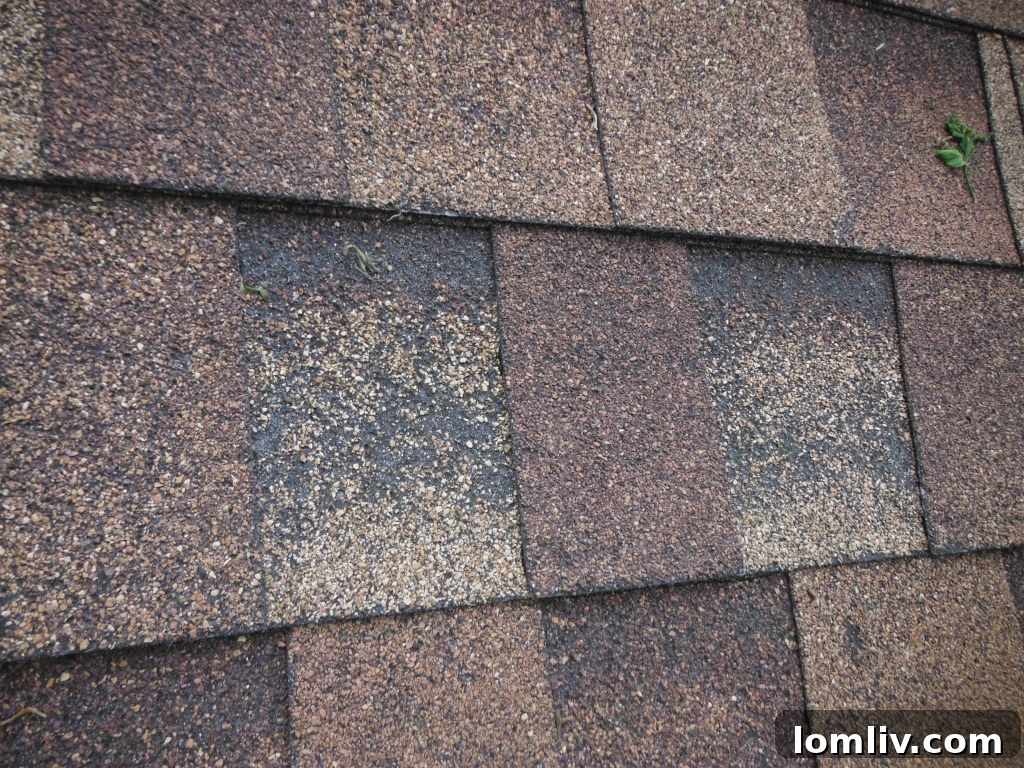
1. Thinning and Pitting: Unmistakable Indicators of Aging and Environmental Stress
As clearly depicted in the accompanying image, observing signs of both thinning and pitting on your roof shingles is a critical warning sign that demands immediate and thorough investigation. These are not merely superficial blemishes; they are profound symptoms that your roof may be nearing the culmination of its expected service life or experiencing significant distress from other underlying factors. Shingle thinning primarily manifests as a noticeable and often widespread loss of the granular surfacing. These protective granules, meticulously embedded in the asphalt, play a pivotal role in deflecting harmful UV radiation, thereby preventing the asphalt from prematurely degrading, and also contribute to the shingle’s fire resistance. When these granules erode or detach, the underlying asphalt becomes directly exposed and highly vulnerable to the elements, leading to accelerated aging, increased brittleness, the formation of cracks, and a significantly diminished capacity to effectively shed water.
Pitting, characterized by small indentations or depressions on the shingle surface, is often observed in conjunction with granule loss. While minor pitting can sometimes result from small impacts, extensive or widespread pitting, especially when accompanied by advanced granule erosion, strongly suggests a more systemic issue. One of the most significant contributing factors to these conditions is prolonged and relentless exposure to harsh environmental elements. This includes intense solar radiation, which causes thermal expansion and contraction; extreme temperature fluctuations between hot and cold; and cycles of freezing and thawing, which physically stress the materials. Furthermore, inadequate attic ventilation is an often-underestimated culprit. A poorly ventilated attic traps heat, which then radiates downward onto the underside of the roof deck and shingles. This internal heat effectively “cooks” the shingles from below, accelerating the breakdown of their asphalt components, rendering them brittle, more prone to cracking, and highly susceptible to granular loss and pitting. A professional home inspection is crucial, as it will not only meticulously assess the visible shingle damage but also investigate potential underlying causes such as poor attic ventilation, providing a comprehensive and accurate diagnosis. Ignoring these pronounced signs can inevitably lead to premature roof failure, insidious water leaks, and ultimately, far more expensive repairs than would have been necessary with timely professional intervention.
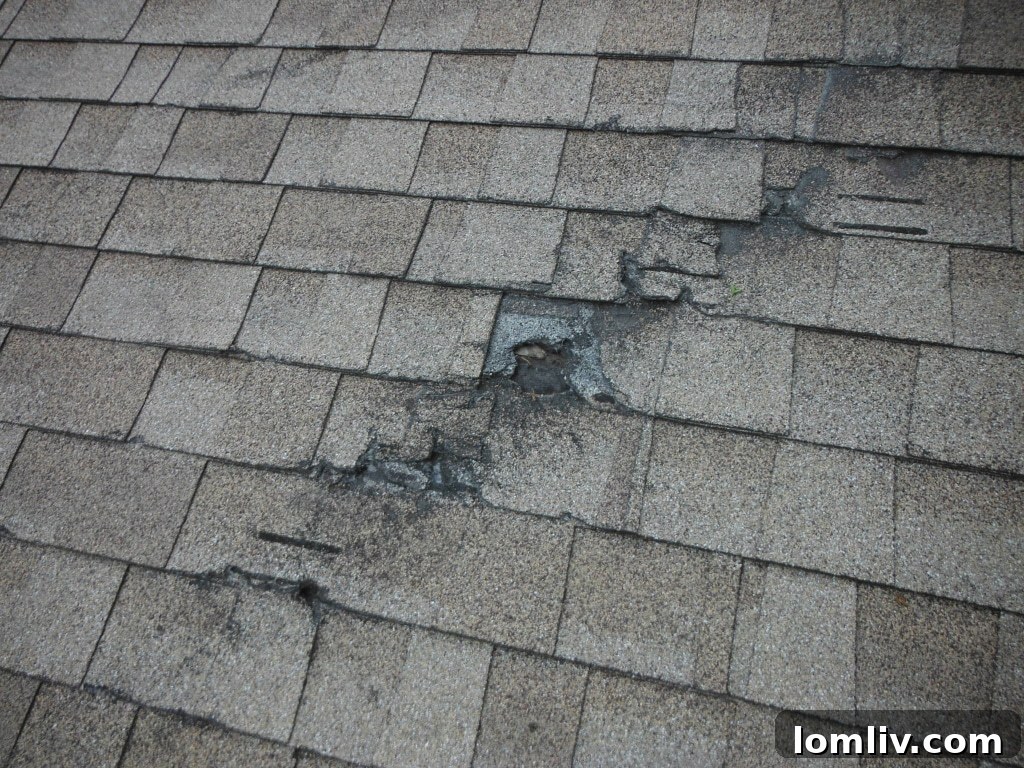
2. Storm Damage: When Nature Leaves Its Indelible Mark on Your Roof
The roof section vividly displayed in the accompanying image clearly exhibits significant and undeniable damage, most likely inflicted by severe weather phenomena such as powerful winds, hailstorms, or the impact of falling debris during a tumultuous storm. Storm damage to a roof can manifest in a variety of destructive forms, each posing a distinct and serious threat to your home’s protective envelope. High winds are a particularly common culprit, possessing the sheer force to lift, crease, or even completely tear off shingles, especially those located along the edges and eaves of the roof where wind uplift forces are often at their most intense. Hail, another frequent and often insidious contributor to storm-related roof damage, may not always leave obvious holes, but its impact can cause internal bruising, hairline cracks, and severe loss of the protective granules. This often critically compromises the shingle’s integrity, leading to accelerated wear and the potential for insidious leaks that might not become apparent until much later.
Falling tree branches, dislodged antenna, or other windborne debris can inflict more direct, concentrated impact damage, ranging from punctures and tears in the shingle material to shattered shingles and even structural damage to the underlying roof decking. When such extensive damage occurs, as vividly captured in the photograph, localized spot repairs are often utterly insufficient. This entire compromised section of the roof would necessitate comprehensive replacement to fully restore its critical protective capacity. Depending on the sheer size of the damaged area, its specific location, the overall age of the surrounding shingles, and the extent of underlying issues, the damage may be widespread enough to warrant a complete full roof replacement. A meticulous inspection conducted by a qualified and experienced professional is absolutely critical following any significant storm event. Such an inspection will accurately assess the full scope of the damage, adeptly differentiate between areas amenable to repair and those demanding replacement, and meticulously document the damage for potential insurance claims. Prompt and decisive action after a storm can proactively prevent minor damage from escalating into major structural problems and costly interior water damage, thereby preserving your home’s value and your peace of mind.
3. Drip Edge Damage: Safeguarding the Roof’s Vital Perimeter
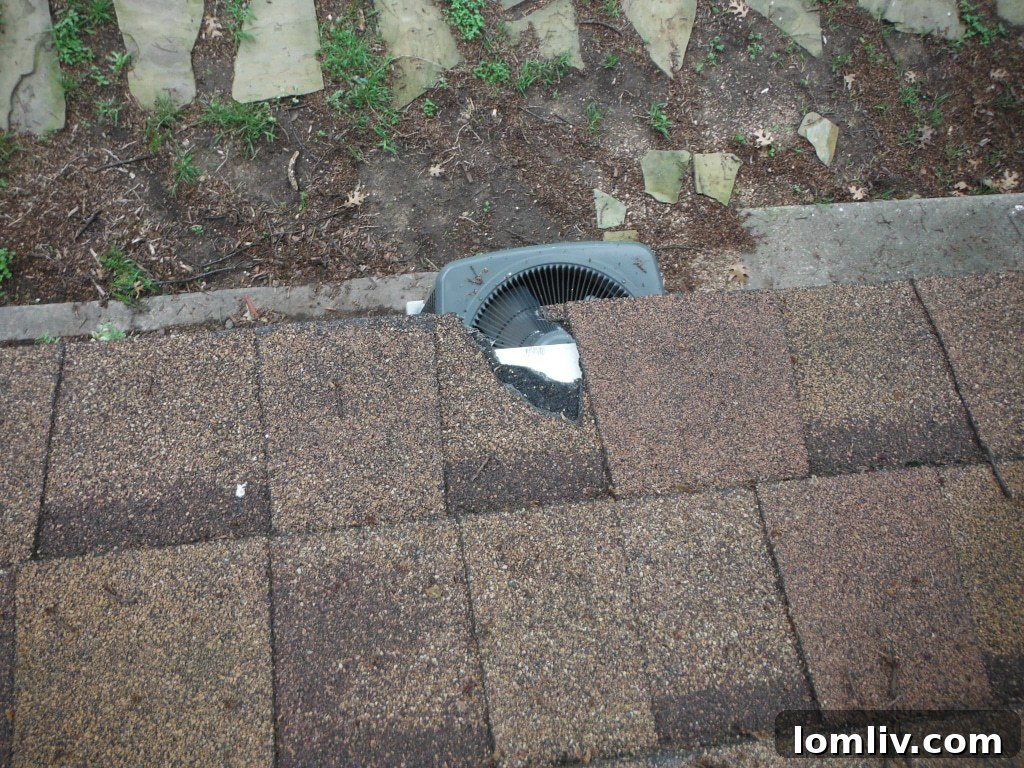
The image above compellingly draws attention to damage specifically targeting the drip edge shingles, a component whose often-underestimated role is surprisingly pivotal to your roof’s long-term health and the overall integrity of your home. The drip edge is a strategically installed piece of metal flashing that runs along the very edges of your roof. It is typically positioned underneath the roofing felt and shingles, extending slightly over the fascia board. Its primary function is undeniably crucial: to effectively direct water runoff away from the fascia board and into the gutters, thereby preventing water from seeping back underneath the shingles or behind the fascia. Without a properly functioning and intact drip edge, water can wick back along the underside of the roof deck, leading to a cascade of significant and often hidden damage such as rotten fascia boards, deteriorated soffits, compromise of the attic space due to moisture, and even foundational issues over an extended period.
Damage to the drip edge shingles, as clearly evidenced in this photograph, can originate from a variety of external forces. A common culprit is a falling tree branch, which can severely bend, crack, or completely dislodge the metal flashing. Ladders, when improperly positioned, handled roughly, or allowed to rub against the delicate roof edge, can also inflict considerable damage. Other contributing factors include severe weather conditions, particularly high winds that can peel back or deform the drip edge, or the dangerous accumulation of ice dams in colder climates, which exert immense physical pressure on the roof’s perimeter. Furthermore, the image reveals another important and concerning detail: the apparent absence of a water diverter directly underneath the drip edge in this specific location. This is particularly problematic given the presence of an AC unit situated immediately below. A correctly installed water diverter would ensure that any water dripping from the roof edge is channeled safely away from the AC unit, preventing potential corrosion, water damage to the unit’s sensitive components, and even issues with its electrical system over time. Addressing drip edge damage promptly and professionally is absolutely essential to maintain the structural integrity of your entire roof system and to protect the critical exterior components of your home’s envelope from costly water-related damage.
4. Rust Discoloration: A Critical HVAC Alert on Your Roof’s Surface
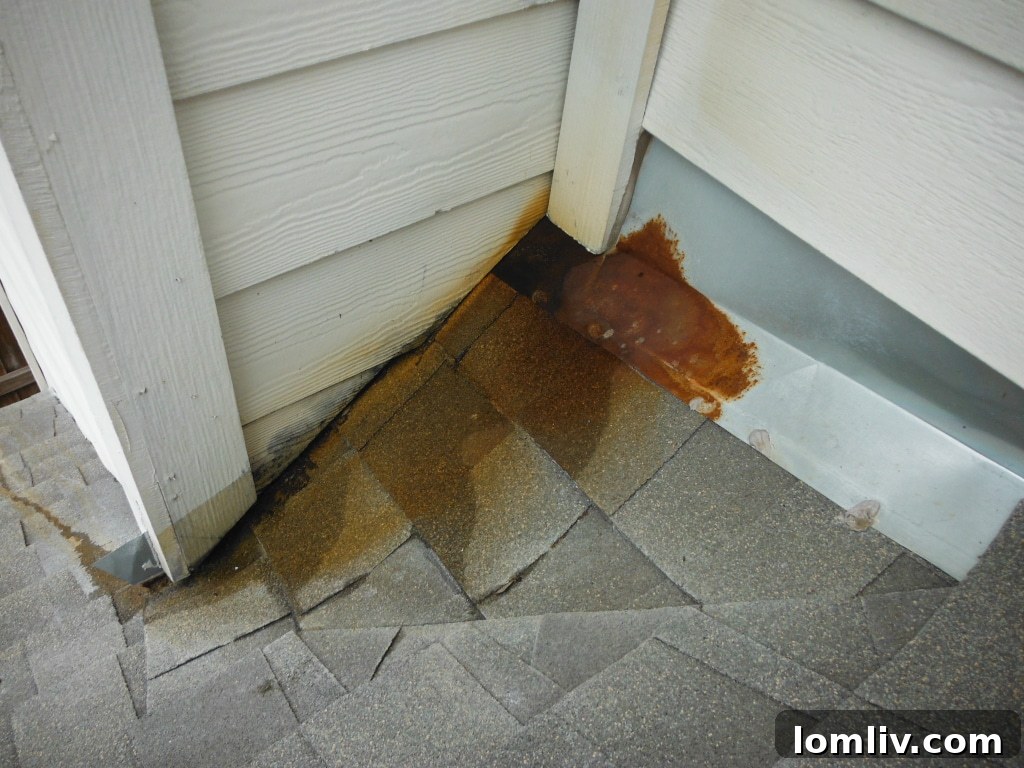
When you observe distinctive rust stains conspicuously marring the surface of your roof shingles, as clearly visible in the accompanying photograph, it serves as an unequivocal signal that something is amiss within your home’s HVAC (Heating, Ventilation, and Air Conditioning) system, specifically concerning its condensate drainage mechanism. This particular rust discoloration strongly indicates that the HVAC secondary condensate line has been discharging its overflow directly onto the roof, often for an extended period, leading to the accumulation of these unsightly and telling stains.
To fully comprehend the significance of this issue, it’s essential to understand the design and function of HVAC condensate drainage. During operation, particularly in humid environments, your AC unit diligently extracts moisture from the air, which then condenses into water droplets. This collected water is gathered in a drain pan and is primarily designed to be routed away from the house through the primary condensate line. This primary line, typically a PVC pipe, directs the water to a suitable drainage point such as a utility sink, a floor drain, or an exterior drainage area. This primary line is engineered for continuous and efficient drainage under normal operating conditions.
However, problems arise when this crucial primary condensate line becomes obstructed. Common culprits for such blockages include the build-up of algae, mold, mildew, dust, and other various forms of debris. When the primary line is clogged, the water has no viable path for evacuation and consequently begins to back up within the drain pan. To prevent the drain pan from overflowing into your attic space or ceilings—which could cause extensive and costly water damage—HVAC systems are ingeniously equipped with a secondary or emergency condensate line. This secondary line is strategically positioned slightly higher within the drain pan. Should water levels rise due to a blocked primary line, the secondary line activates, diverting the overflow. Often, this secondary line is deliberately routed to a visible exterior location, such as an exterior wall or, as observed in this case, directly onto the roof. This visible discharge serves as a clear, unmistakable indicator to the homeowner that an underlying problem requires immediate attention. Water that sits stagnant in the drain pan, particularly if the pan is constructed from metal or contains metallic components, will inevitably begin to rust. This rust-laden water is then discharged through the secondary line, resulting in the characteristic reddish-brown streaks that become prominently visible on your shingles.
The good news amidst this architectural eyesore is that, while rust discoloration on your roof is undeniably unsightly and significantly detracts from your home’s curb appeal, it typically does not inflict structural damage upon the shingles themselves. The rust is purely a surface stain. The critical issue, however, is not the stain in isolation, but rather the underlying problem it signifies: a compromised or clogged primary HVAC condensate line. Ignoring these visible rust stains is tantamount to ignoring a potentially serious HVAC malfunction that could, if left unaddressed, ultimately lead to significant water damage within your home should the secondary line also become overwhelmed, clogged, or fail. Fortunately, these rust stains can usually be effectively removed with the careful application of a good power washer, or by utilizing specialized roof cleaning solutions, provided meticulous care is taken to avoid damaging the shingles in the process. More importantly, it is absolutely imperative to address the root cause by engaging a qualified HVAC technician to inspect, clear, and thoroughly service the primary condensate line to prevent future recurrence and ensure your entire HVAC system operates both efficiently and safely.
The Paramount Importance of Proactive Roof Care and Professional Inspections
Whether you are actively navigating the complexities of purchasing a new home or have been a long-time homeowner, the health and condition of your roof must never be relegated to an afterthought. Waiting until overt signs of leaks or extensive structural damage become glaringly apparent is often a costly delay, invariably leading to more intricate and expensive repairs than necessary. Proactive roof care, which fundamentally encompasses regular, expert inspections and timely, preventative maintenance, is not just advisable; it is absolutely essential for significantly extending the lifespan of your roof and safeguarding your entire home against deterioration.
A professional roof inspection transcends a mere visual check for obvious damaged shingles. Experts, such as those at Green Scene Home Inspections, conduct a comprehensive and systematic assessment, meticulously examining every critical component, including:
- Shingle Condition: A detailed evaluation for granule loss, prevalent cracking, upward curling, blistering, and any missing shingles that compromise the roof’s integrity.
- Flashing Integrity: A thorough inspection of the metal strips or other materials installed around chimneys, vent pipes, skylights, and where the roof meets any vertical wall. Properly installed and maintained flashing is critically important for preventing insidious leaks in these particularly vulnerable areas.
- Vents and Skylights: Ensuring all roof vents and skylights are securely sealed, free from cracks, and undamaged, allowing for proper attic ventilation and light while preventing water intrusion.
- Gutters and Downspouts: Verifying that these systems are impeccably clean, securely attached to the fascia, and efficiently channeling water safely away from the roof and the home’s foundation.
- Soffit and Fascia: A meticulous search for any signs of rot, decay, or points of entry for pests, issues which are frequently indicative of underlying water management problems.
- Attic Inspection: An crucial internal examination to check for adequate attic ventilation, proper insulation levels, and any visible signs of water intrusion, mold growth, or structural damage on the underside of the roof deck.
- Structural Integrity: An overall assessment of the roof’s structure for any noticeable sagging, unevenness, or other tell-tale signs of deeper underlying structural problems that could compromise the entire system.
Regular inspections, ideally conducted annually or promptly after any major storm event, are invaluable for identifying minor issues before they have the opportunity to escalate into significant and costly problems. Early detection facilitates targeted repairs, which are demonstrably less expensive and disruptive than a full roof replacement. Moreover, possessing a clear and accurate understanding of your roof’s condition empowers you to make well-informed decisions regarding its ongoing maintenance and future investments in your home.
Repair or Replace? Making the Right Decision for Your Roof’s Future
One of the most profound dilemmas homeowners often encounter when roof issues surface is the critical decision of whether to pursue targeted repairs or to commit to a complete roof replacement. This significant decision hinges on a careful consideration of several critical factors, each weighing heavily on the most appropriate course of action:
- Age of the Roof: The typical lifespan for most asphalt shingle roofs ranges between 20 to 30 years. If your existing roof is nearing or has already exceeded this projected age, and you are observing widespread and recurrent issues, a comprehensive replacement is often the most economical and prudent long-term solution.
- Extent of Damage: Isolated damage, such as a handful of missing shingles, a small area of hail impact, or localized wind damage, can typically be addressed effectively through targeted repairs. However, if the damage is widespread (e.g., extensive thinning and pitting across numerous sections, or significant storm damage affecting a large percentage of the roof’s surface), a full roof replacement may become not just advisable, but absolutely necessary.
- Type of Damage: Certain types of damage, such as severe hail impact that compromises the underlying shingle mat, or chronic, repeated wind damage that causes widespread shingle lifting and creasing, suggest that the fundamental integrity of the entire roof system has been compromised. In such scenarios, replacement is often a stronger and more secure consideration than repeated repairs.
- Matching Shingles: For specific repairs, finding exact matching shingles for an older roof can present considerable challenges due to natural color fading over time and the discontinuation of certain styles or shades. An obvious patchwork appearance might be a significant cosmetic concern for many homeowners, impacting curb appeal.
- Local Building Codes: Building codes are dynamic and evolve over time, often becoming more stringent. A full roof replacement ensures that your new roofing system will meet all current local safety, structural, and energy efficiency standards, providing added compliance and peace of mind.
- Insurance Considerations: In instances of significant storm damage, your homeowner’s insurance company might cover the cost of a full roof replacement if the damage is deemed extensive enough. Understanding your policy and securing proper documentation can make the financial burden of replacement considerably more manageable.
It is always highly recommended to seek multiple professional opinions and obtain detailed, itemized estimates from reputable and licensed roofing contractors. This comprehensive approach will empower you to make an informed decision that optimally aligns with your budget, your long-term homeownership goals, and the safety of your property.
In conclusion, your roof is far more than a simple covering; it is a critical, multi-functional component tirelessly protecting your most significant investment. Recognizing the tell-tale signs of shingle damage – ranging from the thinning and pitting indicative of age and heat stress, to the immediate impacts of severe storms, issues with the vital drip edge, and even rust stains signaling underlying HVAC problems – is the indispensable first step in a proactive and responsible home maintenance regimen. Do not defer action or wait until a minor leak inevitably escalates into a major, costly disaster to educate yourself about the true condition of your roof. Empower yourself with knowledge and, crucially, with the seasoned expertise of qualified professionals.
For more excellent and highly informative resources on how to discern when it might be the opportune moment to replace your roof, we highly recommend exploring trusted guides such as Bob Vila’s comprehensive guide on “7 Signs You Need a New Roof.” And always remember, for unparalleled comprehensive and reliable insights into the health and safety of your home, place your trust in the detail-oriented and expert team at Green Scene Home Inspections. Stay tuned for more invaluable content from our “Upon Closer Inspection” series, dedicated to helping you maintain a safe, valuable, and truly beautiful home for years to come.