Navigating the complex world of electricity plans in Texas can feel like a daunting task, especially given its deregulated market. With over 40 retail electricity providers vying for your business, the sheer volume of options often leads to confusion, frustration, and ultimately, higher costs for consumers. Many providers and comparison websites employ intricate marketing strategies and pricing structures that obscure the true cost of electricity, causing countless Texans to inadvertently overpay for their power.
For anyone involved in the real estate sector—be it closing on a new home, efficiently managing a portfolio of rental properties, or advising clients on their living expenses—understanding this market isn’t just a matter of saving a few dollars; it directly impacts operating costs, cash flow, and overall financial health. The electricity plan you select can significantly influence a property’s appeal, its profitability as an investment, and the long-term satisfaction of homeowners and tenants alike. This comprehensive guide aims to demystify the Texas electricity market, expose common pitfalls, and equip you with the knowledge to make truly informed decisions.
The Typical Texas Electricity Shopping Experience: A Path to Confusion
Most Texans begin their search for a new electricity plan using familiar methods, often unknowingly stepping into a landscape filled with hidden complexities. Let’s explore the common approaches and why they frequently lead to suboptimal choices.
The Google Search Trap
The first instinct for many is to type “best electricity plans in Texas” into a search engine. The results invariably feature a multitude of comparison sites prominently. These platforms often highlight incredibly attractive “teaser rates,” such as “9.9¢/kWh at 1,000 kWh.” While these numbers certainly catch the eye, they come with a critical caveat: they are almost always associated with what are known as “bill-credit plans.”
The challenge here lies in the fine print—or rather, the lack of clear explanation. While these sites might include a brief mention of “bill credit,” they rarely delve into how these plans actually function or, more importantly, how they can lead to unexpectedly high electricity bills. The allure of a low advertised rate often overshadows the crucial details that determine the real cost you’ll pay each month, setting the stage for significant financial surprises down the line.
AI and ChatGPT: A New Twist on an Old Problem
In our increasingly digital world, many consumers now turn to artificial intelligence tools like Google’s AI Overviews or ChatGPT for guidance on everyday decisions, including selecting an electricity plan. If you prompt an AI with “best electricity plans in Texas,” it might generate a list of seemingly “cheapest plans,” similar to this:
- Company 1 → 9.5¢/kWh @ 1,000 kWh
- Company 2 → 9.6¢/kWh @ 1,000 kWh
- Company 3 → 9.7¢/kWh @ 1,000 kWh
- Company 4 → 9.5¢/kWh @ 1,000 kWh
- Company 5 → 9.6¢/kWh @ 1,000 kWh
Even if the AI provides a disclaimer that these might be bill-credit plans, the immediate appeal of the low per-kilowatt-hour rate often takes precedence. The fundamental problem persists: these enticing options are almost invariably bill-credit plans. Without a deeper understanding of how these plans work, even the most sophisticated AI can inadvertently lead users towards options that are rarely the most cost-effective or transparent choice for the majority of Texas households. This underscores the need for human discernment and a thorough understanding of electricity plan structures beyond superficial recommendations.
Demystifying the Bill-Credit Plan: How to Spot and Avoid the Hidden Costs
The “bill-credit plan” is perhaps the most common and perplexing type of electricity plan in the Texas deregulated market. Understanding its mechanics is absolutely crucial to avoiding costly mistakes. Essentially, a bill-credit plan offers a fixed monetary credit—for example, $50 or $100—that is applied to your monthly bill *only* if your electricity usage falls within a very specific, predetermined range or crosses a set threshold, most commonly 1,000 kWh.
The primary issue with these plans is their deceptive simplicity: they appear significantly cheaper than they actually are. The advertised low rate, like “9.9¢/kWh,” is only achievable if your monthly consumption perfectly aligns with or closely hovers around the target usage level (e.g., 1,000 kWh). If your usage is either below or above this narrow window, you forfeit the credit entirely, causing your effective price per kWh to spike dramatically. This fluctuation can turn an ostensibly cheap plan into an unexpectedly expensive one.
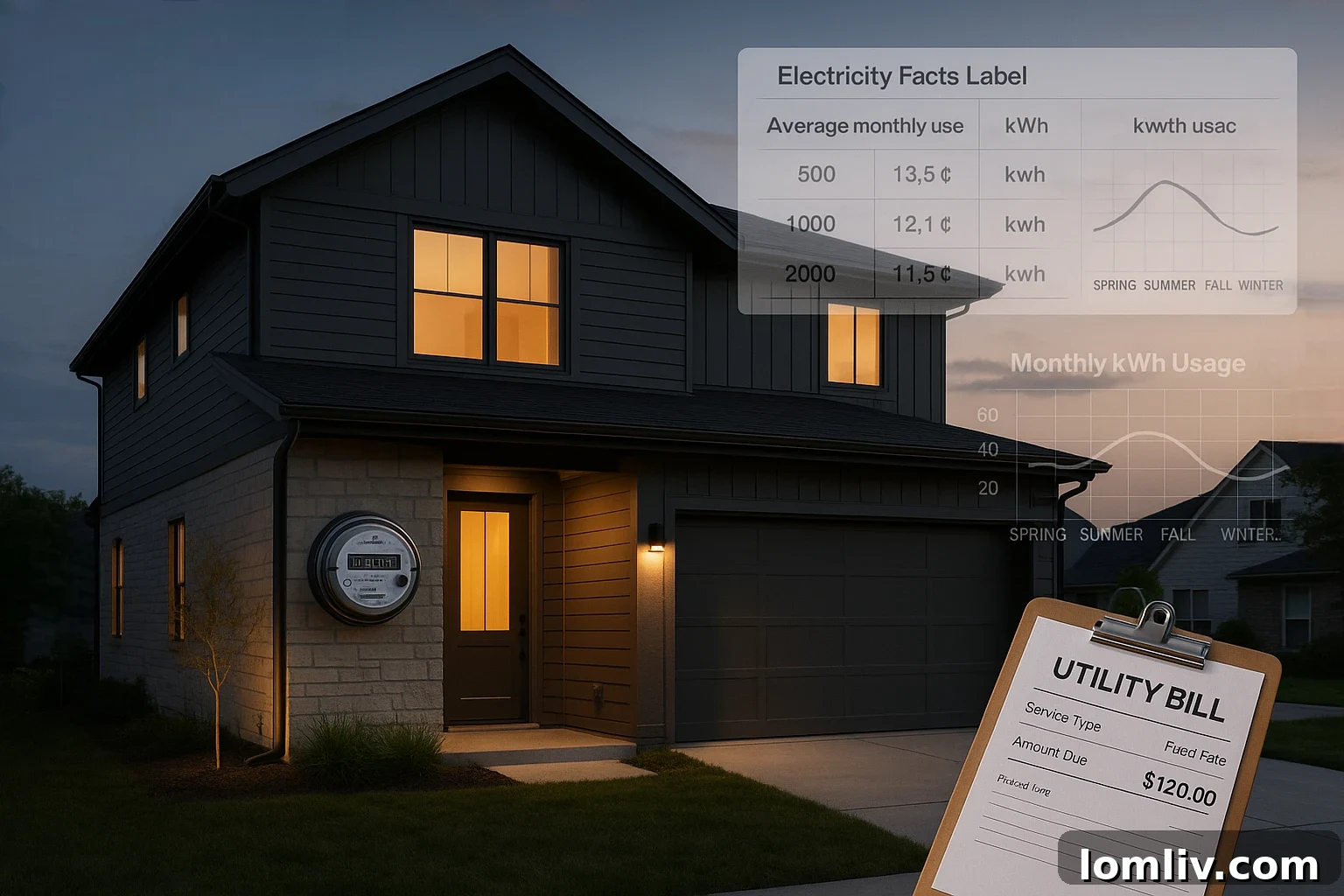
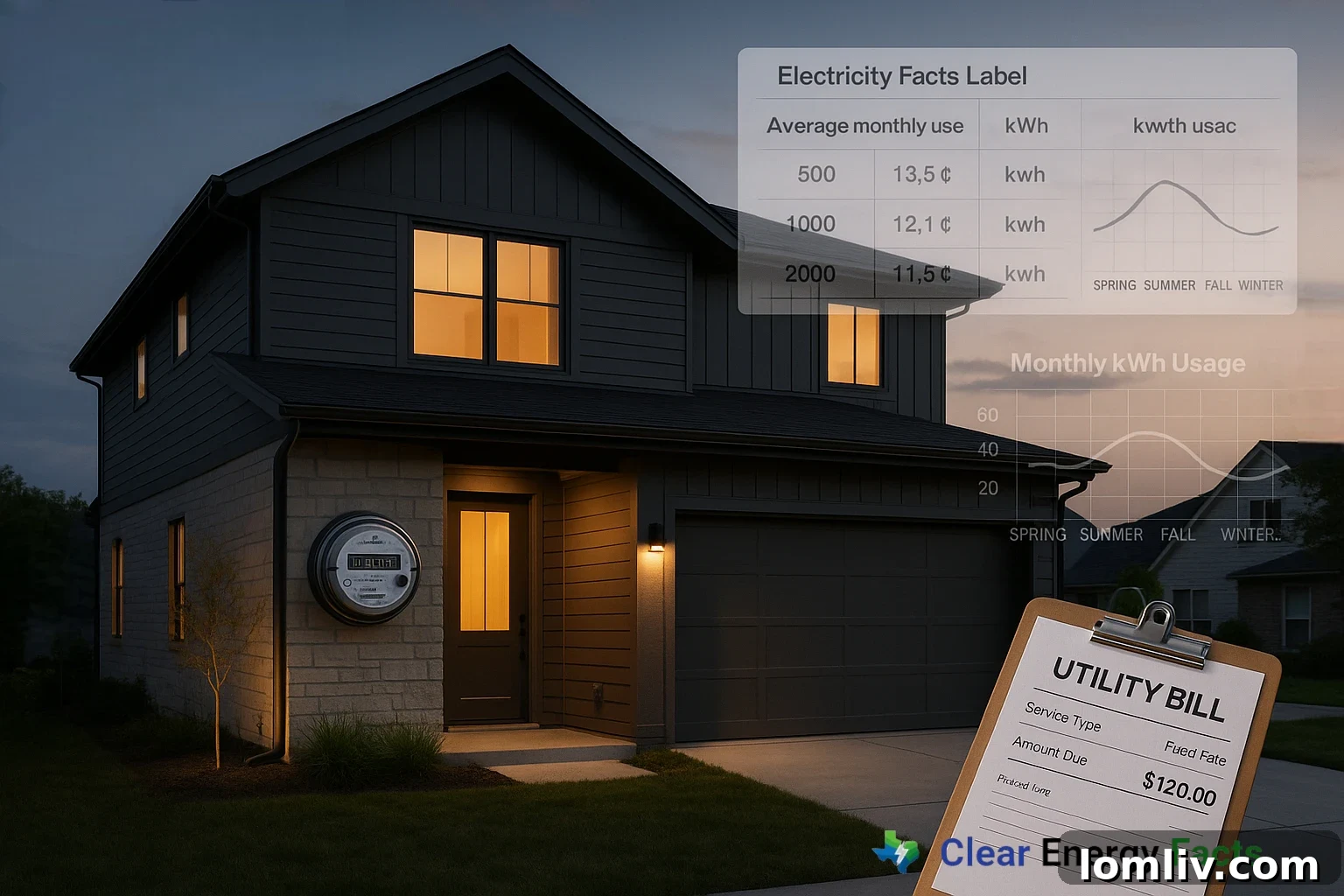
The key to uncovering the true nature of any electricity plan lies in its Electricity Facts Label (EFL). This standardized document, mandated by the Public Utility Commission of Texas, provides a detailed breakdown of all charges, fees, and the effective price per kWh at various usage levels. A typical EFL for a bill-credit plan will clearly illustrate this tiered pricing structure:
- 500 kWh → 22.9¢/kWh (High due to missing credit)
- 1,000 kWh → 9.9¢/kWh (Low due to applied credit)
- 2,000 kWh → 15.9¢/kWh (Higher due to usage exceeding ideal range and potentially a different tier, or credit no longer making a significant impact)
As you can see, the enticing “9.9¢/kWh” rate is an anomaly, applicable only within a very narrow usage band around 1,000 kWh. The reality is that very few households consistently land at precisely 1,000 kWh each month. For instance, a medium-sized home, typically around 2,500 square feet, might use anywhere from 500 kWh to 1,800 kWh per month, with significant variations depending on the season, insulation, thermostat settings, and household habits. The moment your usage deviates from that sweet spot, the effective rate you pay begins to climb, often significantly.
Consider the seasonal impact: During milder months such as January, February, March, November, and December, household electricity usage frequently falls below the 1,000 kWh threshold. In such scenarios, the bill credit is not applied, and your effective price can easily jump above 22¢/kWh. This rate is nearly double what you might pay on a genuinely transparent “True Fixed plan.” Conversely, during peak summer months, usage might soar past 2,000 kWh, again shifting the effective rate to a higher tier, albeit often lower than the sub-1,000 kWh rate but still far from the advertised low. The inconsistency makes budgeting difficult and leads to unpredictable bills, making bill-credit plans a perilous choice for unsuspecting consumers.
Effective Strategies to Avoid the Bill-Credit Trap and Secure Genuine Savings
Successfully navigating the Texas electricity market requires a proactive and informed approach. By understanding the common pitfalls and employing strategic tools, you can ensure you’re getting a truly competitive and transparent rate, rather than falling prey to misleading offers. Here are the most effective strategies:
- Begin Your Search at PowerToChoose.org, But Proceed with Caution:
PowerToChoose.org is the official, state-run marketplace managed by the Public Utility Commission of Texas. It’s a valuable starting point as it aggregates plans from various providers. However, merely browsing the advertised rates here isn’t enough. Your crucial first step is to filter for “fixed-rate plans” specifically. Even then, be aware that some bill-credit plans might still appear, masquerading as attractive offers. The critical next action is to meticulously open and scrutinize the Electricity Facts Label (EFL) for every plan that catches your eye. This document is your ultimate defense against hidden fees and deceptive pricing structures, and it should be the cornerstone of your decision-making process. - Master the Art of EFL Analysis: Spotting a True Fixed Plan:
The most definitive way to avoid bill-credit plans is to understand what a “True Fixed plan” looks like within the EFL. A genuine fixed-rate plan will show the exact same “all-in” price per kWh across all major usage benchmarks: 500 kWh, 1,000 kWh, and 2,000 kWh. Furthermore, the “Bill Credit” or “Usage Credit” section within the EFL should explicitly state “$0” or indicate that no such credits are offered. Any deviation—a lower price at 1,000 kWh than at 500 kWh or 2,000 kWh, or the mention of specific bill credits—is a clear indicator that you are looking at a bill-credit plan. Your goal is consistency in the effective rate, regardless of your monthly consumption fluctuations, providing predictability and peace of mind for your budget. - Harness Your Smart Meter Texas Data for Personalized Planning:
For an unparalleled level of accuracy in choosing an electricity plan, leverage your Smart Meter Texas data. Every Texas household with a smart meter can access a secure online portal (SmartMeterTexas.com) that provides detailed, hour-by-hour electricity usage information. This historical data is an invaluable resource, particularly for new homeowners who lack prior usage history for their specific property, or for landlords and property managers who need to optimize costs across multiple units with varying tenant usage patterns and seasonal swings. By downloading your past 12-24 months of usage data, you can identify your actual consumption patterns, peak usage times, and average monthly kWh. This granular insight allows you to match a plan that truly aligns with your unique usage profile, rather than relying on generic assumptions that often lead to overpayment. - Utilize Advanced Tools for Simplified & Verified Choices (e.g., Clear Energy Facts):
While manual review of EFLs is essential, it can be time-consuming and prone to human error, especially when sifting through dozens of plans. This is where specialized tools like Clear Energy Facts become invaluable. These platforms are designed to analyze and categorize electricity plans from various providers, explicitly flagging bill-credit structures and other deceptive offerings—even those found on Power to Choose. By using such tools, you can safely and efficiently search for the best “True Fixed plans” available in your specific area. Many of these services also allow you to upload your Smart Meter Texas data directly, providing a tailored analysis that projects your costs under different fixed-rate plans based on your actual historical usage. This significantly streamlines the process, reduces the risk of error, and empowers you to make a truly optimized and confident choice for your home or investment property.
The Bottom Line: Empowering Your Electricity Choice in Texas
In a deregulated market as dynamic and competitive as Texas’, making an informed choice about your electricity provider is paramount. The difference between a well-chosen “True Fixed plan” and a misleading “bill-credit plan” can amount to hundreds, if not thousands, of dollars in annual savings. For homeowners, real estate investors, and property managers, this directly translates into improved financial stability, better budgeting, and enhanced property value or rental profitability.
When you’re shopping for electricity in Texas, always prioritize transparency and predictability. Make it your unwavering rule to identify and select “True Fixed-Rate plans.” Confirm this by meticulously reviewing the Electricity Facts Label for each potential plan, ensuring that the all-in price per kWh remains flat and consistent across common usage benchmarks like 500, 1,000, and 2,000 kWh, and crucially, that any bill or usage credit listed is $0. This consistency is the hallmark of a truly reliable and fixed-rate offer.
Furthermore, don’t underestimate the power of your own data. Utilizing your Smart Meter Texas usage history provides an unparalleled advantage, allowing you to match a plan precisely to your actual consumption patterns and avoid generic pitfalls. Tools like Clear Energy Facts exist to simplify this process, letting you upload your historical usage data, analyze your past consumption trends, and quickly identify genuine fixed plans that are perfectly suited for your home or entire rental portfolio. By taking these deliberate steps, you can confidently navigate the market, sidestep the traps, and secure an electricity plan that offers true value and peace of mind.