The decision between renting and buying a trailer is a fundamental one, deeply intertwined with your specific operational needs, financial capacity, and long-term aspirations. It’s a classic dilemma pitting the immediate convenience and low commitment of renting against the enduring value and complete control that comes with ownership. To navigate this choice effectively, you must conduct a thorough assessment of your current requirements – whether it’s a sporadic move, an annual vacation, transporting equipment for a seasonal business, or managing a major home renovation project – and weigh these against your financial situation and future plans. Understanding the nuances of each option is crucial for making an informed decision that aligns perfectly with your individual or business objectives, ensuring efficiency and cost-effectiveness in the long run.
The Case for Renting: Flexibility with Minimal Commitment
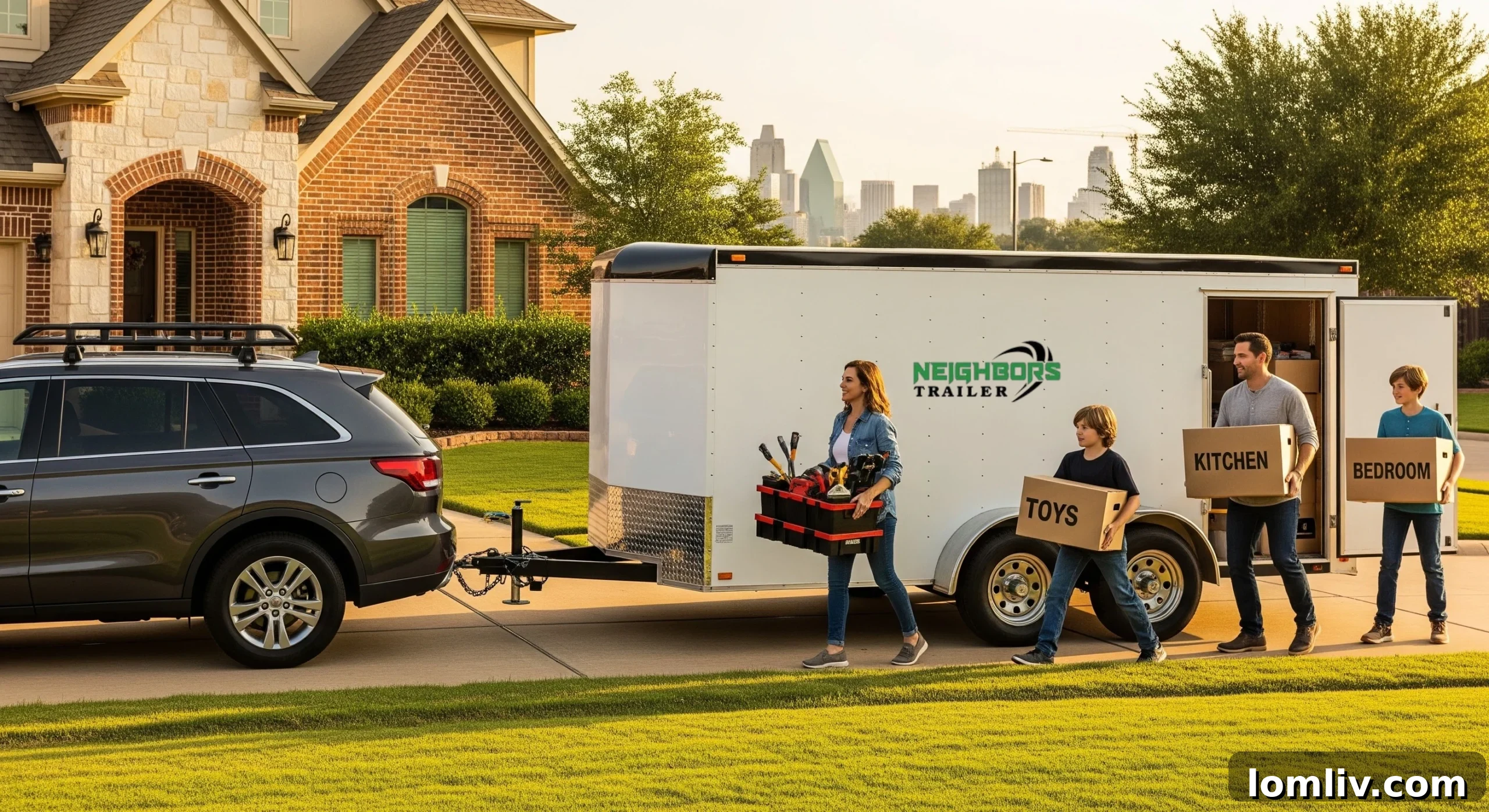
Renting a trailer presents an exceptionally compelling option for individuals or businesses with short-term, infrequent, or highly variable hauling requirements. The primary allure lies in its unparalleled flexibility and the minimal upfront financial outlay. Instead of committing to a significant capital expenditure, renters gain swift access to precisely the equipment they need, exactly when they need it, without shouldering the substantial responsibilities and ongoing costs associated with ownership. This model empowers users to complete diverse tasks efficiently, from moving household goods to transporting recreational vehicles or commercial equipment, all while keeping their balance sheet agile.
In terms of cost, a standard enclosed cargo trailer typically ranges from approximately $80 to $130 per day, depending on size, location, and the rental provider. For more extended projects or multiple-day requirements, many rental companies offer attractive weekly rates, often resulting in a significantly lower daily average. This tiered pricing structure allows users to optimize costs based on the duration of their needs, making it a highly adaptable solution for varying project timelines.
However, the financial advantages of renting extend far beyond the initial rental fee. Opting for a rental means you are effectively absolved of most ongoing operational expenses and long-term liabilities. Renters are never burdened with the complexities of maintenance schedules, the unexpected financial drain of mechanical repairs, or the persistent challenge of finding adequate long-term storage. The rental company meticulously handles all these facets – from routine inspections and preventative maintenance to unforeseen breakdowns and secure parking facilities – absorbing the associated costs and ensuring the equipment is always in prime working condition when you pick it up. This comprehensive service package translates into a genuinely stress-free user experience, allowing you to focus solely on your task at hand.
Here’s what that no-stress approach looks like in practice, offering unparalleled convenience and peace of mind:
- Zero Responsibility for Upkeep or Repairs: When you rent, all maintenance, servicing, and repair obligations fall squarely on the shoulders of the rental provider. This means you will never face an unexpected bill for routine wear and tear, critical technical issues like a blown tire, a malfunctioning brake light, or a failing axle. The rental agreement typically covers these eventualities, ensuring a reliable and safe piece of equipment without any personal financial risk beyond the rental fee itself.
- Elimination of Storage Worries: Trailers, especially larger cargo or utility models, demand considerable physical space, which can be a significant logistical and financial hurdle for many individuals and businesses. Renting completely eradicates the need for a dedicated driveway spot, a garage bay, or the recurring monthly expense of a commercial storage unit. Once your project is complete, you simply return the trailer, freeing up your space and your budget from long-term storage commitments.
- Unmatched Flexibility and Versatility: The rental model provides the ultimate freedom to precisely match the trailer to the specific demands of each unique task. This allows for unparalleled versatility; you might opt for a compact open utility trailer for a weekend landscaping project one month, then seamlessly switch to a spacious, climate-controlled enclosed trailer for a cross-country move or delicate equipment transport the next. This adaptability ensures you always have the most appropriate tool for the job, without the limitations of a single owned unit.
- An Ideal “Try Before You Buy” Opportunity: Renting also serves as an invaluable preliminary step for those contemplating a future trailer purchase. By renting a specific model, such as an enclosed trailer rental for a major hauling operation or a specialized car hauler, you gain hands-on experience with its features, maneuverability, and overall suitability for your needs. This practical insight is crucial in deciding if its dimensions, load capacity, and operational characteristics truly justify a long-term investment, enabling you to make a far more informed and confident purchase decision down the road.
The Case for Buying: An Investment in Long-Term Convenience
On the other side of the spectrum, purchasing a trailer represents a more significant upfront financial commitment, but it is an investment that unlocks unparalleled long-term convenience, complete control, and potential for generating revenue. Trailer prices exhibit vast diversity, ranging from budget-friendly options under $1,000 for a small, well-maintained used utility trailer to $4,500–$9,000 for a basic new enclosed cargo trailer. Premium, specialized models, such as custom-built race car haulers or high-end living quarters trailers, can easily exceed $100,000, reflecting the wide array of designs, features, and capacities available in the market.
This substantial purchase becomes a demonstrably wise investment for individuals or businesses with a consistent and frequent need for hauling solutions. Ownership guarantees immediate availability, eliminating the need for reservations, navigating rental company hours, or worrying about peak-season scarcity. This inherent long-term convenience and constant readiness can translate into significant cost savings over time, especially when compared to accumulating rental fees for frequent use.
However, the purchase price is merely the initial component of the overall cost of trailer ownership. Prospective owners must meticulously factor in a spectrum of ongoing expenses that are part and parcel of maintaining this valuable asset. These include essential costs such as comprehensive insurance premiums, annual registration fees mandated by state or provincial authorities, and routine maintenance designed to ensure the trailer’s safety, reliability, and longevity.
Furthermore, a critical consideration for any trailer owner is storage. Trailers, by their very nature, require dedicated space. You’ll need a suitable, legal parking spot at your home – perhaps a spacious driveway or a secure area in your backyard – or you may need to budget for the monthly expense of a rented storage space or commercial lot if adequate room is unavailable. This storage solution must also offer security to protect your investment from theft or damage.
If you are prepared to manage these responsibilities and ongoing costs, the benefits of trailer ownership are substantial and deeply rewarding:
- Always Ready for Immediate Use: Perhaps the most compelling advantage of ownership is the instant readiness of your trailer. It’s always parked and waiting, enabling spontaneous trips, urgent projects, or last-minute hauling needs without the hassle of advance rental agreements, availability checks, or concerns about seasonal demand. This “always-on” accessibility provides unmatched operational freedom and eliminates potential delays.
- Complete Customization and Personalization: Ownership grants you the ultimate freedom to modify and adapt the unit to your precise specifications and unique requirements. You can install custom shelving, robust tie-downs, specialized lighting, or a bespoke wiring system in a cargo trailer to transform it into a mobile workshop or dedicated equipment transport. Similarly, you might upgrade hitches for specific towing needs, enhance the interior of a travel trailer for improved comfort, or even convert a utility trailer for a niche hobby. This level of personalization creates a tool that is perfectly tailored to your individual or business needs, maximizing its utility and efficiency.
- Potential for Income Generation: A trailer is a tangible asset that possesses significant revenue-generating potential when it’s not in personal use. You can leverage various peer-to-peer rental platforms to rent it out to other individuals or businesses, effectively transforming idle equipment into a source of passive income. This revenue stream can significantly offset the ongoing costs of ownership, such as insurance, maintenance, and storage, making the overall investment more financially viable and even profitable over time. This turns a liability into an asset that works for you.
Beyond its primary function, a custom-outfitted trailer, whether for a burgeoning business or a specialized hobby, becomes an extension of your operational capabilities. With personalized shelves, racks, or advanced wiring, it meets your exact requirements, enhancing productivity and convenience. Moreover, its ability to generate income through rental when not in use means it can contribute directly to its own upkeep and even provide a return on your investment, making it a truly dynamic asset.
A Practical Cost Comparison: Renting vs. Buying a Trailer
To truly understand the financial implications, let’s perform a detailed cost breakdown over a five-year period. Consider a scenario where you frequently need a 6×12 enclosed cargo trailer, utilizing it approximately 10 days out of the year. If the average daily rental rate is $100, your annual rental expense would be $1,000. Over five years, this accumulates to a total of $5,000. At the conclusion of this period, while you’ve met your hauling needs, you ultimately own no tangible asset and have no residual value.
Now, let’s compare this to purchasing a similar 6×12 enclosed trailer. A new, basic model might cost around $7,000 upfront. This initial investment is then accompanied by ongoing annual costs essential for ownership. For example, comprehensive insurance premiums, annual registration fees, and routine maintenance (such as tire checks, brake inspections, and bearing lubrication) could collectively amount to approximately $450 per year. Over a five-year span, these additional annual expenses would total $2,250, bringing the cumulative ownership cost to $9,250 ($7,000 purchase + $2,250 in expenses).
However, unlike renting, owning a trailer means it retains a portion of its value. Assuming a reasonable depreciation rate, this $7,000 trailer might have an estimated resale value of $4,000 after five years of use and proper maintenance. Subtracting this resale value from the total five-year cost ($9,250 – $4,000) yields a net ownership cost of approximately $5,250 over five years. This effectively breaks down to an average annual cost of roughly $1,050 for owning the trailer.
From this practical analysis, it becomes evident that buying a trailer becomes a more financially advantageous proposition over a medium-to-long-term horizon, typically within a five-to-six-year timeframe. The more frequently you use the trailer, the faster this break-even point is reached, making ownership increasingly cost-effective for high-frequency users. This calculation underscores the importance of accurately projecting your usage patterns to determine the most economical path.
This analysis highlights two critical questions that any prospective buyer must meticulously address before committing to a purchase:
- Project Your Actual Usage Frequency: How many days or weeks per year do you realistically anticipate needing a trailer? An honest and accurate assessment of your usage frequency is paramount. Infrequent use (e.g., less than 10-15 days a year) will likely favor renting, while consistent, regular use (e.g., once a month or more) will tip the scales towards the financial benefits of ownership.
- Assess Your Budget for Initial Investment and Ongoing Expenses: Can your budget comfortably accommodate the significant large initial investment required for the purchase, as well as the recurring financial obligations of insurance, routine maintenance, potential repairs, and secure storage? It’s crucial to look beyond the sticker price and understand the full financial lifecycle of trailer ownership.
Conclusion
Ultimately, the choice between renting and buying a trailer is not universally one-sided; rather, the optimal decision emerges from a careful and personalized evaluation of your unique needs, financial situation, and long-term objectives. This analytical procedure, integrating both practical requirements and detailed numerical considerations, is the cornerstone for determining the best course of action tailored to an individual’s or business’s specific circumstances and goals.
Renting offers an attractive, low-commitment solution perfectly suited for occasional requirements, sporadic projects, or the flexibility to adapt to varying demands without the burden of long-term responsibility. It provides immediate access to diverse equipment options, eradicates maintenance and storage concerns, and allows for precise cost management on a per-use basis. It’s ideal for those who value agility and minimal overhead.
Conversely, buying a trailer represents a significant long-term commitment and investment, but one that provides regular users with unparalleled operational autonomy, instant availability, and the freedom to customize. For individuals or businesses with consistent hauling needs, the upfront cost is offset by the cumulative savings over time, the convenience of always having the right tool on hand, and the potential to generate income. Ownership transforms a functional necessity into a strategic asset.
In essence, the decision boils down to three core factors: how often you genuinely anticipate needing a trailer, what your budget can comfortably support not just initially but over its lifespan, and which option ultimately offers the greatest convenience and peace of mind for your specific lifestyle or business model. By meticulously weighing these elements, you can confidently make the choice that best serves your current and future hauling requirements.