

In a resounding mandate from the electorate, Texans have overwhelmingly approved Proposition 4, a landmark constitutional amendment designed to deliver significant property tax relief across the state. This pivotal measure allocates an impressive $18 billion towards reducing property tax burdens for homeowners and businesses alike, while simultaneously cutting school districts’ tax rates. The outcome reflects a widespread desire among Texans for substantial relief from ever-increasing property valuations and their corresponding tax liabilities, making property tax reform a top priority.
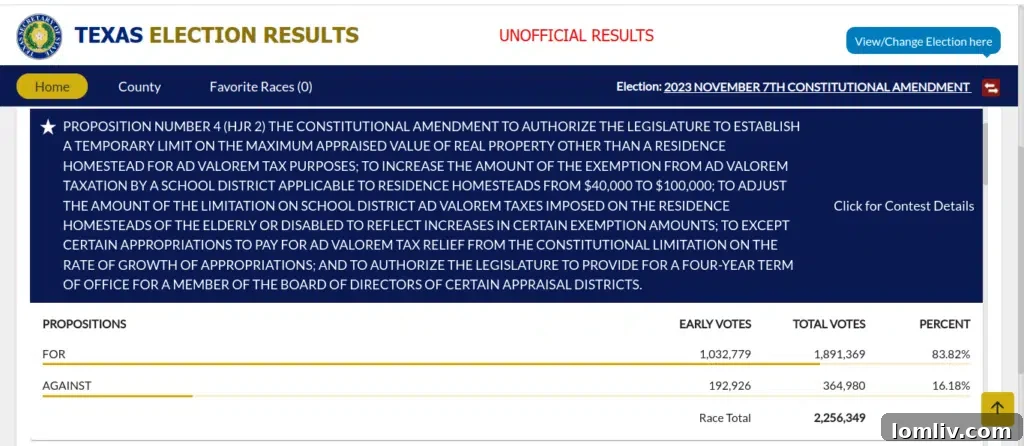
The ballot results speak volumes about the public’s sentiment. A total of approximately 2.26 million Texans participated in the special election, with Proposition 4 garnering an extraordinary 83.82 percent of the vote, translating to roughly 1.9 million ballots cast in favor. This overwhelming support underscores the urgent need for property tax reform and signifies a clear directive from the state’s residents to ease financial pressures on households and enterprises.
A Clear Mandate: Statewide and Local Support for Tax Relief
The robust approval of Proposition 4 was consistent across Texas, demonstrating widespread consensus on the issue of property tax reduction. The statewide tally of 83.82 percent in favor was echoed by strong performances in key metropolitan areas, highlighting a unified voice from diverse communities.
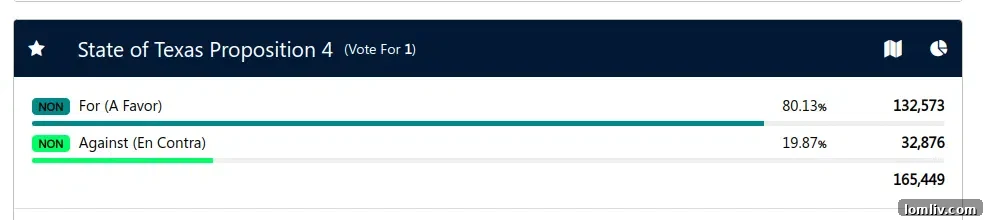
Locally, Dallas County reported an impressive 80.13 percent approval rate for Proposition 4, representing 132,573 ballots. This local enthusiasm was consistent with early voting trends, where the measure showed a commanding lead. Early voting data from various counties across North Texas further emphasized the strong backing, with 62,157 residents casting early ballots in Tarrant County, 59,652 in Dallas County, 46,906 in Collin County, and 46,156 in Denton County. These figures demonstrate significant engagement from voters who were eager to secure property tax relief for their communities.
Senator Paul Bettencourt, R-Houston, the principal author of the legislative bill that led to Proposition 4, wasted no time in declaring victory. His emailed statement to the Austin American-Statesman, released just 30 minutes after polls closed on election night, encapsulated the optimism surrounding the measure. “As I predicted, Proposition 4 was passed tonight by a supermajority of voters because of the State’s surplus they will see eye-popping savings!” Bettencourt’s email asserted, highlighting the dual factors of voter demand and available state resources that propelled the proposition to success.
Understanding the Mechanics of Proposition 4: How It Delivers Savings
Proposition 4 is a multi-faceted approach to property tax relief, primarily focused on three key areas: increasing the homestead exemption, implementing temporary appraisal limits for certain properties, and significantly reducing school district tax rates. These combined efforts are designed to provide tangible financial benefits to a wide range of Texans.

At its core, Proposition 4 dramatically raises the homestead exemption. This exemption is the portion of a homeowner’s property value that is shielded from taxation for public school funding purposes. By increasing this exemption, a larger portion of a home’s value becomes untaxable, directly leading to a lower property tax bill for primary residences. For example, if a home is valued at $300,000 and the exemption is increased by $100,000, the taxable value for school taxes effectively drops by $100,000, resulting in substantial savings.
Beyond the homestead exemption, the proposition also introduces a temporary limitation on appraisals. This measure applies to commercial, mineral, and residential properties that do not receive a homestead exemption and are valued at less than $5 million. This temporary 20% appraisal cap helps to prevent sudden, dramatic increases in taxable values for these properties, offering a period of stability for property owners. As Compass Realtor Heather Guild explained in a pre-election newsletter, this component of Proposition 4 is crucial for businesses and non-homestead residential properties, providing relief beyond just owner-occupied homes.
The third major component, and perhaps the broadest in its impact, is the significant cut to school districts’ tax rates. The $18 billion allocated by the state for property tax cuts is primarily channeled to “buy down” school maintenance and operations (M&O) tax rates. This mechanism directly reduces the tax rate levied by school districts, which form the largest component of most Texans’ property tax bills. By funding schools more substantially from the state’s general revenue surplus, the burden on local property taxpayers is alleviated, benefiting virtually all property owners, regardless of whether they qualify for a homestead exemption.
Tangible Savings and Retroactive Benefits for Texans
The impact of Proposition 4 translates into real, measurable savings for Texans. According to Blair Raggio of Allegiance Title Company, who prepared an insightful podcast breaking down the proposition, the average homeowner can anticipate saving approximately $1,300 on their property tax bill. A crucial aspect of this legislation is its retroactivity: the property tax relief applies to 2023 property taxes, meaning Texans will see these savings sooner rather than later.

Raggio emphasized the importance of this retroactivity for real estate transactions: “It is important that buyers and sellers know that their tax bill may actually be less than what it was prorated on for their 2023 taxes.” This insight is vital for those involved in recent property sales, as adjustments may be necessary to reflect the new, lower tax liabilities. This change can affect closing costs and the overall financial picture for both parties in a transaction.
To illustrate the potential savings, a property tax calculator prepared by CBS News North Texas estimated that the owner of a $500,000 home within the Dallas ISD would save approximately $1,226.24 in property taxes. This estimate primarily accounts for the increased homestead exemption and the school tax compression. It’s important to note that homeowners may be eligible for additional exemptions (such as for seniors, disabled persons, or veterans) that could further reduce their property tax obligations. These additional exemptions, when combined with the relief provided by Proposition 4, can significantly lighten the financial load on Texas households.
Understanding these savings and proactively applying for all eligible exemptions is key for homeowners to maximize their benefits from this historic tax relief package. While the school tax rate reduction is automatic, homeowners should always ensure their homestead exemption is properly filed with their local appraisal district.
Broader Implications and the Future of Texas Taxation
The passage of Proposition 4 was part of a larger electoral event where Texans approved 13 of the 14 constitutional amendments on Tuesday’s ballot. The only measure rejected was one that sought to raise the mandatory retirement age for judges, indicating a careful and selective approach by voters towards the proposed changes. The overwhelming support for Proposition 4, in particular, signals a powerful mandate for fiscal responsibility and direct tax relief from the state legislature.
This $18 billion property tax relief package, enabled by Texas’s significant budget surplus, represents one of the largest tax cuts in the state’s history. It reflects a political environment where alleviating the property tax burden has become a bipartisan priority. The successful implementation of Proposition 4 is expected to provide much-needed breathing room for families and businesses grappling with rising costs of living and doing business in Texas. While the immediate impact is clear, its long-term effects on property values, school funding models, and economic development across the state will be closely watched. This measure sets a precedent for how state surpluses can be leveraged to provide direct financial relief to taxpayers, potentially influencing future legislative actions regarding state finances and taxation.
Homeowners and businesses are encouraged to familiarize themselves with the details of Proposition 4 and understand how these changes will be reflected in their upcoming property tax statements. Consulting with local appraisal districts or tax professionals can provide tailored information and ensure all eligible savings are realized. The passage of Proposition 4 marks a significant chapter in Texas’s fiscal policy, promising a brighter financial outlook for millions of its residents.