

Discovering Texas: Why Mid-Size Cities are Attracting a New Wave of Movers
Nearly three decades ago, our family embarked on a hasty relocation. Driven by job opportunities, and perhaps a touch of weak research, we found ourselves settling into a modest garage apartment in rural Wylie, Texas, a location characterized by a two-lane road and a quaint chicken-crossing sign. At the time, we were convinced that the bustling Dallas/Fort Worth metroplex surely offered superior options, leading us to swiftly move closer to the city within a month. While we briefly entertained second thoughts about our initial choice, time, and indeed, recent trends, have proven our long-ago decision to be remarkably vindicated.
Fast forward to today, and Wylie, along with numerous other mid-sized cities across the Lone Star State, has transformed into a highly sought-after destination for individuals and families seeking new beginnings. This dramatic shift is not merely anecdotal; it is clearly reflected in comprehensive studies examining national migration patterns. The once-quiet town of Wylie now proudly features on lists of the most popular mid-size cities for movers, a testament to its evolution and growing appeal.
The Rising Popularity of Mid-Size Cities: Insights from moveBuddha
The landscape of American relocation is constantly evolving, with a noticeable trend towards mid-size cities offering a compelling blend of opportunity and lifestyle. This phenomenon was meticulously analyzed in a 2020 study by moveBuddha, an Athens, Ga.-based relocation company. Their research identified the “101 Most Popular Mid-Size Cities for Movers,” shedding light on the hidden gems that are increasingly capturing the attention of those looking to relocate.
MoveBuddha’s methodology for compiling this definitive list was robust, drawing on proprietary data from over 400,000 moves facilitated in the preceding year. A key criterion for inclusion was that each city experienced a net positive migration, meaning more inbound moves than outbound. While the company acknowledges that its data offers a snapshot rather than a comprehensive reflection of all U.S. migration patterns, it provides invaluable context regarding the motivations and preferences of contemporary movers. To enhance the depth of their insights, moveBuddha strategically cross-referenced its findings with crucial U.S. Census data and County Health rankings, offering a multi-dimensional perspective on what makes these cities attractive. For those eager to delve deeper into the specifics, moveBuddha’s comprehensive dataset allows users to explore how cities rank across various categories.
The study underscored a significant trend: 46 of the listed mid-sized cities reported at least 50 percent more inbound than outbound moves, indicating a strong magnetic pull. This surge in popularity for mid-size urban centers signals a broader shift in what people prioritize when choosing a new home, moving away from the traditional dominance of sprawling metropolises.
Texas: A Magnet for Movers
When examining the national landscape of relocation, Texas emerges as a dominant force, securing the position of the second-most popular state for movers, just behind Florida. With an impressive 15 cities making moveBuddha’s prestigious list, the Lone Star State clearly stands out. This robust performance is often attributed to several compelling factors, not least of which is the absence of a state income tax, offering significant financial advantages to residents. However, the appeal of Texas extends far beyond tax benefits, encompassing a thriving job market, diverse economic opportunities, a relatively lower cost of living compared to other major states, and a vibrant cultural tapestry.
The strong representation of Texas cities, particularly those clustered around the dynamic Austin area, suggests a deliberate and well-founded preference among movers. These cities are not just experiencing growth; they are actively shaping the future of urban living, offering a unique blend of community, amenities, and economic vitality that resonates with a wide range of individuals and families. The sheer volume of Texas cities on the list underscores a powerful statewide trend: people are discovering and embracing the distinct advantages of life in the Lone Star State’s flourishing mid-size urban centers.
Spotlight on North Texas Gems: Wylie, Flower Mound, and Rowlett
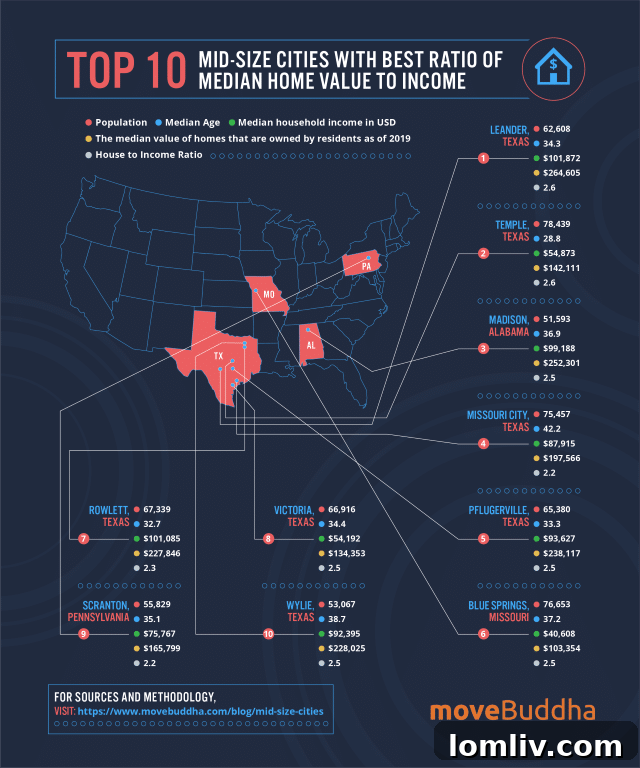
Our journey began in Wylie, a city that has gracefully transitioned from a rural outpost to a desirable mid-size destination. While it ranked 90th on moveBuddha’s list, its inclusion is a testament to its remarkable growth and increasing appeal. Once a sleepy town, Wylie now offers a growing array of amenities, good schools, and a strong sense of community, all while maintaining a more relaxed pace than its larger neighbors. Its strategic location within the booming North Texas region provides residents with convenient access to the employment hubs and cultural attractions of Dallas and Fort Worth, without sacrificing the benefits of suburban living.
Further west in North Texas, Flower Mound captivated attention by securing the 74th spot nationally. This affluent community boasts an impressive median household income of $137,285, ranking as the nation’s second-highest in moveBuddha’s analysis. Flower Mound is renowned for its exceptional public schools, extensive park system, and a commitment to preserving green spaces, making it a highly attractive choice for families seeking a high quality of life. Its proximity to Dallas/Fort Worth International Airport and major business corridors further enhances its desirability, offering both connectivity and tranquility.
Rounding out the North Texas contingent, Rowlett came in 82nd, distinguished by its nation-leading County Health score. Situated on the shores of Lake Ray Hubbard, Rowlett offers abundant recreational opportunities, including boating, fishing, and lakeside parks. The city combines a welcoming suburban atmosphere with convenient access to urban amenities, appealing to those who value outdoor living and community well-being. Its focus on public health and quality-of-life initiatives makes it a standout choice for health-conscious movers seeking a balanced lifestyle.
Austin-Area Suburbs: Texas’s Top Choices
While North Texas cities showcase diversity in appeal, the Austin metropolitan area’s surrounding suburbs collectively dominate Texas’s representation on moveBuddha’s list. These cities exemplify the state’s rapid growth and appeal, driven by Austin’s burgeoning tech industry, vibrant culture, and robust economy. Leander stands out as Texas’ mid-size city of choice for movers, leading the pack in the state. Its rapid growth can be attributed to its relative affordability compared to Austin proper, excellent schools, and a burgeoning array of new developments and community facilities. Leander offers a compelling blend of suburban comfort with easy access to Austin’s dynamic urban core.
Other notable Austin-area suburbs making significant waves include Georgetown, known for its historic downtown, robust retirement community, and rapidly expanding infrastructure; New Braunfels, a city rich in German heritage, famous for its Wurstfest and river activities, offering a unique cultural experience alongside natural beauty; Pflugerville, a fast-growing community with a youthful population and expanding job opportunities, particularly in the tech sector; and San Marcos, home to Texas State University, which provides a lively college-town atmosphere combined with access to natural springs and outdoor adventures. These cities collectively demonstrate the multifaceted appeal of the Austin region, offering a spectrum of lifestyles from historic charm to modern suburban convenience, all underpinned by strong economic foundations and a high quality of life.
What Drives the Mid-Size City Migration?
The increasing gravitation towards mid-size cities, particularly in states like Texas, is a trend rooted in several powerful socioeconomic shifts. Understanding these drivers is crucial for anyone considering a relocation.
Economic Advantages and Opportunities
One of the most significant lures, especially for Texas, is the economic landscape. The absence of state income tax immediately puts more money back into residents’ pockets, making the state an attractive option for both individuals and businesses. Beyond taxation, many Texas mid-size cities boast robust job markets fueled by diversified industries, including technology, healthcare, manufacturing, and energy. These cities often offer a lower cost of living compared to major metropolitan centers, meaning housing, utilities, and everyday expenses are more manageable. This affordability allows residents to achieve a higher quality of life, save more, or invest in their future, making financial stability a primary motivator for many movers.
Unparalleled Quality of Life
The moveBuddha study highlights that Texas cities dominate the top rankings for quality-of-life, social, and economic scores, as well as sweeping all top five slots for physical environment rankings. This indicates a holistic appeal that goes beyond mere economics. “Quality of life” encompasses a broad spectrum of factors, including access to excellent educational institutions, low crime rates, abundant recreational facilities, and a strong sense of community. The high social and economic scores suggest robust local economies that support a vibrant community life, with opportunities for engagement and growth. The exceptional physical environment rankings point to well-maintained public spaces, access to nature, clean air, and thoughtful urban planning that enhances daily living. These elements combine to create environments where residents can thrive, both personally and professionally.
Post-Pandemic Realignment and Remote Work
The global pandemic significantly accelerated the trend towards mid-size cities. With the widespread adoption of remote work, many individuals and families were freed from the necessity of living in expensive, densely populated urban centers. This newfound flexibility allowed them to prioritize factors like more living space, access to nature, and a stronger community feel, often found in mid-size cities. People sought less crowded environments, better value for their money, and a perceived improvement in work-life balance. Mid-size cities, with their blend of urban amenities and suburban tranquility, perfectly fit these evolving needs, offering a compelling alternative to both sprawling metropolises and isolated rural areas.
Considering Your Next Move: Research is Key
Reflecting on our own initial, less-than-thorough move three decades ago, the value of comprehensive research becomes acutely clear. The availability of detailed data and studies like moveBuddha’s now provides an unparalleled resource for prospective movers. These rankings, offering insights into everything from median income to county health scores and overall quality of life, would have been invaluable tools in our younger years, guiding us toward a more informed decision.
For anyone contemplating a relocation, especially to the dynamic and diverse state of Texas, thorough research is paramount. Utilize available datasets, explore city-specific statistics, and consider what factors are most important to your lifestyle, career, and family needs. Whether it’s the thriving job markets, the absence of state income tax, the top-tier schools, or the rich recreational opportunities, Texas’s mid-size cities offer a compelling narrative for a new chapter. The days of making hasty decisions based on limited information are, thankfully, behind us. With the right tools and a bit of diligence, your next move can be a well-informed step towards a fulfilling future.
The remarkable ascent of cities like Wylie, Flower Mound, Rowlett, Leander, Georgetown, New Braunfels, Pflugerville, and San Marcos is not just a statistical anomaly but a reflection of a broader societal movement towards balanced, sustainable, and high-quality urban living. Texas, with its abundant opportunities and welcoming communities, continues to stand at the forefront of this exciting trend, inviting more and more individuals to discover the unique charm and benefits of its thriving mid-size cities.