 Editor’s Note: On August 16, 2018, the Dallas ISD Board of Trustees cast a pivotal vote, approving a measure 7-1 to place a 13-cent Tax Ratification Election (TRE) on the upcoming November 6 ballot. This decision marks a crucial moment for the district’s financial future and its ability to continue providing quality education. In response to this, District 7 Trustee Audrey Pinkerton has thoughtfully put forth a resolution designed to ensure the prudent allocation of funds generated from this proposed property tax rate increase, should it be approved by voters. We reached out to Trustee Pinkerton to provide an in-depth explanation of her resolution and its profound importance, and she graciously obliged.
By Audrey Pinkerton
Special Contributor
Securing the Future of Dallas ISD: Understanding the Tax Ratification Election and the Path to Financial Stability
This week, a significant decision looms for the Dallas Independent School District (DISD) as its Board of Trustees prepares to vote on a critical resolution directly linked to the Tax Ratification Election (TRE) scheduled for November 6. This vote is not merely a procedural step; it is a fundamental moment that will profoundly shape the district’s financial trajectory and, by extension, the quality of education for thousands of students for years to come. The outcome will dictate Dallas ISD’s capacity to maintain its current academic progress, support its dedicated educators, and ensure a robust learning environment for all students.
Navigating the Complexities of School Funding: Why DISD Needs Your Support
It’s highly probable that you’ve heard the Dallas ISD is facing a pressing need for additional financial resources. For many residents, this request might seem perplexing, especially considering the consistent increase in their DISD property tax bills. This apparent contradiction stems from a deeply entrenched and often misunderstood reality: the state of Texas’s school funding system is notoriously convoluted and frequently characterized by a significant disconnect between the property taxes paid by local residents and the actual revenue the school district ultimately receives. This intricate system means that while local property values may rise and tax collections increase, a substantial portion of these funds can be recaptured by the state, leaving local districts like DISD with a persistent financial gap.
The core issue lies within Texas’s “Robin Hood” school finance system, officially known as the “recapture” system. Designed to equalize funding across districts, it mandates that property-wealthy districts send a portion of their local property tax revenue to the state for redistribution to property-poor districts. While the intent is to foster equity, the practical impact on fast-growing urban districts like DISD, which experience rising property values but also significant student needs and increasing operational costs, is often a net loss of local revenue. This mechanism creates a scenario where local taxpayers pay more, but the district’s net operating funds do not proportionally increase, leading to a constant struggle to meet financial obligations. This challenge is compounded by general inflationary pressures and the escalating costs of providing comprehensive educational services, from specialized programs to competitive teacher salaries.
The Case for a Tax Rate Increase: Superintendent Hinojosa’s 5-Year Vision
Recognizing the severity of this financial challenge, Superintendent Hinojosa presented a compelling case for a tax rate increase during a series of community meetings held in August. His message was clear and urgent: without an influx of additional state funding—a prospect that remains uncertain given historical legislative trends and the current state budget—the district faces an undeniable inability to cover its fundamental operating costs in the coming academic year. This isn’t merely about maintaining the status quo; it’s about safeguarding the existing programs and services that are crucial to the district’s current upward trajectory and its ability to innovate.
To address this looming deficit and chart a sustainable course, the Superintendent outlined a meticulously crafted 5-year financial plan. This comprehensive strategy is built on several key pillars, designed to provide stability and foresight:
- Immediate Tax Rate Increase: A modest increase in the tax rate now, through the TRE, is designed to generate the necessary immediate revenue. This proactive step aims to close the existing financial gap and prevent further erosion of essential services.
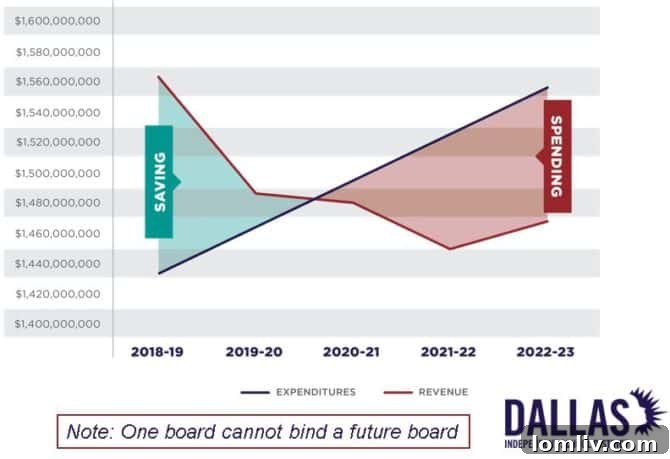
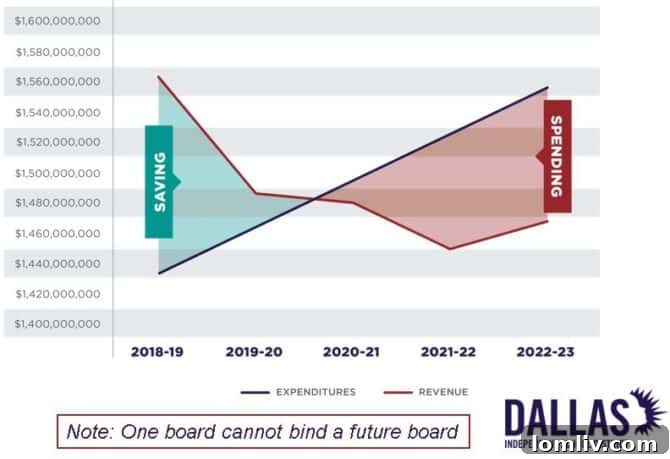
- Strategic Fund Set-Aside: A crucial component of the plan involves setting aside a significant portion of the newly generated funds to proactively address future cost increases. The primary driver for these anticipated expenses is wage inflation, ensuring DISD can continue to attract and retain high-quality educators and staff in an increasingly competitive market. This reserve acts as a vital buffer against unforeseen economic shifts.
- Prudent Use of Reserves: Beginning in 2020, the plan envisions a strategic draw from these accumulated reserves to supplement ongoing operational needs. This measured approach provides financial agility, reducing reliance on an often-unsupportive state legislature and safeguarding the district’s ability to fund its core mission regardless of external factors.
This forward-thinking plan is a testament to prudent financial stewardship. It aims to insulate the district from unpredictable state funding fluctuations and secure long-term financial stability, allowing DISD to focus unequivocally on its core mission: providing exceptional educational opportunities for its students and fostering academic excellence across all campuses.
The Assurance Mechanism: Trustee Pinkerton’s Resolution for Accountability
While Superintendent Hinojosa’s 5-year plan offers a robust framework for financial stability, a critical concern emerged regarding its long-term implementation: the absence of legally binding mechanisms to guarantee its execution by future boards. Taxpayers could approve the TRE, contribute additional funds, but without a formal commitment, there’s a risk that these funds might not be set aside as intended. Such a scenario could lead to the district facing drastic cuts within a few years, potentially derailing the significant academic progress DISD has painstakingly achieved and undermining public trust.
To directly address this crucial issue of accountability and ensure the integrity of the proposed financial plan, Trustee Audrey Pinkerton put forth a powerful resolution. This resolution serves as a formal declaration of the current Board’s intent to faithfully adhere to the principles and actions outlined in the 5-year plan. It transforms a conceptual strategy into a documented commitment, providing the transparency and assurance that the community rightfully expects, especially when asked to approve additional taxes.
Addressing the “Future Board” Dilemma: Legal Validity and Practical Application
A common skepticism often voiced in such situations is the adage, “one board cannot bind a future board.” While it’s true that a current board cannot legally dictate every action of its successors, Trustee Pinkerton’s resolution is meticulously crafted to navigate this legal nuance effectively. The key lies in its two-pronged approach, which leverages both immediate action and stated long-term intent:
- Immediate Earmarking of Current Funds: The most substantial portion of the planned set-aside, a significant $126 million, is specifically designated to occur during the current school year. This is the period when residents will pay their property tax bills, due by January 31. The resolution explicitly earmarks these surplus funds to be utilized strictly in accordance with the 5-year plan. This earmarking is an immediate action taken by the current Board upon passing the resolution; therefore, it doesn’t rely on a “future” board to initiate the commitment. It’s a present-day decision with immediate effect on how these funds are categorized and intended for use, creating a legally recognized financial commitment.
- Stating Future Intent: For the subsequent four years of the 5-year plan, the resolution employs softer, yet still impactful, language. It clearly states the current Board’s intent to support and continue the 5-year plan. While an intent statement for future actions is not legally binding in the same way as an immediate earmark, it establishes a strong precedent, a public commitment, and a clear directive for future boards to consider and uphold. This promotes continuity and responsible governance, setting a moral and political expectation for future leadership to follow the established strategic financial framework.
It is important to emphasize that the entire framework of this resolution is contingent upon the successful passage of the 13-cent tax rate increase through the Tax Ratification Election. To ensure its legal soundness and compliance with all applicable regulations, DISD’s outside counsel meticulously reviewed the resolution’s specific wording and provided a definitive “green light,” confirming its validity and enforceability within the given parameters.
The Resolution’s Authority: More Than Just Words
Some might question the efficacy of a resolution, perceiving it as merely symbolic or a non-binding declaration. However, within the context of board governance, a resolution possesses tangible authority and carries significant weight. DISD’s own Board policy explicitly empowers the Board to formally commit a portion of its fund balance for a specific, designated purpose through the adoption of a resolution during a public meeting. The policy unequivocally states: “The Board may commit a portion of the fund balance for a specific purpose by resolution during a Board meeting. The committed fund balance shall be used according to the Board’s resolution and must be spent for the specified purpose and within a reasonable period of time unless an an emergency occurs.”
This policy unequivocally establishes a resolution as the appropriate and effective legal mechanism to ensure that the designated funds are indeed available and utilized precisely when and how they are needed to support the district’s long-term financial health and the objectives of the 5-year plan. It transforms an intention into an actionable commitment, providing a crucial layer of financial security and safeguarding taxpayer investments against potential misdirection or short-sighted decisions in the future. This makes the resolution a vital tool for responsible fiscal management.
The Stakes for Dallas ISD: Sustaining an Upward Trajectory
The outcome of the upcoming TRE, coupled with the Board’s decision on Trustee Pinkerton’s resolution, carries profound implications for the future of Dallas ISD. The district has made remarkable strides in recent years, demonstrating significant improvements in academic performance, student outcomes, and overall operational efficiency. This “upward trajectory” is not accidental; it is the result of dedicated leadership, innovative programs, and the tireless efforts of teachers and staff. The continued momentum of these successes hinges on securing a stable financial foundation.
Potential Positive Outcomes (If TRE and Resolution Pass):
- Financial Stability: A stable financial foundation allows DISD to plan effectively, make strategic investments in education, and avoid disruptive, reactive budget cuts that can negatively impact learning.
- Competitive Compensation: Funds can be allocated to maintain competitive salaries and benefits, ensuring the district continues to attract and retain highly qualified teachers and staff, who are the backbone of student success and academic excellence.
- Program Continuity and Enhancement: Existing successful programs, from robust early childhood education initiatives to advanced placement courses and specialized support services, can be sustained and even expanded, directly benefiting student learning experiences and preparing them for future success.
- Infrastructure Investment: Adequate funding supports ongoing maintenance and necessary upgrades to school facilities, creating optimal, safe, and modern learning environments conducive to student engagement.
- Reduced Reliance on State Politics: By proactively building reserves and establishing a clear financial plan, DISD can mitigate the impact of unpredictable state legislative decisions and funding changes, gaining greater control over its own destiny and strategic direction.
Potential Negative Outcomes (If TRE Fails or Resolution is Not Adopted):
- Drastic Budget Cuts: Without the additional revenue and the commitment to reserves, DISD would likely face severe budget shortfalls, necessitating significant cuts to staff, critical programs, and essential services, potentially impacting thousands of students.
- Impact on Student Outcomes: Cuts could directly affect class sizes, reduce the availability of crucial learning resources, and diminish specialized support services, potentially reversing the academic gains made and hindering future student achievement.
- Teacher Shortages and Morale: Inability to offer competitive compensation could lead to an exodus of talented educators seeking better opportunities, exacerbating existing teacher shortages and negatively impacting staff morale and instructional quality.
- Erosion of Public Trust: A failure to implement a promised financial plan, or to secure the necessary funds for long-term stability, could diminish public confidence in the district’s leadership and its ability to manage taxpayer dollars effectively and transparently.
A Call for Unity and Transparency: The Path Forward
Dallas ISD has openly communicated its 5-year financial plan to the public, fostering an environment of transparency regarding its needs and intentions. Now, the onus is on the Board of Trustees to solidify this commitment through a unified vote. The community has a right to, and indeed deserves, complete clarity regarding the Board’s intentions and an ironclad assurance that their hard-earned tax dollars will be meticulously utilized to sustain the district’s vitality and navigate the projected deficit ahead responsibly.
Achieving a unanimous 9-0 approval for Trustee Pinkerton’s resolution is more than just a procedural endorsement; it is a powerful demonstration of the Board’s collective integrity, its unwavering dedication to the district’s long-term success, and its commitment to ensuring the enduring financial health of Dallas ISD. Such a decisive vote would send a clear message of unity, foresight, and accountability to the entire community, reinforcing public trust and paving the way for a stable, thriving educational future for all students within the Dallas Independent School District. It underscores a collective responsibility to uphold the promise of quality education.