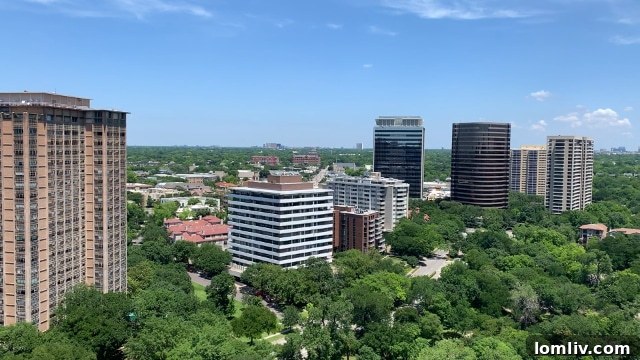
Dallas’s High-Rise Condo Conundrum: A Deep Dive into the Limited Inventory
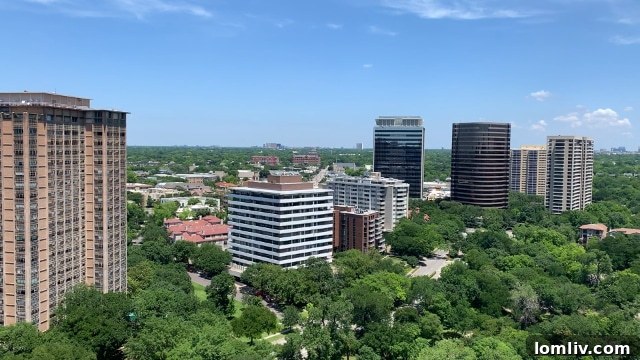
As Dallas continues its impressive trajectory towards becoming a denser, more vibrant urban center, the demand for high-rise living naturally escalates. For many residents seeking an urban lifestyle, high-rise condos present an ideal solution, offering convenience, amenities, and breathtaking views. However, a significant challenge looms over the Dallas real estate landscape: the glaring scarcity of for-sale condo high-rises outside the ultra-luxury segment. This imbalance creates a tight market, limiting choices for a vast majority of potential buyers and pushing high-rise living into an increasingly exclusive niche.
Currently, the high-rise condo market in Dallas reveals a stark reality. By recent counts, the entire spectrum of high-rise condos available for purchase, ranging from entry-level prices in the low hundreds of thousands to multi-million dollar penthouses, totals a mere 133 units. This limited inventory, spanning from approximately $159,000 to a staggering $9.2 million, underscores a critical gap in the market, particularly for those seeking more accessible options in a rapidly growing city. The lack of diverse inventory means that while Dallas embraces vertical expansion, it primarily caters to a select few, leaving many aspirations for high-rise living unmet.
The Missing Middle: Why Mid-Range High-Rises Are a Rarity in Dallas
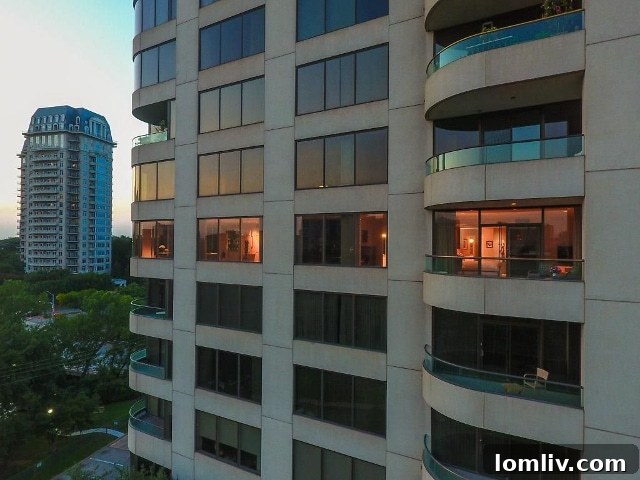
While iconic buildings like The Stoneleigh, Ritz Residences, and Museum Tower dominate the ultra-luxury market, representing significant investments and opulent lifestyles, they remain largely out of reach for the average Dallas resident. The core issue isn’t a lack of demand for mid-range high-rises; rather, it’s a profound absence of new construction in this crucial segment. Dallas hasn’t seen the development of a large, mid-range high-rise condo project in over two decades, a trend directly attributable to financing challenges.
This situation marks a notable divergence from historical development patterns. Projects like The Renaissance, completed in 1998, were initially conceived without the explicit intention of ultra-luxury, offering more accessible options. Similarly, 3883 Turtle Creek, built in 1963, was originally planned as HUD housing, exemplifying a different era of development. Preston Tower, with its substantial 362 units, has consistently provided affordable high-rise living for generations. These past successes were largely built on the principle of cost containment through scale. The Renaissance boasted 603 units, while 3883 Turtle Creek featured 373, demonstrating how greater density could translate into more attainable price points. More recently, The Cedars’ Beat Lofts in 2007, a relatively modest project with 75 units, represented a brief foray into more transitional areas, but it wasn’t a large-scale solution to the mid-range shortage.
The consequence of this financing bottleneck is a market where the most reasonable strata of high-rise living, typically offering units priced from the $150,000s to $700,000 and usually under 2,000 square feet (an ideal size for many), is severely undersupplied. This segment, which historically provided diverse options for a broad demographic, has been neglected, forcing many buyers to either compromise on their desire for high-rise living or stretch their budgets significantly beyond comfortable limits. The current market, therefore, presents a stark contrast: a vibrant luxury sector juxtaposed with a struggling, almost non-existent, mid-range condo market, pushing Dallas’s urban development towards an increasingly exclusive model.